Latest

  • A Study Examining Responses to Overt Versus Relational Aggression in College Students

    Hailey Davis, Jon Cody Mactutus, Alina Marino, and Hayley Mulford

    Advisor: Dr. Findley-Van Nostrand

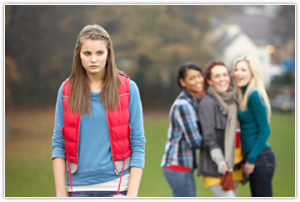
    [Picture of Girl Being Bullied] (2015). Retrieved from https://www.texasconflictcoach.com/2015/adolescent-relational-aggression-how-to-diminish-the-damage/

    Background Information

    The present study evaluated whether type of aggression (overt, relational) witnessed towards a peer impacted likelihood to intervene and/or desire to punish the aggressor, considering desensitization as a factor. Most peer aggression studies focus on childhood and adolescence, but we used emerging adults (18-24) instead because it would be further expansion as less is known about peer aggression in this age group.

    Relational aggression is indirect, status hurting actions whereas overt aggression is direct actions with the intent to cause harm (Cairns, Neckerman, Ferguson, & Gariépy, 1989). Previous research has found that aggression has negative impacts on all involved; aggressors, victims, bystanders (Rivers, Poteat, Noret, & Ashurst, 2009). Both relational and overt aggression have internalizing and externalizing problems as negative possible outcomes for experiencing these types of aggression (Casper, Card, Bauman, & Toomey, 2017). The current study aimed to explore the differences in outcomes (intervening and punishing) based on the form of aggression (overt or relational). Although relational aggression is more common, especially in this age group, and just as problematic, people are less likely to recognize it as aggression (Crick & Grotpeter, 1995). So, we also tested whether people are more likely to perceive overt or relational aggression as aggression. Finally, we also explored the relationship of mood and previous exposure to aggression in these responses.

    Methods

    We recruited our participants through SONA, Roanoke College’s online psychology research website. Participants were awarded credit for their participation in this study. Everything was conducted in accordance with the guidelines of the Roanoke College Institutional Review Board, with participants supplying informed consent. In an online survey, participants were assigned to read a vignette about either relational or overt aggression where a familiar peer is aggressed upon by a stranger. First, they were asked questions to determine their current emotional state, then read a singular vignette, and then were asked if they thought the scene they read about was aggression. We also included a question to ensure that participants paid attention. 26 failed the check, leaving our final number of participants to be 130. We asked each participant whether what they just read about was aggression (and to what extent they thought it was aggression), how likely they would be to intervene in the situation, and to what extent they believed the aggressor should be punished. Participants were then asked about their previous exposure to either type of aggression. Lastly, participants were asked demographic information.

    Results and Discussion

    The results of the project were not as promising as we hoped. We had 60 participants in the relational aggression group and 69 participants in the overt aggression group. There was no significant difference in desire to punish between types of aggression. There was also no significant difference in likelihood to intervene between types of aggression. Sadly, the predictions that there would be a difference among the type of aggression and how a by-stander would feel and react were not found to be supported (see Figure 1). However, we did find that the type of aggression had an effect on the perception of whether the act was aggression or not- people were more likely to perceive overt aggression as aggression relative to relational aggression. Unfortunately, the predictions that prior exposure would account for some variance and predictive value in both intervening and punishing was not found to be supported either. Finally, emotion was not found to have a relationship with the likelihood to punish. We did not expect for most of our predictions to be rejected, but there are some promising ideas still prevalent. It is important that there is a relationship between how someone perceives aggression and the type because this can play a role in bullying. It seems from this study that relational aggression is not seen as aggression, which could help in efforts to reduce bullying. The statistical analyses we used may not have been complicated enough to reveal complex structures and relationships, but future studies could delve deeper.

    Figure 1

    Perception of Aggression, Likelihood to Intervene, and Desire to Punish Based  on Type of Aggression

    Note. All variables were on a scale from 1-10. Perception of aggression (blue bars) differed significantly by type of aggression. The other variables did not.

    Reflection

    Despite our results not being what we anticipated them to be, we were able to find out how people interpreted aggression. Fortunately, we did not have any problems with our research when we were no longer on campus and able to access the lab. The only difference with having to make our study online was the amount of credit the participants received. Our study took into account a wide range of variables so we could look at multiple factors that could possibly have an influence on the participants’ answers.

    Conclusion

    In conclusion, thoughts about the aggression witnessed did not seem to differ much between type of aggression, current state of emotions, or prior exposure to aggression. Some of our results might contradict other research, like our finding that prior exposure did not influence intervention or punishing, but some of our results match very well. Our study, as well as many others, found that people correctly identified overt aggression as a form of aggression. So, people know overt aggression when they see it which means you can rest assured that people are watching out for you! However, it seems relational aggression is less recognizable, which could say something about the way college students interact.

    References

    Cairns, R.B., Cairns, B.D., Neckerman, H.J., Ferguson, L.L., & Gariepy, J.-L. (1989).  Growth and aggression: I. Childhood to early adolescence. Developmental Psychology, 25, 320– 330. https://doi.org/10.1037/0012-1649.25.2.320

    Casper, D. M., Card, N. A., Bauman, S., & Toomey, R. B. (2017). Overt and relational aggression participant role behavior: Measurement and relations with sociometric status and depression. Journal of Research on Adolescence, 27(3), 661–673.      https://doi.org/10.1111/jora.12306

    Rivers, I., Poteat, V. P., Noret, N., & Ashurst, N. (2009). Observing bullying at school: The mental health implications of witness status. School Psychology Quarterly, 24(4), 211–223. https://doi.org/10.1037/a0018164

  • WELL WISHES & UPDATES FROM THE PSYCHOLOGY DEPARTMENT!

    These last few weeks have no doubt been challenging for everyone in some way, shape, or form. With finals starting tomorrow and being away from Roanoke College, we wanted to share some well wishes and updates from some of the Psychology Department professors!

    Dr. Buchholz:

    We are living through strange and trying times; however, I am heartened by the way we, the students, faculty, and staff of Roanoke College, have risen to the occasion. I am encouraged by the leadership of President Maxey, Dean Smith, and many other staff during these difficult times. I am thankful for our departmental secretary, Ellen, who continues to be the glue that holds our department together. I am proud of the faculty in our department for handling this moment with grace and compassion. Likewise, I am proud of our students for how they have reacted to these challenges. From the many kind words expressed in emails, to the understanding we receive when we can’t figure out zoom or have had some other problem adjusting to teaching online; I am thankful for the kindness and patience of our students. The way our community has come together, even if apart, reminds me of why I love Roanoke College.

     For those of you who are struggling during this moment, I wish you and your families the best, and I want you to know that we are all here for you. For those of you who are graduating, congratulations and I hope to see you at the rescheduled graduation; and for the rest of you, I look forward to seeing you in the fall. Be well, stay safe, and take care of yourselves.

    Dr. Carter:

    I miss my students! My stats jokes are wasted on my family. I don’t even get an eye roll from a good t-test pun.

    Dr. Carter making his kids breakfast during the quarantine (aka Will Forte in The Last man on Earth)
    Dr. Carter’s kids completing a puzzle!

    I’m extremely, extremely jealous of the people who don’t have anything to do during this quarantine. My wife and I are both trying to work full time while also taking care of two children under three (i.e., requiring constant supervision). So if I’ve learned anything new, it’s just how effective an active bird feeder can be as a babysitter. (Seriously though, getting to spend a lot of time with my kids is really nice. It’s just stressful trying to do so much at once.)


    Dr. FVN:

    I miss my students! I am super proud of everyone in my classes and in my lab, who have all worked super hard to make the most of this situation. It’s been an experience, but it’s been one we are all figuring out together. 

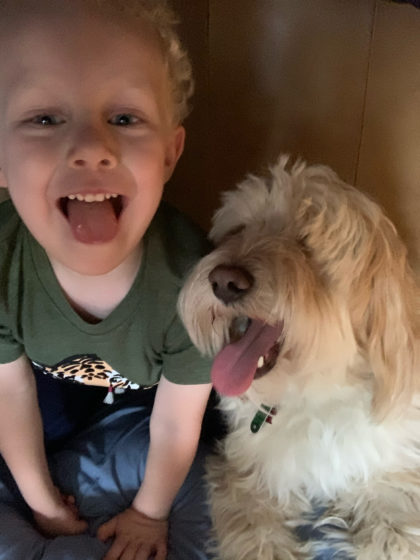
    Dr. FVN’s son and dog!

    I’ve especially appreciated the love during student meetings when my son or dog pop in for a hello! They have filled my days while my husband and I juggle our work. In fact, my favorite (non-work) thing has been going on backyard adventures and spending time on creative ways to stay entertained and engaged, like building obstacle courses.


    I can’t wait to get back to in-person teaching, I miss my people! And, congratulations to the seniors! 

    Dr. Hilton

    I have been encouraged in speaking with students in my courses to hear about the diligent work you are all putting in amidst this almost overwhelming uncertainty we face on a daily basis. I applaud all of you for continuing to do your best and finding ways to make this unexpected challenge a time of growth. In addition- I also want to encourage you all to keep in mind that now is the time to practice that self-care we all talk about, yet rarely put into practice if we’re honest…We will have bad days in the coming weeks and we will have good days. Take them in stride, do your best (the definition of which might change daily…), and find whatever ways you can to keep your spirits and hopes up.

    I’ve been reading a lot- which is a welcome change; watching a lot of TV (I’m rewatching Community on Netflix right now); and finding time for both quiet space alone and not so quiet time with my family. I also built a pull-up bar on the rafters in my basement with steel pipe so once this thing is all over- I may be able to do a few of those!

    Dr. Nichols:

    Dr. Nichols and Alumni hanging out on Zoom!

    I was able to gather with some alumni from my lab on Zoom on Friday, 4/17, with graduates from 2011 to 2019. All but one of them are in graduate school now, the other one has a PhD and is currently in a post-doc position. The alumni present (in order of graduation) are: Madison Elliott & Paige Arrington (2011), Nikki Hurless, Lauren Kennedy-Metz, & Victoria Godwin (2014), Stephanie Shields & Lauren Ratcliffe (2017), Alex Grant (2018), Noelle Warfford (2019).

    Dr. Osterman:

    There’s a quote from Freud that has occurred to me a few times since all of this started: “One day, in retrospect, the years of struggle will strike you as the most beautiful.” I’m not sure if that’s exactly an encouraging or optimistic sentiment, exactly, but if Freud is right, it does suggest that our future selves will be overly sentimental and a little callous toward this very difficult situation we’re all going through right now, which makes them a common enemy against whom we can all fight. That’s something.

    The deck couldn’t have been done without this helper!
    The deck couldn’t have been done without this helper!

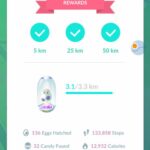
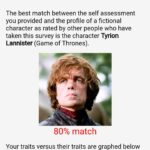
    For myself, I walked 101 km in a week and learned that I have no desire to ever walk 101 km in a week ever again. Dr. B and I built a deck, with some help from Dr. B’s son James and our cats. I also took a quiz about which characters from various TV shows I am (it’s actually a very cool quiz by a psychometrician) and learned that I am Tyrion Lannister… I think because I drink and I know things? 

    Dr. Powell

    This video depicts wow we’re all feeling

    There’s a lot of fails when trying to find that perfect backdrop for Zoom sessions #Halo #SpaceShipEncounter

    Dr. Powell’s out of this world zoom background!

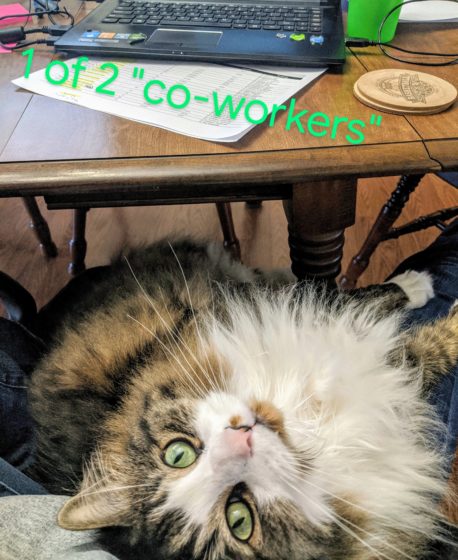
    We’re missing our 5th-floor co-workers and the students, soo much! Our new Coworkers are soo needy!

    Dr. Powell’s new needy co-worker!

    From the Psychology Department, we wish you all the best with conquering finals this week and next! Stay strong Maroons!

    .

    .

    .

    Get Connected!

    Bloghttps://psych.pages.roanoke.edu/
    Facebookhttps://www.facebook.com/rcpsychology
    Twitter: @RC_Psychology
    Linked In: https://www.linkedin.com/groups/RC-Psychology-8140491/about
    Website: https://www.roanoke.edu/inside/a-z_index/psychology
    Instagram: rcpsychology


  • APA & GSA’S CAREERS IN AGING WEEK!

    April 19 to April 25 is APA and GSA’s careers in aging week! Psychology of aging focuses on applying knowledge and methods of psychology to understanding and helping older adults and their families to achieve well-being in later life. If you are interested in working with older adults and want to learn more then follow this link! Likewise, if this is a topic that interests you then check out Adult Development and Aging (PSYC-323), a course that is being offered this fall and likely will not be offered again until Fall 2022.

    Furthermore, if you are interested overall in human development then check out the human development concentration that is offered at Roanoke College! The human development concentration exposes students to the broader life-span perspective and allows students to focus on the stages (e.g., childhood, adolescence, adulthood) and the topics most applicable to their personal or professional goals.

    For more information on the human development concentration, reach out to Dr. Powell or Dr. FVN!

  • Measuring Persistence in Psychology Students

    Athey Crump, Emily Giovanini, Elizabeth Helminski, Mariyana McAgy & Kojiro Leonard (Advisor: Chris Buchholz)

    Background Information

    What causes individuals to complete difficult tasks? Locus of control is categorized into two levels: internal and external. Individuals with internal LOC believe they have control over their environment, whilst individuals with external LOC believe their environment controls them (Killpack, 2005). After examining current literature on LOC, we discovered a gap in past research, which had looked at the relationships between LOC and motivation, competence, and self-efficacy, but not perseverance (Rotter, 1996). Our research is designed to focus on the relationship between LOC and persistence. We hypothesized that those scoring a high internal LOC would have a longer duration while those scoring a high external LOC would have a shorter duration.

    Methods

    In this study participants (77) were asked to solve a series of math problems. Half of the participants were led to believe they had some control over the difficulty of the math problems, while the other half were led to believe that the difficulty of the questions was random. However, the manipulation did not work due to an unforeseen error in setting up the study. As a part of this study, participants were also asked to complete a scale that measured whether they possessed more internal or external locus of control using Rotter’s scale of Locus of Control.

    Results & Discussion

    Data collected from the survey was run with the results from the LOC questionnaire. While there was no difference in the total number of math problems completed for external vs. internal locus of control, those who have an internal locus of control did spend more time answering questions but these results were not statistically significant, as seen in Figure 1. So, while these two groups (internal/external) completed the same number of problems, it is possible that those with an internal locus of control spent more time thinking and working on them, as can be seen in Figure 2. This makes some sense in that those with internal locus of control feel they have more control, and thus they spend more time working (i.e. persisting).

    Figure 1: Internal and external locus of control on number of math problems completed.

    Figure 2: Internal and external locus of control on duration of survey.

    Reflection

    The process of conducting an experiment from start to finish provided the opportunity to put knowledge we’ve gained over the past four years into a single project. When creating an online study, we gained experience using programs like SPSS, SONA and Qualtrics. Though there were several changes that needed to be made to the study, this only allowed us the opportunity to showcase our knowledge of research skills. Though there were several challenges to overcome, this study allowed us, as students to think and act as researchers and provided the opportunity to have these skills as undergrads.

  • Examining How Music Affects Mood

    Nina Amato, Hailey Davis, Emily Deeds, Kinsey Overfelt, Valerie Spasojevic (Advisor Chris Buchholz)

    Background Information

    Music has been around for centuries and it has been used in many different ways, from ceremonies, to dancing, or even to uplift the soul.  Philosophers have wondered what the purpose of music is and what it does for us.  Many people believe that music can affect their mood – we were curious about this as well and wanted to take it a step further to see if happy or sad music was able to change ones mood when combined with having a certain personality trait.  We predicted that people with a high level of Neuroticism would have their mood shifted the most due to the type of music they were listening to.  We predicted that this specific personality trait would be most likely to change their mood due to the type of music because it is said that people with the personality trait of Neuroticism tend to be emotionally unstable, which would allow their mood to shift easily.  To examine the effects, we used different tests in order to assess how a happy song and a sad song affected the moods of different personalities.  Specifically, we predicted that people having a personality high in Neuroticism will convey a happier mood in the happy music group, as well as convey a sadder mood in the sad music group.  We  also predicted that those who are low in neuroticism will not have their mood as affected by the music since they are in theory more emotionally stable individuals.

    Methods

    Participants were randomly assigned to one of two conditions in the study, either listening to a happy or sad version of the same song.  Individuals then self-reported their mood via a slider scale immediately after listening to the song condition to which they were assigned.  Participants then took the Big Five Inventory (BFI) questionnaire to measure personality traits (e.g., neuroticism).

    Results and Discussion

    There was a significant difference between the moods of the people in the sad condition versus the happy condition (see Figure 1). Also, in line with our predictions, we found that those high in neuroticism did have a significant difference between their reactions to happy versus sad music, while this was not the case for those low in neuroticism (see Figure 2).

    Figure 1: The effect of music on mood.

    Figure 2: Interaction effects between music condition and neuroticism.

    Reflection

    We experienced challenges throughout our research because we anticipated our study to be conducted in a lab setting, not completely online. We originally decided that we wanted to have an in-person study so we could ensure that individuals would listen to the song entirely and not have any distractions, however, we had to switch to an online version of our study due to the Coronavirus.  Our study also does not take into account the mood the individual was already experiencing, which could have impacted mood persuasion.

  • PSYCHOLOGY DEPARTMENT STUDENT RESEARCH SPRING, 2020

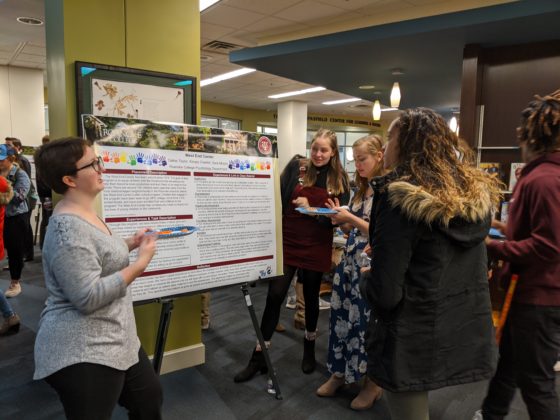
    The department normally hosts a poster session to present all of the research that happens each semester; however, due to stay at home restrictions we will present student research on our blog. Over the next several days we will be posting some of the research carried out by our students here. Congratulations students for all of your hard work!

    –  Chris Buchholz, Psychology Department Chair

  • PSYCHOLOGY DEPARTMENT ACADEMIC AWARDS 2020!

    During this past week, students were presented with awards from the psychology department! While students are typically presented these awards at the annual academic award ceremony, due to the recent events, the ceremony was unable to be held this year. However, the psychology department went on to recognize the following students and their accomplishments.

    “Congratulations to all of the students who won awards in the Psychology Department this year! These are all great honors and well-deserved. We are all proud of your accomplishments and all that you do to make our department great. ” – Dr. Buchholz

    This year, the Psychology Department distributed awards to fifteen students:

    Lauren Furlow – Senior Scholar – Psychology

    Rachel L. Harmon – Karl W. Beck Memorial Prize

    Sophia R. Bacon – Curt R. Camac Student Research Award

    Riker F. Lawrence – Curt R. Camac Student Research Award

    Brittney A. Rowe – The Charles E. Early Award

    Morgan J. Hamilton – Outstanding Junior Psychology Major

    Kira N. Hunt – Outstanding Junior Psychology Major

    Abbie L. Joseph – Outstanding Junior Psychology Major

    Grace E. Page – Outstanding Junior Psychology Major

    Vanessa L. Pearson – Outstanding Junior Psychology Major

    Kaillee M. Philleo – Outstanding Junior Psychology Major

    Carly M. Schepacarter – Outstanding Junior Psychology Major

    Mason L. Wheeler – Outstanding Junior Psychology Major

    Rachel L. Harmon – The Jan H. Lynch Human Development Concentration Award

    Sophia R. Bacon – The Jan H. Lynch Human Development Concentration Award

    Emily B. Townley – The Jan H. Lynch Human Development Concentration Award

    Casey J. Gough – Psi Chi Achievement Award

    To learn more about the awards and honors or their descriptions follow this link!

    On behalf of the Psychology Department, congratulations again to all of our students. You have all worked hard, accomplished wonderful things and we look forward to seeing what you will achieve in the future!

    .

    .

    .

    Get Connected!

    Bloghttps://psych.pages.roanoke.edu/
    Facebookhttps://www.facebook.com/rcpsychology
    Twitter: @RC_Psychology
    Linked In: https://www.linkedin.com/groups/RC-Psychology-8140491/about
    Website: https://www.roanoke.edu/inside/a-z_index/psychology
    Instagram: rcpsychology
  • AN INTERVIEW WITH FULBRIGHT ETA CLAIRE KIRCHOFF ’17

    Claire Kirchoff ’17

    Alumna Claire Kirchoff ’17 recently received notification that she will be serving as a Fulbright ETA in Nepal next year! While at Roanoke College Kirchoff studied psychology and spent time working with Dr. Powell in her research lab. In this post, Kirchoff discusses with a student assistant what she has been up to since graduating from Roanoke College, how she learned about the Fulbright program and advice she has for students considering applying to Fulbright or any other research/internship opportunity.

    Can you please tell me a little about yourself?

    I am from Nashville, TN and moved back here after college and graduate school in Virginia. I have a dog named Kona who just turned 1 at the beginning of March, and he is being trained as a therapy dog. Currently, I am finishing up the coursework and supervision hours (well, not anymore #covid) for my School Counseling licensure, at the end of which I plan to pursue elementary school counseling positions (following the Fulbright, of course.) I have never held a job that did not involve children or youth in some capacity, and I have always been drawn to education and mental health, though I took a roundabout way to get to where I am now.

    What have you been doing since graduating from Roanoke College?

    In reference to my last comment above, I told my advisor (Dr. Powell) that I had zero intentions of going into school counseling and that it was the last thing I wanted. Things change, clearly, and 4 years after putting my foot down, here I am about to be a licensed school counselor. Because I thought I didn’t want to go into counseling, I chose a graduate program without a licensure track, which, in hindsight, was poor planning. Immediately after college (2017-18), I attended the University of Virginia for a Master’s in Education, Educational Psychology – Applied Developmental Science (it’s a mouthful, I know.) While I was there, I took just about every opportunity I came across. I worked in a research lab studying the implementation of social-emotional curriculum interwoven with standard science curriculum, I wrote and implemented curriculum for a multi-week summer environmental science and service-learning program for high school students on a Native American Reservation in South Dakota, helped create a mental health team at a summer camp for youth with chronic health conditions (this has a nod to my undergraduate research study, “Emerging Adults’ Perceptions of Peers with Chronic Health Conditions”), I tutored ESL students at a local middle school, and I took as many courses as would fit into my schedule.

    Claire Kirchoff’s group while in South Dakota (which included 2 UVA undergrads) at the end of their summer program

    (2018-19) After graduate school (literally a week after), I started a year as an AmeriCorps service member in Nashville at a nonprofit serving a very low-income community. Moving back to Nashville was a tough choice because I loved my time in Virginia so much, but it’s home and I’m happy to be back. During my AmeriCorps term, I worked in the K-8 education department at the nonprofit, and I was placed at a middle school in the community (it was actually a charter school drawing students from all over Nashville, so it was very diverse and had a wide spectrum of academic and social-emotional needs). The K-8 education program implements after-school enrichment programs at several schools in the community, and I was basically in charge of the implementation of my school’s after-school programming. I collected and analyzed testing and progress report data, designed reading and math enrichment curriculum for differentiated levels of need, and organized outside community partners for enrichment activities (other nonprofit partners like artists, musicians, science shows/experiments, and volunteers like Vanderbilt football and soccer players, student groups, and others.)

    UVA Graduation – Claire with several friends from her own program as well as other friends she made along the way

    This year (2019-20), I have been working to complete my supervision hours in school counseling at two local schools with similar levels of socioeconomic challenges, but both are very rural schools, which I was not super used to. I started at an elementary school and had the time of my life. This semester, I was at a middle school in the same community as the elementary school, and having a great experience, then my internship was cut short in early March, just like everyone else in the country/world. Since the schools closed, I went back to working at my part-time job as a preschool teacher at a private pre-k center. We actively try to keep our daily routines as normal as possible for the sake of the kids, but each day they become a little more aware of the issues, and I often hear the older kids saying things like “the sickness” or attempting to say the word coronavirus. It’s a daily battle to keep surfaces clean and kids happy, but we make do and push through.

    How did you learn about Fulbright and this opportunity?

    I knew about Fulbright in college when I had friends applying (my graduation year there were 6 Fulbright winners and I was friends with 4 of them). What I didn’t know then was that I, too, could apply if I wanted to. These types of opportunities weren’t really advertised to me when I was in college. I wasn’t super eligible to apply right out of college like my friends were, but my experiences and education since college has made me a better candidate for the grant.

    Why did you choose Nepal?

    There are a few reasons why I chose Nepal. First, I am one of the biggest culture nerds you’d ever meet. I attempt learning new languages for fun when I’m bored, I read books about other countries, cultures, and religions, and actively seek out cultural experiences in my life. When I was thinking about the Fulbright and Jenny Rosti was hounding me to pick a country, Nepal just kept creeping up on me. It stuck with me and I felt the draw to apply.

    Secondly, when I was in graduate school, I tutored ESL students at a middle school in Charlottesville. Many of these students were from far-flung areas of the globe, mostly the Middle East and, surprising to me, Nepal. I had never met anyone from Nepal, nor had I thought too much about the country in my life, other than knowing about Mts. Everest and Annapurna. It was really these kids and their stories and culture that led me towards choosing Nepal as my Fulbright application. Side note: I actually wrote a paper about those kids for one of my grad courses, I interviewed them about their experiences immigrating to the US and acclimating to US culture and schooling. It was very interesting and helped me better understand how immigrant students view American schooling and what I, as a school counselor, can do to help them.

    Thirdly, and this is the last big reason, is that I want to (someday, hopefully, in the next 5 years or so) go back to school for a Ph.D. in Educational Psychology with a focus/concentration in anthropology (some schools have dedicated Educational Anthropology programs, but the others have Ed Psych with cross-curricular study in which anthropology is encouraged as an option). As a course of study in my future Ph.D., I want to study how education (non-traditional and traditional ways of viewing education) blossoms even in the least Westernized corners of the world, and how folklore and storytelling are integrated into childrearing as a form of education for those without access to Westernized education. Because of this interest in education’s evolutionary roots, I figured Nepal would be a good place to start.

    Can you give any advice for those interested in applying for the Fulbright, or for research/internship experiences in general?

    This is a Dr. Powell-ism that has stuck with me since I was a wee duckling in her lab: trust the process. If you put your all into it and you really want it, it will happen for you, even if it doesn’t happen the way you planned. Dive in, give it your 100%, and trust that everything will shake out the way you need it to (but it might not be the way you want it to.)

    Take-aways: Trust the process. Be kind to yourself. You’re capable of more than you think.

    Dr. Powell was also asked to speak on this accomplishment and stated:

    “I’m extremely proud of Claire – what she accomplished as a student at Roanoke and all that she has achieved since! I’m confident that her training and applied experiences have prepared her to succeed as an ETA in Nepal. I’m looking forward to seeing her posts and hearing details about her adventures as a Fulbright when she returns to the states. “
    Thank you, Claire, for taking the time to answer our questions and congratulations again on receiving Fulbright! We look forward to hearing about how it goes in the future and will continue to cheer you on!
  • SUMMER INTERNSHIP AND EMPLOYMENT OPPORTUNITIES!

    Image result for psychology
    © Iowa State University

    With spring break being only one week away the thought of summer may still seem distant in some mind’s, but it is quickly approaching. Summer break is a great time to explore opportunities in psychology and get experiences that go beyond the classroom. With the multitude number of research or internship opportunities available to students it can sometimes be challenging to figure out where to begin. Likewise, with summer comes graduation and the rush to find jobs begins. However, this website has got your back!  

    Whether it be a summer opportunity or a long-term job, this website is regularly updated with information on psychology opportunities. Not only does this website offer a numerous amount of resources but it is also easy to navigate. By providing filtering options such as the type of position you are looking for and what state you are looking to be in, there are options that would align with each students needs and interests. Moreover, this website also filters the positions on areas of psychology and includes opportunities in clinical, cognitive, cultural, developmental, educational, health, neuroscience, positive, and social psychology. 

    While you may not know quite yet what you want to do this summer or after graduation, this website is a great place to start searching and a great starting point to familiarize oneself with the endless opportunities that those studying psychology have! This website is updated frequently so if you don’t find a position that suits your needs or interests now, check back later! 

    .

    .

    .

    Get Connected!

    Bloghttps://psych.pages.roanoke.edu/
    Facebookhttps://www.facebook.com/rcpsychology
    Twitter: @RC_Psychology
    Linked In: https://www.linkedin.com/groups/RC-Psychology-8140491/about
    Website: https://www.roanoke.edu/inside/a-z_index/psychology
    Instagram: rcpsychology
  • PSYCHOLOGY INTERNSHIP INFORMATION SESSION!

    Image result for psychology word cloud
    © American Psychological Association

    Are you interested in getting a real world experience in Psychology? Then come to the Psychology Internship Information Session! The info session will be this Thursday, February 20, from 11:45 AM – 1:00 PM in Life Science 502.

    This info session will provide you with all of the information you need about internships in psychology. Not only will deadlines, requirements, and opportunities be shared, but there will also be information shared on how to present yourself with resumes and cover letters.

    If you are looking to get an experience in psychology outside of Roanoke College, complete an internship credit, or learn more about the benefits of internships then stop by this info session.

    If you are interested in attending RSVP by 12 PM Wednesday, February 19, by contacting (540) 375-2462, or dyer@roanoke.edu

    See Toni McLawhorn (Career Services), or Dr. Mary Camac or Dr. Danielle Findley-Van Nostrand for more information.

    P.S. There will be pizza!

    Image result for pizza gif

    .

    .

    .

    Get Connected!

    Bloghttps://psych.pages.roanoke.edu/
    Facebookhttps://www.facebook.com/rcpsychology
    Twitter: @RC_Psychology
    Linked In: https://www.linkedin.com/groups/RC-Psychology-8140491/about
    Website: https://www.roanoke.edu/inside/a-z_index/psychology
    Instagram: rcpsychology