
Author: Vicki Peterson

  • EPA Conference Deadline!

    EPALogoThe submission deadline is November 15, 2015 5:00pm, EASTERN STANDARD TIME.

    The 2016 Annual Meeting of the Eastern Psychological Association will take place at the Marriott Marquis in New York City Thursday March 3 – Saturday, March 5.

    For more info, go here: https://www.easternpsychological.org/i4a/pages/index.cfm?pageid=1

    Get connected!
    Instagram & Twitter:  #PsychRC
    Linked In:  https://www.linkedin.com/ (Join RC Psychology group)

  • SEPA Deadline!

    nola-logoSEPA is a regional psychological association affiliated with the American Psychological Association (APA). Dates & Location: March 30-April 2, 2016, at the Sheraton New Orleans.

    The deadline is Tuesday, October 13, 2015 at 6:00 p.m. Eastern time!

    Get connected!
    Instagram & Twitter:  #PsychRC
    Linked In:  https://www.linkedin.com/ (Join RC Psychology group)
  • Check Out Our New Student Study Center!

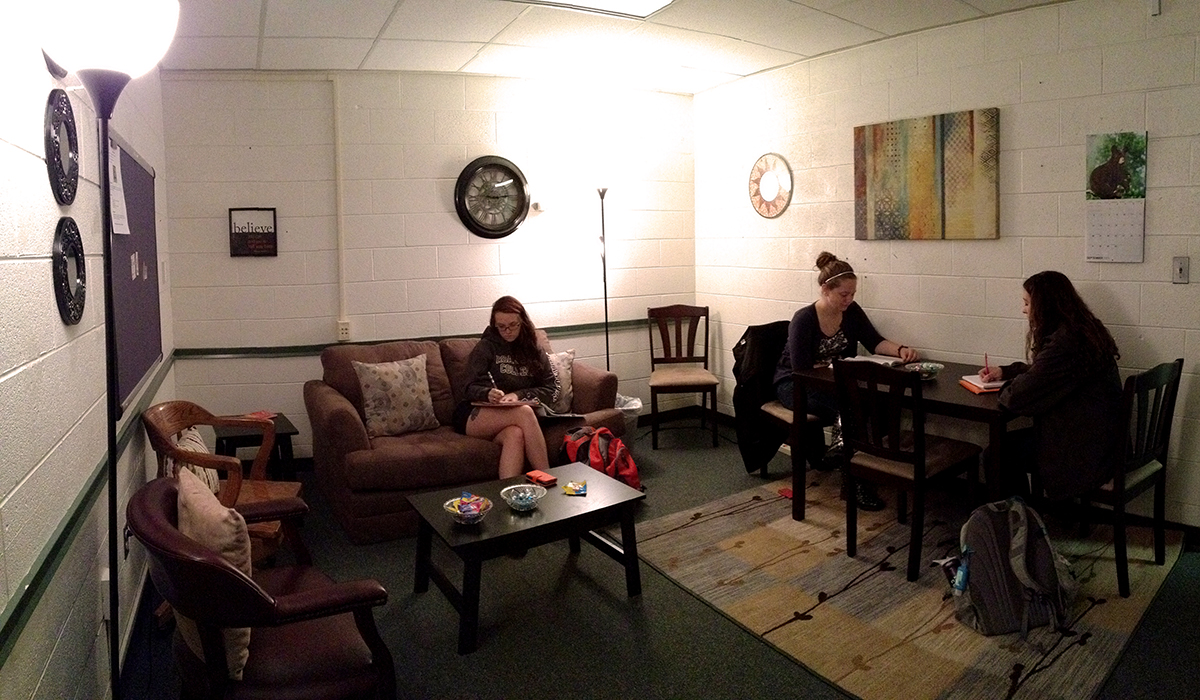
    Some of you may know that we have a student lounge on the fifth floor of Life Science for anyone to hang out and possibly nap on the comfy couches. This semester we’ve been able to open up another room designated more for studying and other quiet activities! It used to be faculty office space, but is now a place for students to use. It is located on the left side of the same hallway the other student lounge is. Come check it out!

    Student Study Center 2

    Get connected!
    Instagram & Twitter:  #PsychRC
    Facebook:  https://www.facebook.com/rcpsychology
    Blog:  https://psych.pages.roanoke.edu/
    Linked In:  https://www.linkedin.com/ (Join RC Psychology group)
    Website:  https://www.roanoke.edu/inside/a-z_index/psychology

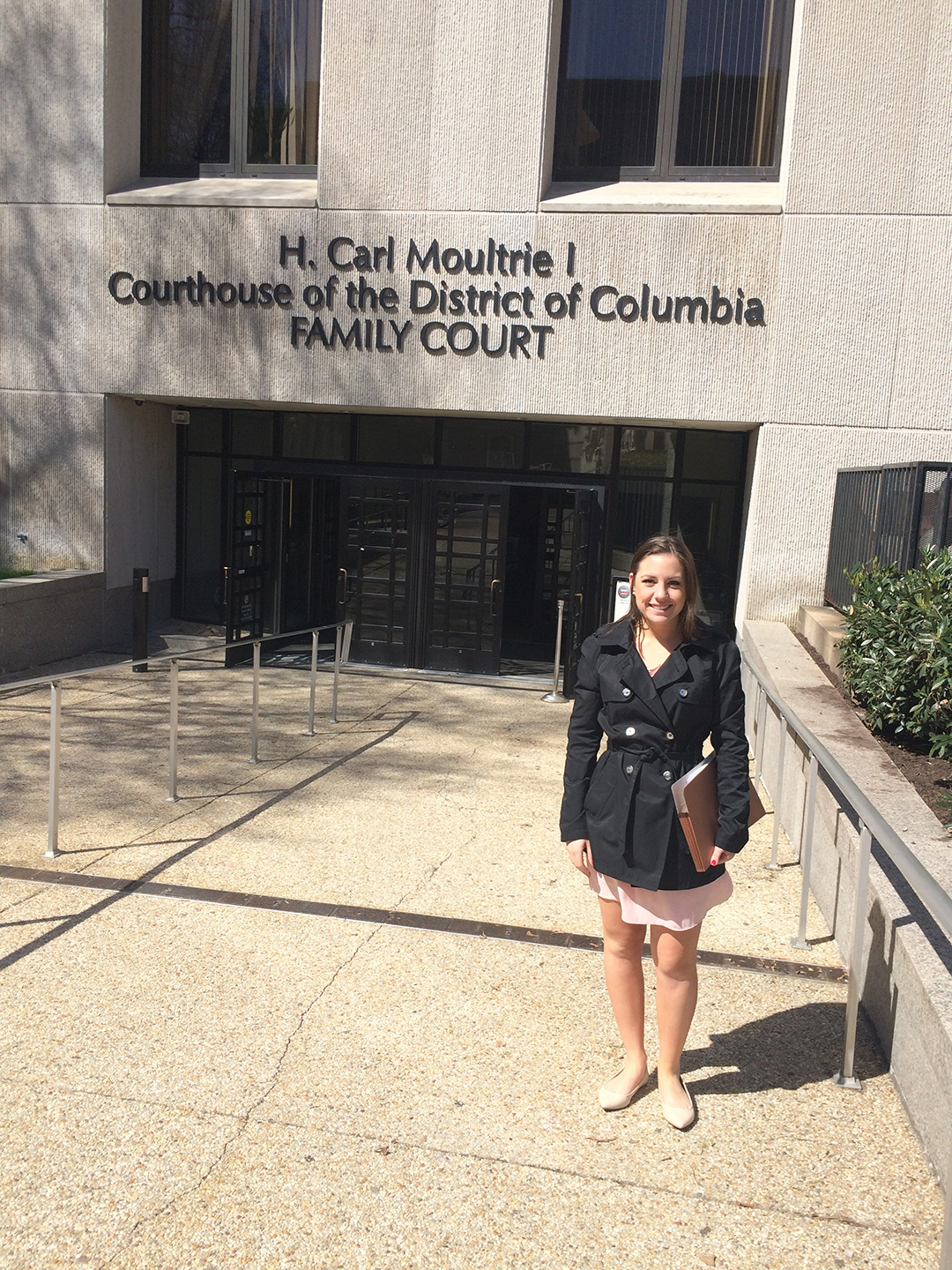
  • Katie Jensen, Attorney General Intern

    Katie Jensen Katie Jensen 2

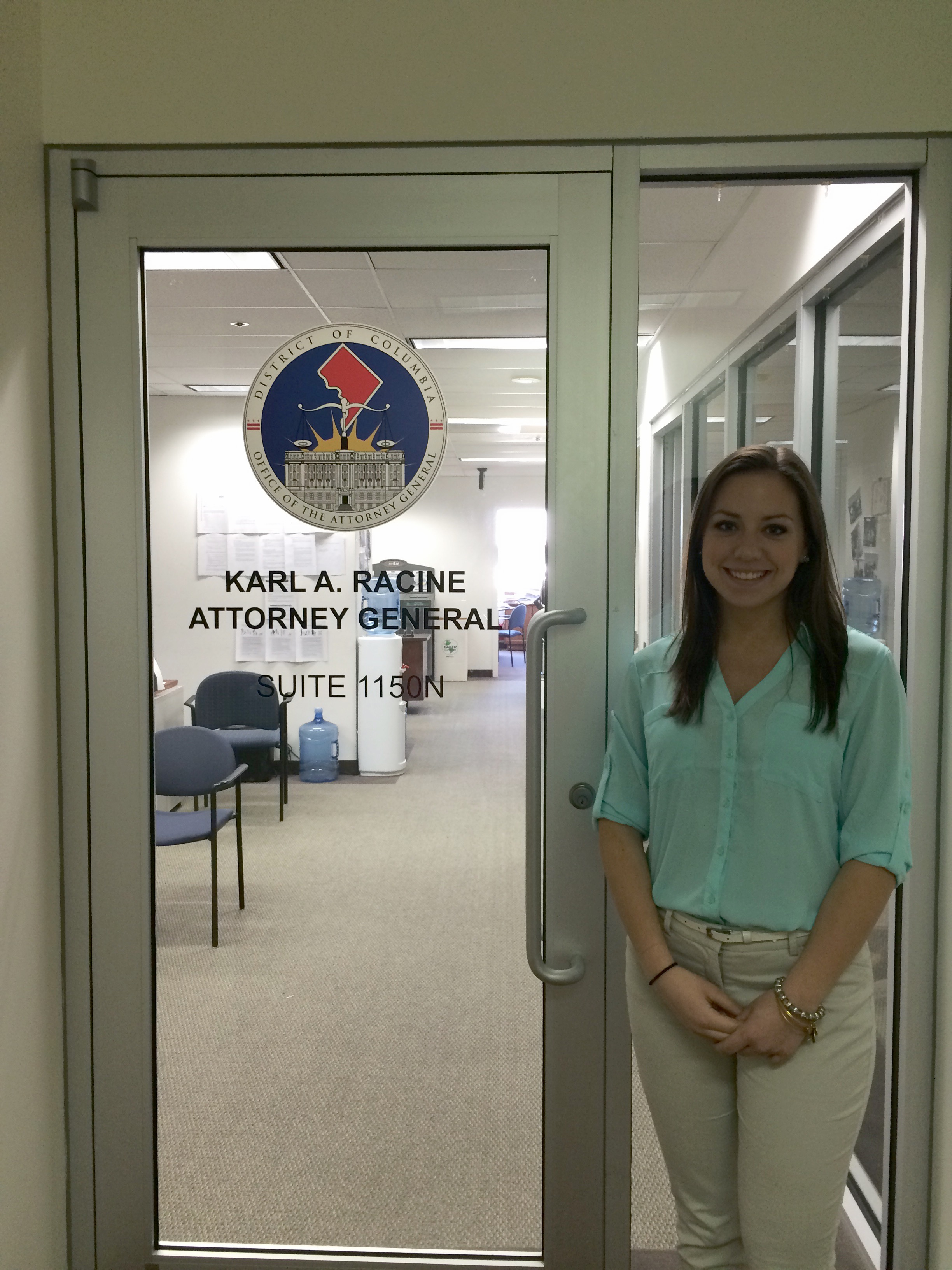
    “During my semester in Washington, DC, I interned at the DC Office of the Attorney General’s Mental Health Section. As a Psychology major with a Legal Studies concentration, this internship has given me valuable experience in a fascinating field of law. The Assistant Attorney Generals that I shadowed work to ensure that people who are likely to injure themselves or others as a result of mental illness legally get the help they need, while protecting the public and the rights of the patient. On a daily basis, I analyzed medical records, filed petitions for emergency hospitalizations, and occasionally attended witness interviews at psychiatric hospitals. I also had the opportunity to go to court and observe probable cause hearings, commission hearings, and jury trials. My internship at DCOAG taught me so much about the legal process and mental healthcare system in Washington, DC, because I got to experience it every day. Living, learning, and interning through the Washington Semester was an amazing experience!”

    Get connected!
    Instagram & Twitter:  #PsychRC
    Facebook:  https://www.facebook.com/rcpsychology
    Blog:  https://psych.pages.roanoke.edu/
    Linked In:  https://www.linkedin.com/ (Join RC Psychology group)
    Website:  https://www.roanoke.edu/inside/a-z_index/psychology

  • DR. NICHOLS’S INQ 277: EXPERIENCING VISION

    277 Sumi Yi 1 277 Sumi Yi 2

    These photos, taken by Sumi Yi, were a part of Dr. Nichol’s INQ 277 May term titled “Exploring Vision Through the Eye of the Lens”.

    This class utilized the digital camera as both a metaphor for the human eye and as a tool to create photographic representations of principles of human vision.  Cameras and the human eye were compared and contrasted in order to better understand both. Mechanisms of human visual perception, such as color vision, depth perception, and motion perception, were discussed in lecture format and then assignments carried out wherein students take purposeful photographs to illuminate the discussion topics.  The idea is that application through photography of principles discussed in relation to human vision, i.e. how we sense and perceive the world, may give us a better understanding of how and why the human vision system works the way it does.  Photographic expeditions were done both around campus and as part of full day trips.

    #PSYCHRC

  • DR. NICHOLS’S INQ 277: EXPERIENCING VISION

    277 Buturla 3 277 Buturla 2277 Buturla

    These photos, taken by Stephanie Buturla, were a part of Dr. Nichols’s INQ 277 May term titled “Exploring Vision Through the Eye of the Lens”.

    This class utilized the digital camera as both a metaphor for the human eye and as a tool to create photographic representations of principles of human vision.  Cameras and the human eye were compared and contrasted in order to better understand both. Mechanisms of human visual perception, such as color vision, depth perception, and motion perception, were discussed in lecture format and then assignments carried out wherein students take purposeful photographs to illuminate the discussion topics.  The idea is that application through photography of principles discussed in relation to human vision, i.e. how we sense and perceive the world, may give us a better understanding of how and why the human vision system works the way it does.  Photographic expeditions were done both around campus and as part of full day trips.

  • DR. NICHOLS’S INQ 277: EXPERIENCING VISION

    277 Ghosn277 Ghosn2277 Ghosn 3

    These photos, taken by Gaby Ghosn, were a part of Dr. Nichols’s INQ 277 May term titled “Exploring Vision Through the Eye of the Lens”.

    This class utilized the digital camera as both a metaphor for the human eye and as a tool to create photographic representations of principles of human vision.  Cameras and the human eye were compared and contrasted in order to better understand both. Mechanisms of human visual perception, such as color vision, depth perception, and motion perception, were discussed in lecture format and then assignments carried out wherein students take purposeful photographs to illuminate the discussion topics.  The idea is that application through photography of principles discussed in relation to human vision, i.e. how we sense and perceive the world, may give us a better understanding of how and why the human vision system works the way it does.  Photographic expeditions were done both around campus and as part of full day trips.

  • SYNAPSE Conference 2015

    image3 image17

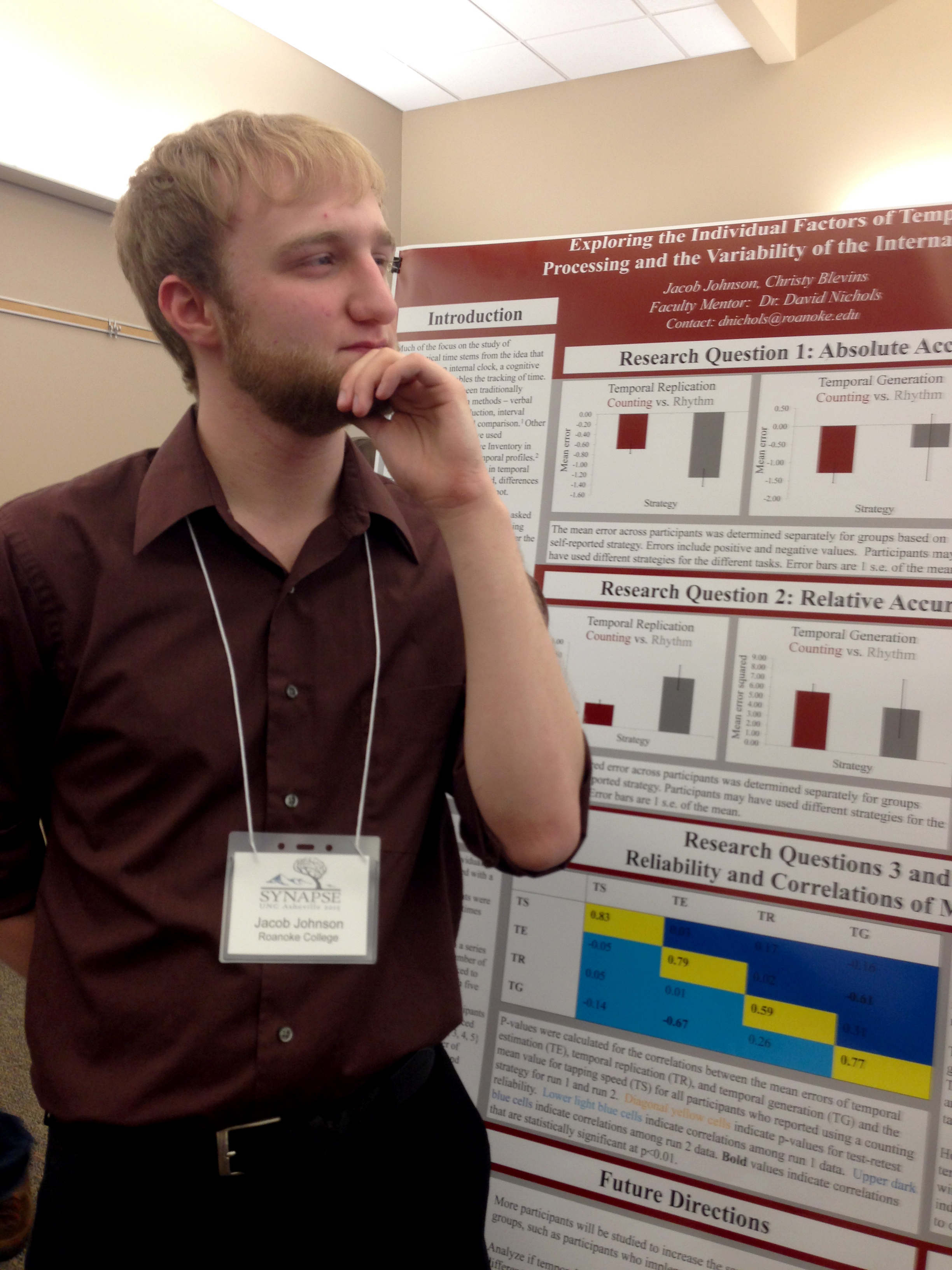
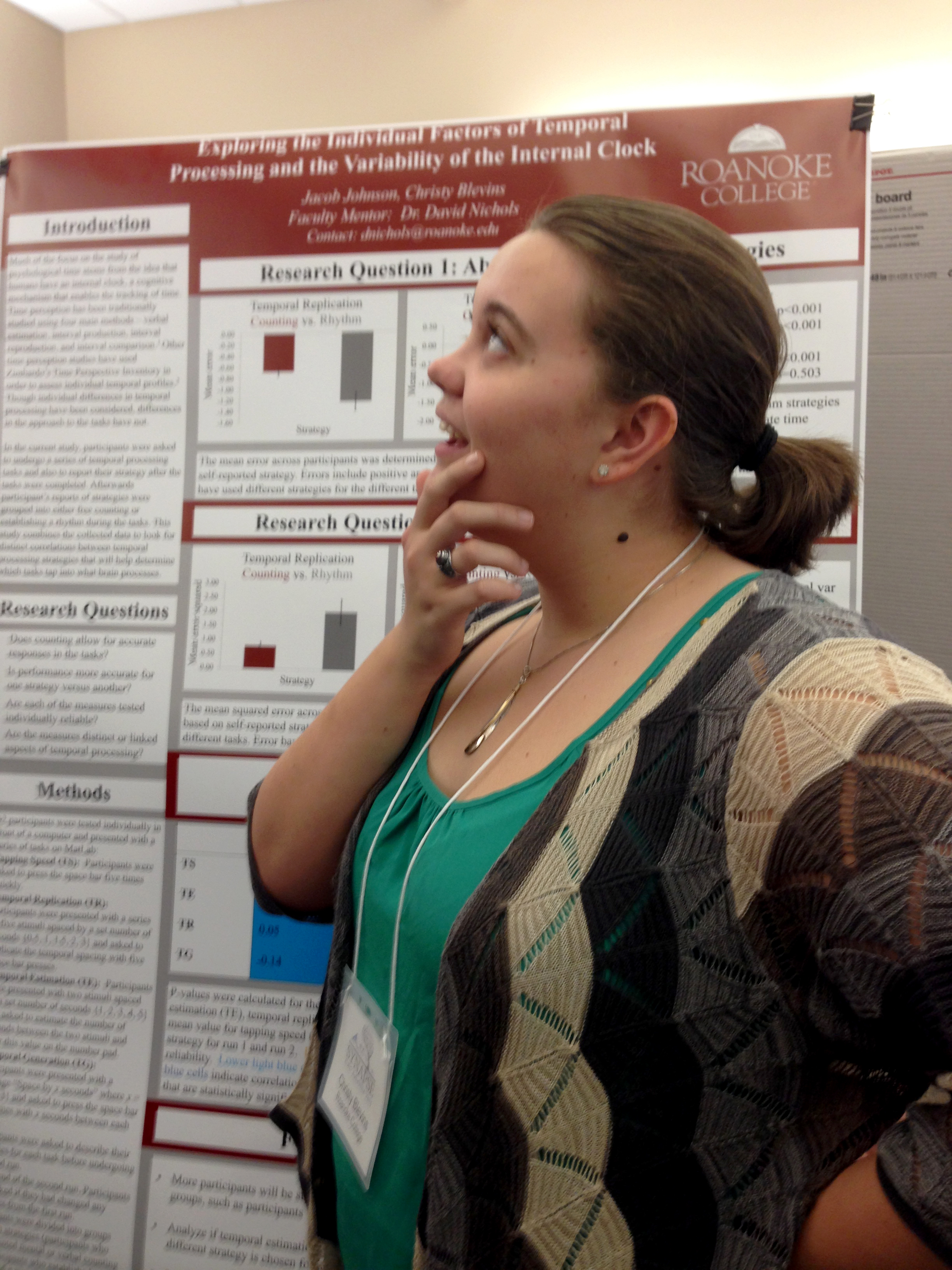
    Dr. Nichols, Dr. Allen, and Dr. Shenal assisted students in neuroscience-based research and a few of those students got to present their findings at the SYNAPSE conference! They went to the University of North Carolina at Asheville and represented Roanoke College.

    Jacob Johnson, Christy Blevins, and Dr. Nichols presented on exploring the individual factors of temporal processing and the variability of the internal clock.

    [Johnson, J., Blevins, B., & Nichols, D.F. (2015, March). Exploring the individual factors of temporal processing and the variability of the internal clock. Poster presented at the SYNAPSE conference, Asheville, NC.]