Remember Pie-a-Prof is today at 5 pm on Sutton Terrace!
Alexander, Maddie McCall, Adora Nguyen, and Ruth Woldu
Blue Ridge Behavioral Health Clinic
Shannon Yard, Alaina Thao Nguyen, and Karla Williams
Sydney Quantock, Kathryn Wicklund, & Griffith Wood
Eesha R. Imam, Shuhang Wu, Kathryn A. Flinchum, Grace E. Page, and Athena Buckthought
Samantha Baldwin, Victoria Blair, Amy Fox, and McKenna Polak
John Anderson, Sarah Waldinger, Alicia Robinson, Sarah Bocook, & Jessica Bowen
Laura S. Sullivan
Amber Durr, Mary Grove, Sydney Patterson-Bradbery, Licia Sheridan, Jeanne Skulstad, & Dr. Mary Camac
Jillian Barnard, Kaitlin Busse, Taylor Kracht, & Hannah Wuerthner
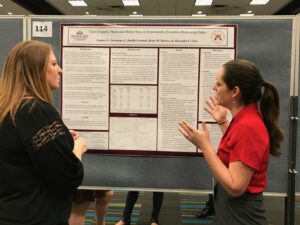
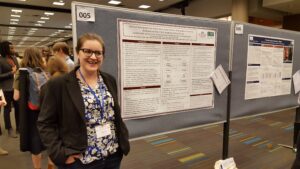
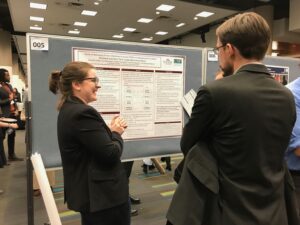
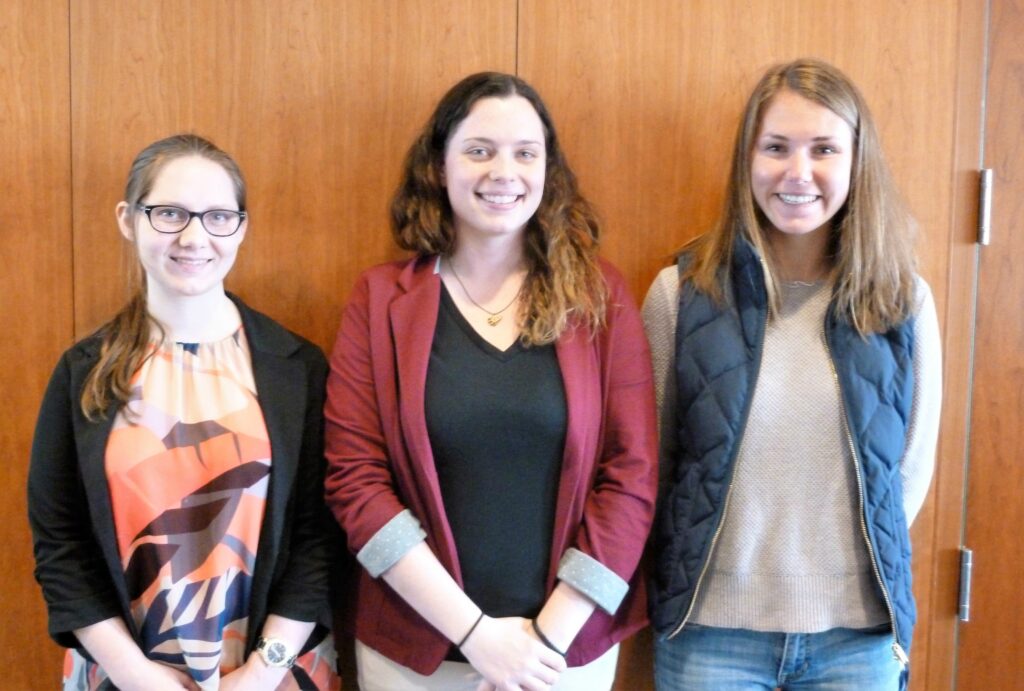
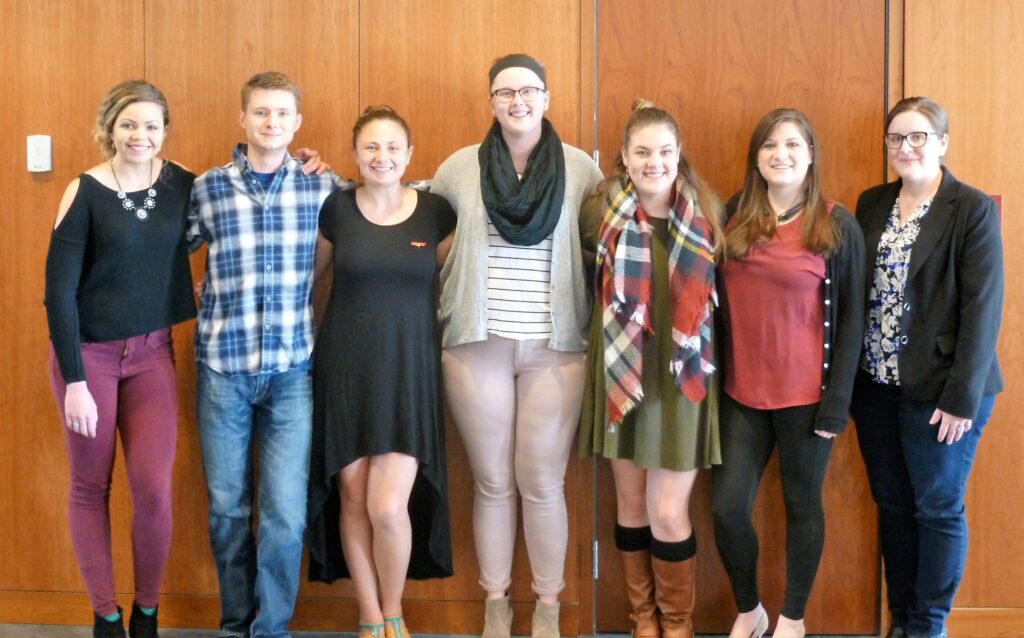
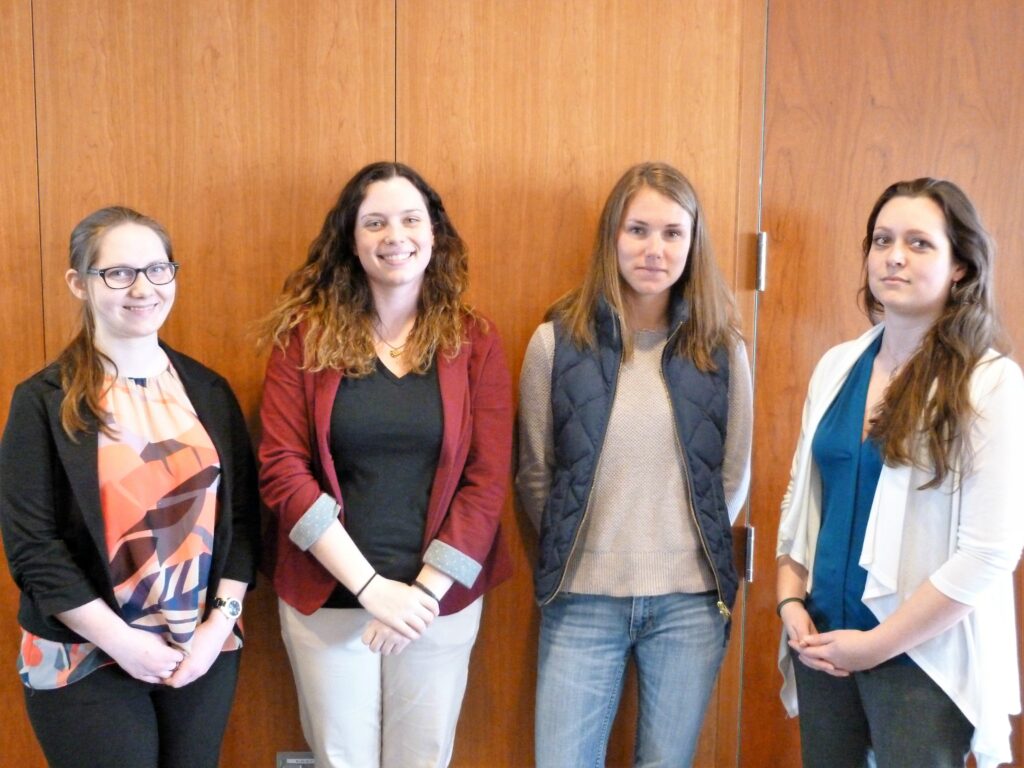
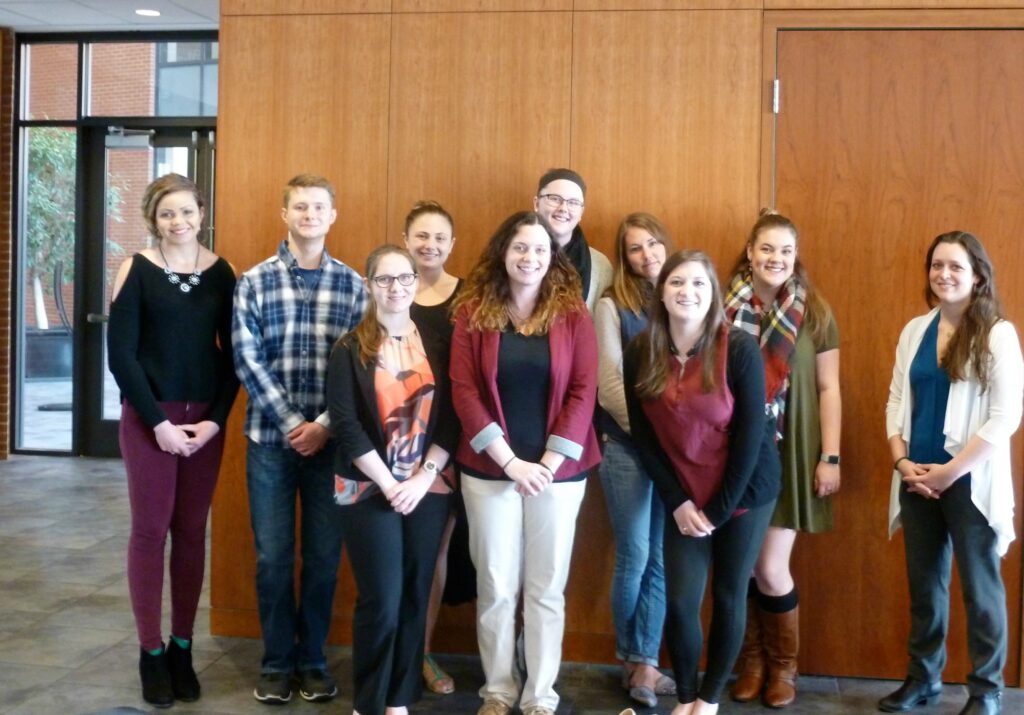
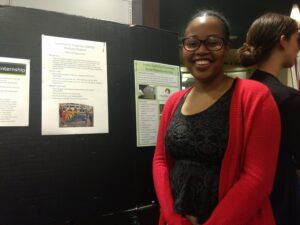
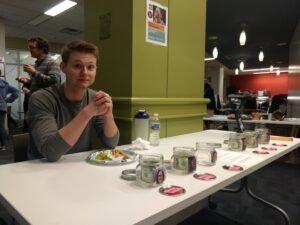
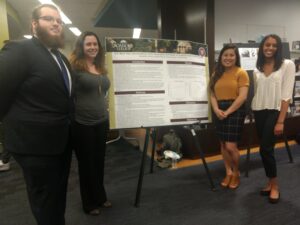
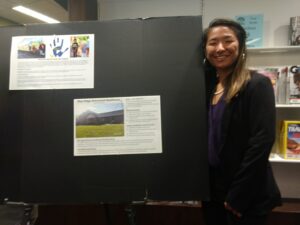
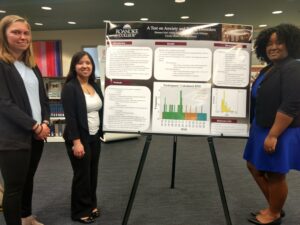
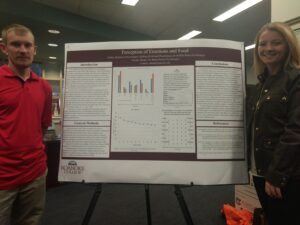
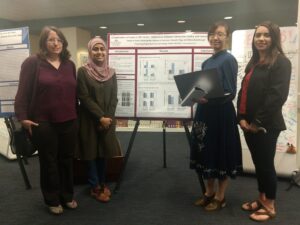
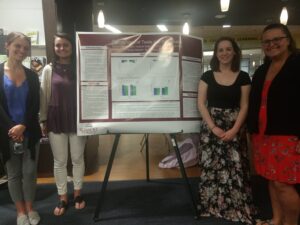
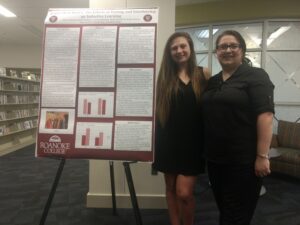
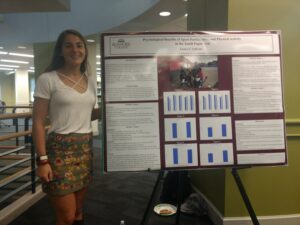
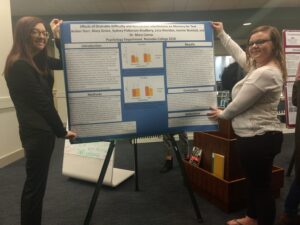
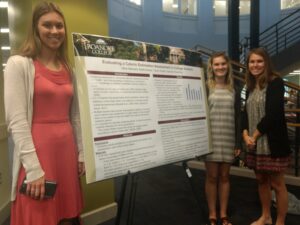
The Psychology Department hosted their research poster session on Thursday, April 19th 2018. Many students presented on their research projects and internships; students were also able to donate to the American Foundation for Suicide Prevention while choosing which professor they’d like to see pied with whipping cream and sprinkles. Great job to everyone who presented and thanks to everyone who came!
Today is the day. The day you get to see your professors pied! From 5pm-6pm at Sutton Terrace RCPA and Psi Chi will make your dreams come true by pieing 6 of our beloved professors for your enjoyment, all while raising money for the American Foundation for Suicide Prevention.
Pieing will occur at 5:30pm, with the opportunity for students to pay $10 to personally pie a professor of their choice. Bring your friends!
So, naturally, the psychology department decided to celebrate Belated April Fools the following day.
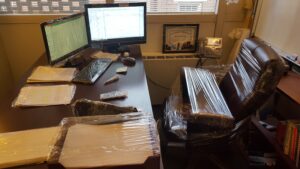
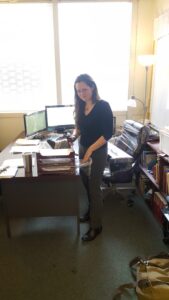
Nothing like showing up to work and finding your office perfectly wrapped.
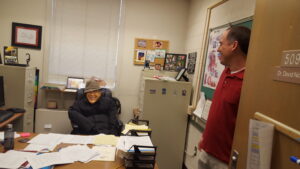
Dr. O admires the wrapping skills.
Surprise!
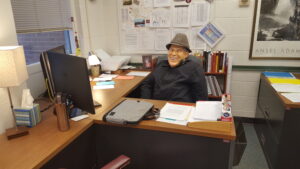
The scarecrow is everywhere.
You cannot escape.
This takes dedication.
What resulted was nothing less than genius.
Part of this included a revenge plot that had been brewing for years.
Dr. O tells her side of the story below:
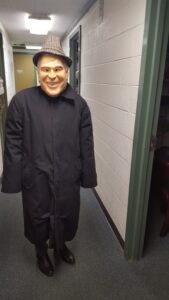
Weeeeeell… It all started many moons ago, in Spring 2014, when Dr. Nichols was on his way to do an optical illusion demonstration in his Research Methods class and got the bright idea to don his George W. Bush mask (a prop in the demonstration), his trench coat, and his fedora (all together, a rather intimidating combination), and slowly peeked around the doorway of my office in an attempt to get me to pee my pants.
It very nearly worked.
After I recovered from my extreme fright, I told Dr. Nichols in no uncertain terms that wearing a mask in public on a non-Halloween day was highly illegal behavior (which we later confirmed), and that I wouldn’t tolerate it in my workplace. I also vowed, privately, to seek revenge upon him at the first opportunity.
Months passed.
Years passed.
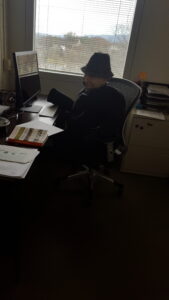
And I bided my time, quietly, patiently. Until one day, in February 2018, I walked into Life Science 502 a few minutes before the start of my Quantitative Methods class and noticed atop the “technology tower” in the corner of the room… The Mask, completely unattended (and very creepily staring at the ceiling with its vacant, soulless eye-sockets). Immediately, I grabbed The Mask and ran back to my office to conceal it until April 1st.
A close-up
Over the intervening weeks, I discussed with esteemed colleagues on what prank I might involve the mask. Many excellent ideas were put forward (e.g., perhaps we could dangle the mask by a string from the ceiling; perhaps one of us could put on the mask and startle Dr. Nichols as he had startled me), but eventually, we landed on the following plan:
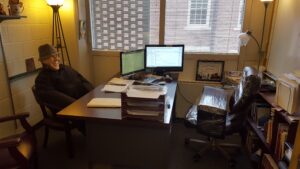
We would construct a lifelike “scarecrow” from garbage bags, recycled paper, and dress the scarecrow in the mask, trench-coat, and fedora (the latter of which Dr. Nichols usually leaves in his office). We would sit the scarecrow in Dr. Nichols’s desk chair, and Dr. Buchholz would construct a complicated pulley system connecting the office door to the desk chair, so that when Dr. Nichols entered his office, the chair would spin around to face him, and hopefully cause Dr. Nichols to shout in alarm.
The plan went off without a hitch, but I found Dr. Nichols’s reaction somewhat underwhelming. So, over the course of that fine Monday, the scarecrow moved around from office-to-office, scaring a number of colleagues (including myself, somehow), and I came up with one final step in the plan.
Dr. O on a mission
Dr. O sits in wait
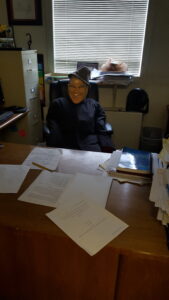
At the end of the day, Dr. Nichols was teaching his Neuroscience lab, and a few minutes before the end of class, I donned the scarecrow’s disguise, and seated myself, perfectly still, in Dr. Nichols’s chair. When Dr. Nichols entered his office, he thought it was just the scarecrow, and was not alarmed until my hands sprang into the air like scary claws and I yelled “RAAAAWR” and Dr. Nichols said “Ah!” and it was my very favorite moment of my entire life.
And that is the story of the mask.
Test One:
Dr. Nichols confirmed the events of that fateful day, telling his side of the story:
The mask is something that I use in PSYC 202 to tell a hopefully amusing story about some silliness my friends and I did in college. However, I scared Dr. Osterman with it in her first year at Roanoke College when I wore it down the hall on my way to class. Since then, I include in class a life lesson that apparently wearing a mask in public outside of Halloween is illegal in many states, including Virginia. Apparently, the last time I used the mask in PSYC 202, I left it in the classroom and Dr. Osterman found it, planning a frightening surprise when the chance arose.
On Monday morning, April 2nd, I came into the office a little bit later than I usually do since my kids were on Spring Break and I didn’t have to get up as early as I normally do. I said ‘hi’ to Dr. Buchholz, who ‘just so happened’ to be out in the hall on my way in. I opened my door and noticed that someone seemed to be sitting in my chair with a hat and trench coat on and remembered thinking something like ‘That’s weird that there is someone sitting in my office chair in the dark. Huh, how about that?’. Then when I opened the door completely, the chair swung around and it looked quite realistic. I started slightly before realizing it was my mask. I was quite impressed by the system of fishing line that was rigged up to get the chair to move that way!
Then, at the end of the day after the dummy had been moved around to the offices of other department faculty, I came back to my office after my afternoon class was over. The day had not gone well at all because of technical difficulties preparing for Neuro lab, so I was feeling exhausted but glad that the lab had gone alright in the end. Dr. Allen was waiting out in the hall and took out her camera to film me entering my office, which seemed suspicious. I remember saying something like ‘I’ve seen it already’ because I expected the dummy to be back in my office, though suspected something else to possibly be going on.
When I entered the office, the dummy sprung to life as it jumped out of my chair! I started on the inside but didn’t have too much of a physical reaction, though it was a very good set-up with Dr. Osterman inside a padded suit so that it looked pretty much just like the original dummy, even though someone was now inside it.
I very much appreciated the thought and planning that went into both surprises! It’s great to work in a department that enjoys one another so much. 🙂
Stop by the table outside of Colket or by the box in the hallway of the 5th floor to choose your victim(s) to get pied! The professor with the most money in their jar will get a special pie, with sprinkles.
All proceeds will go to The American Foundation for Suicide Prevention.
The first weekend of spring break, Drs. Buchholz, Osterman, Carter, and Findley-Van Nostrand, in addition to several students, traveled to Atlanta to present their studies at the 2018 Society for Personality and Social Psychology Conference.
The students in attendance included:
Cody is a psychology major and biology minor.
He is also a student assistant and works in Dr. Buchholz’s lab.
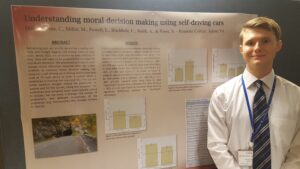
Cody Dillon-Owens ’19, who presented on “Understanding moral decision making using self-driving cars.” This study was supervised by Dr. Buchholz and included several other students, including Megan Miller ’18, Allison Smith, Lauren Powell ’21, and Seth Poore ’20. They found that participants generally thought positively of self-driving cars. Faced with a moral dilemma on who to save during an impending crash, the participants were generally more likely to save themselves and their mothers over anyone else. Participants were also more likely to save “significant” individuals rather than strangers.
To learn more about the study, please contact Dr. Buchholz at buchholz@roanoke.edu.
Nicole Moughrabi ’19 and Lauren Furlow ’19
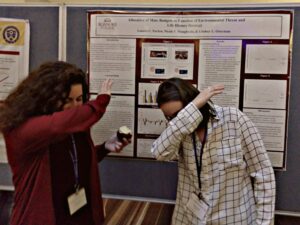
Their dabbing is impeccable.
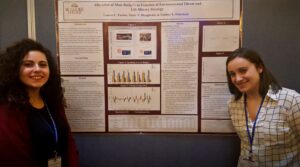
Lauren Furlow ’19 and Nicole Moughrabi ’19 presented on the “Allocation of Mate Budgets as Function of Environmental Threat and Life History Strategy.” From Dr. Osterman’s lab, Furlow and Moughrabi added to further research to the field discussing how “women’s mating psychologies shift as a function of early environment and current environment demands.”
To learn more about this study, email Dr. Osterman at osterman@roanoke.edu.
Sabrina McAllister ’18 presents her findings.
Sabrina McAllister ’18, a member of Dr. Nichols’s lab, discussed the results of her study titled “Time Perspective as a State-Based Measure.” To learn more about her study, follow this link. (If you have any questions, please contact Dr. Nichols at dnichols@roanoke.edu.)
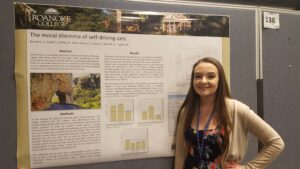
Lauren Powell ’21
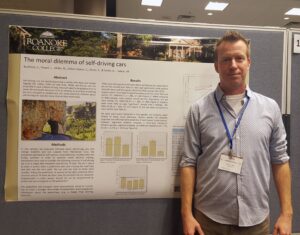
Dr. Buchholz
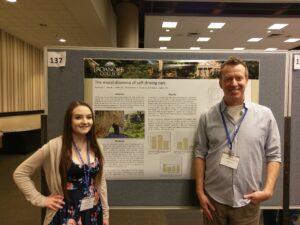
Lauren Powell ’21 and Dr. Buchholz with their poster.
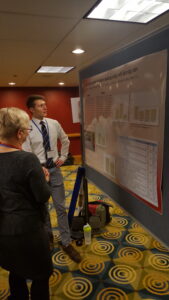
Lauren Powell ’21, also a member of Dr. Buchholz’s lab, discussed the study titled “The moral dilemma of self-driving cars.” As this study was conducted alongside the first discussed study, the same researchers also worked on this inquiry. The main goal in this study was to see how gender and empathy would affect how the participants answered the moral dilemmas. However, the results showed that neither gender nor empathy predicted the answers, but that there was a “three-way interaction between gender, cognitive empathy, and affective resonance.” They also found that men possessed significantly more positive attitudes towards self-driving cars than women.
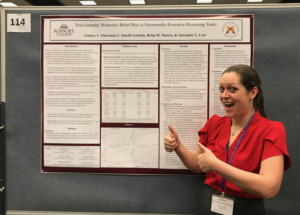
Dr. O giving a “thumbs-up”
Dr. Osterman
In addition, Drs. Osterman and Findley-Van Nostrand also presented their research. Specifically, Dr. O presented findings found in conjunction with Dr. Gornick of the Virginia Military Institute, Mr. Brian Matera, and Mr. Alexander Carr, titled “Trait Empathy Moderates Belief Bias in Emotionally-Evocative Reasoning Tasks.” To learn more, please contact Dr. Osterman at the above mentioned email address.
Dr. Findley-Van Nostrand presents at SPSP 2018
She is otherwise known as Dr. FVN.
Dr. Findley-Van Nostrand’s study was titled: “Sense of Belonging Drives Intentions to Leave STEM in Undergraduate Students: Mediated and Short-Term Longitudinal Association.” She worked alongside Drs. Sophie Kuchynka, Jennifer Bosson, and Richard Pollenz, all from the University of South Florida. If you are curious about the study and want to learn more, Dr. FVN can be contacted at findley@roanoke.edu.
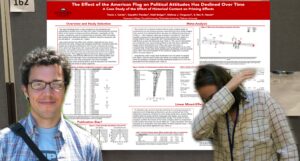
Dr. Carter and Lauren Furlow ’19
Courtesy of Dr. O’s editing skills.
Finally, the day before the official SPSP conference began, Dr. Carter presented his study on “The Effect of the American Flag on Political Attitudes Has Declined Over Time: A Case Study of the Effect of Historical Context on Priming Effects,” at the JDM preconference.
The preconferences are one-day, mini conferences that allow for colleagues to gather to discuss their specific areas of interest. For Dr. Carter, this was to discuss the changes since the first study he and his fellow researchers had conducted in 2011, wherein his research revealed that using the American flag as a primer has become less effective in shifting participants towards more politically conservative attitudes and beliefs. The effect is shown to be roughly zero at present. To learn more, please contact Dr. Carter at tjcarter@roanoke.edu.
(Unfortunately, no pictures were taken of Dr. Carter while he was presenting at the JDM preconference. Instead, Dr. O provided a dramatic reenactment via hard work and editing skills.)
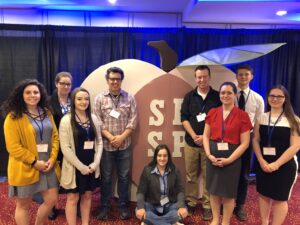
A group photo at SPSP 2018
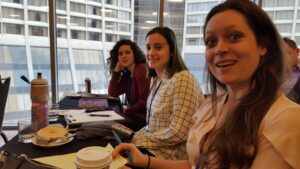
Drinking coffee and working.
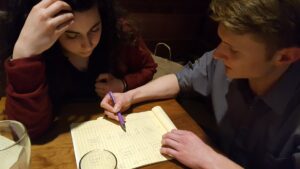
Behind the scenes
Celebrating a successful conference
Dr. Buchholz and Dr. FVN
When asked about the experience, Dr. Osterman said…
We had a fantastic time at SPSP, and all of our student presenters did a wonderful job of talking about their research with other scholars. They represented the college and department exceedingly well.
Cody seconded this, saying:
SPSP went really well! It was a wonderful opportunity to present research to a large body of our peers in psychology, as well as learn about a lot of the exciting new research that’s being conducted in the field. I definitely look forward to attending my next conference!
Congratulations to our students and professors for their successful SPSP conference!
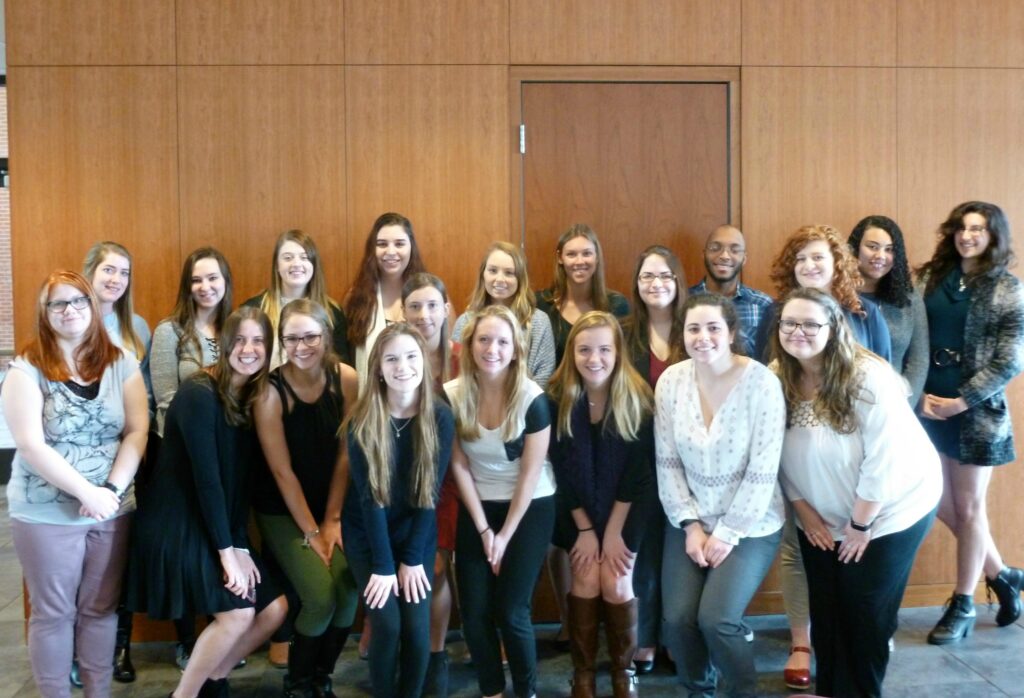
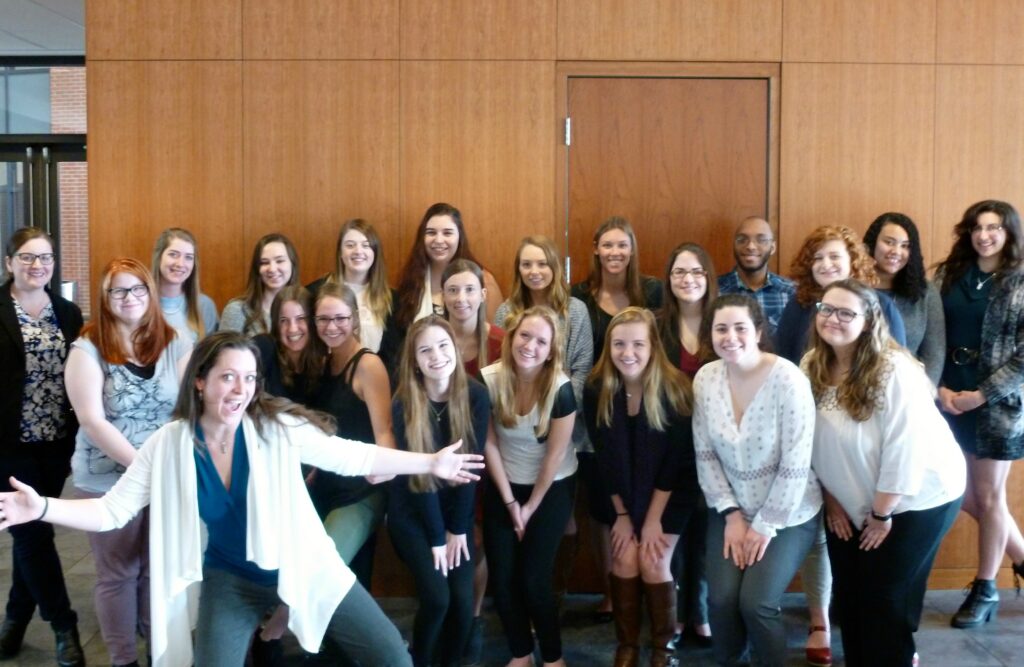
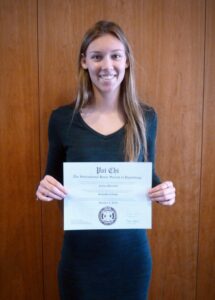
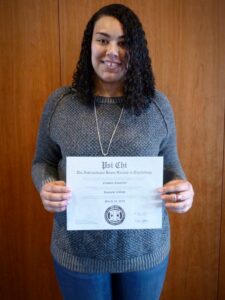
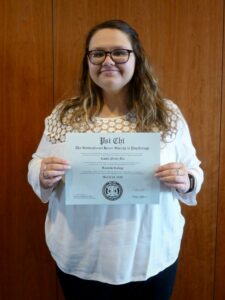
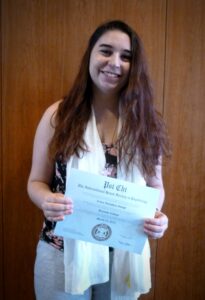
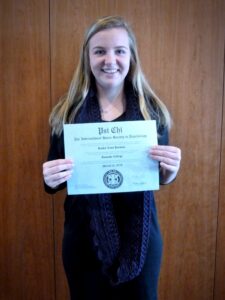
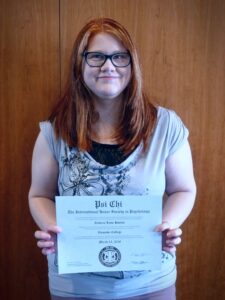
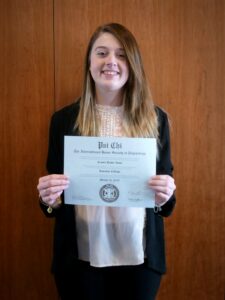
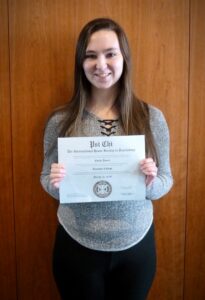
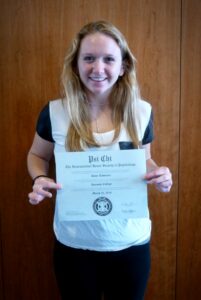
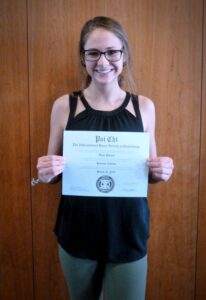
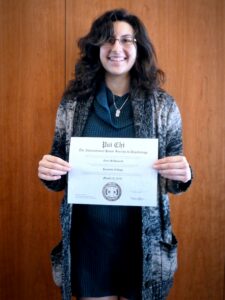
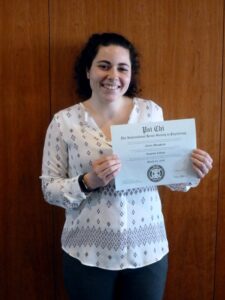
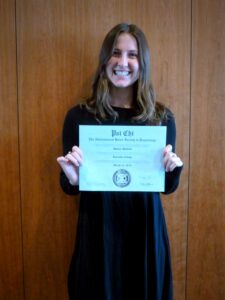
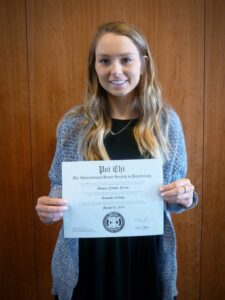
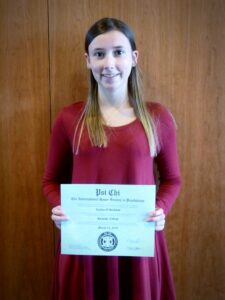
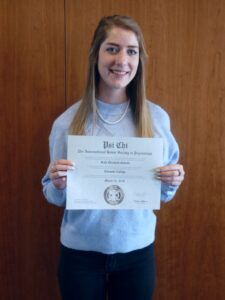
On March 13th, 2018, the psychology department held their Psi Chi Induction Ceremony. Thirty-four students were inducted this semester into Psi Chi, the international honor society for psychology and one of the largest honor societies in the United States.
Following lunch, Dr. Findley-Van Nostrand began the ceremony by making the opening remarks. Students were then given their certificates and the nominations for the new executive board for Psi Chi were held. Dr. Osterman ended the ceremony by leading the recognition of the outgoing and incoming executive boards.
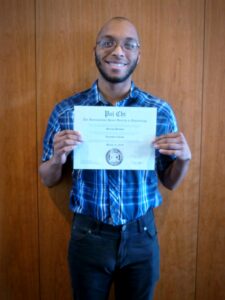
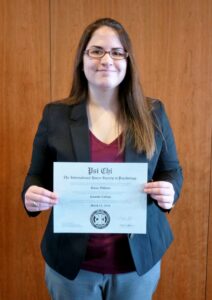
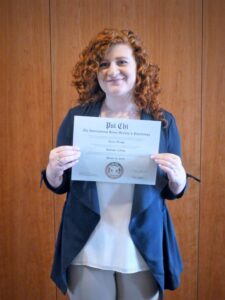
Pictures of the new members of Psi Chi followed the conclusion of the ceremony, including:
Jillian R. Barnard
Cristoni R. Couvrette
Rachel N. Dix
Casey J. Gough
Rachel L. Harmon
Rebecca L. Horton
Crysta D. Isom
Emily L. Jones
Riker F. Lawrence
Alina V. Marino
Erin E. McDonnell
Nicole Y. Moughrabi
Hayley J. Mulford
Monica N. Nixon
Caitlyn R. O’Sullivan
Ruth E. Schultz
Marcus T. Stewart
Bailey H. Wilburn
Emily A. Wright
Students who were not able to attend the ceremony but are new members of Psi Chi are as follows:
Ciprianna O. Azar
Alexander J. Glando
Elizabeth Q. Helminski
Jeanette L. Kurtic
Logan E. Miner
Hannah Pfeffer
Jeanne M. Skulstad
Natalie M. Slemp
Allison L. Smith
Thomas E. Thomas
Kestrel Thorne-Kaunelis
Caroline G. Wagoner
Taylor C. Ward
Griffith E. Wood
Emily A. Wright
In order to be accepted to Psi Chi as an undergraduate student, one must:
be enrolled as a major or minor in a psychology program or a program psychological in nature
have completed at least 3 semesters or equivalent of full-time college coursework
have completed at least 9 semester credit hours or equivalent of psychology courses
have earned a cumulative GPA that is in the top 35% of their class (sophomore, junior, or senior) compared to their classmates across the entire university or the college that houses psychology (minimum GPA of 3.0 on a 4-point scale)3
have a minimum 3.0 GPA average for psychology courses
Some of the benefits include:
International recognition for academic excellence in psychology.
Distinguished members can be found here, including Albert Bandura, B. F. Skinner, and Philip G. Zimbardo.
Over $400,000 are available annually in awards and grants.
Psi Chi’s Career Center
Free access to three publications:
Psi Chi Journal of Psychological Research
Eye on Psi Chi
Psi Chi Digest
For more information, follow this link to the official Psi Chi website.
Congratulations again to our new members of Psi Chi! They’ve worked hard and we look forward to seeing what they will do in the future.
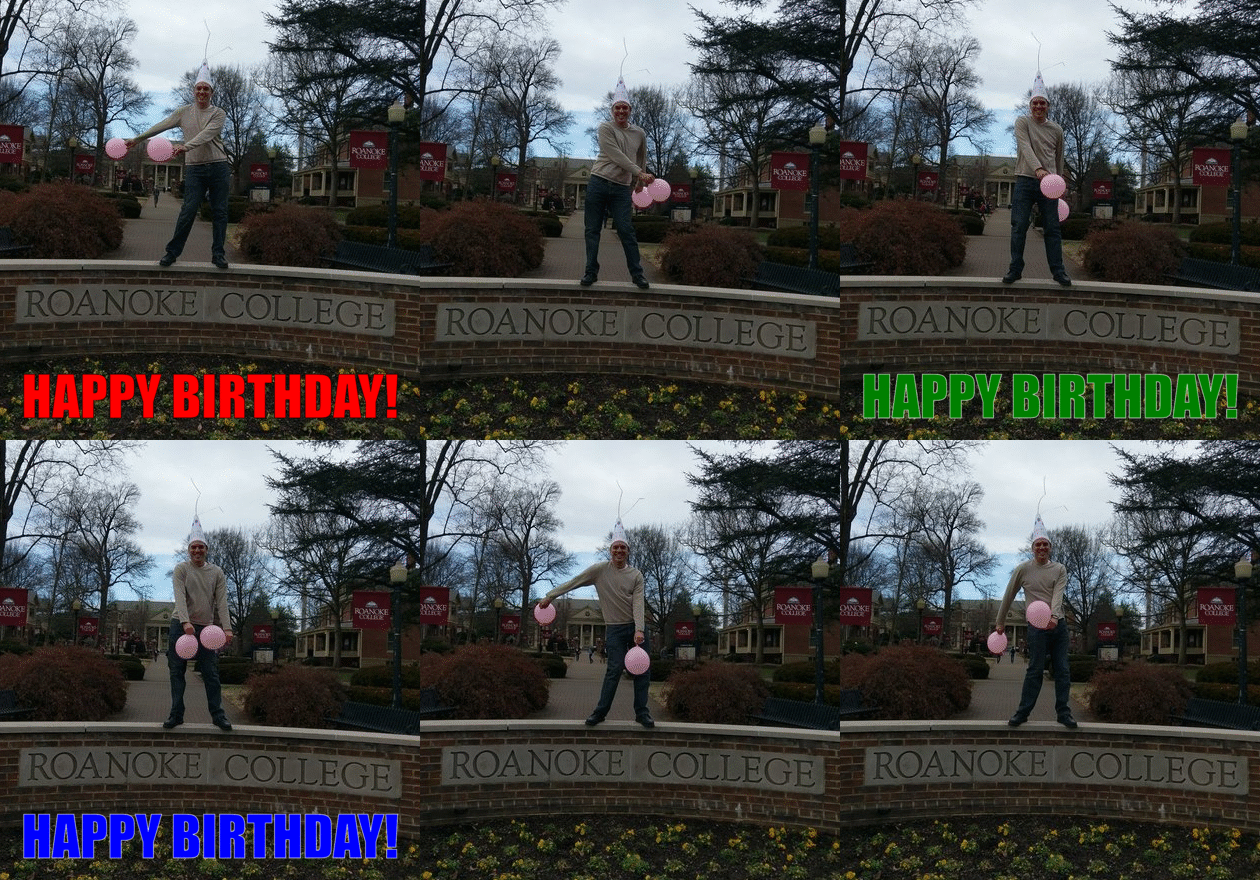
In honor of three very special birthdays, including Dr. FVN and recent alums Stephanie Shields and Nikki Hurless, Dr. Nichols demonstrated how to “floss.”
Naturally, it was made into a GIF.
For a brief period of time, it was also shown on the psychology television near the elevators.
To see the original video that inspired this masterpiece, click here.
Want to get involved with a worthwhile (and fun) program?
Roanoke College’s Psychology Department will be delivering modified toys February 20th-26th made to look like the children they will be going to as part of the Toy Like Me program.
There is a sign-up sheet in the hallway for specific times deliverers are needed. Primary and back-up deliverers are needed, so feel free to sign up for more than one slot if you can!
Furthermore, Construction Day will be on March 15th from 5 pm-8 pm in Patterson if you would like to get experience modifying toys (and service hours).

 Today is the day. The day you get to see your professors pied! From 5pm-6pm at Sutton Terrace RCPA and Psi Chi will make your dreams come true by pieing 6 of our beloved professors for your enjoyment, all while raising money for the American Foundation for Suicide Prevention.