The Psychology Department would like to congratulate Dr. Powell and Dr. Findley-Van Nostrand on getting their manuscripts accepted for publishing this semester!
Dr. Powell has published two articles this semester. The first was in conjunction with Elizabeth Babskie and Aaron Metzger, titled “Variability in Parenting Self-Efficacy Across
Prudential Adolescent Behaviors” and can be found here.
The second article, titled “Prospective Parents’ Knowledge About Parenting and Their Anticipated Child-Rearing Decisions,” has received special promotion by the National Council of Family Relations as one of the five “early view” articles from their journals for October, and was co-written with Dr. Katherine Karraker of West Virginia University.
Dr. Findley-Van Nostrand has also had a manuscript acceptance for her article on “Affective-interpersonal and impulsive-antisocial psychopathy: Links to social goals and forms of aggression in youth and adults”, which is co-authored with Tiina Ojanen, a professor at the University of South Florida, and will be published in the journal Psychology of Violence.
For Dr. FVN’s description of her article and findings, please follow this link.
Again, congratulations to both professors on their recent article acceptances!
Interested in internships? Then join us on Thursday, November 2nd, from 11:45 to 1:00 in Life Science 502 for an information session to learn about the different opportunities available, as well as their requirements and deadlines, and much, much more!
Pizza will be provided, but please bring your own drink.
RSVP by Wednesday, November 1, noon, to 540-375-2462, or to dyer@roanoke.edu
Dr. Findley Van-Nostrand is pictured above. She is a new Psychology professor here at Roanoke College.
A student assistant was recently able to interview Dr. Findley-Van Nostrand amidst the chaos and confusion that is midterms about herself and her research interests, as well as her recent manuscript acceptance in the journal Psychology of Violence.
So, how do you like Roanoke so far? Is it very different from Florida?
It’s great! Definitely different from Tampa. Smaller city, slower pace, cooler weather…all good things for me.
Can you tell me about your academic background?
I did my undergraduate degree at the University of South Florida. I also remained there, for a variety of reasons, for my Ph.D. (and Masters along the way). Towards the end of my doctorate, I broadened my interests some and was involved in a couple of projects outside of the Psychology department that involved applying psychology to the problem of STEM (Science, Technology, Engineering, and Math) student persistence. These projects ended up leading to an offer to remain as a postdoctoral researcher after wrapping up my dissertation. So, after my postdoc, here I am!
What classes are you teaching right now and what types of courses will you be teaching in the future?
Right now I am teaching PSCY221- Developmental Psychology, and PSYC321- Child Development. In the near(ish) future I will teach these, as well as Intro to Psychology, Adolescent Development, and a Research Seminar in Developmental Psychology.
What are some of your past and current research experiences and interests?
My research interests are related but twofold. In my primary research, I am interested in peer relationships and social behaviors during adolescence and early adulthood. In this line, I have
focused on aggression among peers, underlying motivational factors, and the ways in which aggression is tied to social status among peers. I also have continuing research aimed at understanding the role of the self in aggression and prosociality, and my studies in these area are driven by both developmental and social psychology literatures and studies. In my second line of research, I’m also interested in understanding how social experiences, like felt belonging, as well as self-concepts and motivation may drive interest and persistence in STEM disciplines. Much of the research in this area is also related to academic persistence and achievement more broadly, but has some specific nuances related to the STEM context.
I recently heard that you have been approved to publish an article in a journal, can you tell me more about that?
Sure! The paper will be published in the journal Psychology of Violence, and includes two studies (one in early adolescence, and one in young adulthood) examining two forms of psychopathy, social goals, and forms of aggression. In previous research, we’ve demonstrated that social goals for status predict heightened aggression (especially relational aggression) over time in adolescents, and social goals for closeness and affiliation are related to lower levels of aggression. In a separate line of research, psychopathy and callous-unemotional traits are consistently tied to high aggression. In our study, we demonstrated differences in relationships between psychopathy and social goals based on form of psychopathy (one form entailing interpersonal manipulation was related to social goals, whereas the other form entailing behavioral impulsivity was not), and that social goals mediated the links between psychopathy and aggression in both age groups. So, within the context of psychopathy as a risk factor, targeting social goals may help in aggression-related interventions.
What are some random/cool facts about you?
First, my husband and I have an 1 ½ year old son, who keeps us busy and I’m forever in awe of. Second, I am a huge Formula 1 racing fan! We have a lot of awkward hours in our house where we will wake up to watch the European races live. It’s a much more complex sport than you might think, and the psychology of the drivers, their competitiveness, decision making, team dynamics, etc. is really fascinating.
Is there anything else that you’d like to mention?
Everyone here has been super welcoming. So thanks!
Congratulations Dr. FVN for your recent manuscript acceptance and thank you for taking time to answer our questions!
Don’t be like this cat, even though it is tempting. Instead, read this article to get a better understanding of how to get the most out of class so you can afford to nap while others stress. Image found: https://www.quickmeme.com/meme/3rs5sq
As this is the beginning of the first official week of Hell (in other words, midterms; the second official week of Hell being finals), we thought sharing some tips on how to survive would be helpful.
In Part I there were tips about starting the semester off to a good start and what to do in preparation for classes. In Part II, we will cover what cognitive research and educators* recommend for learning in class during and after, and, most importantly, how to study for those exams you’re dreading.
Before we begin, here’s a picture of a bunny:
https://www.fantasticviewpoint.com/cute-animals/
During Lecture
Do Not Skip (Unless You Absolutely Have To)
Simply put, you won’t learn if you don’t go.
Even if the lecture is essentially a review of the material you already read, just showing up and hearing the material again will allow the information to more easily become part of your long-term memory.
Furthermore, teachers will often explain the material in different ways, so if the way the book describes a concept does not make sense, the teacher’s description may help clarify what you did not understand. Teachers also tend to add additional information that they believe is relevant to the class that is not included in the book but most likely will be on the test.
Take Notes By Hand
There are exceptions to this as students become more accustomed to taking notes with a laptop than with a pen and paper. Even so, the use of a laptop could distract both you and your neighbors as the temptation to look on social media and the internet is tempting, so be careful in how you use your laptop and where you sit. The authors of the study suggest turning off your WiFi so the internet and social media will be less tempting.
The reasons behind the insistence on using the traditional method of taking notes is related to the lower levels of information processing generated when using a laptop. Students take notes with their computer mindlessly, while those who use a pen/pencil and paper must process the information and convert it into something that is not word-for-word, but will make sense to them in the future.
In other words, those who write on a piece of paper know that they cannot copy everything down and therefore have to pick and choose what is the most important information to write down in a concise manner. This method of note-taking therefore leads to greater comprehension of the material.
Your wish is my command, Chem. Cat! https://www.quickmeme.com/meme/35y19r
Obtain Slides Before Class
That way, you will not have to write everything down that your professor talks about, but can add to the information already shown. You can pay more attention to what the professor is saying instead of madly trying to copy everything down before they go to the next slide.
After Class
https://giphy.com/search/fleeing
Most students leave immediately and focus on whatever they have to do next, but the authors of the article recommend going back over notes from your lectures later on in the day. By doing so, you can fill in whatever information you remember but did not get a chance to write down, as well as to find where you need more information on a topic.
In addition, write down whatever questions arise from your studying and try to answer them yourself before turning to your book. The authors say just spending fifteen minutes looking over your notes can help you better understand and remember what you learned that day.
By studying this way, you don’t have to re-learn everything the night before the test but can instead simply review the easier concepts and focus more on what you really struggled with.
Preparing for Tests
Advice for this section is essentially what has already been discussed. Research shows that students tend to study at the last minute by looking over notes and rereading material paying close attention to highlights, but that these methods do not work as well as one might hope. Instead, the authors recommend studying over a length of time and using active studying techniques (Putnam et al., p. 656).
Space-Out Studying
The author of this article has no clue what is going on in this gif, but she finds it mildly amewsing. Found on: https://catswithfoodinspace.tumblr.com/
Don’t cram everything at the last minute, instead, space out your studying over the course of several days. You’re still spending around the same amount of time, but you are learning much more from these study sessions than from one gigantic cramming session the night before (or day of).
Cramming may seem to work in the short-term, but for long-term memory retention, spacing out your studying sessions will drastically help your performances on tests.
The authors also make note of how rereading should be for when you are confused about a topic after quizzing yourself, not when you want to remember something. If you want to remember something, quizzing will help much more than simply reading over what you’ve already read before.
Reasons of Quizzing
This emphasis on quizzing yourself is based on a learning tool called “retrieval practice.” By quizzing yourself, the authors point out, you are literally doing what you are going to have to do for the test: retrieving information from memory.
The authors provide a few more ways to improve results from study sessions. Besides the read-recite-review method and other methods discussed in part I, the authors also recommend the use of flashcards. Use memory retrieval and do not look at the answer side when trying to answer the question; in addition, make sure you keep using the card until you have gotten the answer right at least three-to-four times. Finally, don’t just define the term, but try explaining the term to a friend; this method also helps retention.
Some Other Tips
The authors provide a helpful link towards balancing studying and retrieval practicing through suggesting looking up something called successive relearning (Putnam et al., p. 656).
Continuing on, if there are a lot of terms you need to memorize, using mnemonic techniques can be useful. Mnemonics are probably familiar to you; teachers use them often, such as when you are learning the order of operations in math. Teachers will probably use “PEMDAS” to help you remember, with each letter corresponding to something else: Please (parenthesis), Excuse (exponent), My (multiplication), Dear (division), Aunt (addition), Sally (subtraction). You can use mnemonics to help you in college as well, either through this particular way or through loci, which are mental associations formed with objects or buildings familiar to us in order to help us remember harder things.
The Final Exam
By following the suggestions above and in part I, the Final Exam will not seem quite as daunting as before and you might even be able to get a good nights rest. Be sure to start studying well ahead of time and test yourself on what you recall, reviewing what you cannot and making sure that everything you do remember is correct.
Final Tips
Put studying at the top of your priority list (you and/or your parents are paying a fortune for you to learn), but also remember to have fun with your friends and reward yourself for what you have accomplished so far. Exercising can be a great method of stress relief, as well as getting a regular amount of sleep.
In the end, it’s easy to get caught up in the multitude of activities and assignments we involve ourselves in, but be sure to just take a few minutes for yourself to just… breath.
Everything will be okay.
*The information discussed in Part I and Part II is taken from a study conducted by Dr. Adam L. Putnam of the Department of Psychology in Carleton College and Victor W. Sungkhasettee and
Henry L. Roediger, III of the Psychological & Brain Sciences Department of the Washington University in St. Louis. Their study, published in 2016, is titled “Optimizing Learning in College:
Tips From Cognitive Psychology” and can be found here.
Is this you? Then you should read this post. Found through the all-knowing Google search: https://www.quickmeme.com/meme/3rs2li
It happens a lot, that dreaded “study-a-day-before-the-test” deal that causes lots of stress and results in multiple brews of coffee.
There might be highlighting.
There will definitely be crying.
Office hours might be a thing and there will probably be some frantic texts and emails sent to both professors and friends, swearing that this will “never happen again” and “when did we even learn this?”
Even so, you study on and you pray that everything will be okay. You stay up all night studying, maybe getting a few hours of sleep if you’re lucky. You promise yourself that next time, you’ll do better.
If this is something you have experienced, then the information provided in a recent study* published through the Association for Psychological Science will help immensely.
In the study, the authors attempt to provide tips both from research in cognitive psychology, as well as through their own experience as educators. They provide advice for studying before classes, during, and after, as well as a lot of tips for preparing for tests.
In this part, we will discuss methods of studying and preparing before classes. In part II, we will discuss methods of better learning during and after class and in preparation for exams. Finally, parts I and II will both include memes simply for pure entertainment.
Besides the usual “don’t study at the last minute” that a lot of people know about and yet still happens because, well, life happens, there are also a number of other things that contribute to learning effectively.
https://askstudents.edublogs.org/tag/exams/
Rereading textbooks and notes, generally only focusing on the highlighted words, does not work as well as we think it does. For short-term, those tricks might work, but in the long-term, studies have suggested that these methods consume a lot of time without much real output (e.g., Dunlosky, Rawson, Marsh, Nathan, & Willingham, 2013).
Basically? You might be okay on the midterm, but for long-term memory retention, specifically regarding that cumulative final you’re dreading, this method of studying probably won’t work as well as you might hope.
So what should you do according to Putnam, Sungkhasettee, and Roediger III?
Starting the Semester
Most of this is common sense, but try to minimize the late-nights spent studying by getting organized early in the semester so that you can minimize later stress when weeks like midterms come and assignments never seem to end. Starting good habits when stress levels are low can also help immensely during these dark times of never-ending homework.
Organize
Organization is incredibly important to maintaining both sanity and grades, while still somehow managing to get sleep and having a social life. Therefore, going to the first day of classes and carefully reading over the syllabus is key to juggling this impossible balancing act. By reading the syllabus, you will know what is happening in the class and when assignments are due, so you won’t be blind-sided by multiple projects hitting all at once. Putting your assignments all into a calendar, an excel spreadsheet, or on your phone and making a habit of checking a month ahead every week can help to maintain a good overview of your classes. This can also help you to know when you need to start studying, like when multiple projects are due on the same day.
The authors also recommend setting calendar reminders a week prior to exams, projects, or recurring assignments and quizzes so nothing gets forgotten (Putnam et al., 2016).
Buy the Books
In order to succeed in the class, you need to have the books. Buying textbooks can be incredibly expensive, but be careful of used textbooks, especially if they have highlighting because the previous owner(s) may not have recognized the crucial parts of the text.
Do Not Attempt Multitasking
Multitasking is bad.
It does not work.
Repeatedly switching attention from one task to another can make learning less effective (e.g., Anderson & Fuller, 2010; Craik, Govoni, Naveh-Benjamin, & Anderson, 1996). Any kind of multitasking, in fact, from having a Facebook tab open to listening to music can impair your ability to learn even if you don’t think it bothers you (as qt. Willingham 2010a). Try to make a habit of turning off your media while studying at a quiet place (meaning, unfortunately, Mill Mountain does not count).
Preparing for Class
Sometimes it’s hard to get all of the assigned reading done before class, but by doing so in an effective manner, you will get more out of the class. Don’t try to read as quickly as possible, even if you feel like you’re getting piled down with homework. As the authors point out, comprehension takes time and while reading quickly may get you through the text, you likely won’t be retaining the information you read (Rayner, Schotter, Masson, Potter, & Treiman, 2016). Try to make sure you understand the material before moving on to the next thing; reading is pointless if you don’t remember what you read.
In addition, while highlighting and underlining are popular, studies show that they do not really contribute towards recall later on (Dunlosky et al., 2013). Instead, try these tips:
Answer the Comprehension Questions Prior to Reading
While seemingly counter-intuitive, attempting to answer the questions before reading the chapter can help activate what prior knowledge you do have on the topic and make it easier to connect with the new material. Research also shows that by doing so, you will better be able to remember the material as well (e.g., Pressley, Tanenbaum, McDaniel, & Wood, 1990; Richard et al., 2009).
Ask Yourself Questions While Reading
By actively asking questions about the material you are reading, you will have better comprehension regarding what you read as well as for the future when you make study guides. Potential questions could include defining the topics you are learning about as well as asking yourself “Why is this true?” or “What parts of this page are new to me?” (Putnam et. al., 2016; R. Wong, Lawson, & Keeves, 2002).
Instead of highlighting or simply reading, read the assigned chapter and then try to recall the major points of the chapter. After that, go back through the chapter and focus on what you missed. This way of studying may take more time, but in the long run, it’s more effective in remembering the material than simply reading or highlighting.
So, what sort of things should you do while in class and what are the best methods of studying for tests (like, say, impending midterms)? Continue on to part II to see what cognitive psychologists and educators recommend doing in order to survive college!
*The study, titled “Optimizing Learning in College: Tips From Cognitive Psychology” was put together by Adam L. Putnam, from the Department of Psychology, Carleton College and, Victor W. Sungkhasettee and Henry L. Roediger III from the Psychological & Brain Sciences Department, Washington University in St. Louis. The link can be found here.
Sabrina McAlister ’18, pictured above, showcases her findings at the 2017 Research Showcase in Fintel Library on 9/22/2017
Sabrina McAlister, a senior at Roanoke College who was previously featured on our site and recently interviewed by our college’s research blog, presents her findings on time perception at the Research Showcase in Fintel Library on September 22, 2017. (The link to the interview by Marcus Stewart can be found at the bottom of the page.)
Megan Miller ’18, another senior psychology student, presented her findings on moral decision making through focusing on self-driving cars. Her project included the results from her survey on SONA, in which students were asked various questions regarding their views on self-driving cars and whether or not they believed these cars were an ethical means to reduce car-related fatalities.
The showcase, featuring research projects from all academic disciplines, kicks off the beginning of the Family Weekend for Roanoke College students and their families.
We’re proud of our psychology students for presenting their intriguing and well-researched projects and we look forward to what more findings will be discovered!
For more information regarding McAlister’s project on time perception, please follow the link below:
The Eastern Psychological Association is being held in Philadelphia on March 1 – 3, 2018. Please consider submitting a poster proposal. Students should talk to their research advisors/mentors or research seminar professors if they have an idea for a submission. Submission guidelines and the FAQ page can be found here and here respectively.
The early and encouraged deadline for undergraduates is November 15, 2017, with the last possible chance to submit a proposal on December 1, 2017. Spots are very limited so please submit any proposals as early as possible.
There is a one-time only due of $30 for students, due by February 20, 2018. To pay, please go to easternpsychological.org, click on “Join EPA,” then “Members Only,” and finally “Associate Proposals” to submit your proposal. Dues will take 48 hours to process.
The EPA is also “going green” this year as it will once again use a free app, which contains the entire program. To obtain a hardcopy of the program, a $5 charge is put in place.
Rooms can be reserved at the EPA group rate of $212 (plus taxes) until February 6, 2018 by following the link: https://aws.passkey.com/go/EPA2018. Reservations can be made also by calling the hotel (1-877-901-6632) and requesting the group rate for EPA2018.
Students are strongly are encouraged to consider submitting proposals – this is an awesome opportunity to share what you’ve been working hard on, and a way to network and amp up CV’s and resumes!
In a recent interview with Marcus Stewart for undergraduate research at Roanoke College, Sabrina McAllister ’18 talked about her research project titled “Time Perspective as a State-Based Measure” and gave advice for other prospective Summer Scholars.
For her research as part of the Summer Scholars program, McAllister worked over the summer with her faculty advisor, Dr. David Nichols, a professor of Psychology at Roanoke College whose primary research includes topics in neuroscience, vision perception, and time perception. Together, they examined the structure of the Zimbardo’s Time Perspective Inventory (ZTPI), a questionnaire that determines amounts of focus on past, present, and future, for ways to improve the inventory for more accurate results.
To learn more about what they discovered, as well as the the link for Dr. Nichols’ research lab, follow the links at the bottom of the page.
The Summer Scholar Program awards thirteen applicants from all majors with funding every year for independent study under the supervision of a professor. If all conditions are met, the scholar will receive one unit of credit for independent study, which can be counted towards the Honors project if part of the Honors Program. The program typically coincides with Summer Sessions I and II (June & July), but more time can be given if the student’s project requires it.
The deadline for applying to the Summer Scholar Program is March 15 and decisions are made by April 1st.
Come out to Massengill Auditorium on September 21st to enjoy a Q&A session with graduate students from Virginia Tech. Please RSVP by emailing Dr. Osterman at osterman@roanoke.edu. All are welcome!
Want to gain clinical experience as a doctoral student?
Then read on…
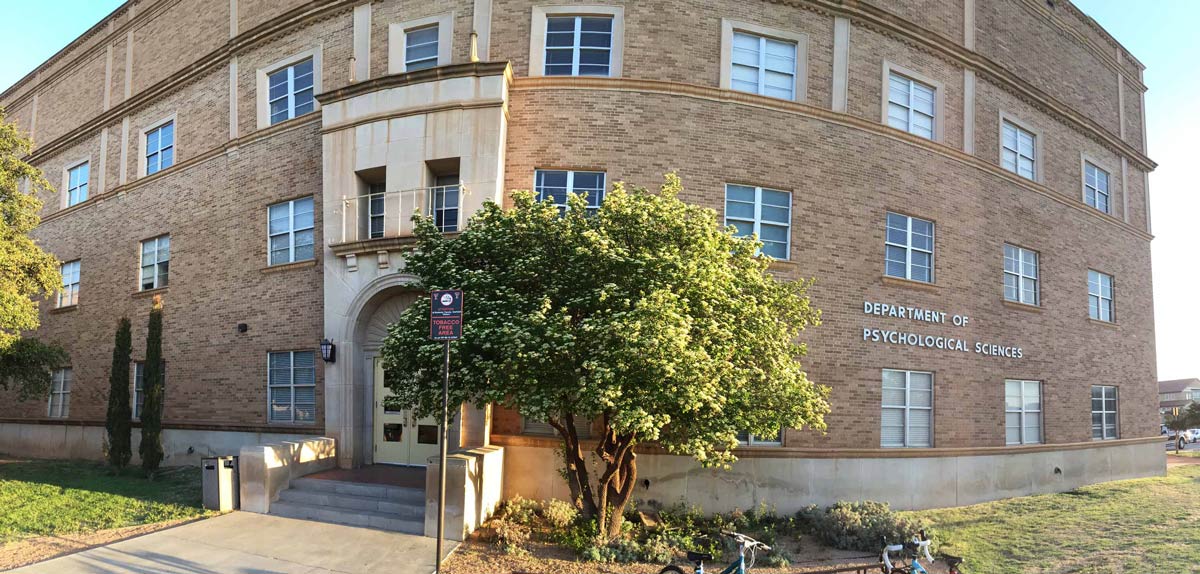
Dr. Adam Schmidt, assistant professor and director of the Pathways to Resilient Youth Development (PRYDe) lab, is looking for up to two students who would qualify in the Fall of 2018 to work as clinical psychology doctoral students.
The PRYDe lab is located in the Department of Psychological Sciences at Texas Tech University (TTU) and conducts research in the areas of neuropsychology, forensic psychology, and child clinical psychology with research grounded in neuroscience and developmental psychopathology. The lab has three broad areas of interest, including:
“The impact of adverse childhood experiences (ACEs).
The impact of resilience promoting factors on brain/cognitive development.
The utility and incremental validity of neuropsychological assessment in forensic and
clinical settings.”
Interested students would need to have “a strong academic/research focus and be open to a psychological clinical science training perspective.” In addition, prospective applicants with “substantial coursework outside of psychology (e.g., neuroscience, cognitive science, computer science, criminal justice/criminology, genetics, chemistry, physics, math/statistics, engineering,etc.) are particularly welcome to apply. ” The lab considers competitive students to be those who are interested in “integrating cognitive neuroscience/neuropsychology techniques with theories of developmental psychopathology and applying this approach to investigations of justice-involved youth or youth at risk for such involvement (e.g., youth with a history of significant trauma exposure).”
The deadline for applications is December 1st, 2017.
Onsite interviews will occur on February 9, 2018
For more information about the PRYDe lab, go to https://www.depts.ttu.edu/psy/pryde/ ; for those interested in the clinical psychology doctoral program at Texas Tech University, the link is: https://www.depts.ttu.edu/psy/clinical. Finally, for more specific questions, contact Dr. Adam T. Schmidt at adam.t.schmidt@ttu.edu.