Image from https://www.illustrationhistory.org/illustrations/summer-psychology-session
Are you still debating what to do over the summer but are interested in research? Roanoke College offers several opportunities to get involved with research this upcoming summer.
Roanoke College Summer Scholars
As the March 15th deadline quickly approaches, we will highlight Roanoke College’s Summer Scholars program. Summer scholars work one-on-one with faculty on a project that will be presented during Family Weekend (late September/early October). On-campus housing is provided and summer scholars will be paid $3000 and earn a summer course credit.
To apply students must have a 3.0 or higher GPA, have completed 8 units by the start of the grant period, and plan to return the following fall. The application consists of a cover sheet, a student application for summer scholars, and a faculty nomination to mentor a summer scholar. These forms and more information about the process can be found on the summer scholars page, here.
Below are some past psychology majors and their summer scholars projects:
2018
Aislinn Foutz. Parental and Peer Factors in Children’s Theory of Mind Development. Major: Psychology. (Faculty Mentor: Danielle Findley-Van Nostrand, Psychology)
Yipeng Wang. Gender Difference of Domestic Abuse and How Honor Culture Would Affect those Differences. Major: Psychology. (Faculty Mentor: Lindsey L. Osterman, Psychology)
2017
Sabrina McAllister. Time Perspective as a State-Based Measure. Major: Psychology. (Faculty mentor: David Nichols, Psychology)
Megan Miller. Self-driving cars as a test of the potentially harmful effects of empathy on moral decision making. Major: Psychology. (Faculty mentor: Chris Buchholz, Psychology).
Summer Research Incentive Program
As part of the Summer Experience Incentive Program, students are provided reduced summer tuition for one unit of internship, research, or independent study credit. To qualify for reduced summer tuition, approval for their project must be received no later than May 15th.
Students have the responsibility of finding a faculty member who is willing to supervise the project. It is recommended that students start working on proposals by Spring Break to give faculty members time to review the plan and give the students time to make revisions and acquire needed signatures.
Projects, required reflections, final paper, and final reflection (3-page minimum) must all be completed and submitted to their faculty supervisor by September 30th. Students in the program are also required to participate in a showcasing event.
A more in-depth description of the program, as well as the applications for the program, can be found on the Summer Research Incentive Program page, here.
Salem VA Medical Center and Roanoke College Undergraduate Research Experience
Please note that the program is currently on hold during the COVID-19 pandemic but those interested should email the director of undergrad research at research@roanoke.edu to get on the mailing list for when applications become open.
This collaboration with the Salem VA Medical center allows Roanoke College undergraduates to work in research with a Principal Investigator (PI) on current medical research and present it. Research has included topics such as “Predictors of Treatment Response Among Veterans with PTSD”, “Mental Health in Rural Veterans with and without Traumatic Brain Injury”, and “Effect of Exercise Training on Inflammation and Function in HIV Infected Veterans”.
It is recommended interested students meet with the Director of Undergraduate in the fall semester or early in the spring semester to discuss the program. To apply, students must submit a cover letter (with research interests), a curriculum vitae, an unofficial transcript, and two letters of recommendation to the Director of Undergraduate Research by the deadline.
More information about expectations and other important information can be found here.
On February 9-13, eight students attended the Society for Personality and Social Psychology (SPSP) Conference virtually, to present research through poster sessions and to attend presentations. The students included Sophie Bacon ’20, Carolynn Bructo ’21, Ben Campbell ’22, Sydney Caulder ’21, Kira Hunt ’21, Abbie Joseph ’21, Naomi Painter ’22, and Carly Schepacarter ’21.
This blog post will highlight reactions to presenting and attending the SPSP conference virtually.
Sophie Bacon ’20
While presenting a poster at a virtual conference was a different experience, I ended up finding a silver lining! Something that I ended up enjoying about the virtual format was having all of the information about the conference and the research that was being presented at my fingertips. I think I ended up reading and viewing more posters on the SPSP app than I did at a different conference that I attended in person!
Carolynn Bructo ’21
It was exciting to have my independent study project accepted for presentation at the SPSP convention. SPSP is the biggest organization of social psychologists and personality psychologists globally, and it is an achievement to have my work displayed. A benefit of the online format of the conference was that it was low pressure. Instead of a formal presentation, attendees can look at the poster and post any questions they may have. The online format also provided flexibility. I did not have to miss any classes, and I could look at other presentations in my free time. Although the experience of an online conference was undoubtedly different from getting to travel, I enjoyed the opportunity.
Ben Campbell ’22
I thought the conference did the best it could to make it interactive and interesting for presenters and attendees. I uploaded my poster and then added a 4-minute recording of myself presenting my study. I saw that several people watched and liked my poster/presentation. I however did not receive any questions for my Q&A, so I hope that the attendees found my work to be interesting and easy to comprehend. Though being online was a bit disappointing, I found it to be a great experience for me to present my work.
Sydney Caulder ’21
My experience at the SPSP conference this year was a true reflection of these uncertain times. Although the way that it was conducted was unconventional, I was still met by a few professionals in the field that were supportive and interested in my work. I appreciated the organization into subsections of research and those who conducted the conference were able to keep a personalized feel. Overall, I enjoyed the experience of getting a taste of what conferences are like!
Kira Hunt ’21
Presenting at SPSP this year was certainly different because of the online format. I felt less pressure about having an audience because I recorded a video of me presenting the poster but I did miss the exhilaration from being around other people. However, I didn’t feel as though I missed seeing any posters I wanted to see, and having access to so much information for several days was nice.
Abbie Joseph ’21
Presenting at SPSP was a great experience, even though it was completely virtual. People from all across the country (and even across the world) were able to see the research I was doing and ask me questions. I was able to view as many posters as I wanted to on the app, and I still learned about a lot of the research that was going on, just like I would have if the conference was in person.
Naomi Painter ’22
Presenting virtually at the SPSP 2021 conference was an eye-opening experience. I greatly enjoyed the freeform aspect of a virtual conference that encouraged exploration and illustrated increased accessibility I had not experienced in past conferences. With the online platform, I was able to view multiple posters and recorded presentations at my own pace and convenience. As a presenter, I appreciated the various means by which questions and comments could be communicated in addition to the expanded time for individuals to view the poster and materials beyond a limited time period.
Carly Schepacarter ’21
Presenting at SPSP was a really positive experience. While I was skeptical at the beginning about an online conference, I feel like it was easier to navigate and find talks/posters I was interested in, as well as for others to engage with my work more than just for the hour that my presentation was scheduled. There was a whole host of topics to explore and I really enjoyed taking the time to listen to a few presentations and enjoy the conference environment (and the psychology meme group!). I would definitely present at another virtual conference and recommend the experience to others.
Congratulations once again to all those that presented at SPSP!
On February 9-13, eight students attended the Society for Personality and Social Psychology (SPSP) Conference virtually, to present research through poster sessions and to attend presentations. The students included Sophie Bacon ’20, Carolynn Bructo ’21, Ben Campbell ’22, Sydney Caulder ’21, Kira Hunt ’21, Abbie Joseph ’21, Naomi Painter ’22, and Carly Schepacarter ’21.
This blog post will highlight the posters that the students presented and a brief summary of their research.
Sophie Bacon ’20
Research has shown that social networking platforms (Instagam, Facebook, Snap Chat, ect) afford the opportunity for identity development, specifically through engaging in different types of self-presentation. In this study, we examined the association between social goals (including, authenticity, the need for popularity, and need for belonging) and presentation of the real, ideal, and false self on social media.
Our main findings were that Authenticity predicted greater real self-presentation on social media, a high need for popularity predicted higher false self-presentation, and a high need for belonging predicted greater ideal self-presentation.
Carolynn Bructo ’21
In this study, we examined achievement goal orientations (mastery, performance-approach, and performance-avoidance) in association with intention to remain in STEM majors and differences in these variables and associations by gender and unrepresented minority status in a large sample of undergraduate students. Results suggest achievement goals are meaningfully related to STEM persistence.
Ben Campbell ’22
This study aimed to expand on past research on relational aggression in adolescents, but in emerging adults (age 18-25). Relational aggression is an indirect form of aggression used to harm relationships (e.g., silent treatment, excluding others from a peer group, gossiping, verbal threats). We examined associations between relational aggression, resource control strategies (coercive and prosocial), social status (popularity, likeability, and social status insecurity), dominance, and prestige. Results showed that like in adolescents, relational aggression in emerging adults is associated with higher use of dominant behavior, coercive resource control strategies, greater social status insecurity, and greater valuing of popularity. This suggests that people who desire popularity and dominance within a peer group use higher amounts of relational aggression to attain and maintain that status.
Sydney Caulder ’21
Research has found that narcissism predicts heightened provoked aggression and hostility. However, less understood is the role of hostile attribution bias (HAB) in these associations. In this study, we examined multiple conceptualizations of narcissism (grandiose and pathological) in relation to HAB and aggressive responses to provocation.
Kira Hunt ’21
My poster “Ignoring Red Flags” pertained to online dating and how self-efficacy in romantic relationships impacted how much-emerging adults self-disclosed (i.e. shared information about themselves) to hypothetical online romantic matches. I also wanted to determine if disclosure levels would change if these hypothetical online romantic matches differed in physical attractiveness and were paired with vignettes that varied in honesty. We found that self-efficacy was not associated with disclosure and photo attractiveness did not influence participants’ disclosures but the level of honesty did influence disclosure. Participants were less likely to disclose and continue communicating for deception vignettes.
Abbie Joseph ’21
This project explores the use of ghosting as a romantic relationship dissolution strategy and its association with post-dissolutional cyberstalking behaviors. Due to the uncertainty that ghosting involves, it was expected that ghosting would be associated with more severe and more frequent cyberstalking behaviors than relationships ended by other strategies (e.g., an explicit breakup).
Naomi Painter ’22
COVID-19 has impacted the food industry’s means of operation and employment. We examined the effect of stigmatization against Asian restaurants on the perception of contamination and willingness to order takeout. We found statistically significant effects as participants with a higher fear of contamination were less likely to order takeout and were also less likely to order Chinese food.
Carly Schepacarter ’21
This project’s goal was to determine if people experiencing a negative life event have different tastes in art than others, as well as if interacting with art can help those people have an improved emotional state. In the first study, we were interested in studying if individuals reported a different preference for art after recalling a negative event, and we wanted to know how exposure to art would impact their emotions. Ultimately, participants did not have a specific preference for a subject matter in art, but there was an interaction between Prime and Order which means that the Prime did impact the emotional state of the participants when they did the emotion questionnaire right after the prime, but this effect disappeared when they did the art rating first. The second study tested if this happened because of some impact of the art task, or because of natural decline over time. The results indicated that participants who completed an art task had more positive emotions on a questionnaire than those in a non-art control task. From this, we can say confidently that experiencing art after recalling a negative event increases positive emotions more than the control task. Research from this project was used to create paintings for Hopetree Family Services in Salem, VA.
We dedicate every February to Black History Month. A month that celebrates the incredible achievements of African Americans and highlights and recognizes their central role in U.S. history. Roanoke College is celebrating Black History Month through a series of events, of which more information is provided below.
Keynote Speaker – “An Evening with Yusef Salaam”
Date: Tuesday, February 23
Time: 6:00 – 7:00 p.m.
Where: Virtual webinar
Roanoke College Blood Drive
Date: Thursday, February 25
Time: 11:00 a.m. – 4:00 p.m.
Where: Fintel Library – Preregistration required
Community, Diversity, Equity and Inclusion Symposium
Date: Saturday, February 27
Where: Roanoke College Campus
Schedule of events:
9:00 a.m. – 1:00 p.m.
Morehead Hall – Service Learning – Micah’s Backpack Weekend Food Program; Habitat for Humanity “Horses for Habitat”
Morehead Hall– Community Art Activity
9:30 – 10:00 a.m.
Morning Reflection with President Michael C. Maxey
10:00 – 11:00 a.m.
Virtual – “Black History and Black Lives Today,” panel discussion moderated by Dr. Shannon Anderson featuring Dr. Jesse Bucher, Jordan Robinson ’22, and Jordan Bell
11:00 a.m. – 12:00 p.m.
Virtual – “King’s Complicated Legacy: Persuasive Non-Violent Action & Resistance,” panel discussion moderated by Courtney Penn and Aaron Rogers ’21 featuring Dr. Paul Hinlicky, the Rev. Dr. David A. Jones and Cathy Bonilla ’14
1:00 – 2:00 p.m.
Virtual– Healing Circle – “Unpacking the Current Climate of America,” moderated by Heather Gunn, LPC
2:15 p.m.
Virtual – Closing Session – “The Work to be Done”
More information on each event and registration details can be found here. We hope to see you at these events!
For those students still looking for graduate programs, Shippensburg University, located in south-central Pennsylvania, is providing a complete asynchronous (online) program that can be completed in one year as a full-time student or two years as a part-time student. To earn the degree, a total of ten courses (thirty credits) of graduate work is required.
The program according to Shippensburg University “emphasizes the application of psychological principles and methodologies to real-world problems.” Many of their graduates assume research-related roles (e.g., program evaluation, survey research, data analyst, etc.) across various areas in business/industry, government, and non-profit settings.
Students in the program are able to pursue one of two specialties. Those interested in quality control careers can pursue a Six Sigma greenbelt certification. Those who are interested in working with individuals with learning or social impairments such as those with autism can earn a Behavior Specialist Certificate which provides advanced coursework in applied behavioral analysis.
Remote assistantships are available on a competitive basis but are subject to change based on university funding.
Shippensburg University has rolling admissions which allow students to begin and complete the program in any term.
More information on the program can be found on their official webpage found here. For answers to any other questions or more information about the program, feel free to contact the graduate program coordinator, Dr. Thomas Hatvany at Tchatvany@ship.edu.
Congratulations to Dr. Powell and co-authors Katherine Jensen ’17 and Victoria Preston ’17 on their recent publishing in the Journal of Couple & Relationship Therapy, titled “‘Talking’ as a Romantic Interaction: Is There Consensus?”
Abstract: “Emerging adults (EAs) use many phrases to refer to their romantic interactions. In two studies (N1 = 110; N2 = 222), EAs’ knowledge and perceptions of “talking” were examined. In Study 1, a majority of college students had heard of “talking,” and perceived “talking” as distinct from “friends with benefits” (FWB) and dating. In Study 2, about half of a broader EA sample had heard of “talking” and perceived “talking” as being significantly less emotionally and physically intimate, and less committed than dating; they did, however, perceived “talking” to be similar in some ways to being FWB. Additionally, EAs varied in their agreement regarding the what, why, and how of “talking.” Incorporating these results into youth relationship education programs may be beneficial to promoting healthy relationship development and reducing relational uncertainty.”
For more information on the article, followthis link,and once again congratulations to Dr. Powell, Jensen, and Preston for their recent publication!
If you are anything like the majority of psychology students across the country, you are probably trying to find a meaningful experience to fill your time over the 2021 summer. For some, this could mean going home and spending time with family, while others may have a job lined up and waiting for them. Whether you have an idea of what to do or not, we encourage everyone to take a look at summer internship and research opportunities for psychology!
Internships offer real-world learning experiences that allow students to apply what they are learning in the classroom in a professional setting and broaden their education from abstract to applied contexts. Internships also give you valuable information to add to your resume, allow you to develop a professional network, and there are opportunities for you to earn academic credit or pay for the work you are performing.
Research in psychology is a broad field that has endless topics to conduct research on. Psychology research occurs every day and providing support to research does not require extensive degrees, or prior experience. Research experience is a very valuable component to any graduate school or job application. Just like with internships, research experience provides a wealth of knowledge about the research process that your classes may not even begin to cover. It also opens a window of academic networking opportunities, is an outstanding experience to list on your resume, and often earns you course credit.
All Roanoke College students should remember that internship credits can be earned for research-based internships, and/or paid opportunities as well! This year specifically, credit can be earned locally, through a virtual opportunity, or wherever home is.
Not sure where to start looking for an internship? Check out this list of paid internship positions in developmental and general psychology. OR take a look at this site, which offers both psychology job listings and opportunities for internships for undergraduate students.
Additional information about internships and research can be found here, as well as contact information for Dr. Danielle Findley-Van Nostrand, the Internship Director for Psychology.
Image found on: https://divine.ca/en/how-to-look-after-your-relationship-during-covid-19/
Background Information
In the midst of a pandemic, how have our relationships changed? Due to the COVID-19 pandemic, we suspected that the number of individuals in long-distance relationships may have increased as a result of quarantine and travel restrictions. We also thought this may have disproportionately affected college students who were used to being in geographically-close relationships when they were living on their school’s campus. This shift from being in a geographically-close relationship to being in a long-distance relationship could be a major source of stress that ultimately decreases couples’ satisfaction, and we were interested in considering how this relational dissatisfaction could potentially be reduced in such unprecedented times. After researching relational maintenance behaviors, we decided to examine how the education and implementation of relational maintenance behaviors in college students’ romantic relationships during the COVID-19 pandemic could potentially affect satisfaction in their relationships. Relational maintenance behaviors refer to the several behaviors used to maintain a healthy and successful relationship (Weigel & Ballard-Reisch, 2001). The most common way to measure this is by using the Relational Maintenance Strategy Measure (RMSM) which contains five groups of strategies: positivity, openness, assurances, social networks, and sharing tasks (Stafford & Canary, 1991). These behaviors have been proven to increase satisfaction levels when implemented into a relationship (Weigel & Ballard-Reisch, 2001). Satisfaction was measured using the Relationship Assessment Scale (RAS) which describes several relationship dimensions such as love, problems, and expectations (Hendrick, 1988). Several studies have been conducted on how the use of relational maintenance behaviors correlates with satisfaction, but there are no studies that have used an experiment to test this like ours did. An experiment allows us to determine whether something like relational maintenance behaviors may have a causal impact on satisfaction, and whether they may be able to change through intervention.
Methods
The 36 participants were recruited through Roanoke College’s SONA system in the psychology department and received 2 SONA credits for participating in all parts of the study. Participants had to have been in a romantic relationship. Participants signed up for a Zoom session where they were asked to complete a pre-survey in order to measure satisfaction within their current relationships. After the completion of the pre-survey, participants were asked to return to the Zoom session. Those in the experimental group were read a list of examples from the RMSM and encouraged to try some in their current romantic relationships, and those in the control group were asked to watch a 5 minute video about helpful habits for better sleep. The purpose of a control group is to have a base-line to be able to compare the changes in the experimental group to. Within a week, all participants received an email with a link for a post-survey, and their satisfaction in their romantic relationship was once again assessed using the RAS.
Results and Discussion
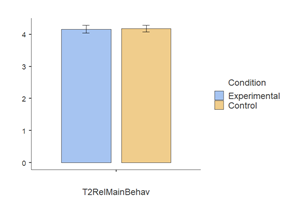
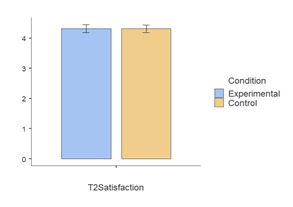
Contrary to expectations, participants in the experimental group, who received the informational session on relational maintenance behaviors, did not report more satisfaction at the time of the post-survey compared to the time of the pre-survey. Additionally, participants in the experimental group did not report more satisfaction than participants in the control group at the time of the post-survey. However, we did find that participants in both the control and experimental groups who reported using more relational maintenance behaviors at the post-survey also reported more satisfaction at the post-survey. Participants in both the control and experimental groups who reported more use of relational maintenance behaviors at the time of the pre-survey also reported more use of these maintenance behaviors at the time of the post-survey. Also, participants from both groups who reported high satisfaction at the pre-survey also reported high satisfaction at the post-survey.
Relational Maintenance Behaviors (Post-Survey)
Satisfaction (Post-Survey)
Due to our very low sample size, the inability to have face-to-face sessions, and the inability for us experimenters to monitor the relational maintenance behaviors of participants, we did not find what we had previously expected. We did, however, find what previous studies have found, as the participants reported more satisfaction when they used more relational maintenance behaviors in their romantic relationships.
Reflection
Through this process, we gained some much needed insight on what was beneficial to the success of this study, as well as what kept the study from reaching its full potential. First, we believe this study aimed to measure important variables and believe that a replication or partial replication of this study could result in significant and useful findings. Considering the majority of our findings were insignificant, however, we noted a few different aspects of our study that, if changed, may have led to greater significance. For example, the outcome of our study might have been significantly different if everything did not have to be done through online surveys and Zoom sessions. Additionally, we believe that the pressing SONA credit requirement for Psychology students at Roanoke College may have encouraged students to complete our survey for the sake of completion, rather than to provide quality data. If this study were replicated in the future, it would be important to ensure that the participants take the study seriously.
Conclusion
While we found that an information session regarding relational maintenance behaviors given to some participants did not significantly increase satisfaction, we found that all participants seem to already implement these maintenance behaviors in their relationships. The main finding from our study suggests that the use of relational maintenance behaviors in college students’ romantic relationships is associated with their relationship satisfaction, even during a global pandemic.
References
Hendrick, S. S. (1988). A generic measure of relationship satisfaction. Journal of Marriage and the Family, 50(1), 93–98.
Stafford, L., & Canary, D. J. (1991). Maintenance strategies and romantic relationship type, gender and relational characteristics. Journal of Social and Personal Relationships, 8(2), 217–242.
Weigel, D.J., & Ballard-Reisch, D.S. (2001). The impact of relational maintenance behaviors on marital satisfaction: A longitudinal analysis. Journal of Family Communication, 1(4), 265-279.
Ethan Abbott, Sydney Caulder, & Morgan Hamilton (Advisor: Danielle Findley-Van Nostrand)
Image from thesheaf.com
Background Info
Emerging adulthood is a highly exploratory and developmentally rich period of time in an individual’s life. Between the ages of 18 to 29 is a big transitional phase for young adults to develop their own identity and find their niche in society. There are frequent changes experienced through changing vocations, relationships, and living situations attributed to a significantly reduced sense of stability as compared to parts of life prior to and after emerging adulthood (Arnett 2000; Arnett et al., 2014). In order to properly evaluate how young adults are handling the transitional stressors of their lives coupled with the extenuating circumstances brought on by COVID-19 pandemic, we wanted to see if individual’s locus of control helped mitigate stress. Specifically, an internal locus of control refers to how much one believes their actions are the result of their own efforts, relative to the belief that outside events influence their future (external locus of control). If individuals perceive to have some form of control over a situation then they will find the aversive stimulus to be less threatening.
Another facet of stress management we wanted to measure is an individual’s intolerance of uncertainty. This term refers to the cognitive ability to compartmentalize unknown potentially negative events so that it won’t hinder mental health or physical actions. This anticipation of uncertainty derives from the desire for predictability and an active engagement in seeking certainty and paralysis of cognition and action in the face of uncertainty (Birrell, Meares, Wilkinson, & Freeston, 2011). Emerging adults will also employ various coping strategies for the sake of their physical and psychological well-being. Coping mechanisms are vital towards a young adult maintaining proper mental health because poor maintenance of mental thoughts and adjustment can lead to instability. The four types of core coping mechanisms that young adults utilize are problem-solving, support-seeking, escape, & accommodation (Skinner, Edge, Altman, & Sherwood, 2003). Given the current circumstances of the world at large, we thought it wise to conduct and evaluate a survey administered to the Roanoke College student body to see how these three facets of handling mental stressors are being employed amongst the young adult student population. For the sake of our study we used locus of control and intolerance of uncertainty as predictors of various coping mechanisms.
Methods
Participants in this study were recruited from current students at Roanoke College through the Psychology Department’s SONA system. Participants who were enrolled in psychology courses eligible for extra credit upon participation received one half credit. In total, 145 participants completed the study.
The survey was administered online through Qualtrics where participants were asked demographic information including gender, race, age, year in school, and impact of COVID-19. Previously constructed measurements were used for locus of control, intolerance of uncertainty, and coping. For locus of control, the 24-item Multidimensional Locus of Control Scale was used. Intolerance of uncertainty was measured using the 27-item Intolerance of Uncertainty Scale. Finally, coping was measured using the 60-item COPE inventory.
Results & Discussion
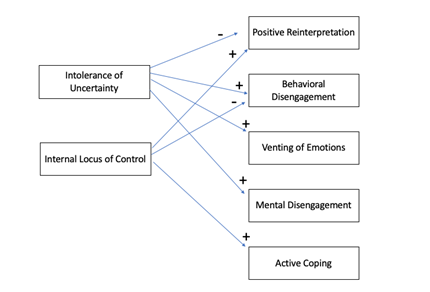
We decided to focus on intolerance of uncertainty and locus and control as predictors of coping in a multiple regression model. A multiple regression model demonstrates the strength of two individual predictors controlling for one another while also controlling for shared variance in a single outcome. The COPE inventory included different subscales focusing on specific forms of coping such as focus on venting of emotions or active coping. There were several significant associations found among the different subscales of coping when intolerance of uncertainty and locus of control were used as predictors. And, in each set of tests, there was a large effect size, meaning that these explained a fairly significant amount of the individual type of coping.
Having a higher internal locus of control was related to greater use of managing distress emotions rather than dealing with the stressor (positive reinterpretation) and less use of behavioral disengagement when controlling for intolerance of uncertainty which was related to less use of positive reinterpretation and more behavioral disengagement.
Internal locus of control was unrelated to, and intolerance of uncertainty positively related to both venting of emotions and mental disengagement.
There was one subscale, active coping, that was positively related to internal locus of control but unrelated to intolerance of uncertainty. See the figure below for an overview of regression results across models; the positive sign indicates as the level of the predictor increases the level of the outcome also increases, and the negative sign indicates that as the level of the predictor increases or decreases the outcome would do the opposite of that increase or decrease).
We also explored differences of mean scores between males and female participants. There were no significant differences based on gender in internal locus of control and intolerance of uncertainty scores, or coping subscales of use of instrumental social support, positive reinterpretation, active coping or behavioral disengagement. There were significant differences in scores based on gender for the coping subscales of focus on venting of emotions, use of emotional support, and mental disengagement.
Our data collection and analysis produced logical results that were mostly as expected. Our research can open the door to future research on how different forms of coping may indicate how individuals perceive changes within their life or the amount of control they feel they have over those changes. This research was especially meaningful given the current COVID-19 pandemic and associated mental health difficulties. Intolerance of uncertainty and internal locus of control may be influential in encouraging adaptive forms of coping.
Figure: Visual Representation of Regression Results: Intolerance of Uncertainty and Internal Locus of Control as Predictors of Forms of Coping.
Reflection
Creating a study which was interesting to all of us and able to be done efficiently through remote learning certainly posed a tough challenge to our group. Initially we thought a study more focused on the current challenges for emerging adults amidst the COVID-19 pandemic would be interesting, but we ultimately decided emerging adults face many challenges with uncertainty regardless of if they are enduring a pandemic or not. The beginning stages were relatively easy to manage by dividing up the work and checking in on each other periodically, but as we started using Jamovi our difficulties took a turn. One of the many challenges posed due to remote learning was the opportunity to learn an entirely new data analysis application, Jamovi. Although Jamovi is user friendly when conducting data, we struggled getting it to be compatible with Qualtrics, and those problems were difficult to work through together. Ultimately these issues were ironed out through many meetings with our group and Dr. Findley-Van Nostrand via Zoom trying to figure it out. Although ultimately our outcome of our research was largely unchanged, it was difficult to manage each challenge together while completing our tasks remotely, but I think we all understood the value of good communication and patience through completing this experience remotely.
References
Arnett, J.J. (2000). Emerging adulthood: a theory of development from the late teens through the twenties. American Psychologist, 55(5), 469–480.
Arnett, J.J. (2014). The new life stage of emerging adulthood at ages 18-29 years: implications for mental health. The Lancet Psychiatry, 1(7), 569–576.
Birrell, J., Meares, K., Wilkinson, A., & Freeston, M. (2011). Toward a definition of intolerance of uncertainty: A review of factor analytical studies of the Intolerance of Uncertainty Scale. Clinical Psychology Review,31(7), 1198-1208. doi:10.1016/j.cpr.2011.07.009
Skinner, E.A., Edge, K., Altman, J., & Sherwood, H. (2003). Searching for the structure of coping: a review and critique of category systems for classifying ways of coping.. Psychological Bulletin, 129(2), 216-269.
Caelan DeMuth, Mason Wheeler, Maggie Lewis (Advisor: Dr. Findley Van-Nostrand)
Image taken fromL Harris, M. (2015). Top Valentine’s places to cry alone on campus. photograph. https://thetab.com/uk/lancaster/2016/02/12/top-valentines-places-cry-alone-campus-4936.
Background Information
Many changes brought on by the COVID-19 pandemic have affected well-being of individuals, with college students being uniquely affected given the changes in their academic environment. Specifically, remote learning during the COVID-19 pandemic has changed the way students are expected to learn, potentially driving issues related to focus and to social isolation. Younger students with less experience in university level education may be at higher risk of struggling more than their older peers during the pandemic (Ledman, 2008). In this study, we students’ psychological well-being in relation to their individual need for structure (that is, the extent to which they desire structure and clarity and find ambiguity troubling), academic motivation (the extent to which they are motivated to remain in and do well in school), and academic year. We expected responses that underclassmen or younger students would report higher levels of a need for structure and lower levels of academic motivation, and that both motivation and need for structure would predict well-being. As motivation in academic settings during the ongoing pandemic had yet to be assessed this research may be used to provide insight into how to provide resources to students during upcoming academic terms.
Methods and Measures
Participants for this research were individuals currently enrolled at Roanoke College. There were 115 participants, of which 39 were freshmen, 39 were sophomores, 21 were juniors, and 16 were seniors; 30 identified as male, 83 identified as female, and 2 identified as nonbinary. Participants were recruited via the Roanoke College Psychology Department through SONA and led to an external survey using Qualtrics. Participants answered a combination of questions pertaining to their academic year, gender, and demographics in addition to questions intended to assess individual needs for structure, academic motivation and well-being. Questions pertaining to structure were taken from the Personal Need for Structure scale. Academic motivation was assessed via questions in the Academic Motivation scale. Psychological Well-Being scale was used to gauge the well-being of participants. Ultimately the three scales demonstrated relationships between individualized preferences for structure, mental health and motivation to remain focused and engaged in coursework during COVID-19.
Results and Discussion
This study was facilitated successfully, especially given the challenges of a nontraditional semester. Contrary to the initial expectation for this study, participants enrolled in their senior year reported the lowest scores for perceived wellness whereas underclassmen reported the highest scores for this criteria. Although students in lower academic years reported higher values of perceived wellness, responses from first years did have the largest standard deviation, suggesting that there was more variation among participants in lower academic years. However, it was found that there was no statistically significant differences when separating between the psychological well-being subscales (autonomy, environmental mastery, personal growth, positive relations, purpose in life, self-acceptance) between academic years.
Personal need for structure was unrelated to academic motivation. Academic motivation was positively related to psychological well-being in the era of COVID-19 learning. Academic motivation is the voluntary engagement with coursework in terms of intrinsic and extrinsic variables (Cerino, 2014), suggesting that those who can maintain high levels of motivation are likely also experiencing higher well-being in other areas. It was found that personal need for structure statistically significantly predicted the psychological well-being subscale of purpose in life, while academic motivation as a whole statistically significantly predicted the psychological well-being subscale of personal growth, and somewhat significantly predicted the psychological well-being subscale of autonomy. Overall, results suggest that need for structure and academic motivation during the pandemic are related to well-being, but this depends on type of well-being.
Reflection
This research study challenged each of us extensively throughout the duration of the semester. The first and largest obstacle we as a group encountered was transitioning Research Seminar class typically taught in person to a fully remote and functional formatt. We were given the additional task to complete the workload together across time zones via Zoom rather than have the ease of access to be able to meet whenever necessary in person. Our initial research topic was a much broader version of our final product, with the first intent to be to examine COVID-19 impact on wellness in all of its dimensions and definitions. This was evidently too broad as the eight clinical dimensions of wellness (Stoewen, 2017) would have introduced a myriad of confounds to our research. The goal of our work was to examine if academic motivation and perceived wellness had been impacted during a semester of exclusively remote learning.
As our study was conducted via online survey, the ease in accessibility for participants was likely beneficial to the recruitment process. The convenience of the survey being administered online allowed for more people to complete it on their own time. An additional positive to the survey being conducted online eliminated the risk of observer bias and made participants more comfortable by removing the risk of potential exposure to COVID-19. Despite the challenges of conducting research in a fully remote manner, our group was able to find significant associations within our data and report conclusive findings.
Conclusion
The main findings of this study indicate that college underclassmen are experiencing higher perceived wellness than upperclassmen in the era of COVID-19, and that personal need for structure and academic motivation only significantly correlate with three of the six psychological well-being subscales (purpose in life, autonomy, and personal growth). COVID-19 has caused significant changes to what is defined as a normal academic setting. With this knowledge moving forward, academic institutions may use this information to provide adequate mental health resources for students as well as modify course plans to proceed in more academically efficient means.
References
Cerino, Eric. S. (2014). Relationships between academic motivation, self-efficacy, and academic procrastination. Psi Chi Journal of Psychological Research, 19(4).
Stoewen, D. (2017). Dimensions of wellness: Change your habits, change your life. Retrieved September 15, 2020, from https://www.ncbi.nlm.nih.gov/pmc/articles/PMC5508938/.



 Research has shown that social networking platforms (Instagam, Facebook, Snap Chat, ect) afford the opportunity for identity development, specifically through engaging in different types of self-presentation. In this study, we examined the association between social goals (including, authenticity, the need for popularity, and need for belonging) and presentation of the real, ideal, and false self on social media.
 In this study, we examined achievement goal orientations (mastery, performance-approach, and performance-avoidance) in association with intention to remain in STEM majors and differences in these variables and associations by gender and unrepresented minority status in a large sample of undergraduate students. Results suggest achievement goals are meaningfully related to STEM persistence.
 Research has found that narcissism predicts heightened provoked aggression and hostility. However, less understood is the role of hostile attribution bias (HAB) in these associations. In this study, we examined multiple conceptualizations of narcissism (grandiose and pathological) in relation to HAB and aggressive responses to provocation.


 We dedicate every February to Black History Month. A month that celebrates the incredible achievements of African Americans and highlights and recognizes their central role in U.S. history. Roanoke College is celebrating Black History Month through a series of events, of which more information is provided below.