








Latest

  • Dr. Powell’s May Term to Thailand Part I

    Twelve students from multiple disciplines, including psychology, went to Thailand this past summer with psychology professor, Dr. Darcey Powell to study emerging adulthood as part of a May Term program at Roanoke College.

    Over the course of three weeks, students were able to compare the empirical articles they had read before departure with their own experiences as they traveled across Thailand to cities including Bangkok, Phetchabun, Chiang Mai, and Koh Samui. While there, they discussed cultural similarities and differences with local emerging adults in Thailand. By traveling from city to city, students were able to see how socioeconomic settings and geography affect the lives of different emerging Thai adults.

    As Peyton Holahan ’19 recalls,

    The readings for our May Term were really interesting and relevant to the cultures and places we encountered. The topics in our readings varied from the collectivist[…] ideals in Thai society, to the importance of education, to the role of the transgender community in Thailand. Almost every day, we would have group discussions about our assigned readings and consider how the readings related to what we experienced or could possibly experience in our daily ventures.

    Holahan ’19

    When asked to talk about one of the most interesting parts of their trip, multiple students talked about their visit to Chulalongkorn University in Bangkok where they were able to interact with Thai students. Through talking one-on-one with each other and asking questions about their social and academic lives, they came to realize that perhaps they were not so different after all.

    Holahan describes how her group quickly learned that social media plays a huge role in Thai student’s everyday lives, just as media does in the United States. In fact, because of the interactions with the Chulalongkorn students, Ms. Holahan came to realize that:

    […]the Thai students in Bangkok had very similar lives to our own in that most of them were working towards getting a degree and were still financially dependent on their parents. Spending the day at Chula and getting to know Thai students on a personal level completely contradicted my initial belief that our cultures were so far apart.

    Sarah Hughes ’19 also mentioned her experiences talking with the psychology graduate students at Chulalongkorn University.

    […] It was funny[;] the first question they asked was about our current president and our political systems. They did not understand that our political system creates conflicts because in Thailand everyone worships the Royal Family. […] One conversation that stood out to me was when a student asked if our traffic jams in the U.S. only lasted approximately thirty minutes. I thought this was a strange question, but I shortly learned that it is easier to walk somewhere than drive because traffic jams can last for three hours.

    Sarah Hughes ’19

    Molly Zydel ’19 noted that for all the similarities, Thai and USA cultures are fundamentally different.

    Thai culture is very different from US culture, in so many ways. First off, it is a collectivist[…] culture, meaning they emphasize the collective whole rather than the individual. This was observed in many ways, but especially in the way they treated each other. I never once saw a Thai person yelling. Thai people are also much more conservative. They don’t really like talking about themselves. 

    Molly Zydel ’19

    This was most noticeable during the talk with graduate students from Chulalongkorn University, as Zydel continued on to say.

    […] As Americans, we were much more open to answering questions about ourselves, but when we asked them questions, the Thai students often struggled in speaking up to answer them, especially when we asked questions that were uncomfortable in the first place (e.g. we asked about sex outside of marriage and if it happened, and that question clearly made them uncomfortable).

    Through their traveling, students were further exposed to various ways of thinking about life and their own culture. For Sarah Hughes ’19, the first few moments in Thailand were a startling contrast with her home in Maryland.

    As soon as we landed in Bangkok I noticed many differences. For starters[,] the airport was half-inside and half-outside. We had been traveling for 23 hours in nice cold air conditioning and the second you stepped into the airport it felt like 100 degrees or more because of the humidity. Before our trip, everyone had told us to prepare for the heat but none of us expected it to be as hot and as humid as it was. I am from Maryland near Washington D.C. and I thought I knew what humidity was, but oh[,] I was wrong. The humidity in Thailand was something I have never experienced before.

    Sarah Hughes ’19

    Later, Ms. Hughes began to notice something else about the differences between the United States of America and Thailand.

    In the United States we tend to separate poor areas from the rich areas, but in Thailand you will have a gorgeous temple that the Rama (king) built next to shacks that people live in. It stood out to me because you would have thousands of tourist[s] admiring these stunning buildings and next door are [the homeless] or people that live in a small shack without running water.

    These observations fall in line with the readings, as Peyton Holahan noted…

    I remember leading a group discussion on two readings about the importance of social class in society. These readings directly related to our experiences because it was clear that social class in Thai society affected the paths of Thai emerging adults as to whether they got an education or started working at a young age to support themselves. Social class was a key factor in many of the places we visited because we witnessed higher social classes in urban areas like Bangkok.

    In cities like Bangkok, education was emphasized for emerging adults because they were in an urban setting with plenty of accessible resources that stressed academic goals for better jobs and opportunities. On the other hand, we also witnessed the extent of lower social classes in more rural areas like Phetchabun. In such areas, emerging adults usually resorted to working at young ages to support their families instead of pursuing higher education because it was rarely an option within their socioeconomic sphere.

    In addition to these observations and experiences, students were also able to have some fun as well. Continue to part II to learn about some of the student’s and professor’s favorite parts of the trip, including getting to spend the day with elephants.


    To see more pictures of the trip, click here to go to the official RC May Term Facebook Page.

    Get connected!
    Instagram & Twitter:  #PsychRC @RC_Psychology
    Facebook:  https://www.facebook.com/rcpsychology
    Blog:  https://psych.pages.roanoke.edu/
    Linked In:  https://www.linkedin.com/groups/RC-Psychology-8140491/about
    Website:  https://www.roanoke.edu/inside/a-z_index/psychology

  • Congratulations to Dr. Powell and Dr. FVN on their Manuscript Acceptances!

    The Psychology Department would like to congratulate Dr. Powell and Dr. Findley-Van Nostrand on getting their manuscripts accepted for publishing this semester!

    Dr. Powell has published two articles this semester. The first was in conjunction with Elizabeth Babskie and Aaron Metzger, titled “Variability in Parenting Self-Efficacy Across
    Prudential Adolescent Behaviors” and can be found here.

    The second article, titled “Prospective Parents’ Knowledge About Parenting and Their Anticipated Child-Rearing Decisions,” has received special promotion by the National Council of Family Relations as one of the five “early view” articles from their journals for October, and was co-written with Dr. Katherine Karraker of West Virginia University.

    Dr. Findley-Van Nostrand has also had a manuscript acceptance for her article on  “Affective-interpersonal and impulsive-antisocial psychopathy: Links to social goals and forms of aggression in youth and adults”,  which is co-authored with Tiina Ojanen, a professor at the University of South Florida, and will be published in the journal Psychology of Violence.

    For Dr. FVN’s description of her article and findings, please follow this link.

    Again, congratulations to both professors on their recent article acceptances!

  • New Majors’ Orientation

    If you recently declared a major in psychology either this semester or last semester, you are required to attend the New Majors’ Orientation either on Wednesday, November 8th or Thursday, November 9th in Life Science 502 from 6:00 to 7:00 pm.

    Please sign up through SONA and select which day you will be attending.

    If you have any questions, feel free to email Dr. Powell at DPowell@Roanoke.edu.


    Get connected!
    Instagram & Twitter:  #PsychRC @RC_Psychology
    Facebook:  https://www.facebook.com/rcpsychology
    Blog:  https://psych.pages.roanoke.edu/
    Linked In:  https://www.linkedin.com/groups/RC-Psychology-8140491/about
    Website:  https://www.roanoke.edu/inside/a-z_index/psychology

  • Interested in Becoming a Professional Counselor?

    If you are considering becoming a professional counselor, then look into attending the Virginia Tech Counselor Education Open House on Friday, November 3rd. The event will last from 9:00 am to 12:00 pm and you can drop-in anytime to chat with students and faculty and to tour the facilities.

    Interested? Please RSVP by emailing: vtcounsed@gmail.com


    Get connected!
    Instagram & Twitter:  #PsychRC @RC_Psychology
    Facebook:  https://www.facebook.com/rcpsychology
    Blog:  https://psych.pages.roanoke.edu/
    Linked In:  https://www.linkedin.com/groups/RC-Psychology-8140491/about
    Website:  https://www.roanoke.edu/inside/a-z_index/psychology

  • For Ryan Hedgpeth

    Trail_01
    Courtesy of Roanoke College via The Roanoke Times

    The psychology department would like to offer their sympathy and support to Ryan Hedgpeth and her family.

    Ryan, a senior psychology major and volleyball player at Roanoke College, was driving back to school after visiting her friends at the University of Pittsburgh over fall break last Thursday when she was involved in a single-car accident and was seriously injured.

    She’s currently in the intensive care unit at Charleston General Hospital in West Virginia. Her coach, Blair Trail, told The Roanoke Times reporter, Mark Berman, that Ryan is conscious but sedated and that she is responsive to commands and can communicate, using a card to spell out words.

    Ryan will have a long recovery process ahead of her and has already undergone one surgery but is scheduled for more.

    Her dog, Blue, was also injured in the accident but stayed with her until help arrived. He has undergone surgery and will need physical therapy as well.

    If you want to help Ryan and are looking for ways to support her and her family but aren’t sure how, there is a gofundme page for Ryan here.

    Get connected!
    Instagram & Twitter:  #PsychRC @RC_Psychology
    Facebook:  https://www.facebook.com/rcpsychology
    Blog:  https://psych.pages.roanoke.edu/
    Linked In:  https://www.linkedin.com/groups/RC-Psychology-8140491/about
    Website:  https://www.roanoke.edu/inside/a-z_index/psychology

  • Psychology Internship Information Session


    Interested in internships? Then join us on Thursday, November 2nd, from 11:45 to 1:00 in Life Science 502 for an information session  to learn about the different opportunities available, as well as their requirements and deadlines, and much, much more!

    Pizza will be provided, but please bring your own drink.

    RSVP by Wednesday, November 1, noon, to 540-375-2462, or to dyer@roanoke.edu


    Get connected!
    Instagram & Twitter:  #PsychRC
    Facebook:  https://www.facebook.com/rcpsychology
    Blog:  https://psych.pages.roanoke.edu/
    Linked In:  https://www.linkedin.com/groups/RC-Psychology-8140491/about
    Website:  https://www.roanoke.edu/inside/a-z_index/psychology
  • A Brief Interview with Dr. Findley-Van Nostrand

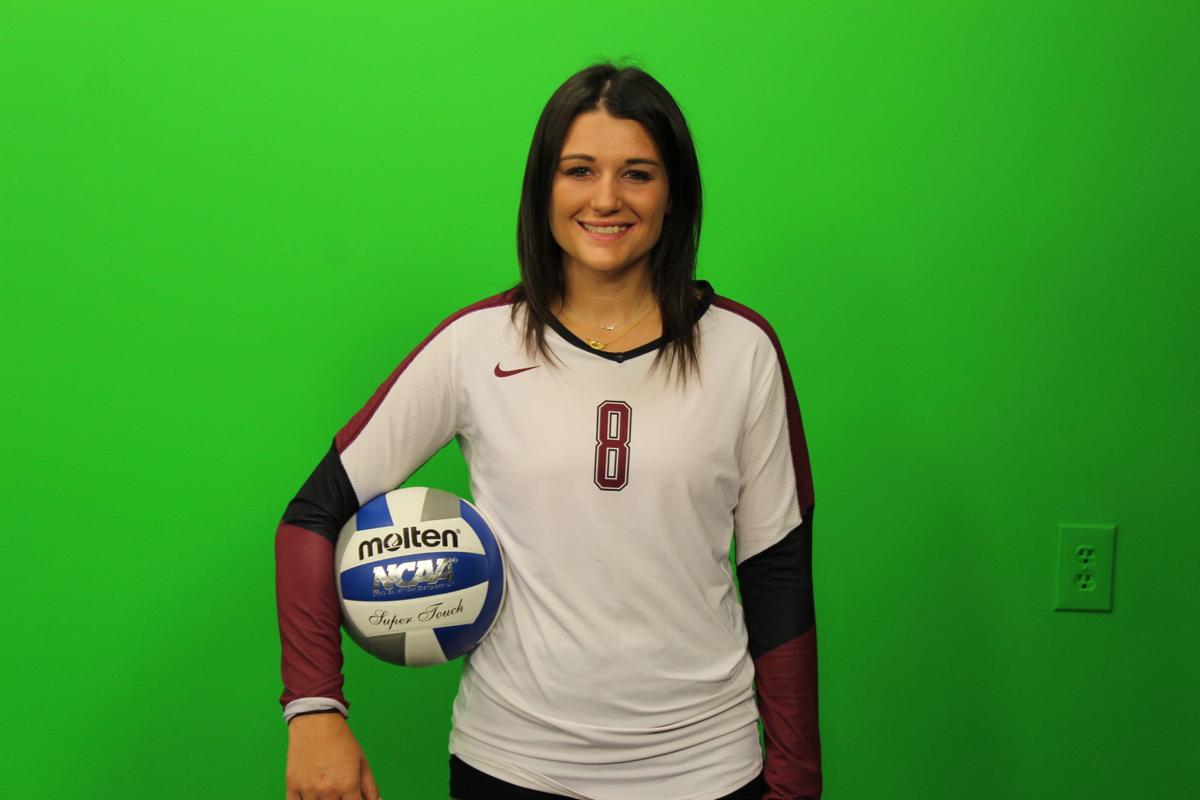
    Dr. Findley Van-Nostrand is pictured above. She is a new Psychology professor here at Roanoke College.

    A student assistant was recently able to interview Dr. Findley-Van Nostrand amidst the chaos and confusion that is midterms about herself and her research interests, as well as her recent manuscript acceptance in the journal Psychology of Violence.

    So, how do you like Roanoke so far? Is it very different from Florida?

    It’s great! Definitely different from Tampa. Smaller city, slower pace, cooler weather…all good things for me.

    Can you tell me about your academic background?

    I did my undergraduate degree at the University of South Florida. I also remained there, for a variety of reasons, for my Ph.D. (and Masters along the way). Towards the end of my doctorate, I broadened my interests some and was involved in a couple of projects outside of the Psychology department that involved applying psychology to the problem of STEM (Science, Technology, Engineering, and Math) student persistence. These projects ended up leading to an offer to remain as a postdoctoral researcher after wrapping up my dissertation. So, after my postdoc, here I am!

    What classes are you teaching right now and what types of courses will you be teaching in the future?

    Right now I am teaching PSCY221- Developmental Psychology, and PSYC321- Child Development. In the near(ish) future I will teach these, as well as Intro to Psychology, Adolescent Development, and a Research Seminar in Developmental Psychology.

    What are some of your past and current research experiences and interests?

    My research interests are related but twofold. In my primary research, I am interested in peer relationships and social behaviors during adolescence and early adulthood. In this line, I have

    focused on aggression among peers, underlying motivational factors, and the ways in which aggression is tied to social status among peers. I also have continuing research aimed at understanding the role of the self in aggression and prosociality, and my studies in these area are driven by both developmental and social psychology literatures and studies. In my second line of research, I’m also interested in understanding how social experiences, like felt belonging, as well as self-concepts and motivation may drive interest and persistence in STEM disciplines. Much of the research in this area is also related to academic persistence and achievement more broadly, but has some specific nuances related to the STEM context.

    I recently heard that you have been approved to publish an article in a journal, can you tell me more about that?

    Sure! The paper will be published in the journal Psychology of Violence, and includes two studies (one in early adolescence, and one in young adulthood) examining two forms of psychopathy, social goals, and forms of aggression. In previous research, we’ve demonstrated that social goals for status predict heightened aggression (especially relational aggression) over time in adolescents, and social goals for closeness and affiliation are related to lower levels of aggression. In a separate line of research, psychopathy and callous-unemotional traits are consistently tied to high aggression. In our study, we demonstrated differences in relationships between psychopathy and social goals based on form of psychopathy (one form entailing interpersonal manipulation was related to social goals, whereas the other form entailing behavioral impulsivity was not), and that social goals mediated the links between psychopathy and aggression in both age groups. So, within the context of psychopathy as a risk factor, targeting social goals may help in aggression-related interventions.

    What are some random/cool facts about you?

    First, my husband and I have an 1 ½ year old son, who keeps us busy and I’m forever in awe of. Second, I am a huge Formula 1 racing fan! We have a lot of awkward hours in our house where we will wake up to watch the European races live. It’s a much more complex sport than you might think, and the psychology of the drivers, their competitiveness, decision making, team dynamics, etc. is really fascinating.

    Is there anything else that you’d like to mention?

    Everyone here has been super welcoming. So thanks!

    Congratulations Dr. FVN for your recent manuscript acceptance and thank you for taking time to answer our questions!


    Get connected!
    Instagram & Twitter:  #PsychRC @RC_Psychology
    Facebook:  https://www.facebook.com/rcpsychology
    Blog:  https://psych.pages.roanoke.edu/
    Linked In:  https://www.linkedin.com/groups/RC-Psychology-8140491/about
    Website:  https://www.roanoke.edu/inside/a-z_index/psychology

  • Congratulations to the New Members of Phi Beta Kappa!

    We are incredibly proud and excited to announce that four psychology students were recently accepted as new members to Phi Beta Kappa, the United State’s most prestigious honor society for the liberal arts and sciences.

    When asked how they felt about their acceptance, students replied:

    “I’m so honored to be accepted into Phi Beta Kappa and be recognized for my accomplishments at Roanoke!” – Megan Miller ’18

    “When I found out I got Phi Beta Kappa I was very excited and proud of myself. I have worked very hard over these past years and it’s an honor to be recognized for it.” – Taylor Kracht ’18

    “I am honored to learn my Roanoke Professors nominated me for Phi Beta Kappa. Acceptance into this honor society is especially meaningful because it recognizes the broad array of pursuits that I have had the good fortune to enjoy at RC.” – Laura Sullivan ’18.

    Congratulations to Megan Miller ’18, Laura Sullivan ’18, Taylor Kracht ’18, and Sabrina McAllister ’18! We are incredibly proud of you and look forward to seeing what you will accomplish in the future!


    Get connected!
    Instagram & Twitter:  #PsychRC @RC_Psychology
    Facebook:  https://www.facebook.com/rcpsychology
    Blog:  https://psych.pages.roanoke.edu/
    Linked In:  https://www.linkedin.com/groups/RC-Psychology-8140491/about
    Website:  https://www.roanoke.edu/inside/a-z_index/psychology

  • How to Survive College: Tips from Cognitive Psychology On Learning Part II

    Don’t be like this cat, even though it is tempting. Instead, read this article to get a better understanding of how to get the most out of class so you can afford to nap while others stress. Image found: https://www.quickmeme.com/meme/3rs5sq

    As this is the beginning of the first official week of Hell (in other words, midterms; the second official week of Hell being finals), we thought sharing some tips on how to survive would be helpful.

    In Part I there were tips about starting the semester off to a good start and what to do in preparation for classes. In Part II, we will cover what cognitive research and educators* recommend for learning in class during and after, and, most importantly, how to study for those exams you’re dreading.

    Before we begin, here’s a picture of a bunny:

    Related image
    https://www.fantasticviewpoint.com/cute-animals/

    During Lecture

    Do Not Skip (Unless You Absolutely Have To)

    Simply put, you won’t learn if you don’t go.

    Even if the lecture is essentially a review of the material you already read, just showing up and hearing the material again will allow the information to more easily become part of your long-term memory.

    Furthermore, teachers will often explain the material in different ways, so if the way the book describes a concept does not make sense, the teacher’s description may help clarify what you did not understand. Teachers also tend to add additional information that they believe is relevant to the class that is not included in the book but most likely will be on the test.

    Take Notes By Hand

    There are exceptions to this as students become more accustomed to taking notes with a laptop than with a pen and paper. Even so, the use of a laptop could distract both you and your neighbors as the temptation to look on social media and the internet is tempting, so be careful in how you use your laptop and where you sit. The authors of the study suggest turning off your WiFi so the internet and social media will be less tempting.

    The reasons behind the insistence on using the traditional method of taking notes is related to the lower levels of information processing generated when using a laptop. Students take notes with their computer mindlessly, while those who use a pen/pencil and paper must process the information and convert it into something that is not word-for-word, but will make sense to them in the future.

    In other words, those who write on a piece of paper know that they cannot copy everything down and therefore have to pick and choose what is the most important information to write down in a concise manner. This method of note-taking therefore leads to greater comprehension of the material.

    Your wish is my command, Chem. Cat! https://www.quickmeme.com/meme/35y19r

    Obtain Slides Before Class

    That way, you will not have to write everything down that your professor talks about, but can add to the information already shown. You can pay more attention to what the professor is saying instead of madly trying to copy everything down before they go to the next slide.

    After Class

    https://giphy.com/search/fleeing

    Most students leave immediately and focus on whatever they have to do next, but the authors of the article recommend going back over notes from your lectures later on in the day. By doing so, you can fill in whatever information you remember but did not get a chance to write down, as well as to find where you need more information on a topic.

    In addition, write down whatever questions arise from your studying and try to answer them yourself before turning to your book. The authors say just spending fifteen minutes looking over your notes can help you better understand and remember what you learned that day.

    By studying this way, you don’t have to re-learn everything the night before the test but can instead simply review the easier concepts and focus more on what you really struggled with.

    Preparing for Tests

    Advice for this section is essentially what has already been discussed. Research shows that students tend to study at the last minute by looking over notes and rereading material paying close attention to highlights, but that these methods do not work as well as one might hope. Instead, the authors recommend studying over a length of time and using active studying techniques (Putnam et al., p. 656).

    Space-Out Studying 

    Image result for space cat
    The author of this article has no clue what is going on in this gif, but she finds it mildly amewsing. Found on: https://catswithfoodinspace.tumblr.com/

    Don’t cram everything at the last minute, instead, space out your studying over the course of several days. You’re still spending around the same amount of time, but you are learning much more from these study sessions than from one gigantic cramming session the night before (or day of).

    Cramming may seem to work in the short-term, but for long-term memory retention, spacing out your studying sessions will drastically help your performances on tests.

    The authors also make note of how rereading should be for when you are confused about a topic after quizzing yourself, not when you want to remember something. If you want to remember something, quizzing will help much more than simply reading over what you’ve already read before.

    Reasons of Quizzing

    This emphasis on quizzing yourself is based on a learning tool called “retrieval practice.” By quizzing yourself, the authors point out, you are literally doing what you are going to have to do for the test: retrieving information from memory.

    Image result for the more you know gif
    https://giphy.com/gifs/the-more-you-know-83QtfwKWdmSEo

    The authors provide a few more ways to improve results from study sessions. Besides the read-recite-review method and other methods discussed in part I, the authors also recommend the use of flashcards. Use memory retrieval and do not look at the answer side when trying to answer the question; in addition, make sure you keep using the card until you have gotten the answer right at least three-to-four times. Finally, don’t just define the term, but try explaining the term to a friend; this method also helps retention.

    Some Other Tips

    The authors provide a helpful link towards balancing studying and retrieval practicing through suggesting looking up something called successive relearning (Putnam et al., p. 656).

    Continuing on, if there are a lot of terms you need to memorize, using mnemonic techniques can be useful. Mnemonics are probably familiar to you; teachers use them often, such as when you are learning the order of operations in math. Teachers will probably use “PEMDAS” to help you remember, with each letter corresponding to something else: Please (parenthesis), Excuse (exponent), My (multiplication), Dear (division), Aunt (addition), Sally (subtraction). You can use mnemonics to help you in college as well, either through this particular way or through loci, which are mental associations formed with objects or buildings familiar to us in order to help us remember harder things.

    The Final Exam 

    By following the suggestions above and in part I, the Final Exam will not seem quite as daunting as before and you might even be able to get a good nights rest. Be sure to start studying well ahead of time and test yourself on what you recall, reviewing what you cannot and making sure that everything you do remember is correct.

    Final Tips

    Put studying at the top of your priority list (you and/or your parents are paying a fortune for you to learn), but also remember to have fun with your friends and reward yourself for what you have accomplished so far. Exercising can be a great method of stress relief, as well as getting a regular amount of sleep.

    In the end, it’s easy to get caught up in the multitude of activities and assignments we involve ourselves in, but be sure to just take a few minutes for yourself to just… breath.

    Everything will be okay.


    *The information discussed in Part I and Part II is taken from a study conducted by Dr. Adam L. Putnam of the Department of Psychology in Carleton College and  Victor W. Sungkhasettee and
    Henry L. Roediger, III of the Psychological & Brain Sciences Department of the Washington University in St. Louis. Their study, published in 2016, is titled “Optimizing Learning in College:
    Tips From Cognitive Psychology” and can be found here.

    Get connected!
    Instagram & Twitter:  #PsychRC @RC_Psychology
    Facebook:  https://www.facebook.com/rcpsychology
    Blog:  https://psych.pages.roanoke.edu/
    Linked In:  https://www.linkedin.com/groups/RC-Psychology-8140491/about
    Website:  https://www.roanoke.edu/inside/a-z_index/psychology

  • Out of the Darkness Walk for Suicide Prevention

    On Saturday, October 7th, 2017, Roanoke College hosted an Out of the Darkness Suicide Prevention Walk. Students, professors, locals, and students from other universities all participated in the walk.

    Thank you to everyone who came on Saturday!