Latest

  • How to Survive College: Tips from Cognitive Psychology on Learning Part I

    Is this you? Then you should read this post. Found through the all-knowing Google search: https://www.quickmeme.com/meme/3rs2li

    It happens a lot, that dreaded “study-a-day-before-the-test” deal that causes lots of stress and results in multiple brews of coffee.

    There might be highlighting.

    There will definitely be crying.

    Office hours might be a thing and there will probably be some frantic texts and emails sent to both professors and friends, swearing that this will “never happen again” and “when did we even learn this?” 

    You might look like this:

    https://www.picturequotes.com/too-much-stress-quote-1-picture-quote-592879

    Even so, you study on and you pray that everything will be okay. You stay up all night studying, maybe getting a few hours of sleep if you’re lucky. You promise yourself that next time, you’ll do better.

    If this is something you have experienced, then the information provided in a recent study* published through the Association for Psychological Science will help immensely.

    In the study, the authors attempt to provide tips both from research in cognitive psychology, as well as through their own experience as educators. They provide advice for studying before classes, during, and after, as well as a lot of tips for preparing for tests.

    In this part, we will discuss methods of studying and preparing before classes. In part II, we will discuss methods of better learning during and after class and in preparation for exams. Finally, parts I and II will both include memes simply for pure entertainment.

    Besides the usual “don’t study at the last minute” that a lot of people know about and yet still happens because, well, life happens, there are also a number of other things that contribute to learning effectively.

    https://askstudents.edublogs.org/tag/exams/

    Rereading textbooks and notes, generally only focusing on the highlighted words, does not work as well as we think it does. For short-term, those tricks might work, but in the long-term, studies have suggested that these methods consume a lot of time without much real output (e.g., Dunlosky, Rawson, Marsh, Nathan, & Willingham, 2013).

    Basically? You might be okay on the midterm, but for long-term memory retention, specifically regarding that cumulative final you’re dreading, this method of studying probably won’t work as well as you might hope.

    So what should you do according to Putnam, Sungkhasettee, and Roediger III?

    Starting the Semester

    Most of this is common sense, but try to minimize the late-nights spent studying by getting organized early in the semester so that you can minimize later stress when weeks like midterms come and assignments never seem to end. Starting good habits when stress levels are low can also help immensely during these dark times of never-ending homework.

    Organize

    Organization is incredibly important to maintaining both sanity and grades, while still somehow managing to get sleep and having a social life. Therefore, going to the first day of classes and carefully reading over the syllabus is key to juggling this impossible balancing act. By reading the syllabus, you will know what is happening in the class and when assignments are due, so you won’t be blind-sided by multiple projects hitting all at once. Putting your assignments all into a calendar, an excel spreadsheet, or on your phone and making a habit of checking a month ahead every week can help to maintain a good overview of your classes. This can also help you to know when you need to start studying, like when multiple projects are due on the same day.

    The authors also recommend setting calendar reminders a week prior to exams, projects, or recurring assignments and quizzes so nothing gets forgotten (Putnam et al., 2016).

    Buy the Books

    In order to succeed in the class, you need to have the books. Buying textbooks can be incredibly expensive, but be careful of used textbooks, especially if they have highlighting because the previous owner(s) may not have recognized the crucial parts of the text.

    Do Not Attempt Multitasking 
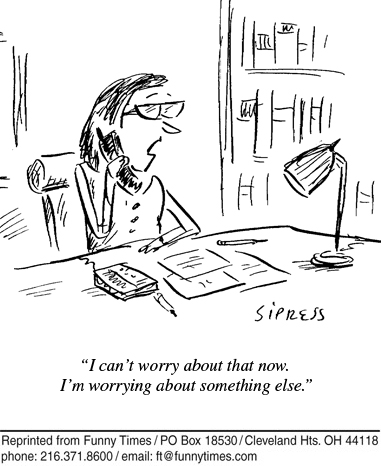
    Multitasking is bad.

    It does not work.

    Repeatedly switching attention from one task to another can make learning less effective (e.g., Anderson & Fuller, 2010; Craik, Govoni, Naveh-Benjamin, & Anderson, 1996). Any kind of multitasking, in fact, from having a Facebook tab open to listening to music can impair your ability to learn even if you don’t think it bothers you (as qt. Willingham 2010a). Try to make a habit of turning off your media while studying at a quiet place (meaning, unfortunately, Mill Mountain does not count).

    Preparing for Class

    Sometimes it’s hard to get all of the assigned reading done before class, but by doing so in an effective manner, you will get more out of the class. Don’t try to read as quickly as possible, even if you feel like you’re getting piled down with homework. As the authors point out, comprehension takes time and while reading quickly may get you through the text, you likely won’t be retaining the information you read (Rayner, Schotter, Masson, Potter, & Treiman, 2016). Try to make sure you understand the material before moving on to the next thing; reading is pointless if you don’t remember what you read.

    In addition, while highlighting and underlining are popular, studies show that they do not really contribute towards recall later on (Dunlosky et al., 2013). Instead, try these tips:

    Answer the Comprehension Questions Prior to Reading 

     While seemingly counter-intuitive, attempting to answer the questions before reading the chapter can help activate what prior knowledge you do have on the topic and make it easier to connect with the new material. Research also shows that by doing so, you will better be able to remember the material as well (e.g., Pressley, Tanenbaum, McDaniel, & Wood, 1990; Richard et al., 2009).

    Ask Yourself Questions While Reading

    By actively asking questions about the material you are reading, you will have better comprehension regarding what you read as well as for the future when you make study guides. Potential questions could include defining the topics you are learning about as well as asking yourself “Why is this true?” or “What parts of this page are new to me?” (Putnam et. al., 2016; R. Wong, Lawson, & Keeves, 2002).

    https://giphy.com/gifs/reading-dot-strategies-NFA61GS9qKZ68

    “Read, Recite, and Review” 

    Instead of highlighting or simply reading, read the assigned chapter and then try to recall the major points of the chapter. After that, go back through the chapter and focus on what you missed. This way of studying may take more time, but in the long run, it’s more effective in remembering the material than simply reading or highlighting.

    So, what sort of things should you do while in class and what are the best methods of studying for tests (like, say, impending midterms)? Continue on to part II to see what cognitive psychologists and educators recommend doing in order to survive college!


    *The study, titled “Optimizing Learning in College: Tips From Cognitive Psychology” was put together by Adam L. Putnam, from the Department of Psychology, Carleton College and, Victor W. Sungkhasettee and Henry L. Roediger III from the Psychological & Brain Sciences Department, Washington University in St. Louis. The link can be found here.

    Get connected!
    Instagram & Twitter:  #PsychRC @RC_Psychology
    Facebook:  https://www.facebook.com/rcpsychology
    Blog:  https://psych.pages.roanoke.edu/
    Linked In:  https://www.linkedin.com/groups/RC-Psychology-8140491/about
    Website:  https://www.roanoke.edu/inside/a-z_index/psychology

  • A Brief Interview with Dr. Travis Carter

    Dr. Travis Carter, Psychology Professor at Roanoke College

    A student assistant for the psychology department was recently able to interview Dr. Travis Carter, a new Psychology professor at Roanoke College this year, as a follow-up interview to learn more about him, his interests in psychology, and other cool things as the semester is now in full-swing. The following is the interview:

    So, how do you like Roanoke so far? Is it very different from Maine?

    I think it’s great! Everyone I’ve met has been incredibly welcoming, and although we’ve just started to explore the area, it seems like there’s a ton of stuff to do. And yes, it is very different from Maine in a lot of ways, but I think the biggest differences will be apparent this winter. I am not going to miss shoveling 3+ feet of snow from my driveway.

    Can you tell me a little about your educational background?

    I did my undergrad at the University of Chicago, which has a reputation as a large research university, but the undergraduate population is actually not all that big, so it operates more like a liberal arts college. I received my PhD from Cornell University, and then returned to Chicago for a postdoc in the Center for Decision Research, housed in the University of Chicago’s Booth School of Business.

    What classes are you teaching right now and what types of courses will you be teaching in the future?

    Right now, I am teaching PSYC-251: Social Psychology and PSYC-204: Quantitative Methods in Psychology. I’ll continue to teach those courses in the future, and will teach what I hope will be a fun INQ-120 course this coming spring, called A Perfect World. It aims to examine past utopian visions through the lens of modern psychological research. Next year, I’ll also be teaching some upper level courses, including a course in Judgment and Decision Making, and one on Social Cognition.

    What are your past and current research interests?

    I continue to have a diverse range of research interests, examining everything from political attitudes to consumer behavior to a fairness bias exhibited by Major League Baseball umpires. Broadly speaking, I’m interested in the ways that our judgments, beliefs, attitudes, and behaviors can be biased by both external forces (subtle exposure to a symbol in the environment, a manager screaming at an umpire about a bad call) and internal motivations (political ideology, desire to gorge yourself on potato chips).

    What are some random/cool facts about you?

    Just this summer my wife and I had a baby, who I think is in the running for cutest baby of all time. (And as someone who studies biased beliefs, I can comfortably say that my opinion about her cuteness is completely objective.)

    Other than that, I love music, technology, and the boring sports (baseball, soccer).

    Thank you Dr. Carter for taking time to answer our questions and congratulations on having a baby! We’re glad to have you at Roanoke College!

  • Out of the Darkness Community Walk: A Walk to Fight Suicide

    On Saturday, October 7th beginning with registration at 10 am in the Cregger Center, Roanoke College will be hosting the Out of the Darkness Community Walk to help fight suicide. Following registration, the walk will start at the back quad beginning at 11 am.

    If you would like to participate in the walk, then please register today through the link in the flyer. RCPA and Psi Chi Students will also be there to help support the event and the American Foundation for Suicide Prevention.

    This event is part of Mental Health Awareness Week sponsored by Roanoke College’s Student Health and Counseling Services.

    Other activities hosted this week include a Suicide in the Media Discussion Panel on Tuesday, Oct. 3 from 6:30- 8 pm in Massengill Auditorium which is open to all, followed by a Mental Health Education Fair and Free Depression Screening Event on Thursday, Oct. 5th from 5-7 pm in the WELL (Alumni 216).

    For this latter event, students can call Student Health and Counseling Services (540-375-2286) to schedule a screening or they can drop-in. Screenings are confidential. 

    If you’re interested in any of these activities and want to learn more, there will be a table set up on Monday (10/2) and Wednesday (10/4) outside of Commons where information will be provided and ribbons for Mental Health Awareness will be given out.

    Get connected!
    Instagram & Twitter:  #PsychRC @RC_Psychology
    Facebook:  https://www.facebook.com/rcpsychology
    Blog:  https://psych.pages.roanoke.edu/
    Linked In:  https://www.linkedin.com/groups/RC-Psychology-8140491/about
    Website:  https://www.roanoke.edu/inside/a-z_index/psychology

  • Fall 2017 Research Showcase

    Sabrina McAlister ’18, pictured above, showcases her findings at the 2017 Research Showcase in Fintel Library on 9/22/2017

    Sabrina McAlister, a senior at Roanoke College who was previously featured on our site and recently interviewed by our college’s research blog, presents her findings on time perception at the Research Showcase in Fintel Library on September 22, 2017. (The link to the interview by Marcus Stewart can be found at the bottom of the page.)

    Megan Miller ’18, another senior psychology student, presented her findings on moral decision making through focusing on self-driving cars. Her project included the results from her survey on SONA, in which students were asked various questions regarding their views on self-driving cars and whether or not they believed these cars were an ethical means to reduce car-related fatalities.

    The showcase, featuring research projects from all academic disciplines, kicks off the beginning of the Family Weekend for Roanoke College students and their families.

    We’re proud of our psychology students for presenting their intriguing and well-researched projects and we look forward to what more findings will be discovered!

    For more information regarding McAlister’s project on time perception, please follow the link below:

    https://www.rcresearch.org/?p=627


    Get connected!
    Instagram & twitter: @rcspsychology & #PsychRC
    Facebook:  https://www.facebook.com/rcpsychology
    Blog:  https://psych.pages.roanoke.edu/
    Linked In:  https://www.linkedin.com/groups/RC-Psychology-8140491/about
    Website:  https://www.roanoke.edu/inside/a-z_index/psychology

  • Eastern Psychological Association

    Attention Psychology Students:

    The Eastern Psychological Association is being held in Philadelphia on March 1 – 3, 2018. Please consider submitting a poster proposal. Students should talk to their research advisors/mentors or research seminar professors if they have an idea for a submission. Submission guidelines and the FAQ page can be found here and here respectively.

    The early and encouraged deadline for undergraduates is November 15, 2017, with the last possible chance to submit a proposal on December 1, 2017. Spots are very limited so please submit any proposals as early as possible.

    There is a one-time only due of $30 for students, due by February 20, 2018. To pay, please go to easternpsychological.org, click on “Join EPA,” then “Members Only,” and finally “Associate Proposals” to submit your proposal. Dues will take 48 hours to process.

    The EPA is also “going green” this year as it will once again use a free app, which contains the entire program. To obtain a hardcopy of the program, a $5 charge is put in place.

    Rooms can be reserved at the EPA group rate of $212 (plus taxes) until February 6, 2018 by following the link: https://aws.passkey.com/go/EPA2018. Reservations can be made also by calling the hotel (1-877-901-6632) and requesting the group rate for EPA2018.

    Students are strongly are encouraged to consider submitting proposals – this is an awesome opportunity to share what you’ve been working hard on, and a way to network and amp up CV’s and resumes!


    Get connected!
    Instagram & twitter: @rcspsychology & #PsychRC
    Facebook:  https://www.facebook.com/rcpsychology
    Blog:  https://psych.pages.roanoke.edu/
    Linked In:  https://www.linkedin.com/groups/RC-Psychology-8140491/about
    Website:  https://www.roanoke.edu/inside/a-z_index/psychology

  • 2017 Summer Scholar Sabrina McAllister ’18 Talks About Her Experiences

    Pictured above: Sabrina McAllister ’18, Psychology major, 2017 Summer Scholar

    In a recent interview with Marcus Stewart for undergraduate research at Roanoke College, Sabrina McAllister ’18 talked about her research project titled “Time Perspective as a State-Based Measure” and gave advice for other prospective Summer Scholars.

    For her research as part of the Summer Scholars program, McAllister worked over the summer with her faculty advisor, Dr. David Nichols, a professor of Psychology at Roanoke College whose primary research includes topics in neuroscience, vision perception, and time perception. Together, they examined the structure of the Zimbardo’s Time Perspective Inventory (ZTPI), a questionnaire that determines amounts of focus on past, present, and future,  for ways to improve the inventory for more accurate results.

    To learn more about what they discovered, as well as the the link for Dr. Nichols’ research lab, follow the links at the bottom of the page.

    The Summer Scholar Program awards thirteen applicants from all majors with funding every year for independent study under the supervision of a professor. If all conditions are met, the scholar will receive one unit of credit for independent study, which can be counted towards the Honors project if part of the Honors Program. The program typically coincides with Summer Sessions I and II (June & July), but more time can be given if the student’s project requires it.

    The deadline for applying to the Summer Scholar Program is March 15 and decisions are made by April 1st.

    For more information regarding McAllister’s project, Dr.  Nichols lab, or the requirements and application for the Summer Scholars Program, please follow the appropriate links.

    Get connected!
    Instagram & twitter: @rcspsychology & #PsychRC
    Facebook:  https://www.facebook.com/rcpsychology
    Blog:  https://psych.pages.roanoke.edu/
    Linked In:  https://www.linkedin.com/groups/RC-Psychology-8140491/about
    Website:  https://www.roanoke.edu/inside/a-z_index/psychology

  • Preparing For Graduate School: A Q&A Session

    Come out to Massengill Auditorium on September 21st to enjoy a Q&A session with graduate students from Virginia Tech. Please RSVP by emailing Dr. Osterman at osterman@roanoke.edu. All are welcome!

    There will be free pizza!


    Get connected!
    Instagram & Twitter:  #PsychRC
    Facebook:  https://www.facebook.com/rcpsychology
    Blog:  https://psych.pages.roanoke.edu/
    Linked In:  https://www.linkedin.com/groups/RC-Psychology-8140491/about
    Website:  https://www.roanoke.edu/inside/a-z_index/psychology

  • Doctoral Student Recruitment Opportunity

    Doctoral Student Recruitment Opportunity

    Graduating this year?

    Want to gain clinical experience as a doctoral student?

    Then read on…

    Dr. Adam Schmidt, assistant professor and director of the Pathways to Resilient Youth Development (PRYDe) lab, is looking for up to two students who would qualify in the Fall of 2018 to work as clinical psychology doctoral students.

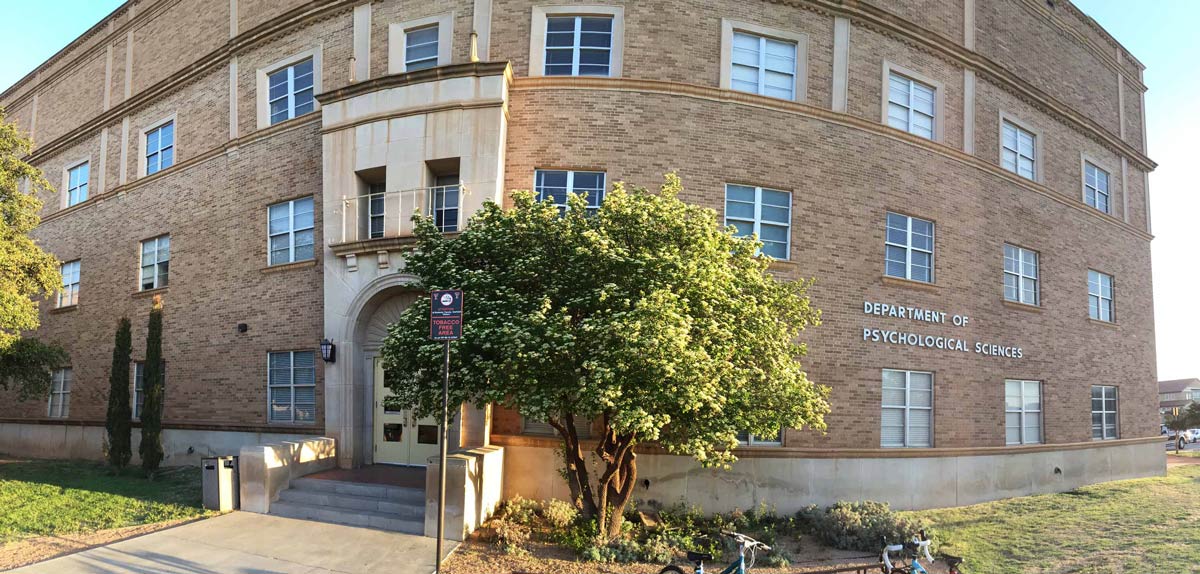
    The PRYDe lab is located in the Department of Psychological Sciences at Texas Tech University (TTU) and conducts research in the areas of neuropsychology, forensic psychology, and child clinical psychology with research grounded in neuroscience and developmental psychopathology. The lab has three broad areas of interest, including:

    1. “The impact of adverse childhood experiences (ACEs).
    2. The impact of resilience promoting factors on brain/cognitive development.
    3. The utility and incremental validity of neuropsychological assessment in forensic and
      clinical settings.”

    Interested students would need to have “a strong academic/research focus and be open to a psychological clinical science training perspective.” In addition, prospective applicants with “substantial coursework outside of psychology (e.g., neuroscience, cognitive science, computer science, criminal justice/criminology, genetics, chemistry, physics, math/statistics, engineering,etc.) are particularly welcome to apply. ” The lab considers competitive students to be those who are interested in “integrating cognitive neuroscience/neuropsychology techniques with theories of developmental psychopathology and applying this approach to investigations of justice-involved youth or youth at risk for such involvement (e.g., youth with a history of significant trauma exposure).”

    The deadline for applications is December 1st, 2017.

    Onsite interviews will occur on February 9, 2018

    For more information about the PRYDe lab, go to https://www.depts.ttu.edu/psy/pryde/ ; for those interested in the clinical psychology doctoral program at Texas Tech University, the link is: https://www.depts.ttu.edu/psy/clinical.  Finally, for more specific questions, contact Dr. Adam T. Schmidt at adam.t.schmidt@ttu.edu.