This past summer Rachel Harmon was selected as a recipient of the 2018-2019 Summer Mamie Phipps Clark Diversity Undergraduate Research Grant from Psi Chi, the international psychology honorary, where she spent several weeks in Mexico working on her project titled, “Cross-Cultural Comparison of Caregiver Concerns and Resources for Children with Disabilities.”
Rachel Harmon was in the list of top 11 applications and so Dr. Powell was awarded a faculty stipend as well.
A brief interview was done with Harmon to learn more about this project and process:
Thank you for taking time to answer some questions, to start off, can you describe what the grant process was like and how you discovered it?
I began the grant application process in December of last year but ended up not submitting the grant until the May due date. I heard about the grant through Dr. Powell, who recommended applying, and advised me throughout the process. The grant required me to provide a concise version of my Literature Review and a brief Methodology section, and all the scales that I would use. I found that the grant helped me to determine the specific methodology I would use for my project and helped me to determine the specific scales that I would use.
Can you tell me more about your project?
The title of my project is “Cross-Cultural Comparison of Caregiver Concerns and Resources for Children with Disabilities”. I have collected both observational and quantitative data in both Mexico and the United States to compare the resources that are available for children with disabilities in each country and how this impacts caregiver stress levels and the emotions they feel, regarding caring for their child with a disability. I originally got the idea for my project when I traveled to Nicaragua the summer before my freshman year. While I was walking through a market in Managua, I saw a woman who was working and had her daughter who had a disability in what we would consider a baby stroller. I have worked a lot with individuals, specifically with children with disabilities and developmental delays, and I was naturally compelled to investigate the topic further.
What drew you to Mexico for this project?
I was originally supposed to return to Nicaragua for my project, but due to the current political environment, it was not ideal for travel. Jesse Griffin, who serves on the committee of my project knew of several connections that our college has with research facilities and other institutions in the Yucatán. One of the facilities was conveniently across the street from a Centro de Atención Múltiple, which is a government funded special education school, which was a great resource for collecting observational data and distributing surveys.
What did a normal day look like for you in Mexico as you worked on this project?
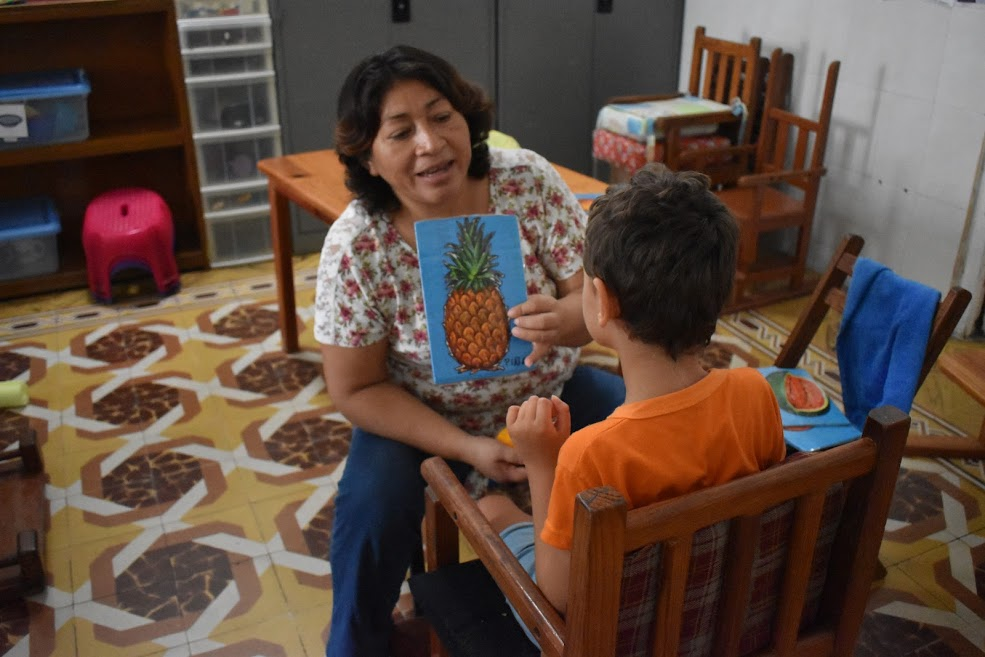
For the first month I spent in Mexico I was in Oxkutzcab, which was a small, rural town. This was where the C.A.M. school was. Each weekday I would go to the school at 7:30, and I would rotate which classroom I was in each day. The school has seven classes serving student from ages 2-28. Depending on which classroom I was in, I would either observe the class, and participate in class activities, or work one on one with students who needed more individualized attention. The school days in Mexico only last from 7:30 to 12:30, so in the afternoons I would explore or relax, and work on other research tasks.
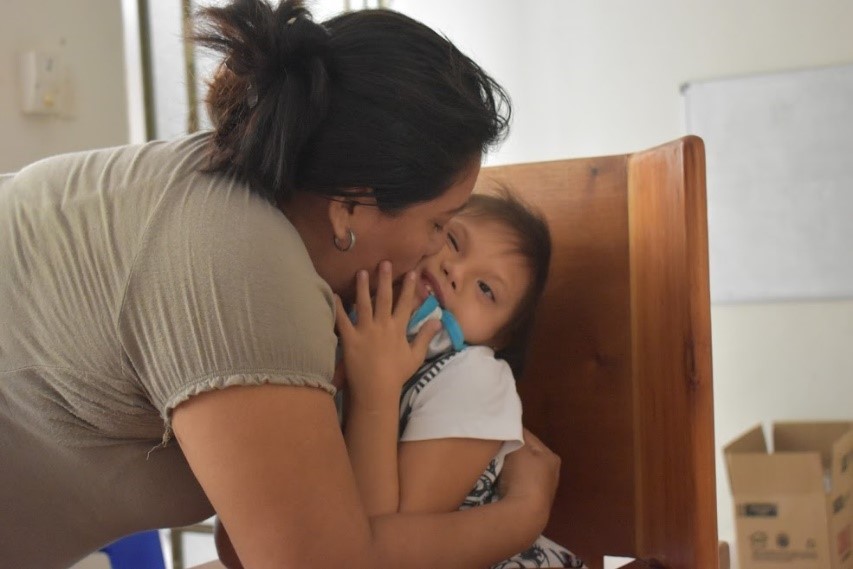
I spent the second month in the capital of the Yucatán, Mérida. Here, I was working with an internationally run non-profit called SOLYLUNA. The organization provides special education opportunities and access to physical therapy, speech therapy, and occupational therapy for children who have a diagnosis of multiple disabilities and their caregivers. The dynamic of the organization was very different than the C.A.M. school, so it was an adjustment. The organization requires that a caregiver accompanies the child for the full day from 7:30-1:30. My job as a volunteer was to assist the parents when needed, and to observe the teachers and therapists. I also worked with the volunteer coordinator and director of the organization to create a document about potential resources to provide for caregivers, and I took pictures for them to use for promotion purposes. Since I was now in a larger city there was a lot more to explore in the afternoons, and I enjoyed travelling on the weekends.
You mentioned that you had opportunities to explore while in Mexico, what was the coolest place you visited/most favorite?
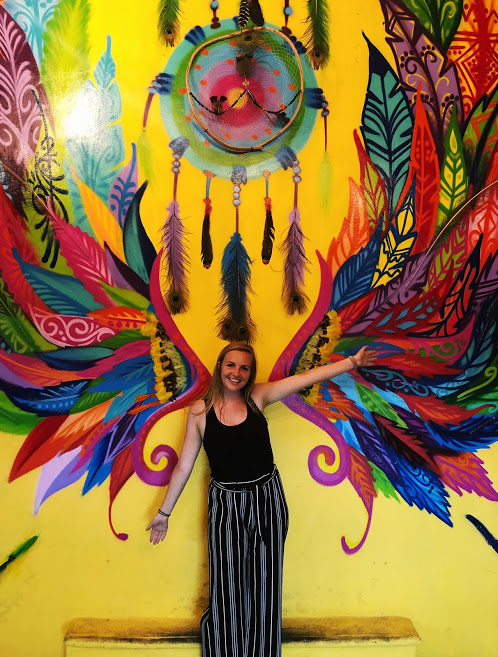
I did have a lot of time to explore while I was in Mexico, especially on the weekends. I enjoyed exploring nearby towns and venturing further to other landmarks. I think my favorite place I traveled to while in Mexico was Isla las Mujeres. This was an island off the coast of Cancún, where we were able to hear lots of live music, enjoy the beach, and go snorkeling. I met a group of other students from Millsaps College, in Mississippi while I was there, and I enjoyed traveling with them and meeting them at different places on some weekends.
If given the opportunity would you go back and work, there again?
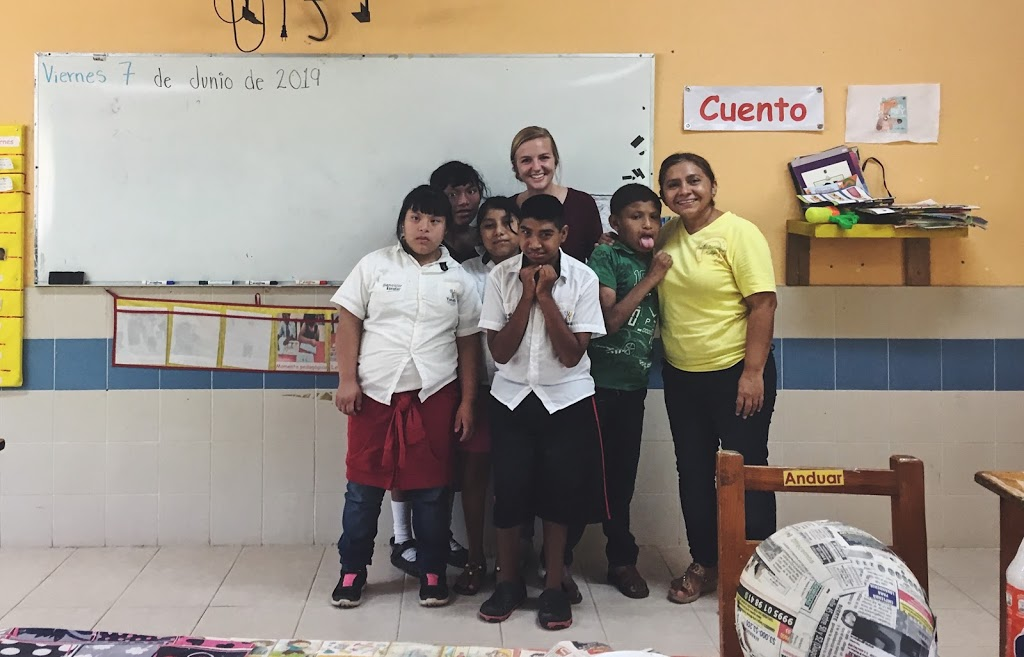
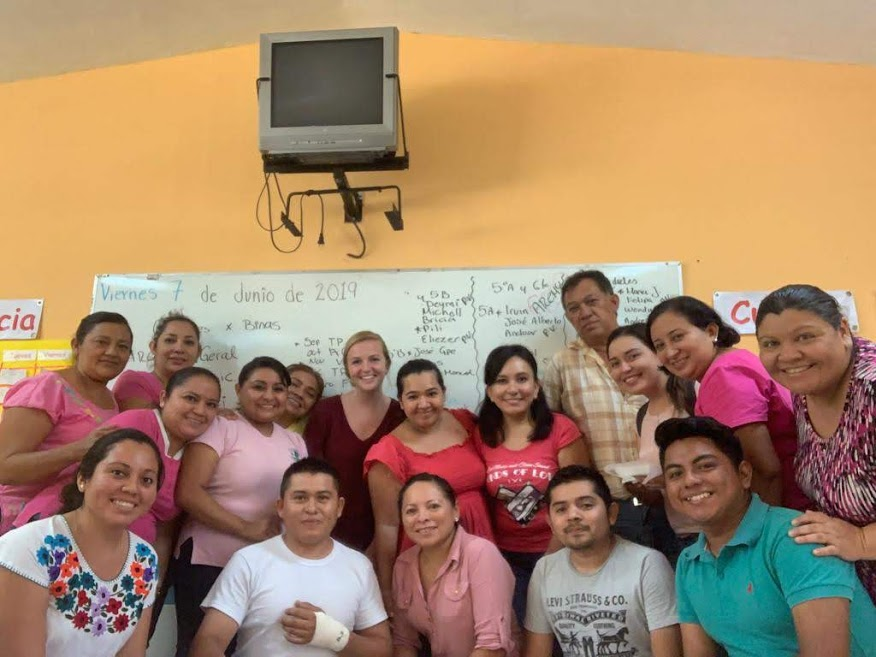
Absolutely! While I was there, I formed a lot of connections with the kids, caregivers, teachers and therapists that I was working with and I would love to see them again (I miss them a lot)! It was hard to leave such amazing people, and such an amazing place.
Is there anything else you would like us to know?
Overall, my experiences in Mexico taught me more than I could have ever imagined. I especially learned a lot about collecting data in another culture, which is an experience I consider myself lucky to have had at this point in my academic career. Whether it is through research, or a different study abroad program, I highly recommend spending time in another country to everyone, because it allows you to learn so much about yourself and the world.
Congratulations again to Rachel Harmon and Dr. Powell and thank you for taking time to answer some questions!
.
.
.
Get Connected!
Blog: https://psych.pages.roanoke.edu/
Facebook: https://www.facebook.com/rcpsychology
Twitter: @RC_Psychology
Linked In: https://www.linkedin.com/groups/RC-Psychology-8140491/about
Website: https://www.roanoke.edu/inside/a-z_index/psychology
Instagram: rcpsychology

 Molly Zydel
 Megan Blackwell


 The psychology department would like to congratulate Noelle Warfford ’19 on her acceptance to The University of Toldeo’s Clinical Psychology PhD program!
 To start off, can you tell me a little about you?


 small, artfully plated bowl of pea soup. Our entrees were then brought out and none of us could talk because we were just so amazed at how good the food was. Finally, we ordered dessert which was the grand finale of our fabulous meal. I ordered an apple pastry which was presented inside of a chocolate dome which then had melted chocolate poured on top of it to reveal the pasty in the shape of a rose. At this point, our friends and I were almost screaming in delight. The rest of our day we couldn’t stop talking about how surprising the meal was and how it was the best dining experience we had ever had.
 the Swiss Alps: Interlaken. While there were many magical moments that happened while I was there, like watching the sunset from the Harderkulm and paragliding, probably the most striking moment was when I was in the mountain top town, Mürren. It’s only accessible by cable car which made it feel like it was almost out of a fairy tale because of the lack of cars. It’s hard to describe exactly how it felt to be so high up in the mountains and to see the snow-capped summits of the Alps in person. In some ways, it was the most peaceful I’ve ever felt.
 hang out with. Luckily, those fears were unfounded! I formed some great friendships while I was abroad with some wonderful people that I hope I get to travel with again in the future.
 turned out to be a kidney stone! Once I was in the hospital and on pain medicine it wasn’t as scary anymore but [everything] leading up to that point was quite stressful. My mom was ready to drop a few thousand dollars to fly over to be with me (and thank God she didn’t). The care I received in the hospital was phenomenal and I was lucky enough to have another girl in my study abroad program there with me for some of the time so I wasn’t alone (she had a seizure on the bus ride from the airport :O).
 What did you learn while abroad? This is not limited to just coursework (though certainly talk about the types of courses you were able to take) but also about the culture or cultures you interacted with and, cheesy as it is, yourself as well.
 I also miss the friends I made abroad. Luckily, my program was for American students, so all my friends live in the U.S., but we’re still pretty far out. Just in my friend group there was someone from California and another from Minnesota, so it will be hard to see them in person in the future. Thank God for technology though!
 Perugia. It was called Pasta alla Norcina and I always got it at this one restaurant called Ferrari. While there were many other delicious foods I had while abroad, this will definitely be what I miss the most, especially because it was a specialty to the area.
 peer problems). Follow-up analyses revealed child age, closeness, and mind-mindedness seem to be especially important to children’s theory of mind development, and that, although these associations were significant throughout early, middle, and late childhood, the closeness-theory of mind relationship was strongest in early childhood. I am aiming to extend this research in several ways, primarily by examining how various sub-types of theory of mind (e.g., belief and desire) may relate differently to these parental and peer factors.
 As a follow-up to the previous article