Author: barowe

  • Color Your Cares Away with RCPA

    With the promise of Fall Break comes the stress of Midterms.

    Escape the stress of midterm week by relaxing and coloring with peers.

    Don’t think you have the time? Running through everything you have to get done before the blessed Fall Break begins?

    Take a break and breathe.

    .

    .

    .

    Get connected!
    Instagram & Twitter:  #PsychRC @RC_Psychology
    Facebook:  https://www.facebook.com/rcpsychology
    Blog:  https://psych.pages.roanoke.edu/
    Linked In:  https://www.linkedin.com/groups/RC-Psychology-8140491/about
    Website:  https://www.roanoke.edu/inside/a-z_index/psychology

  • Thinking of Grad School? A Webinar Opportunity

    Missed out on the Psychology Department’s Graduate School Panel?

    Want to ask a few more questions about navigating graduate school applications?

    Want to ask current graduate school students questions?

    If you are any of the above, then consider attending the webinar hosted by the psychology department from the University of Alabama! Current PhD candidates will be there to answer any questions you might have about the process, or if you just want some advice.

    The online webinar will happen on Wednesday, October 10th at 5 pm CST or 6 pm EST. 

    This is a fantastic opportunity to learn about graduate school applications, ask any lingering questions, and learn about current graduate school student’s experiences.

    Don’t miss out!

    Get connected!
    Instagram & Twitter:  #PsychRC @RC_Psychology
    Facebook:  https://www.facebook.com/rcpsychology
    Blog:  https://psych.pages.roanoke.edu/
    Linked In:  https://www.linkedin.com/groups/RC-Psychology-8140491/about
    Website:  https://www.roanoke.edu/inside/a-z_index/psychology

  • A Quick Look: Thompson in New Zealand

    Rebecca Thompson ’19

    During the spring of 2018, I had the incredible opportunity to study abroad in Palmerston North, New Zealand. While abroad I had the chance to take ‘Abnormal and Therapeutic Psychology,’ which gave an interesting overview to how different countries treat different psychological conditions. My favorite part of the class came through the literature review project we had at the end of the semester. I chose to complete my literature review on eating disorders. My future career plans are veering more towards social work and a law degree, but my background in psychology will help me to understand some of the situations my future clients may be going through. My favorite memory while abroad is skydiving from 17,000 feet over Lake Taupo!

    Thanks to Rebecca Thompson for providing this cool description of her study abroad experience in Palmerston North, New Zealand! It sounds like an incredible and worthwhile adventure, though we are glad to have you back on campus.

    .

    .

    .

    Get connected!
    Instagram & Twitter:  #PsychRC @RC_Psychology
    Facebook:  https://www.facebook.com/rcpsychology
    Blog:  https://psych.pages.roanoke.edu/
    Linked In:  https://www.linkedin.com/groups/RC-Psychology-8140491/about
    Website:  https://www.roanoke.edu/inside/a-z_index/psychology

  • Mental Health in Rural Appalachia

    Dr. Dane Hilton will be discussing mental health in rural Appalachia tomorrow (Wednesday, October 3rd) at 7:00 pm in Life Science 502.  Specifically, in terms of prevalent mental health diagnoses and problems with accessibility to treatment in these areas.

    This talk is sponsored by the Roanoke College Honors Program.

    All are welcome.

    Hope to see you there!

    .

    .

    .

    Get connected!
    Instagram & Twitter:  #PsychRC @RC_Psychology
    Facebook:  https://www.facebook.com/rcpsychology
    Blog:  https://psych.pages.roanoke.edu/
    Linked In:  https://www.linkedin.com/groups/RC-Psychology-8140491/about
    Website:  https://www.roanoke.edu/inside/a-z_index/psychology

  • Mindfulness Meditation: What It Is, What It Isn’t, and Why You Should Care

    Dr. Dane Hilton was asked by a student assistant to discuss mindfulness meditation, specifically about what mindfulness is and the many misconceptions regarding it. Thank you, Dr. Hilton, for taking time to write this post. Enjoy!

    ___________________________________________________________________________

    Mindfulness meditation is a topic that has exploded into the popular culture in the past 10-15 years. In 2018 alone, dozens of books have been published with Mindfulness as the main subject, with titles including Mindful Me: Mindfulness and Meditation for Kids by Whitney Stewart, Falling Awake: How to Practice Mindfulness in Everyday Life by Jon Kabat-Zinn, and the cutely illustrated A Sloth’s Guide to Mindfulness by Ton Mak. A quick search of Google Scholar for the term “mindfulness meditation” included in anything published in 2018 gets you 129,000 hits. I will admit I did not filter through all of those results to verify but the point is this: mindfulness is getting a lot of attention.

    As a researcher of mindfulness meditation, I am glad that this topic is getting its time in the limelight. Mindfulness has the potential to improve the lives of humans in a variety of ways, though the questions of how, in what ways, for whom, and under what circumstances are still up for debate and empirical examination. While I am happy on one hand, on the other hand I do worry about issues that arise with the rapid increase in interest surrounding mindfulness. As we all know, popular things are marketable things. They generate buzz, get people to click on your article or blog post (like this one!), and make publishers excited when you come to them with a “cutting edge” book that claims to cure all that ails you. When demand increases, everyone is more than happy to contribute to the supply. Unfortunately, that increased quantity doesn’t equal quality. Quite frankly- you may not even get what you think you are getting…So I want to briefly talk about what mindfulness is, clarify what it is not, and present some literature supporting why I still believe you should care.

    Let me be clear: mindfulness meditation is not new. It is not “cutting edge.” It is not a product of new technology or “third-wave” psychology or even a better understanding of human nature. Mindfulness is actually quite old. The mindfulness that most folks think of today is actually rooted in thousands of years of history in Eastern religions, including Judaism, Hinduism, and Buddhism. The practice itself is not new. What is new is the recognition by researchers in health and medicine that meditation can have profound physical and psychological effects on the body. I will mention some of these toward the end of this post. Regrettably, the influx of passengers on the mindfulness bandwagon- that, I must admit, includes me- has sometimes led to a watering down, or even total misrepresentation, of mindfulness.

    So what is mindfulness? Mindfulness, simply put, is an open and nonjudgmental stance toward one’s present moment experiences. In other words, mindfulness is an approach to existence marked by awareness and acceptance of the full spectrum of human experience- including all the things we think of as positive (e.g., joy, surprise, laughter, love), negative (e.g., sadness, fear, loss, anger), and anything in between. We can be mindful of physical sensations (e.g., breath, pain, fatigue), thoughts (e.g., “I’m awesome,” “I feel so stupid right now”), emotions (e.g., sadness, happiness, irritation), interactions with others, experiences of the outer world, and even our relationship to ourselves via our inner world. It is an approach to living that allows you to experience fully- embracing, rather than fighting, all the things that come with being human.

    So what is mindfulness not? It is not a “tool.” It is not one more technique you pull out of your grab bag of breathing exercises, stress relief tactics, and progressive muscle relaxation scripts to use when life starts getting to you. It is not a shield from the tension and busyness of this thing we call life. Despite the fact that mindfulness is clearly not meant to beat back hectic schedules, difficult relationships, troubling inner thoughts, or anxiety about impending deadlines, much of the information you will find on mindfulness presents as just that- a tool to guard against the horrors of 21st century life. Decreased stress, increased sense of well-being, better clarity of thought, and improved psychological functioning are certainly potential byproducts of regular mindfulness practice but to say that you should engage in mindfulness with those things as the goal is to totally miss the point. All the cool effects of mindfulness that make for attention grabbing headlines are, in fact, just side effects of a more open, aware, and accepting approach to the stuff life slings our way.

    Another thing that mindfulness is not is a religion. I think this is an important distinction because in my short time practicing mindfulness and talking with others about it, the issue of whether mindfulness is indicative of a specific religious group or set of beliefs is often a sticking point and potential barrier to individuals looking further into it. While mindfulness meditation certainly does have roots in religion and can even be traced back to specific religious teachings, as I mentioned a few paragraphs back, the basic tenets of mindfulness meditation can fit within any number of worldviews and beliefs. If you believe that life happens now- not 5 seconds ago or 5 seconds from now- then mindfulness might just be for you.

    So now that we have a brief outline for what mindfulness is and what it is not, we still have the question of why you should care. The first reason I will suggest is simply an opinion- and probably a philosophical one at that. Life is happening now. Life is happening in this present moment and once that moment passes, it is gone for good. A mindful stance to life helps us to experience these moments more fully- in essence, living more fully. Maybe it’s just me but I don’t want my life to pass by not having had the chance to truly live it. The second reason comes from my practical and scientific side- mindfulness appears to be immensely beneficial to those who practice it. As I said earlier- health and wellness are not the explicit goals of mindfulness practice, but it does have some super nice side effects.

    Mindfulness practice has been associated with improved cognitive functioning (Zeidan et al., 2010), fewer depression and anxiety symptoms (Chiesa & Serretti, 2011; Hofmann et al., 2010), improved adjustment to major health problems (e.g., cancer diagnosis; Ledesma & Kumano, 2008), less pain and improved functioning in those with chronic pain (Zeidan et al., 2012), greater engagement in positive health behaviors (Jacobs et al., 2016), improved self-regulation and greater resilience in children (Coholic et al., 2012; Semple et al., 2010), and functional brain changes in areas associated with self-regulation/emotion regulation, higher cognitive function, and memory, among other functions (Gotnik et al., 2016; Gartenschläger et al., 2017). This isn’t even close to a comprehensive list but you can check this article for a well-written overview of some of the benefits of mindfulness practice. There is a reason so many people are studying mindfulness and other forms of meditation. It is an exciting time in research as we come to better understand the numerous effects of mindfulness and the mechanisms by which these effects occur.

    I will end this post with a final thought on our conceptualization of mindfulness. You may have seen a picture depicting a cartoon human whose thought bubble is “mind full” while his cartoon dog’s thought bubble is “mindful.” The dog is supposedly more mindful because his thought bubble reflects the environment he is in- sun, grass, trees- while the human’s mind is filled with busyness- thoughts of other people, cars, music, bills, etc. I get the artist’s intention but I still think this misses the mark. Part of being human is that our minds are often wild and out of control. Even in this state, we can be mindful of our experience. It is when we stop fighting against the experience of the moment that we can start to appreciate living in the moment. This is mindfulness.

    .

    .

    .

    Get connected!
    Instagram & Twitter:  #PsychRC @RC_Psychology
    Facebook:  https://www.facebook.com/rcpsychology
    Blog:  https://psych.pages.roanoke.edu/
    Linked In:  https://www.linkedin.com/groups/RC-Psychology-8140491/about
    Website:  https://www.roanoke.edu/inside/a-z_index/psychology

  • Roanoke College Featured in “Eye on Psi Chi Fall 2018”

    Click on the image to be taken directly to the PDF version of the magazine.

    Roanoke College’s Psi Chi chapter was recently featured in the latest edition of Eye on Psi Chi, the official International Honors Society’s magazine.

    In this Fall 2018 edition, all chapters throughout the country were able to share their accomplishments from the previous semester. These categories include: Community Service, Convention/Conference, Fundraising, Induction Ceremony, Meeting/Speaker Event, Recruitment, and Social Events.

    For Roanoke’s Psi Chi chapter, we had thirty-four new members inducted in the spring.

    We also had two major fund-raisers: Psy-Dye and Pie a Prof, with the latter earning around $550.00 in proceeds to support the American Foundation for Suicide Prevention.

    A special feature on Pie a Prof will be coming soon, with pictures and videos included of that fateful day.

    Congrats Psi Chi for being featured and thank you for all of your hard work! We are proud and look forward to seeing what you do in the future.

    .

    .

    .

    Get connected!
    Instagram & Twitter:  #PsychRC @RC_Psychology
    Facebook:  https://www.facebook.com/rcpsychology
    Blog:  https://psych.pages.roanoke.edu/
    Linked In:  https://www.linkedin.com/groups/RC-Psychology-8140491/about
    Website:  https://www.roanoke.edu/inside/a-z_index/psychology

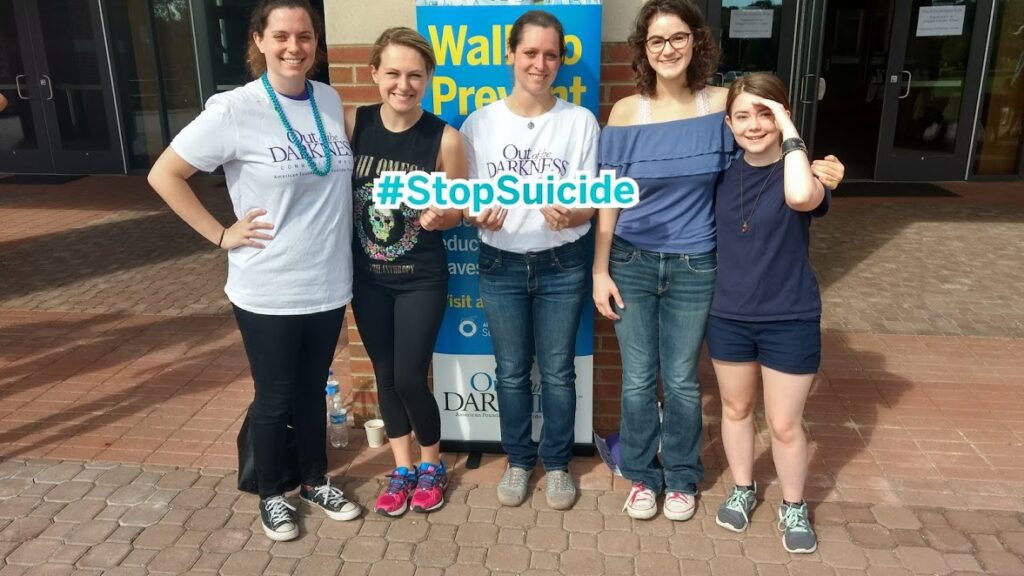
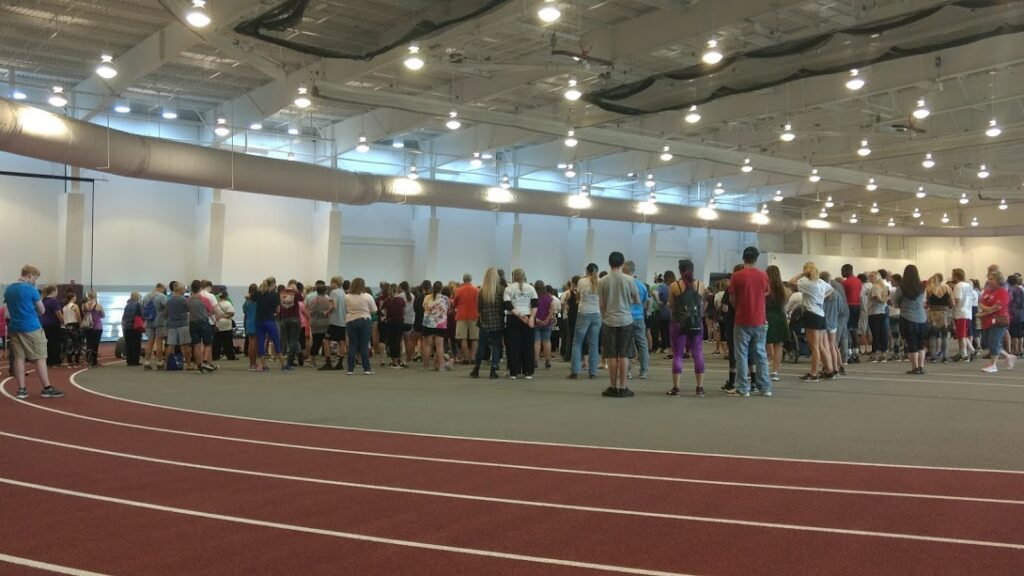
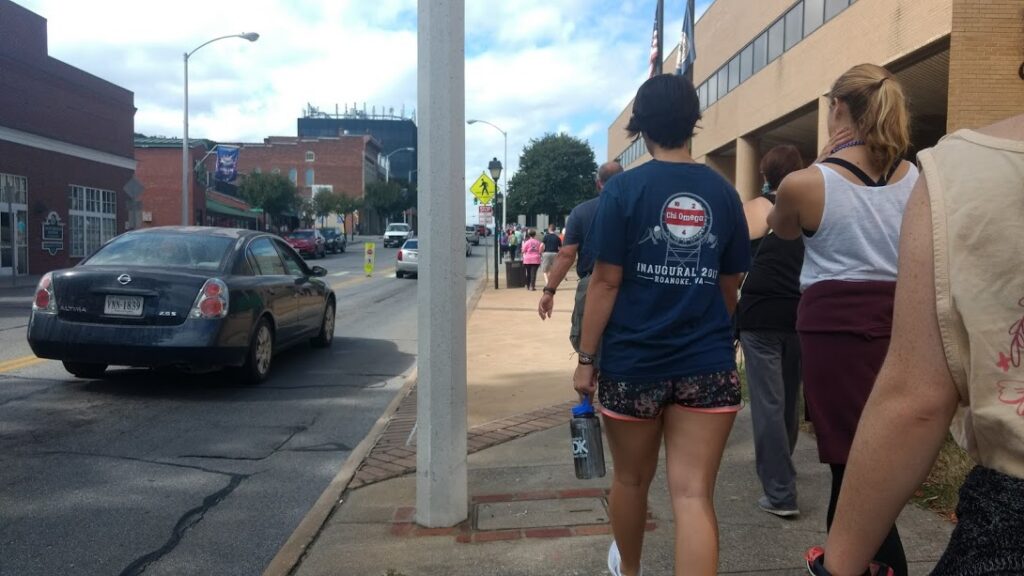
  • Out of the Darkness: Suicide Prevention Walk 2018

    Open to the Roanoke/Salem/New River Valley community, the Out of the Darkness: Suicide Prevention Walk will commence at 11 am on Saturday, October 6, 2018, starting at the Cregger Center.

    Registration/Check-in begins at 10 am. 

    This is the fourth year that Roanoke College has hosted the Suicide Prevention Walk. Last year, psychology professors and students, including representatives of Psi Chi and RCPA, supported the event by volunteering and/or walking.

    If you are interested in attending the event, then please register here. You can also donate through the link, which takes you to our team’s page. So far, we’ve raised $75, with our goal being $100.

    We would love to have you join us in support of the Out of the Darkness Community Walk!


    Get connected!
    Instagram & Twitter:  #PsychRC @RC_Psychology
    Facebook:  https://www.facebook.com/rcpsychology
    Blog:  https://psych.pages.roanoke.edu/
    Linked In:  https://www.linkedin.com/groups/RC-Psychology-8140491/about
    Website:  https://www.roanoke.edu/inside/a-z_index/psychology

  • ESP? Dr. Lindsey Osterman Takes a Look

    Dr. Lindsey Osterman was recently interviewed by a student assistant on a podcast about ESP or extrasensory perception.

    ESP is believed to be akin to a “second sight” or “sixth sense”.

    For their 149th episode, the podcast, Serious Inquiries Only, focused on a meta-study published in the American Psychologist that indicates there might be some truth to the existence of ESP.

    As a follow-up to their initial podcast, they asked Dr. Osterman, an expert in Experimental Psychology, to discuss the article and whether the findings reported in the meta-study were legitimate.

    According to Dr. Osterman,

    “…the podcast itself [Serious Inquiries Only] is a show about science, philosophy, and current events, all discussed from a ‘skeptical’ perspective in the truest sense of the term ‘skeptical.’ The host (Thomas Smith) is committed to approaching all the topics he covers with both curiosity and a critical evaluation of the evidence, and he does his best to correct for (and be transparent about) the preexisting biases that might be contributing to his thinking about those topics.”

    Dr. Osterman had been featured on Serious Inquiries Only two years previously, where she discussed a critique on the history of evolutionary psychology published by a historian.

    Both of my appearances served a similar goal, which was to provide a nuanced and evidence-based opinion about a scientific-sounding claim that was not actually rooted in high-quality evidence. In the first one [from two years ago], I responded to an interview that Thomas conducted with a historian, who had published a very-detailed — but in my opinion, very ill-informed — critique of evolutionary psychology.

    Similarly, in this latest podcast, Dr. Osterman responded to a conversation…

    [Smith] recorded with a professor of philosophy and a clinical psychologist about a review paper (published in American Psychologist, a respected, peer-reviewed journal), which argued that the empirical evidence for psi (or paranormal cognitive abilities, like being able to see the future) is very strong and consistent. My contention was that the article omitted critical details about the evidence, and in turn, presented a case that looked much stronger than it actually was.

    Thank you to Dr. Osterman for being awesome as usual.

    For those interested in knowing more details about the article and what Dr. Osterman found within it, the links to the podcasts are below. The first episode has been included for those who want to know what sparked the debate and to have a better idea of what Dr. Osterman and Thomas are discussing in the later episode.

    In addition, click here for the link to the PDF of the article that sparked this debate.

    Take a listen.

    https://seriouspod.com/sio149-is-esp-real-no-really-it-might-be-2/

    Dr. Osterman’s analysis:

    https://seriouspod.com/sio150-ok-esp-isnt-real-with-dr-lindsey-osterman-2/

    .

    .

    .

    Get connected!
    Instagram & Twitter:  #PsychRC @RC_Psychology
    Facebook:  https://www.facebook.com/rcpsychology
    Blog:  https://psych.pages.roanoke.edu/
    Linked In:  https://www.linkedin.com/groups/RC-Psychology-8140491/about
    Website:  https://www.roanoke.edu/inside/a-z_index/psychology

  • A Brief Interview with Dr. Stacy Wetmore

    The following is a brief interview with Dr. Stacy Wetmore, a new tenure-track professor at Roanoke College. A student assistant was recently able to interview her to learn more about her, her interests, and some cool facts that readers may not know. There’s a picture of a cute puppy at the end of this interview: keep reading to see it.

    So, how do you like Roanoke so far? Is it very different from what you’re used to?

    So far, I’m loving it!! I’m excited that the semester is underway and I get to teach some really interesting topics. I like that I have fairly small class sizes and I will know all of my students’ names in no time. RC is similar in a lot of ways to where I most recently taught, so now it’s just a matter of learning the little quirks about how about things work here.  One thing that is a little different are the class times, so I’m always a bit nervous I’m going to be late!

    Where did you go to undergraduate and graduate school?

    University of Oklahoma

    For my undergraduate (BA in Psychology) and Master’s degree (Experimental Psychology) I was at The University of Alabama in Huntsville. And I got my PhD from the University of Oklahoma. (Dr. Osterman and I actually met there many years ago!!!).

    What classes are you teaching right now and what types of courses will you be teaching in the future?

    Currently, I’m teaching two sections of the INQ 260 Psychology in the Media, and one PSYC 101 Introduction to Psychology. In the near future, I’ll be teaching Cognitive Psych and Research Methods.  I will also be developing (over the upcoming years) a new INQ 110, a Memory course, and a Psychology and Law/Forensic Psych course as well.

    What are some of your past and current research experiences and interests?

    Founders Building, Egham, England.

    My most exciting research experience was getting to be a Postdoctoral Researcher at Royal Holloway, University of London, in Egham, England. I hadn’t yet finished my dissertation, but accepted a position overseas to work on a project evaluating the U.K.’s eyewitness identification system/technique. I got to be a researcher, without any teaching responsibilities for 1.5 years and learned a lot of new stuff, as well as did research that could inform policy abroad.

    In terms of research interests, Dr. Wetmore explains…

    The overall focus of my research examines the intersection between cognition and the legal system. Research that I have been involved in, thus far, has been in three major areas.

    Dr. Wetmore

    The first is research on jailhouse informants. Jailhouse informants are a leading cause of wrongful conviction, yet very little is known about this form of evidence, including how jurors perceive and weigh this information, and if there are effective safeguards against it.

    Another cause of wrongful conviction that I have studied are eyewitness identifications. Specifically, my research focused on show-up identification procedures, in which the individual must make a decision from a single face. My colleagues and I found that the show-up was a more unreliable memory test than a more traditional six-pack lineup. I’m interested in developing other procedures or methods of evaluating eyewitness memory in order to make it a more effective source of evidence at trial.

    Lastly, related to eyewitness identifications, I’m interested in facial processing and memory in general. Humans are made specially to be able to process faces super-fast and efficiently, however there are still instances when this mechanism breaks down and I’m interested in examining these instances when it falters. For instance, a well-known phenomenon is the cross-race effect, or own-race bias, in which we are better at identifying someone from our own race better than from another race. Although we know the phenomenon exists, little is known about what cognitively could be different in the processing so I want to investigate this issue further.

    What are some random/cool facts about you?

    • I was a collegiate athlete in tennis.
    • I lived abroad for 2 years in England as a postdoctoral researcher.

      Dr. Wetmore’s adorable puppy, Daisy.
    • Super allergic to 100% grape juice – but can drink the not healthy stuff, wine, and eat grapes… I think this fits under random.

    Is there anything else that you’d like to mention?

    I have the cutest (I might be biased) 7 month old puppy, Daisy, that I walk around campus every morning between 6-7 (depending on when I can drag myself out of bed) and every evening, so anyone who runs into us is welcome to say hello. 🙂

    Thank you Dr. Wetmore for taking your time to answer our questions, and welcome again to Roanoke College! We are glad to have you here (and Daisy too)!


    Get connected!
    Instagram & Twitter:  #PsychRC @RC_Psychology
    Facebook:  https://www.facebook.com/rcpsychology
    Blog:  https://psych.pages.roanoke.edu/
    Linked In:  https://www.linkedin.com/groups/RC-Psychology-8140491/about
    Website:  https://www.roanoke.edu/inside/a-z_index/psychology

  • Congrats to Cody Dillon-Owens!

    Cody Dillon-Owens ’19

    A student assistant recently caught up with senior Cody Dillon-Owens, who was selected as one of eight recipients of a 2018-19 Psi Chi Undergraduate Scholarship worth $3,000!

    For Cody,

    …Being a part of Psi Chi gave me the opportunity to apply to this scholarship, which I did so at the suggestion of one of my professors. I didn’t know if I would get it because it was a national level scholarship, but I am super grateful that I was one of the few selected to receive it. This scholarship actually allowed me to more or less cover the rest of my costs for senior year, so I’ll be able to focus on saving up for graduate school and getting an apartment next year. That reduced financial burden is a huge stress reliever and I’ll be able to better focus on my studies.

    According to Psi Chi’s Scholarship Review Committee and the Board of Directors, Cody’s application “truly stood out to the judges as this year’s Undergraduate Scholarships had just over 165 applications.”

    Congratulations Cody from everyone at the psychology department!

    More Information:

    Cody is the Head Student Assistant in the Psychology Department and works with Dr. Buchholz on Alumni Relations and Career Development. He is currently pursuing a B.S. in Psychology, with a concentration in Human Development; Cody was awarded the Fintel Senior Scholarship, among other awards. You can find his LinkedIn page here.


    Get connected!
    Instagram & Twitter:  #PsychRC @RC_Psychology
    Facebook:  https://www.facebook.com/rcpsychology
    Blog:  https://psych.pages.roanoke.edu/
    Linked In:  https://www.linkedin.com/groups/RC-Psychology-8140491/about
    Website:  https://www.roanoke.edu/inside/a-z_index/psychology