Author: barowe

  • RC Psychology Professors on the Radio

    During The Academic Minute’s Roanoke College week in December, professors from different departments including psychology, biology, and chemistry were asked to record short segments describing their recent research findings and an ‘I didn’t know that’ fact.

    Drs. Osterman and Powell represented the Psychology Department.

    Dr. Lindsey Osterman spoke about the perception of actors following the wake of the #MeToo movement, where the sexual misconduct scandals surrounding several prominent celebrities in recent years resulted heated public debates. In the segment below, Osterman discusses the research study she and her co-author (Theresa Hecmanczuk, Roanoke College senior) performed in determining the answer to the question: ‘after a scandal, who forgives a previously beloved media figure and who turns on them?’ Listen below to learn more.

    Dr. Darcey Powell described how prenatal expectations differ from postnatal experiences and postnatal desires regarding the division of labor, and how they impact women’s adaptation to motherhood. In addition, Powell explained how important it is for parents with a young infant to find the time to discuss their desires regarding sharing the duty of caring for their little one. To learn more, listen below.

    To listen to all of the segments, click here to see Roanoke College News’ post, published in December.

    .

    .

    .

    Get Connected!

    Bloghttps://psych.pages.roanoke.edu/

    Facebookhttps://www.facebook.com/rcpsychology
    Twitter: @RC_Psychology

    Linked In: https://www.linkedin.com/groups/RC-Psychology-8140491/about
    Website: https://www.roanoke.edu/inside/a-z_index/psychology

    Instagram: rcpsychology

  • Summer Counselor Opportunity at Florida International University Center for Children and Families

    Learn about a paid summer opportunity below, as described by the Center for Children and Families at Florida International University with edits by a RC student assistant for readability:

    The Center for Children and Families at Florida International University announces Summer Treatment Program Counselor positions for 2019. The Summer Treatment Program (STP) provides services to children with Attention-Deficit Hyperactivity Disorder (ADHD), Conduct Disorder, Oppositional-Defiant Disorder, learning problems, and related behavior problems. The program provides treatment tailored to children’s individual behavioral and learning difficulties. Counselors will work in the STP-PreK, for children in preschool or entering Kindergarten, or the STP-E, for children ages 6-12 in elementary school.

    The dates of employment for the Counselor position are Monday, June 3, 2019 through Saturday, August 10, 2019. Counselor hours of employment are 7:00 AM to 7:00 PM, Monday through Friday, and on Saturday, August 10. In addition, Counselors continue to work with the children until 8:30 PM one evening each week while parents participate in weekly parent training groups.

    Counselors are paid a salary of $4,000 for the summer. In addition, current students may be able to arrange for academic course credit through their university departments.

    Desired qualifications for Counselors include: undergraduate-level study in Psychology, Education, Behavior Analysis, Social Work, or related field; experience working with children or adolescents in settings such as summer camps, after-school programs, sports programs, daycare programs, and educational programs; and experience with activities such as organized sports activities, art, music, dance, theater, journalism, photography, and videography.

    Additionally, participation in the STP requires staff members to ensure the safety, well-being and treatment of children and adolescents with mental health, learning, attention and behavior problems. Staff must be able to visually scan the environment, effectively attend to and hear verbal exchanges between children, provide neutral, corrective feedback on children’s misbehavior (which can include aggression), provide a consistent, warm, positive climate for children, and actively engage in sports and physical activity. Applicants must be able to meet the above requirements of the position.

    Applications for STP positions will be accepted beginning in October, 2018. Applicants are required to complete an online application form and to submit 3 letters of recommendation and an official transcript.  There is no cutoff date for applying. Applications received after all positions have been filled will be placed on a waiting list. Positions are competitive so interested individuals should apply as soon as possible.

    Interested in applying? Continue reading for a more in-depth description of the offered programs. You can also follow this link to visit their official website to learn more about their programs and apply!

    (more…)

  • Are Our Beloved Smartphones Actually Making Us Miserable?

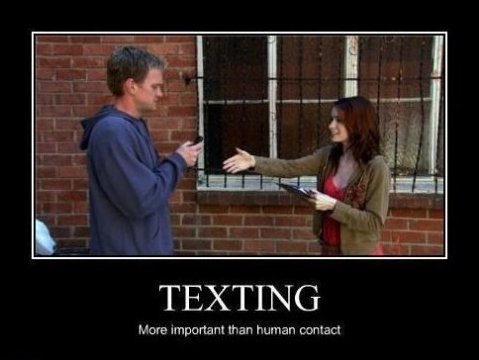
    Related image

    This is the final blog post created by students in Dr. Carter’s Fall 2018 Social Psychology course. It was written by Jackie Hernandez, Shannon Snyder, Autumn Kempf, and Saul Pineda-Torres.

    “Hey, wyd rn?”

    “Omw to see the bf IRL!! I’ll keep you updated!”

    Have you ever been in this situation? Out to dinner but still trying to keep up with all your friends? Have you ever stopped to think your phone is getting in the way of hanging out with people “irl” (that’s “in real life” for those who aren’t up to date with the texting lingo)?  Ryan J. Dwyer, Kostadin Kushlev, and Elizabeth W. Dunn set out to examine how the ubiquitous smartphone impacts social encounters [in their study]. Does phone usage reduce or add to the enjoyment of your interactions? 

    There have been plenty of studies showing the negative impact of phone use in situations like driving and learning, but until now, no studies have actually manipulated smartphone usage in social interactions. Past studies have proven that smartphones cause people to be distracted which, theoretically, could mean the use of smartphones decreases enjoyability in social experiences. 

    The experimenters invited groups of 3 to 5 friends or family members to a local restaurant to participate in a study about “dining out experiences.” The groups were then randomly assigned to be either “phone” or “phoneless” groups. They were implicitly manipulated by being asked, after placing their order, to either answer a text survey (phone group) or a paper survey (phoneless group). The participants in phoneless groups were asked to put their phones on silent in a container on the table. Both groups obviously had the option to use their phone since no one was told they couldn’t. The significant difference was that the participants in the phone groups were explicitly asked to use their phone early on to respond to the survey. 

    The participants were deceived about the true nature of the experiment to ensure the most naturalistic results possible. When the meal was finished, participants were then questioned via iPad (for privacy) about social connectedness, interest, enjoyment, distraction, and boredom. The researchers also measured how much the participants actually used their phones. The whole meal was recorded, so the researchers could break down total phone usage into percentages. Participants in the phone groups used their phones for an average of 11% of the meal, while participants in the phoneless groups used their phones for an average of only 1% of the meal. So, while the phoneless group wasn’t completely phoneless, these participants used their phones significantly less than that in the phone group. Participants in the phone group reported being more distracted, having less interest and enjoyment, and being more bored than the participants in the phoneless group. This data allows the researchers to conclude that distraction caused by phone use does hinder enjoyment. In other words, using phones while eating out with friends could ruin our chances of fun.

    The results indicated that participants under the phone condition were more distracted and in response reported lower interest and enjoyment levels, and higher levels of boredom. Since whether phone use led to distractions or distractions led to phone use cannot be proven through the first study, the researchers set up Study 2. Study 2 was an extensive survey asking people about situations other than just eating out with friends or family, which allowed more general conclusions to be drawn. People reported that using phones overall cause distractions which lead to less interest in their daily interactions. 

    The irony of this research is that we think our phones keep us linked to the world, when actually phone usage undermines the social connectedness we feel when spending time with other people. The experiment was relatively small and further research should be done, but it does seem to indicate that this amazing piece of technology lessens the enjoyment we get out of spending time with friends and family. The researchers did fail to examine whether the personality or mood of the participants could have played a role in the results. In the future, researchers should ask the participants before the meal if they are looking forward to it. If they are not, they are likely to be more bored and could possibly resort to their phones to fill in the entertainment gap. 

    To summarize the relevance of this experiment, enjoy your life! Put your phones away and soak up the face-to-face conversations with those you love. Because we are so used to communicating through technology, we have to distinguish when we are doing something “irl”. Social media can wait; work can wait. Put away the technology and engage in the world around you. You’ll enjoy it more—trust us, the research says so!

    .

    .

    .

    Get Connected!

     Blog:  https://psych.pages.roanoke.edu/

    Facebook:  https://www.facebook.com/rcpsychology

    Twitter: @RC_Psychology

    Linked In:  https://www.linkedin.com/groups/RC-Psychology-8140491/about

    Website:  https://www.roanoke.edu/inside/a-z_index/psychology

    Instagram:  rcpsychology

  • A Blog Post by Samantha Luby, Grace Page, Vanessa Pearson, and Amy Smith

    Related image

    The fourth post from Dr. Carter’s Fall 2018 Social Psychology course, this post was written by Samantha Luby, Grace Page, Vanessa Pearson, and Amy Smith. ___________________________________________________________________________

    When talking about stereotypes and placing someone in a specific group, we do not tend to think about gender differences in children when it comes to performance in different school subjects. We do not necessarily think that gender may affect final scores, specifically in reading, but it does. In this experiment, the authors set out to find data that shows there is implicit reasoning for why girls outperform boys in reading. Overall, the authors are focused on the stereotype that girls perform better in reading than boys and how that affects the boys reading scores.

    Within this experiment, students were chosen from four classes among a group of public schools. The kids took a reading test designed to measure their recognition and comprehension of written words in a normal classroom setting. Experimental conditions were implemented in the classrooms, and all of the students were assigned to either the stereotype threat (ST) condition or the reduced-threat condition. In the ST condition, the experimenter, posing as a reading teacher, told the students that their task was to take a reading test that was designed to evaluate their “ability in reading”. In the reduced-threat condition, the experimenter, posing as a game designer, told them that their task was to play a game in which they had to underline as many animal names they could from a list in three minutes. After the test, the kids had to answer questions about the test, as well as how important reading was to them.

    The ultimate findings of this experiment showed that stereotype does, in fact, play a part in boys’ reading performance in school. When looking at the results from the stereotype threat condition, girls performed much higher than boys in reading due to the boys’ perceptions of the stereotype that they tend to do more poorly. Under the reduced-threat condition, however, there was no strong evidence that boys and girls performed differently in the reading assessments. This demonstrates that within a traditional setting, boys are strongly affected by the reading gender stereotype, particularly when in a stereotype threat condition, such as taking a reading assessment. The presence of this stereotype therefore does produce poorer reading results in boys.

    Although some may argue that the boys’ underperformance on reading tasks are due to the lack of motivation, the findings of this study suggest otherwise. Highly motivated boys still underperformed in reading in the threat condition. This led the researchers to believe this reading difference between genders is because boys are fearful of confirming the stereotype regarding their gender group and reading. These perceptions the boys had because of the stereotype influenced their psychological processing, ultimately affecting how they performed on the reading task. In the threat condition, simply being aware of the stereotype resulted in poorer performance. On the other hand, in the non-threat condition, the boys were not thinking about the stereotype, allowing them to perform better on reading tasks.

    The main issues present within this experiment are components the researchers failed to consider when making general statements about the effects of stereotype threat in children’s reading performances. For example, the researchers claim that from this experiment, it is evident that stereotype threat largely affects learning and performance in most, if not all, classrooms. This is problematic because they are basing this assumption off their study examining only four different classes, all of which were third grade classrooms from three different public schools in France. Before they make blanket statements such as this, the researchers need to consider who their experiment truly applies to and who it does not. The results of the experiment could vary based on: public versus private schooling, the language children are reading, the country/location the schools are in, the grade level that is being tested, and the number of classrooms that are tested.

    ___________________________________________________________________________

    Citation: Pansu, P., Regner, I., Max, S., Cole, P., Nezlek, J. B., & Huguet, P. (2016). A burden for the boys: Evidence of stereotype threat in boys’ reading performance. Journal of Experimental Social Psychology, 65 (26).

  • The Gift That Gives Back: How Being Kind Makes You Happier

    Image result for aesop meme no act of kindness

    The third blog post from Dr. Carter’s Fall 2018 Social Psychology class is titled The Gift That Gives Back: How Being Kind Makes You Happier and was written by Kira Hunt, Yuri Chikada, Holly Garrett, and Jacob Plaster. Enjoy!

    ___________________________________________________________________________

    Aesop once said, “No act of kindness, no matter how small, is ever wasted.” Even the smallest acts of kindness (e.g. holding the door open for someone) don’t go unnoticed by the receiver of the action. It is also a reason that those who ask for help say that even the smallest bit helps. However, those it helps doesn’t just stop at the receiver of the act. One might even say that it makes people feel good to do good, specifically when performing acts that help either a family member, friend, or even a stranger.

    Recent studies have examined the causal relationship between acts of kindness and well-being or happiness. In a systematic review and meta-analysis titled “Happy to help?” social psychology researchers Oliver Scott Curry, Lee A. Rowland, Caspar J. Van Lissa, Sally Zlotowitzd, John McAlaney, and Harvey Whitehouse analyzed twenty-seven experimental studies that tested the hypothesis that kindness causes wellbeing.

    Common methods of the studies included asking participants to perform either a set number of acts of kindness or spend a given amount of money on others. For example, in one study, participants were asked in the following week to perform at least five acts of kindness per day and report not only the act but the responses of the recipient. They were then asked to self-report measures like happiness on scales. Some studies had control participants do nothing, others had the participants act kindly in a non-social activity, while some participants were asked to help themselves. For example, for prosocial purchases (i.e. spending money on others), the control was spending money on themselves.

    The researchers found evidence proving their hypothesis of acts of kindness improving the wellbeing of the actor (i.e. the person performing the act of kindness). Humans are social beings, and it means that we have psychological mechanisms that motivate us to help others. These motivations include biological and sociological benefits.

    Kindness towards genetic relatives is favored by natural selection as seen by parental care. Kindness towards members of the same group allows us to form and maintain groups which enhance belonging. Kindness is also seen to potentially improve individual status as it can impress others and potentially attract mates. We also see kindness towards people we may see again as being beneficial to cooperation and the rules of reciprocity.

    We tend to see people who need help as some reflection of ourselves and it makes it difficult to ignore those people who need help. For example, if you dropped your papers in the middle of the road and those papers spread out, you need some help to collect them all. When we see others in similar situations, we visualize ourselves in that position and potentially the same feelings as those in the situation. After helping those people, we get satisfaction from doing so.

    This satisfaction otherwise known as happiness is a psychological reward that proves that a problem was solved successfully. If someone acted in a kind way, they can get a good reaction from the person who needed help because the person who needed help had their problem solved. The person who helped made the situation better. It can improve their self-esteem. After that, they can understand how they should help in those situations.

    There are some limitations of this research, however. Most of the studies had very small samples and many used non-clinical samples. Due to this, it’s not possible to say that those with specific mental problems are affected in the same way by performing acts of kindness. Several of the studies did not account for the motivation behind the acts, so motivation could possibly be another variable that leads to the results. It is possible that intention to help oneself rather than others could eliminate the effects of improved well-being. The studies also didn’t account for the variety of recipients (e.g. family members, strangers, friends, etc.) nor did they investigate any long-lasting effects. Most studies only investigated immediate effects. In align with the motivations previously mentioned, it is possible that certain people had improved wellbeing giving to the groups they belonged to, rather than groups they didn’t. Also, it is possible that this happiness is only a short-term effect and is not important in the long term.

    Though there does seem to be an outcome of happiness from performing acts of kindness, the effect seems small in the grand scheme of things. Even still, kindness appears to be the best gift to give as it eventually gives back to you.

    Citation: Curry, O. S., Rowland, L., Lissa, C. J., Zlotowitz, S., Mcalaney, J., & Whitehouse, H. (2016). Happy to Help? A systematic review and meta-analysis of the effects of performing acts of kindness on the well-being of the actor. Journal of Experimental Social Psychology, 76, 320-329. https://doi.org/10.1016/j.jesp.2018.02.014

    .

    .

    .

    Get Connected!

     Blog:  https://psych.pages.roanoke.edu/

    Facebook:  https://www.facebook.com/rcpsychology

    Twitter: @RC_Psychology

    Linked In:  https://www.linkedin.com/groups/RC-Psychology-8140491/about

    Website:  https://www.roanoke.edu/inside/a-z_index/psychology

    Instagram:  rcpsychology

  • Religious Shoppers Spend Less Money

    Image result for christmas shopping meme

    The second student blog post from Dr. Carter’s Social Psychology course from this past semester, the authors of this article are Elizabeth Harris, Molly Kasemeyer, Sam Buczek and Kelsey Lee. 

    ___________________________________________________________________________

    The holiday season is finally here! Families gather to share a large meal and exchange colorfully wrapped gifts. Individuals most likely find themselves out-and-about at stores during this time of year, not only to buy gifts, but to buy groceries for that delicious meal. Every shopper has different preferences on brands, products, prices, and even different values when it comes to buying foods, but do people with similar values and lifestyles also share similar purchasing styles? The experiments conducted and discussed in the journal article, Religious shoppers spend less money, aimed to answer a similar question; do religious beliefs affect grocery shoppers spending and purchasing habits? The study that will be discussed here specifically measures the effect of religious priming on grocery shoppers’ willingness to pay for unexpected purchases.

    The first part of the study simulated an unplanned shopping trip where the participants would be able to spend about $25.00. They chose one common grocery item from seven different food categories in which each categories food choices were priced the same to ensure a total of about $25.00. The second part of the study presents each participant with an item at checkout that is, hypothetically, of interest to them, in this case their favorite magazine. They are then asked how much they would be willing to pay for it. After completing the simulation, participants answered a set of demographic questions and questions regarding their religious beliefs and other social concepts.

    Prior to completing the simulated shopping trip and post-experimental questions, the researchers utilized the technique of priming to create the experimental and control groups. Participants were randomly assigned to either watch a short video with a religious focus, the religious prime, or a short video on oil painting tips, the control prime. After viewing the assigned video, the experimenters administered a prime check where participants answered questions about their feelings toward God after watching the religious prime video. The independent variable in this experiment was the religious prime while the dependent variable was the participants willingness to pay for the magazine.

    Image result for christmas shopping meme

    The findings of the study were simple. The more religious a person is, the less likely one is to spend money on “novel purchases”. Many religions emphasize being prudent with money, meaning that many would not spend money, or at least a lot of money,  on unexpected items they may come across during a grocery shopping trip. This study proved that “participants in the religiosity condition” would spent an average of 9.6% less on groceries than customers in the control condition. The study also proved that a “religious prime” lowers money spent by grocery shoppers whether they were a believer in God or not. Lastly, the conclusion stated that “the effect of religion on grocery spending arises from people’s tendency to associate religion and religious cues with frugality rather than the documented effect is simply being a manifestation of religious people’s values”, which means that individuals justify the experiment’s results with the belief that religious shoppers are “frugal” in nature.

    The main psychological process utilized in this experimental study was attention. The participant’s attention during priming in the experimental condition is focused on the religious aspect and leads people to make the common associate between religion and religion cues to frugality. This is evident because people who were not religious still exhibited the same response to the religious priming as those who already had a religious set of beliefs showing that the universal psychological process of attention is at work. Attention leads people to focus on a specific idea and act according to commonly associate behaviors. After watching the priming videos, participants were asked their feelings specifically relating to God. Participants that were in the religious prime condition reported that they felt closer to God or had stronger feelings towards God than those in the control group. Overall, the attention process enabled the participants to be more conservative with their spending compared to the control group.

    Image result for christmas meme

    It is evident that the experimenters thought about various factor of the experiment that could elicit bias or lead to skewed data based on their description in the “Measure” section of the article. Even though their method was sound, they did not choose a representative sample. Instead, they chose individuals who worked for a specific company. This could lead to bias because of possible shared qualities among this group of workers that could influence behaviors in the posed situation. Also, the topic of the control video, oil painting, may not be considered completely neutral. Participants could be either bored by this video or rather intrigued which could lead to more positive or negative feelings in the moment. These feelings could possibly affect their willingness to pay for an unexpected item.

    Bibliography 

    Kurt, et al. “Religious shoppers spend less money.” Journal of Experimental Social Psychology, vol. 78, 2018, pp. 116–124.

    Allie. “8 Basic Psychological Processes.” Exploring Your Mind, Exploring Your Mind, 25 June 2018, exploringyourmind.com/8-basic-psychological-processes/.

  • The False Paradox of Selflessness

    Related image

    As part of Dr. Carter’s Fall 2018 Social Psychology class, students worked in groups to analyze a study related to their coursework. They then wrote a blog post demonstrating their ability to summarize and analyze the study, describing any possible improvements that could be made along with ideas for future studies.

    Five of these posts were randomly selected to be posted to the Psychology Department’s official blog. This blog post, titled The False Paradox of Selflessness was written by Lynsey Wyatt (’21), Emily Deeds (’20), and Ciprianna Azar (’19) and is the first of the five to be posted.

    We hope you enjoy reading it!                        ___________________________________________________________________________

    If acting altruistically makes us happier, isn’t it a selfish act?

    Day to day, we observe acts that we may consider altruistic. Whether it be a small gesture of kindness or a heroic act of self-sacrifice, simply observing these behaviors influences our opinion of the actor. This leads us to question: how do we begin to judge someone’s true moral character? Prosociality refers to any behavior that intentionally benefits another, while altruism refers to more “selfless” actions. In contrast, egoistic forms of prosocial behavior tend to be motivated by attaining some benefit such as social or capital gain. A group of researchers sought to understand what truly makes us believe an act is altruistic. Carlson and Zaki (2018) conducted two studies examining the benefits of prosocial acts and the differences in perceptions of altruism by motive or consequence of benefit.

    In both studies, participants were randomly assigned to one of three conditions and tasked with reading through eight different scenarios and answering an online survey. In the control condition, the scenario only described a prosocial action such as “Jane gave blood at a local clinic”. In the other two experimental conditions, they were given more information about how Jane felt after giving blood, how much money she was given for donating, how many followers she gained on Instagram from her blood drive selfie or how she helped someone in need of blood. These scenarios highlighted four potential benefits including material, social, emotional, or other-oriented benefits. Participants were randomly assigned to read the actions as motivating or consequence. After reading the scenarios, the participants’ judgements were examined using multiple items: how altruistic they thought the prosocial agent was, how altruistic they thought the agent’s action was, and how altruistic they thought the agent’s motive for their action was.

    They first found that for participants who were shown that others performed the behavior and received benefits as a consequence or result, they believed that behaviors that resulted in material benefits or social benefits were of a less altruistic nature. We then infer that the person was motivated in the first place to engage in the act because they wanted a benefit such as monetary (material) or wanted praise (social). These same participants saw emotional benefits, such as feeling good about oneself, and other-oriented or directed towards others, as altruistic. This means that a sense of doing a good deed does not take away from the selfless act that was done.

    Participants who were led to believe the person had a motive or reason to engage in an altruistic behavior for benefits, material or social, were seen as significantly less altruistic. These participants saw motives for behavior that was other-oriented as more altruistic, and surprisingly, even saw emotional benefit as less altruistic. This suggests that people who are motivated to engage for selfish reasons are seen as less altruistic than those who do not have this motive but are unexpectedly rewarded.

    In the control group to which the participants had no information on the motive or consequential benefit to the actor, they rated the actor as altruistic no matter the benefit. This can be explained by the lack of information, as we tend to want to believe that people help others for selfless reasons.

    Through the psychological process of disambiguation, Carlson and Zaki were able to manipulate the participant’s judgements of the actors. This allowed them to examine whether or not perceptions of altruistic acts change when paired with different types of benefits, and if motive versus consequence conditions differentially affect this perception. Carlson and Zaki demonstrate a nuanced mechanism behind perceptions of “true altruism” that allow for an act to benefit both oneself and others, so long as one’s motive is other-oriented. More specifically, their findings suggest that when an observer is judging an actor that benefits themselves emotionally (as opposed to materially or socially) from a prosocial interaction, it differentially affects judgement of the actor’s motives. This suggests, according to the researchers, it is a better predictor of future generosity than extrinsic motivators.

    In ambiguous situations, what factors influence baseline assumptions? Zaki and Carlson’s study of lay theories of altruism and selfishness effectively highlights some of the nuances of social behavior and judgements. However, the studies lack the interpersonal dynamic facilitated by in-person interactions. Social interactions are based upon emotional exchanges. As social beings, we rely upon our ability to interpret others’ emotional states to understand their intentions and our relationship to others. In future work, it would be interesting to utilize confederates to simulate situations closer to real-world circumstances. Overall, Carlson and Zaki’s findings are consistent with what we may expect from the effects of altruism, despite a seemingly contradictory paradigm where a “selfless” act benefits the actor’s sense of self.

    Citation: Carlson, R. W., & Zaki, J. (2018). Good deeds gone bad: Lay theories of altruism and selfishness. Journal of Experimental Social Psychology, 75, 36-40.

    .

    .

    .

    Get Connected!

     Blog:  https://psych.pages.roanoke.edu/

    Facebook:  https://www.facebook.com/rcpsychology

    Twitter: @RC_Psychology

    Linked In:  https://www.linkedin.com/groups/RC-Psychology-8140491/about

    Website:  https://www.roanoke.edu/inside/a-z_index/psychology

    Instagram:  rcpsychology

  • A Brief Interview with Vanessa Pearson ’21, A Gilman Scholarship Recipient!

    A student assistant recently interviewed Vanessa Pearson ’21, a Gilman Scholarship recipient, on her plans for studying abroad this upcoming Spring semester and what the application process for the Gilman was like. 

    To start off, can you tell me a little about yourself? 

    I am a sophomore here at Roanoke. I am majoring in Psychology and Education with a concentration in Human Development. I am originally from Franklin County, VA, about forty minutes away from Salem. On campus, I am a part of Colleges Against Cancer and Habitat for Humanity. Off campus, I work a part time job as a waitress/cook/manager at a restaurant in my hometown. I also play rec volleyball in my free time.

    Congratulations on receiving the Gilman Scholarship! Can you tell me a little about program, what the application process was like, and where you are going to be studying?

    I am going through an international student exchange program to Australia. I will be studying at James Cook University in Queensland. The application process for James Cook University was surprisingly easy. I did not have to write any admission papers on anything like that. I think the hardest part about that application was trying to figure out what classes I wanted to take since they had to go on the application so that they could get approved. 

    The application for the Gilman Scholarship was a little more complex. There were a bunch of different parts to it. The biggest part of the Gilman was the essay section. You needed to have two essays explaining why you are a good candidate for it and what will you do to promote the Gilman and study abroad if you receive it.

    What drew you to studying abroad in Australia?

    I am not one hundred percent sure what drew me to studying in Australia. I was at a study abroad meeting and Dr. Boggs-Parker was going over all of the different places you could study [and] when she said Australia it clicked. [I felt like] that was it, that was where I needed to go.

    Also, the warmer weather doesn’t hurt.

    Another part of me going to Australia is that I want to work in the education system. I thought it would be really interesting to see how education works on a different side of the globe. I also needed to go somewhere that I would be able to understand what others are saying since I would not be studying a language while abroad.

    What are you the most excited about in terms of studying abroad (both in general and specific to Australia)?

    I am excited to experience something new. I am a commuter at Roanoke, so I [want] to [know] what it feels like to live on campus. I am also excited to travel around the world.

    In terms of sightseeing, I really want to go to the Great Barrier Reef and also hike around several places. I am excited to make new friendships and I really want to pet a kangaroo and hold a koala bear.

    What courses are you most interested in taking while there?

    I am really excited about taking Modern Australian History. I think that it is cool that I will be learning about history through the eyes of a different country. I am also excited to take my education class because I want to see and learn from different education systems.

    What advice would you have for those interested in applying to competitive scholarships/grants like Gilman?

    I would say do not wait until the last minute. Start the application process as soon as possible; have someone read over your draft and, for lack of better words, tear it apart. I wrote four drafts before making small corrections to the final one. I would also go through the application and make sure you are not going to have any last-minute questions [to complete] before the deadline, that way you can ensure they are answered.

    Is there anything else you would like add?

    The only thing that I would add is that there is always hope for getting a scholarship you want. Write your application with purpose and meaning. Also, get Dr. Rosti to read over your application, that woman is a saint.

    Thank you, Vanessa, for taking time to answer our questions! We know you will have a fantastic time studying abroad and hope you will share some of your favorite memories upon returning to campus next school year (including petting kangaroos and holding koalas)!

    For those interested in learning more about the Gilman Scholarship, click on the logo below to go to their official website.

    Get Connected!

     Blog:  https://psych.pages.roanoke.edu/

    Facebook:  https://www.facebook.com/rcpsychology

    Twitter: @RC_Psychology

    Linked In:  https://www.linkedin.com/groups/RC-Psychology-8140491/about

    Website:  https://www.roanoke.edu/inside/a-z_index/psychology

    Instagram:  rcpsychology

  • Congratulations to Dr. Dane Hilton!

    Congratulations to Dr. Dane Hilton on obtaining his Clinical Psychologist licensure! He explains the process of attaining the licensure and his future plans below.

    On November 14 I received an email from the Virginia Board of Psychology that I had been approved for licensure as a Clinical Psychologist in Virginia. This was a pretty exciting moment and marked the final step in a long process that started over 8 years ago when I decided to pursue a career as a psychologist.

    To become a licensed psychologist in most states, you must complete your PhD from an APA accredited program, complete a year-long clinical internship year from an APA accredited internship site, fulfill post-doctoral or pre-doctoral supervised clinical hour requirements, and pass the 225 question Examination for Professional Practice in Psychology (EPPP).

    It’s a lot but I thoroughly enjoyed (almost) every moment of my training and education.

    Now that I have my license, I can pursue independent practice as a clinical psychologist. More specifically, this means I can engage in therapy, assessment, consultation, and supervision of trainees within the Commonwealth of Virginia. I am very excited to begin working in the greater Roanoke community to help provide access to mental health services. I do not yet have a specific plan for clinical practice and I am really just enjoying the feeling of relief to have made it over that last hurdle in my clinical training.

    I am always happy to talk with students who are curious about the field of clinical psychology or who want to talk about the specifics of education and training.

    Congratulations again to Dr. Hilton!

    If you would like to know more about becoming a Clinical Psychologist or have any questions, please feel free to contact Dr. Hilton at hilton@roanoke.edu.

    .

    .

    .

    Get Connected!

     Blog:  https://psych.pages.roanoke.edu/

    Facebook:  https://www.facebook.com/rcpsychology

    Twitter: @RC_Psychology

    Linked In:  https://www.linkedin.com/groups/RC-Psychology-8140491/about

    Website:  https://www.roanoke.edu/inside/a-z_index/psychology

    Instagram:  rcpsychology

  • A Belated Birthday Post

    Happy (if belated) Birthday to Dr. Osterman!

    Dr. Nichols continued his tradition of creating a GIF in celebration of departmental birthdays, the first being the legendary ‘flossing’ for Dr. FVN last semester. Watch the video below to see what he did this semester for Dr. O (and her reaction).

    Dr. Osterman’s Birthday Surprise!

    .

    .

    .

    Get Connected!

     Blog:  https://psych.pages.roanoke.edu/

    Facebook:  https://www.facebook.com/rcpsychology

    Twitter: @RC_Psychology

    Linked In:  https://www.linkedin.com/groups/RC-Psychology-8140491/about

    Website:  https://www.roanoke.edu/inside/a-z_index/psychology

    Instagram:  rcpsychology