Author: barowe

  • Grad School Advice Panel

    As fall approaches us here at Roanoke, so do the deadlines for graduate schools.

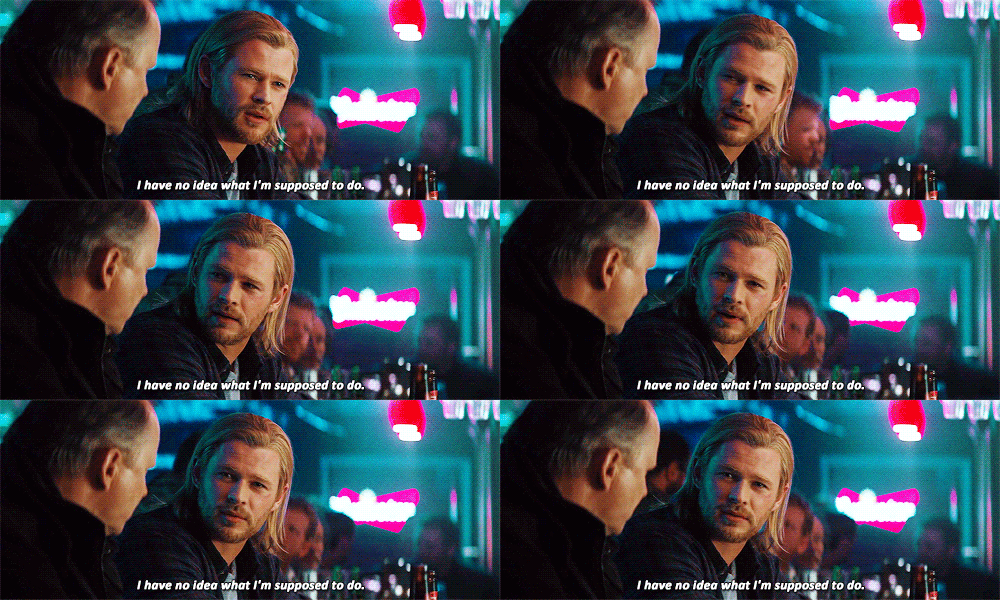
    Cue the mental freak out:

    It’s OK, Thor. Just attend the advice panel.

    Regardless of whether you are a senior or not, if you are like Thor and want to know more about graduate school programs and the application process, then consider attending the Psychology Department’s Grad School Advice Panel on Tuesday, September 18th at 12 pm in Life Science 502.  

    The Grad School Advice Panel will be hosted by Dr. Findley-Van Nostrand, Dr. Wetmore, and Dr. Hilton. If you have any questions or just want advice, they will be happy to help you!

    Oh, there will also be pizza and refreshments provided.

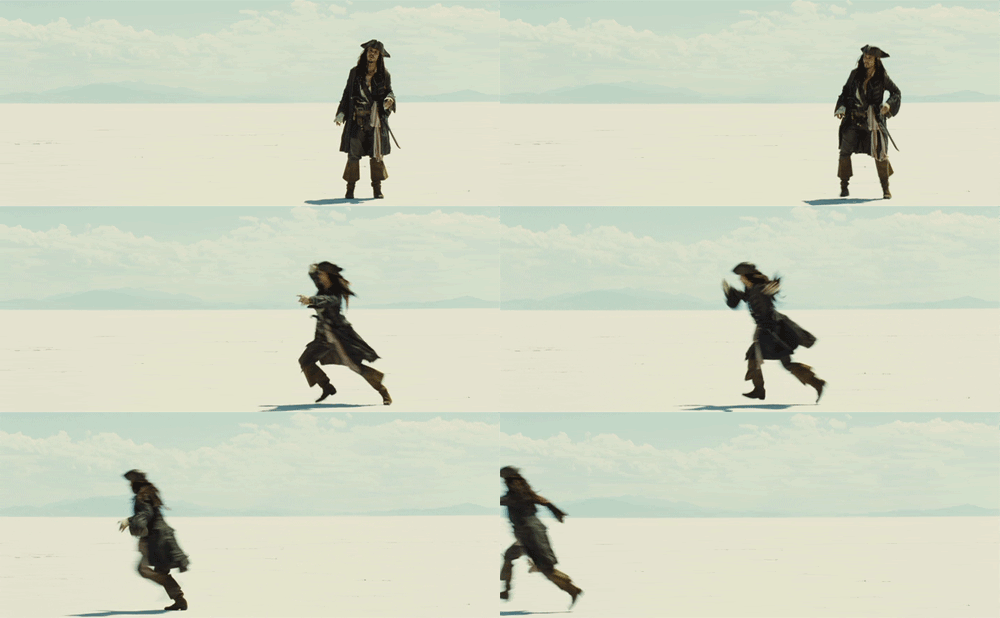
    Be like Captain Jack Sparrow, but instead of a moving ship, there’s free pizza instead.

    Also, if you want to know more information about career opportunities and graduate schools, you can click here to go to the department’s website for more information.

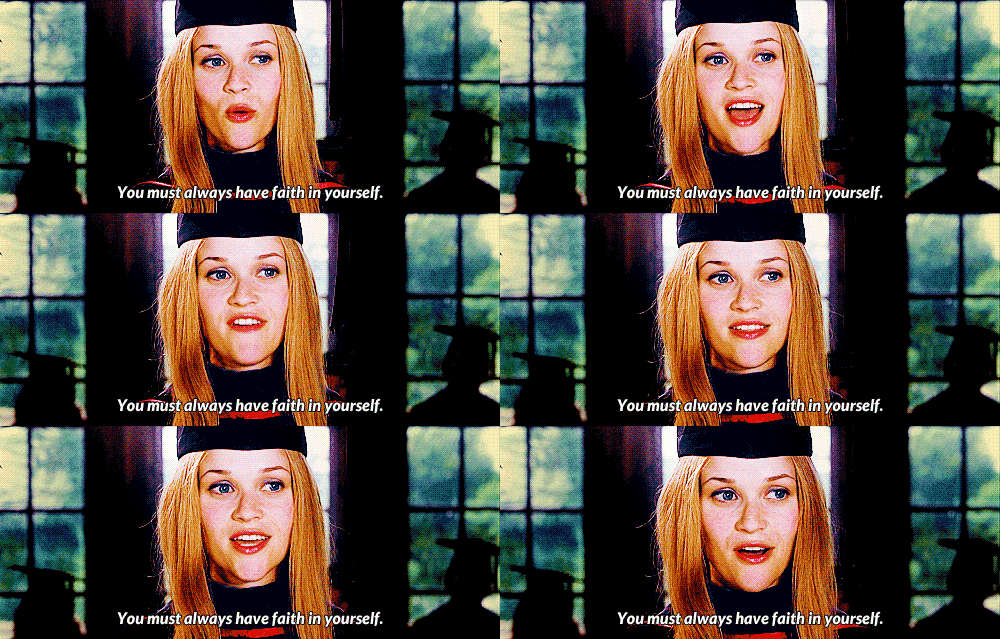
    Most importantly, though, as the time for research and decisions begins, remember:

    Hope to see you there!


    Get connected!
    Instagram & Twitter:  #PsychRC @RC_Psychology
    Facebook:  https://www.facebook.com/rcpsychology
    Blog:  https://psych.pages.roanoke.edu/
    Linked In:  https://www.linkedin.com/groups/RC-Psychology-8140491/about
    Website:  https://www.roanoke.edu/inside/a-z_index/psychology

  • A Brief Interview with Dr. Dane Hilton

    A student assistant for the psychology department recently interviewed Dr. Dane Hilton, a new faculty member this semester, about himself, his interests in psychology, and some other little-known facts.

    The following is the interview:

    So, how do you like Roanoke so far? Is it very different from Alabama?

    I have really enjoyed settling into the Roanoke area. It is a good bit different from Alabama geographically, as Alabama is fairly flat where I lived in Tuscaloosa. At the same time, I’m from western North Carolina originally and spent five years in Boone for school, so being back in the Appalachian region is kind of like coming home. The area reminds me a lot of some of the cooler places I’ve visited in the south east- it’s a bit like Chattanooga, Birmingham, and Asheville, NC all rolled into one compact and livable place. The college is beautiful and I’ve really loved how down to earth and friendly everyone is. That is one thing that is not different from Alabama- everyone is super friendly!

    Where did you go to undergrad and grad school?

    I did my bachelor’s at Appalachian State University in psychology and then stayed for two more years to get my master’s in Clinical Health Psychology. I then moved to Tuscaloosa, AL and did three years at The University of Alabama for my PhD in Clinical Child Psychology. Finally, I did my pre-doctoral internship- a year-long clinical residency- at the WVU-Charleston Division School of Medicine in Charleston, WV. It’s been a long road…

    What classes are you teaching right now and what types of courses will you be teaching in the future?

    Right now I’m teaching Psychology in the Media and Personality Psychology. I think both of these courses will stay in my rotation for a few years but I will also be teaching Intro to Psychology, Abnormal Psychology, Clinical Psychology, and hopefully a course in Applied Behavior Analysis at some point in the future.

    What are some of your past and current research experiences and interests?

    My research has always been related to individuals with Attention-Deficit/Hyperactivity Disorder (ADHD) in some way, and I will likely continue this line of research for many more years. My primary research program is focused on understanding the relationship between executive function- an important set of cognitive skills- and social functioning in folks with and without ADHD. I also do intervention research- again, primarily in the area of ADHD. I am currently working with the WVU Department of Behavioral Medicine to study the mechanisms of treatment outcome in group-based behavioral parent training for ADHD. I was awarded a grant while on internship to conduct this research and our group plans on applying for a larger grant to continue studying these processes in the next year or two. Lastly, I study mindfulness meditation. I have been leading mindfulness meditation groups for about 5 years and studying the effects regular mindfulness practices have on ADHD symptoms, anxiety, depression, and mind-wandering. I’m currently talking with individuals at RC to begin developing various ways to integrate mindfulness practice into curriculum, wellness programs, and intervention groups.

    What are some random/cool facts about you?

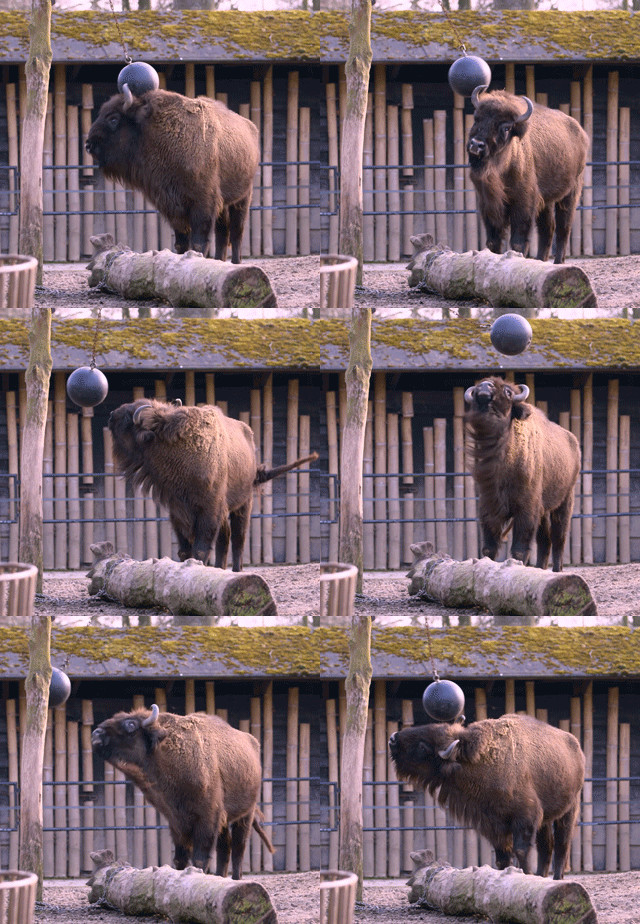
    Before starting graduate school at Appalachian State, I seriously considered becoming a bison farmer- yes, those giant looking beasts in all the Yellowstone pictures. It was between that and psychology. I honestly think I would have been happy doing either but I’m glad I’m here now. Some other random stuff… I was able to dunk a basketball in eighth grade, I once recorded an album in Chapel Hill, NC with my former folk band Foscoe, and I have hiked over 100 miles of the Appalachian Trail with my wife. That pretty much exhausts my cool facts reservoir…

    Is there anything else that you’d like to mention?

    Just that I am super excited to be at Roanoke. The psychology department is full of fabulous teacher-scholars who are also super chill and fun to be around. I look forward to getting to know the students here and being a part of the really great community that exists at RC.

    Welcome to Roanoke College, Dr. Hilton! We are glad to have you here in the Psychology Department, although being a bison farmer sounds pretty great too.


    Get connected!
    Instagram & Twitter:  #PsychRC @RC_Psychology
    Facebook:  https://www.facebook.com/rcpsychology
    Blog:  https://psych.pages.roanoke.edu/
    Linked In:  https://www.linkedin.com/groups/RC-Psychology-8140491/about
    Website:  https://www.roanoke.edu/inside/a-z_index/psychology

  • Alumni Recognition

    Kevin Clarke, Roanoke College graduate of ’02, pictured in the center.

    Kevin Clarke, a 2002 Roanoke College alum, recently succeeded in defending his dissertation!

    Dr. Clarke completed a Bachelor of Arts degree in psychology from Roanoke College. After graduation, he not only went on to pursue a doctorate in theology from Ave Maria University, but also edited the inaugural volume of a new series published by the Catholic University of America Press this past May, titled The Seven Deadly Sins: Sayings of the Fathers of the Church.

    Congratulations to Dr. Clarke!


    Get connected!
    Instagram & Twitter:  #PsychRC @RC_Psychology
    Facebook:  https://www.facebook.com/rcpsychology
    Blog:  https://psych.pages.roanoke.edu/
    Linked In:  https://www.linkedin.com/groups/RC-Psychology-8140491/about
    Website:  https://www.roanoke.edu/inside/a-z_index/psychology

  • Graduating Seniors

    After I graduated in December, I started working at a nursing home as the Social Services Director. In Fall 2018, I will start the Master’s of Social Work program Virginia Commonwealth University.

    Megan Miller

    Hoping to gain a little work experience before I take a swing at grad school!

    Sydney Patterson-Bradbery

    Following graduation I will begin post-baccalaureate work at the University of Alabama at Birmingham in order to pursue a career in medicine.

    John Anderson

    I’ll be working in the psychology field for a year while applying to clinical graduate programs.

    Sabrina McAllister

    Kaitlin was awarded a Fulbright to Copenhagen, Denmark where she will be studying and researching in the field of Organizational Psychology. She then plans to get a graduate degree in Industrial-Organizational Psychology.

    Kaitlin Busse

    I do not plan on going to graduate school immediately after graduation, but I do plan on going back to Long Island. I am thinking of doing EMT work as well as volunteering to figure out what is in my possible scope of view.

    Kathryn Wicklund

    After graduation I will be working as an elementary English as a second language teacher for Prince William County Public Schools!

    Alaina Nguyen

    I will be taking a gap year and preparing for applications for law school.

    Adora Nguyen

    I plan on becoming an artist. After graduation I will be living in Roanoke to hopefully get a good start on this new path.

    Tyler Muntz

    After graduation, I will be pursuing a Masters of Arts/Science Degree in Clinical Counseling and relocating to Charlotte, North Carolina. I plan to use my Master’s Degree to become a Licensed Clinical Professional Counselor and address the mental health needs of children within marginalized populations.

    Victoria Preston

    I am taking a year to gain experience in the field. I will also be preparing to apply for grad school in pursuit of my Master’s degree.

    Sarah Bocook

    Continuing research in Northern Virginia to gain experience before attending graduate school in 2019.

    Maddie McCall

    I am planning on finding jobs or internships that are related to mental health in New York.

    Jeanne Skulstad

    I am going to work for the Western Virginia Water Authority for a year and then apply to medical schools.

    Griffith Wood

    I plan to take a gap year and gain some clinical experience before hopefully apply to graduate school.

    Kyttichera Bridgewater

    I plan to pursue a career in higher education.

    Hannah Wuerthner

    I plan to attend an Accelerated Bachelors of Science in Nursing program. In addition, I hope to travel and see the world.

    Laura Sullivan

    I finished my course work here at Roanoke College December 2017 and have been working towards my Master of Education with a specialization in supervision and administration. After I earn my masters, it is my hope to work within the higher education setting.

    Leah Bond

    I am planning on attending grad school

    McKenna Polak

    I plan on taking the year before furthering my education in Art Therapy.

    Mary Grove

    After graduation, I will be pursuing a Masters of Arts/Science Degree in Clinical Counseling and relocating to Charlotte, North Carolina. I plan to use my Master’s Degree to become a Licensed Clinical Professional Counselor and address the mental health needs of children within marginalized populations.

    Sydney Quantock

    I am taking a gap year of sorts; I’m moving to Dallas, TX to participate in a leadership development program, while I try to decide if I want to go to grad school or not.

    Brittany Naumann

    I will be attending graduate school, at William and Mary, for a masters degree in Couples, Marriage, and Family Counseling

    Taylor Kracht

    Samantha Baldwin will be finishing up her student teaching in the Fall 2018. She hopes to go to graduate school in the following year.

    Samantha Baldwin

    Immediately I will be returning to Newport News, VA hoping to work for the Peninsula Boys and Girls Club. I am ultimately aiming to move to California to pursue a career in Event Management.

    Karla Williams

    My goal is to find a full time job after graduation!

    Amber Durr

    Master has given Dobby a diploma, Dobby is free. Except not really because I plan to go to grad school, the ride never ends.

    Alexander Glando

  • How Much to Pay?

    The fifth and final article written for Dr. Carter’s Social Psychology course, Bailey Ratfliff and Erin Kosmowski discuss an article dealing with how much are people willing to pay depending on the situation.

    When you go to buy something, like a t-shirt of your favorite band, wouldn’t it be nice if you could just pay what you want? Then, you could go through the drive-thru at Chick-Fil-A and be told the car in front of you paid for your meal! These methods are called, respectively, pay what you want and pay it forward, two forms of consumer elective pricing. How much would you pay for that t-shirt if you got to choose the price?  What if you decided to pay for the next car’s lunch, how much would you be willing to pay?  These studies by Nelson, A. Gneezy, and U. Gneezy, seek to find the relationship between pay what you want and pay it forward amounts.  In which method are people willing to pay more?

    In study one, which was conducted at Cartoon Art Museum in San Francisco, participants were told either they could pay their entrance fee forward for another museum goer instead of paying for their own admission, in one condition, or pay what you want in another condition.  It was found, in accordance to the experimenters’ prediction, that the pay it forward condition paid more money than the pay what you want condition.  In study two, the conditions were the same at the same museum, but the wording of what the people in the pay it forward condition were told was changed.  People paid more in both conditions for this study, but still paid more for the pay it forward condition than the pay what you want condition.  In study three, study two was replicated but participants were given a colored sticker, blindly labeling them as pay it forward or pay what you want group.  The cashier in the gift store then recorded their purchases and their colored stickers to see if either condition spent more in the gift shop.  The conditions were found to have spent around the same amount of money.  For the final study, conditions were set as in study two but at a coffee shop instead of a museum.  Again, those in the pay it forward condition paid more than those in the pay what you want condition.

    The researchers believed that descriptive norms were playing a role in the participants’ actions. In the first two studies, people fell subject to the norm of reciprocity. Since another person paid for them, the participants’ felt that they had to do the same for a future attendee. Subjects experienced kindness and generosity and felt as if they must pass it on to reciprocate.  There was also some pluralistic ignorance occurring, leading the participants to believe the norm was to pay more and followed suit.  People may have privately believed they should pay less but decided to pay more because they believed that’s what others did.

    The study does a good job supporting its hypothesis and eliminating any confounding variables that may have also explained the results, though it does not go into further details. They do not discuss if witnessing an act of generosity will impact the participant’s amount paid. Another thing that would have added to the study was to see how the amount paid could be manipulated through a third party’s actions, such as having the earlier guest pay more for the participants’ ticket or witnessing someone pay more for the pay what you want than average. They also focus on for profit organizations so adding a nonprofit organization to the study could show very different results.

    Get connected!
    Instagram & Twitter:  #PsychRC @RC_Psychology
    Facebook:  https://www.facebook.com/rcpsychology
    Blog:  https://psych.pages.roanoke.edu/
    Linked In:  https://www.linkedin.com/groups/RC-Psychology-8140491/about
    Website:  https://www.roanoke.edu/inside/a-z_index/psychology

  • How Many “Likes” Did I Get?

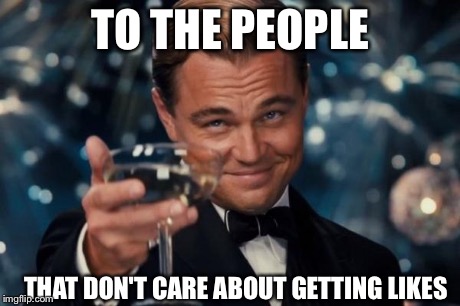
    Image result for likes meme

    The fourth article written for Dr. Carter’s Social Psychology course, this post discusses the power of the “like” system. Written by Julian Edwards, Emily Jones, and Brice Hinkle, the original source can be found here.

    Have you ever felt inadequate after seeing only one like on your selfie? If you are an avid Facebook, Twitter, Instagram, or some other social media user, the culmination of likes on a picture or video is crucial. The incorporation of the “like” system in social media has changed the way in which people view themselves. You expect people such as your family or close friends to like your posts, but what if that is only 10 to 20 people? What does this say about you
    as a person? It is common to believe that the more likes one receives the better they believe others see them, thus determining how they see themselves. The presence of active and/or immediate feedback on a picture you are proud of can make or break how you view yourself. Because of this, social media has become a large factor in the level of self-esteem a user may have. The more likes someone receives the greater self-esteem they will have. Also in contrast, if a person were to receive little to no likes on a selfie or family picture they may begin to suffer through low self-esteem. To help support this claim a study was conducted by researchers Anthony L. Burrow and Nicolette Rainone titled “How many likes did I get?:
    Purpose moderates links between positive social media feedback and self-esteem” (Burrow & Rainone, 2016).

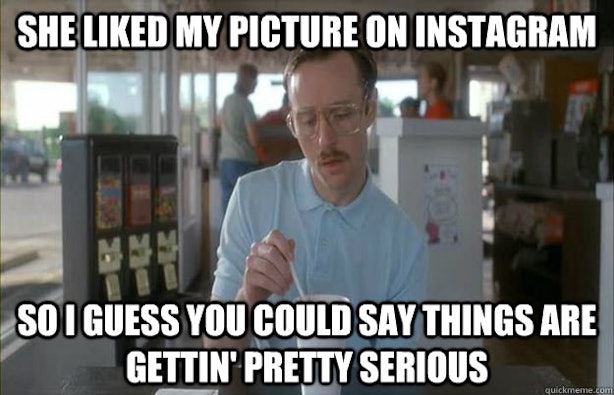
    Image result for likes meme

    In this study, participants first had to complete several forms and surveys – demographics form, a survey measuring their purpose in life, and a personality inventory (which was not used in the experiment). After this was completed, the experimenters told the
    participants they were there to test a new social media site a lot like Facebook and to get started, they had to set up a profile and take a picture of themselves for the experimenter to upload (Burrow & Rainone, 2016). The experimenter told the participants that their picture would be shown on the test site for five minutes and that other users could see and like it. Five minutes later, the experimenter came in the room and told them how many likes their picture got. The amount of likes the experimenter told the participants that they got were a randomized average number of likes, more than average number of likes, or below average number of likes. Afterwards, participants completed another survey, which measured their self-esteem. The results found that the groups that showed a low purpose and low self-esteem were affected more by their number of likes more than the groups with high purpose and high self-esteem, who were not as affected by the likes (Burrow & Rainone, 2016).

    Image result for likes meme

    The researchers established two groups: high purpose and low purpose. In each group, the self-esteem manipulator was introduced to affect self-esteem positively, negatively, or not at all (high, low, and average likes). The participants in each group then reported their post-experiential self-esteem (Burrow & Rainone, 2016). Because the experiment showed no correlation between high purpose and a high number of likes, it can be assumed that the
    participants with high purpose also have self-esteem high enough that it is unaffected by an otherwise effective self-esteem booster: a high number of likes that they receive. Those with low purpose can be said to have a lower baseline self-esteem and so are more affected by a high number of likes (Burrow & Rainone, 2016).

    One critique would be that the researchers should have included an “average purpose” group apart from the “high purpose” group to be manipulated to see more precise results.

    Additionally, it would have been nice to have reported any findings on a decrease in self-esteem for a fuller picture of the effects.
    The lesson that can learned from this article is that self-esteem is that although there are a countless number of things that go into a person’s self-esteem and sense of purpose in life, social media affects them much more than someone thinks.

    Get connected!
    Instagram & Twitter:  #PsychRC @RC_Psychology
    Facebook:  https://www.facebook.com/rcpsychology
    Blog:  https://psych.pages.roanoke.edu/
    Linked In:  https://www.linkedin.com/groups/RC-Psychology-8140491/about
    Website:  https://www.roanoke.edu/inside/a-z_index/psychology

  • What Makes A Great Leader

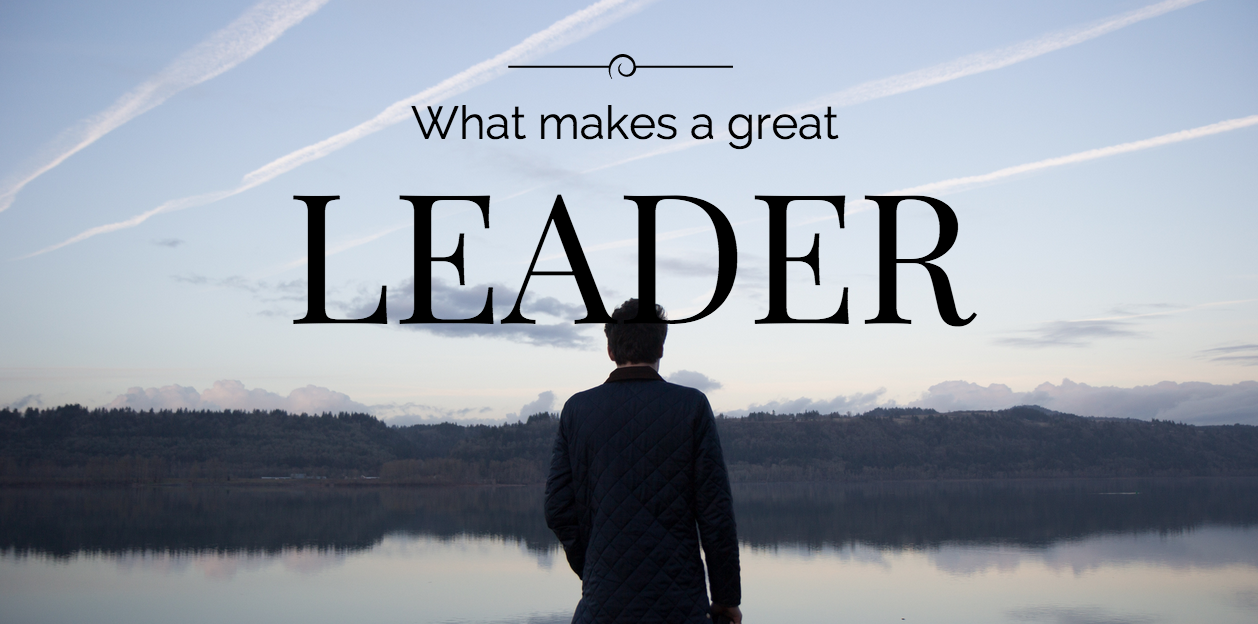
    Image result for leader

    In another post written by students of Dr. Carter’s Social Psychology course, Corey Woodford, Hannah Lester, Michaela Hicks discuss an article on leadership titled “Two ways to the top: Evidence that dominance and prestige are distinct yet viable avenues to social rank and influence.” The original article can be found here. 

    How do people reach leadership positions? Is it because they are generally likable and compassionate about the group? Or is it because they are ruthless and their followers are too scared to do anything but listen to them? Maybe it is a combination of both. Researchers Cheng, Tracy, Foulsham, Kingstone and Henrich formed an experiment that tests these theories. They wanted to know if dominance and prestige work together to get people to the top. In the case of this study, dominance is a force and intimidation and prestige is being able to share your experiences and knowing how to gain respect. Cheng et al. performed two studies that tested the roles in which dominance and prestige play in the selection of a leader. They used students from the University of British Columbia, who had no prior knowledge of each other before the study, as participants for both of the studies.

    The first study’s goal was to distinguish whether or not dominance and prestige are acceptable ways of predicting social influence. It was set up as a round robin setting where groups of 4 to 6 of the same gender, not already acquainted with each other, completed an assignment, then interacted with each other, and then were asked to fill out a questionnaire at the end. Each side of the table was recorded by a video camera looking exclusively at one side of the table. The questionnaire provided peer ratings on who seemed to have more influence, who had more “dominance and prestige” in their group, and the likeability of the group members. The results of the study concluded that, in fact, both dominance and prestige predict greater social influence, but that they are different paths to attaining social rank, with prestige seen as more likeable than dominance.

    Going off the first study, the second study’s goal was to “determine whether gaze allocation patterns corresponded to perceived Dominance and Prestige”. In other words, do dominant or more prestigious individuals receive more visual attention? The participants watched a series of video clips used from the first study, and were asked to think of who they would want to work with on the same task if they were in the room doing the same thing. The participants were wearing eye trackers so the researchers were able to see who they looked at the most while watching these video clips. The results showed that people do tend to notice who the dominant or more prestigious person in the room is, and they subconsciously do visually fixate on them, meaning they receive more visual attention.

    Study 1: with 191 participants, this study compensated them with a chance of extra compensation during the study. The participants first completed an individual activity and then a group activity. The group activity was recorded for 20 minutes.

    Study 2: 59 participants were involved and were instructed to watch 6 twenty-second videos. This study was used to determine a relationship between gaze allocation patterns and perceived Dominance and Prestige.

    While the study was something always relevant and very interesting, it did have some aspects that it did not take into consideration. First, the study did not use co-ed groups. Especially in today’s time, gender norms are a hot topic and are of interest to many people. A future study could use co-ed groups to help distinguish between gender norms that influence leadership positions. Second, the participants of the study were of all different ages. Age is indicative of knowledge and when you are older you can be seen as more superior of those who are younger than you.  Keeping age brackets for each group would have been a beneficial addition to the parameters of the study. With these critiques in mind, a future study would be beneficial to really dive into the psychology of leadership positions from a non-age or non-gender biased study.

    Get connected!
    Instagram & Twitter:  #PsychRC @RC_Psychology
    Facebook:  https://www.facebook.com/rcpsychology
    Blog:  https://psych.pages.roanoke.edu/
    Linked In:  https://www.linkedin.com/groups/RC-Psychology-8140491/about
    Website:  https://www.roanoke.edu/inside/a-z_index/psychology

  • Strategies to Combat Threatened Masculinity

    An analysis of the study “Manning Up: Threatened men compensate by disavowing feminine preferences and embracing masculine attributes” for Dr. Carter’s Social Psychology course. This article was written by Sophie Bacon, Cristoni Couvrette, and Carter Smith.

    In society, men are expected to conform to gender-stereotypic attributes in order to prove their masculinity. Some of these attributes include; being tall, athletic, having an active sex life,
    and being assertive or dominant. Studies have shown if a
    man is in a sense “less masculine” they will compensate
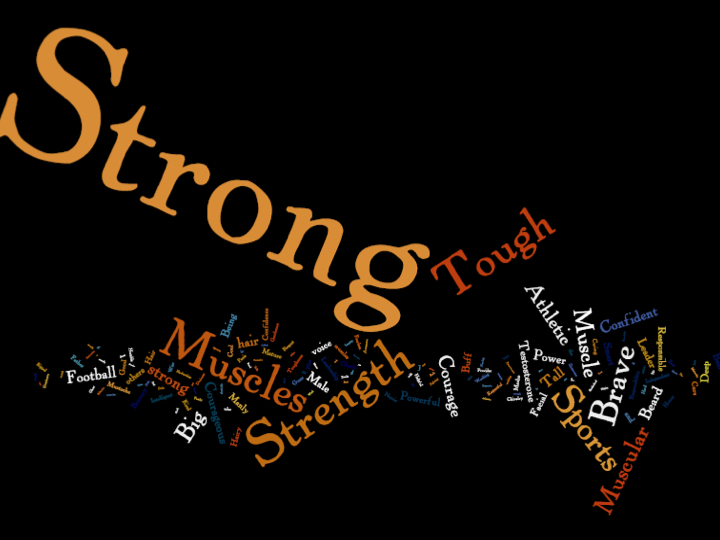
    for this by presenting themselves in a more stereotypical
    masculine manner. In the study, Manning Up, researchers, Sapna Cheryan, Jessica Schwartz Cameron, Zach Katagiri, and Benoît Monin conducted two experiments, in which they examined three techniques that men may use when they perceive a threat to their
    masculinity: avoid feminine preferences, embrace masculine preferences, and claim masculine attributes. The question the researchers were asking is whether or not men are more likely to distance themselves from feminine preferences when their masculinity is threatened versus the responses of those men who are not threatened.

    In the first study some of the male participants were randomly assigned to receive false feedback that they had failed a test of masculinity (a score of 26 out of 100) while the other
    participants received a non-threatening score (73 out of 100). The participants were then asked to rate how much they would like to receive three very masculine products and three very feminine products. Results from study one suggest that men who have their masculinity threatened are more likely to distance themselves from stereotypically feminine preferences, but do not embrace stereotypically masculine preferences more than non-threatened men.

    In the second study, researchers tried to instill a different type of threat to masculinity (telling participants they were
    physically weaker than other males) to see if threatening
    one specific aspect of masculinity causes men to embrace
    another aspect in order to compensate. Participants were
    asked to take a test of handgrip strength. Having a strong
    hand grip is associated with being more masculine.

    Some of the participants received false feedback that their score fell along the female distribution while the other participants were told their score fell into the male distribution. Afterwards they were asked to complete a questionnaire which included masculine and feminine attributes such as: height, handiness with tools, number of previous relationships (all masculine attributes), and personality traits (both masculine and feminine attributes). Participants then
    repeated the grip test which reinforced their false feedback and were asked to rate their interest in receiving five masculine, three feminine, and seven neutral products. Results from this study
    found that men who did not have their masculinity threatened showed no difference in their preference for masculine and feminine products while men who were threatened showed less interest in feminine products. Researchers also found that men who had their masculinity threatened were more likely to exaggerate their other masculine attributes; they claimed to be taller, have more past relationship partners, and higher levels of athleticism and aggressiveness than men in the non-threatened condition
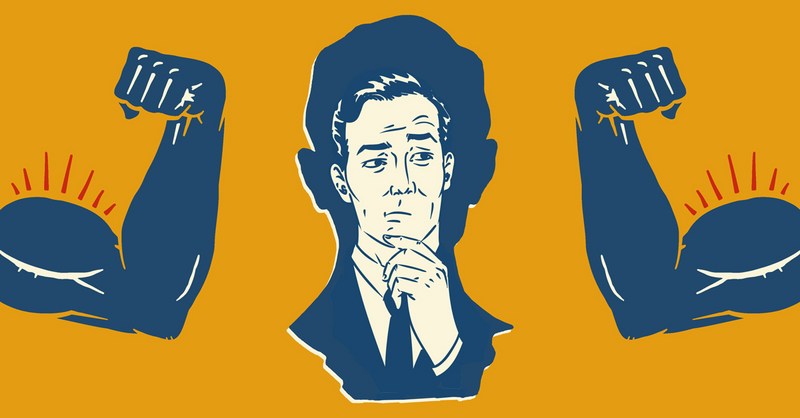
    Researchers examined the strategies used when there is a perceived threat to masculinity. They threatened masculinity as a whole as well as physical masculinity and then examined the ways the participants compensated for the blow. Researchers also said that men who are threatened are more likely to embrace masculine attributes over preferences. An example being, if a man feels his masculinity is being attacked it weighs more for him to defend his physical traits (strength, height and build), compared to him trying to declare his masculinity through his masculine preferences (liking trucks and hunting). Researchers discovered that rejecting
    feminine preferences was more reassuring to their self image rather than restating their masculine preferences.
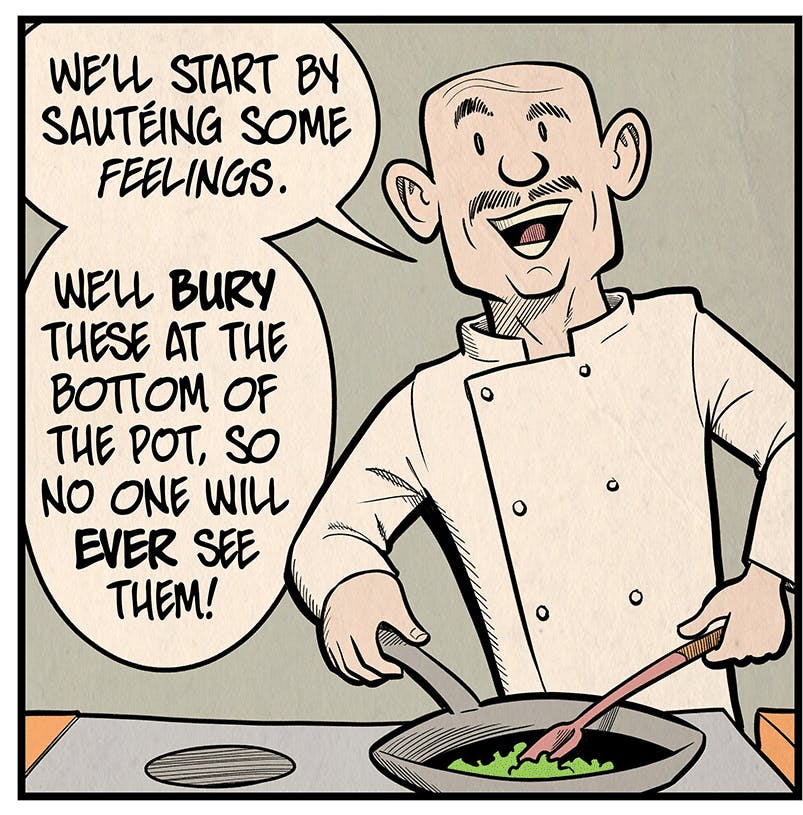
    In this study, researchers provided insight into the strategies men employ when they feel their masculinity has been
    threatened. However, there are three limitations that can be
    observed in this study. The first limitation of this study is the
    fact that they only focused on how masculine attributes were
    affected when men were under masculinity threat. If they
    wanted to get a more well-rounded perspective, they should
    have also examined how feminine attributes were affected by
    masculine threats. In addition, in two of the studies, they used a
    subset of product preferences making it difficult to decipher the
    results of masculine versus feminine preferences. Finally, when
    concluding this study, it wasn’t clear from the results whether or not distancing oneself from a stigmatized outgroup versus a
    related identity would be sufficient in responding to masculinity
    threats.

    Get connected!
    Instagram & Twitter:  #PsychRC @RC_Psychology
    Facebook:  https://www.facebook.com/rcpsychology
    Blog:  https://psych.pages.roanoke.edu/
    Linked In:  https://www.linkedin.com/groups/RC-Psychology-8140491/about
    Website:  https://www.roanoke.edu/inside/a-z_index/psychology

  • Ready to Dance? Then Just Dance.

    Want to celebrate the end of finals in style?

    Then just dance!

    The psychology department will be hosting their annual Psychology Dance Party on Wednesday, May 2nd from 1:30 – 3:30 pm in Life Science 502.

    Here’s an example of the fun you can have:

    This is a chance to challenge your professors to a friendly game of Just Dance on the Wii.

    A chance to groove to the beat and laugh in relief as finals are finally over and you are free. 

    As such, all are welcome.

    You may also get to see Dr. Nichols dance to Let it Go in-person. Here’s a video clip to help make your day a little brighter.

    Get connected!
    Instagram & Twitter:  #PsychRC @RC_Psychology
    Facebook:  https://www.facebook.com/rcpsychology
    Blog:  https://psych.pages.roanoke.edu/
    Linked In:  https://www.linkedin.com/groups/RC-Psychology-8140491/about
    Website:  https://www.roanoke.edu/inside/a-z_index/psychology

  • Ice-Cream, Decisions, and Culture

    The time has come.

    A decision must be made.

    Your family members have designated you as the ‘chooser’ of the group. The responsibility weighs on your shoulders. You try to remain calm.

    ‘Focus,’ you tell yourself. ‘Should I purchase the double chocolate ice-cream from x-brand, or the devil’s chocolate ice-cream from y-brand?’

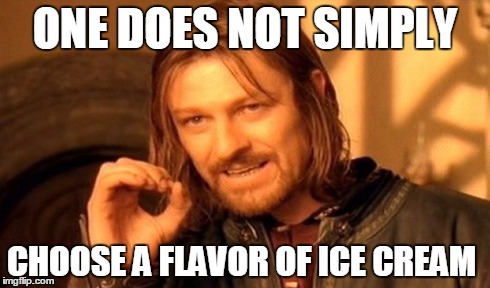
    Even Boromir agrees

    The choices are the same in terms of the contents and price, but they have different names and are from different brands. You cannot decide between the two as you feel equally about both of them, so you ask for the advice of your family; they reply negatively towards the y-brand and you feel relieved, finding yourself agreeing with them, and choose the ice-cream from the x-brand instead.

    While a silly example, this dilemma helps illustrate an interesting observation about humans, at least of European descent (or influenced by Western culture): when we are highly ambivalent towards two choices, we are more easily influenced in our decision. According to psychology researchers, Mr. Andy Ng, Dr. Michaela Hyne and Dr. Tara MacDonald, those of European descent are more likely to be influenced either positively or negatively when unsure of what to think about two objects or subjects. Yet, they also point out that East Asians exhibit greater levels of tolerance towards conflicting views or when possessing high levels of ambivalence towards objects/subjects. In other words, those of East Asian descent or region are more likely to hold two conflicting ideas in their minds without the need to pick one as superior to the other.

    In their study published in 2011, titled “Culture Moderates the Pliability of Ambivalent Attitudes,” Ng, Hyne, and MacDonald were interested in researching the degree to which culture influences the willingness to shift attitudes in those of Western and Eastern cultures after a persuasive attempt.

    (more…)