During this past week, students were presented with awards from the psychology department! While students are typically presented these awards at the annual academic award ceremony, due to the recent events, the ceremony was unable to be held this year. However, the psychology department went on to recognize the following students and their accomplishments.
“Congratulations to all of the students who won awards in the Psychology Department this year! These are all great honors and well-deserved. We are all proud of your accomplishments and all that you do to make our department great. ” – Dr. Buchholz
This year, the Psychology Department distributed awards to fifteen students:
Lauren Furlow – Senior Scholar – Psychology
Rachel L. Harmon – Karl W. Beck Memorial Prize
Sophia R. Bacon – Curt R. Camac Student Research Award
Riker F. Lawrence – Curt R. Camac Student Research Award
Brittney A. Rowe – The Charles E. Early Award
Morgan J. Hamilton – Outstanding Junior Psychology Major
Kira N. Hunt – Outstanding Junior Psychology Major
Abbie L. Joseph – Outstanding Junior Psychology Major
Grace E. Page – Outstanding Junior Psychology Major
Vanessa L. Pearson – Outstanding Junior Psychology Major
Kaillee M. Philleo – Outstanding Junior Psychology Major
Carly M. Schepacarter – Outstanding Junior Psychology Major
Mason L. Wheeler – Outstanding Junior Psychology Major
Rachel L. Harmon – The Jan H. Lynch Human Development Concentration Award
Sophia R. Bacon – The Jan H. Lynch Human Development Concentration Award
Emily B. Townley – The Jan H. Lynch Human Development Concentration Award
Casey J. Gough – Psi Chi Achievement Award
To learn more about the awards and honors or their descriptions follow this link!
On behalf of the Psychology Department, congratulations again to all of our students. You have all worked hard, accomplished wonderful things and we look forward to seeing what you will achieve in the future!
Alumna Claire Kirchoff ’17 recently received notification that she will be serving as a Fulbright ETA in Nepal next year! While at Roanoke College Kirchoff studied psychology and spent time working with Dr. Powell in her research lab. In this post, Kirchoff discusses with a student assistant what she has been up to since graduating from Roanoke College, how she learned about the Fulbright program and advice she has for students considering applying to Fulbright or any other research/internship opportunity.
Can you please tell me a little about yourself?
I am from Nashville, TN and moved back here after college and graduate school in Virginia. I have a dog named Kona who just turned 1 at the beginning of March, and he is being trained as a therapy dog. Currently, I am finishing up the coursework and supervision hours (well, not anymore #covid) for my School Counseling licensure, at the end of which I plan to pursue elementary school counseling positions (following the Fulbright, of course.) I have never held a job that did not involve children or youth in some capacity, and I have always been drawn to education and mental health, though I took a roundabout way to get to where I am now.
What have you been doing since graduating from Roanoke College?
In reference to my last comment above, I told my advisor (Dr. Powell) that I had zero intentions of going into school counseling and that it was the last thing I wanted. Things change, clearly, and 4 years after putting my foot down, here I am about to be a licensed school counselor. Because I thought I didn’t want to go into counseling, I chose a graduate program without a licensure track, which, in hindsight, was poor planning. Immediately after college (2017-18), I attended the University of Virginia for a Master’s in Education, Educational Psychology – Applied Developmental Science (it’s a mouthful, I know.) While I was there, I took just about every opportunity I came across. I worked in a research lab studying the implementation of social-emotional curriculum interwoven with standard science curriculum, I wrote and implemented curriculum for a multi-week summer environmental science and service-learning program for high school students on a Native American Reservation in South Dakota, helped create a mental health team at a summer camp for youth with chronic health conditions (this has a nod to my undergraduate research study, “Emerging Adults’ Perceptions of Peers with Chronic Health Conditions”), I tutored ESL students at a local middle school, and I took as many courses as would fit into my schedule.
Claire Kirchoff’s group while in South Dakota (which included 2 UVA undergrads) at the end of their summer program
(2018-19) After graduate school (literally a week after), I started a year as an AmeriCorps service member in Nashville at a nonprofit serving a very low-income community. Moving back to Nashville was a tough choice because I loved my time in Virginia so much, but it’s home and I’m happy to be back. During my AmeriCorps term, I worked in the K-8 education department at the nonprofit, and I was placed at a middle school in the community (it was actually a charter school drawing students from all over Nashville, so it was very diverse and had a wide spectrum of academic and social-emotional needs). The K-8 education program implements after-school enrichment programs at several schools in the community, and I was basically in charge of the implementation of my school’s after-school programming. I collected and analyzed testing and progress report data, designed reading and math enrichment curriculum for differentiated levels of need, and organized outside community partners for enrichment activities (other nonprofit partners like artists, musicians, science shows/experiments, and volunteers like Vanderbilt football and soccer players, student groups, and others.)
UVA Graduation – Claire with several friends from her own program as well as other friends she made along the way
This year (2019-20), I have been working to complete my supervision hours in school counseling at two local schools with similar levels of socioeconomic challenges, but both are very rural schools, which I was not super used to. I started at an elementary school and had the time of my life. This semester, I was at a middle school in the same community as the elementary school, and having a great experience, then my internship was cut short in early March, just like everyone else in the country/world. Since the schools closed, I went back to working at my part-time job as a preschool teacher at a private pre-k center. We actively try to keep our daily routines as normal as possible for the sake of the kids, but each day they become a little more aware of the issues, and I often hear the older kids saying things like “the sickness” or attempting to say the word coronavirus. It’s a daily battle to keep surfaces clean and kids happy, but we make do and push through.
How did you learn about Fulbright and this opportunity?
I knew about Fulbright in college when I had friends applying (my graduation year there were 6 Fulbright winners and I was friends with 4 of them). What I didn’t know then was that I, too, could apply if I wanted to. These types of opportunities weren’t really advertised to me when I was in college. I wasn’t super eligible to apply right out of college like my friends were, but my experiences and education since college has made me a better candidate for the grant.
Why did you choose Nepal?
There are a few reasons why I chose Nepal. First, I am one of the biggest culture nerds you’d ever meet. I attempt learning new languages for fun when I’m bored, I read books about other countries, cultures, and religions, and actively seek out cultural experiences in my life. When I was thinking about the Fulbright and Jenny Rosti was hounding me to pick a country, Nepal just kept creeping up on me. It stuck with me and I felt the draw to apply.
Secondly, when I was in graduate school, I tutored ESL students at a middle school in Charlottesville. Many of these students were from far-flung areas of the globe, mostly the Middle East and, surprising to me, Nepal. I had never met anyone from Nepal, nor had I thought too much about the country in my life, other than knowing about Mts. Everest and Annapurna. It was really these kids and their stories and culture that led me towards choosing Nepal as my Fulbright application. Side note: I actually wrote a paper about those kids for one of my grad courses, I interviewed them about their experiences immigrating to the US and acclimating to US culture and schooling. It was very interesting and helped me better understand how immigrant students view American schooling and what I, as a school counselor, can do to help them.
Thirdly, and this is the last big reason, is that I want to (someday, hopefully, in the next 5 years or so) go back to school for a Ph.D. in Educational Psychology with a focus/concentration in anthropology (some schools have dedicated Educational Anthropology programs, but the others have Ed Psych with cross-curricular study in which anthropology is encouraged as an option). As a course of study in my future Ph.D., I want to study how education (non-traditional and traditional ways of viewing education) blossoms even in the least Westernized corners of the world, and how folklore and storytelling are integrated into childrearing as a form of education for those without access to Westernized education. Because of this interest in education’s evolutionary roots, I figured Nepal would be a good place to start.
Can you give any advice for those interested in applying for the Fulbright, or for research/internship experiences in general?
This is a Dr. Powell-ism that has stuck with me since I was a wee duckling in her lab: trust the process. If you put your all into it and you really want it, it will happen for you, even if it doesn’t happen the way you planned. Dive in, give it your 100%, and trust that everything will shake out the way you need it to (but it might not be the way you want it to.)
Take-aways: Trust the process. Be kind to yourself. You’re capable of more than you think.
Dr. Powell was also asked to speak on this accomplishment and stated:
“I’m extremely proud of Claire – what she accomplished as a student at Roanoke and all that she has achieved since! I’m confident that her training and applied experiences have prepared her to succeed as an ETA in Nepal. I’m looking forward to seeing her posts and hearing details about her adventures as a Fulbright when she returns to the states. “
Thank you, Claire, for taking the time to answer our questions and congratulations again on receiving Fulbright! We look forward to hearing about how it goes in the future and will continue to cheer you on!
With spring break being only one week away the thought of summer may still seem distant in some mind’s, but it is quickly approaching. Summer break is a great time to explore opportunities in psychology and get experiences that go beyond the classroom. With the multitude number of research or internship opportunities available to students it can sometimes be challenging to figure out where to begin. Likewise, with summer comes graduation and the rush to find jobs begins. However,this websitehas got your back!
Whether it be a summer opportunity or a long-term job, this website is regularly updated with information on psychology opportunities. Not only does this website offer a numerous amount of resources but it is also easy to navigate. By providing filtering options such as the type of position you are looking for and what state you are looking to be in, there are options that would align with each student’s needs and interests. Moreover, this website also filters the positions on areas of psychology and includes opportunities in clinical, cognitive, cultural, developmental, educational, health, neuroscience, positive, and social psychology.
While you may not know quite yet what you want to do this summer or after graduation, this website is a great place to start searching and a great starting point to familiarize oneself with the endless opportunities that those studying psychology have! This website is updated frequently so if you don’t find a position that suits your needs or interests now, check back later!
Are you interested in getting a real world experience in Psychology? Then come to the Psychology Internship Information Session! The info session will be this Thursday, February 20, from 11:45 AM – 1:00 PM in Life Science 502.
This info session will provide you with all of the information you need about internships in psychology. Not only will deadlines, requirements, and opportunities be shared, but there will also be information shared on how to present yourself with resumes and cover letters.
If you are looking to get an experience in psychology outside of Roanoke College, complete an internship credit, or learn more about the benefits of internships then stop by this info session.
If you are interested in attending RSVP by 12 PM Wednesday, February 19, by contacting (540) 375-2462, or dyer@roanoke.edu
See Toni McLawhorn (Career Services), or Dr. Mary Camac or Dr. Danielle Findley-Van Nostrand for more information.
The Gender Race and Cultural Empowerment (G.R.A.C.E.) lab is hosting a 6-week summer program offering students the opportunity for one-on-one mentorship and research experience. The G.R.A.C.E. Lab’s emphasis is on social psychology with a focus on the experiences of Black women in STEM education.
Responsibilities include:
Recruiting study participants
Data collection and analyses
Attending weekly lab meetings
Qualifications for this position:
Strong academic performance in psychology,
with a GPA requirement of 3.25 (overall and
major)
Dependability and takes initiative
Excellent interpersonal and communication skills
Rising juniors and seniors preferred
This program will run from June 8 – July 17, 2020, and will be hosted at Spelman College. You are expected to be committed for all 6 weeks. While attending this program, a stipend, housing for 6 weeks, and a campus meal plan will be included.
They will begin selecting applicants into the program on a rolling basis until February 14, 2020.
If you are interested in applying to this program follow this link and email your cover letter, curriculum vitae, and your most
recent unofficial academic transcript to Dr. Maria Jones, Postdoctoral Research Associate, at mjones35@spelman.edu!
The Center for Children and Families at Florida International University announces Summer Treatment Program Counselor, Research Assistant, and Teacher/Classroom Aide positions for 2020. The Summer Treatment Program (STP) provides services to children with Attention-Deficit Hyperactivity Disorder (ADHD), Conduct Disorder, Oppositional-Defiant Disorder, learning problems, and related behavior problems. The program provides treatment tailored to children’s individual behavioral and learning difficulties. The Center for Children and Families is directed by William E. Pelham, Jr., Ph.D., who is a Distinguished Professor of Psychology and Psychiatry at Florida International University.
By participating in the STP, students will:
· Learn evidence-based techniques for working with children who have disruptive behavior disorders
· Gain valuable clinical and research experience to prepare for career and graduate school
· Help children to improve their social skills, sports skills, and academic skills
· Network with faculty members at the Center for Children and Families, as well as students from across the country.
Positions are available in three related programs serving children between the ages of 3-12. In each program, children and counselors are assigned to groups of four or five counselors and 10 to 15 children of similar age. Children participate in a variety of classroom-based and recreational activities. Staff members implement an extensive behavior modification treatment program during all program activities. The behavior modification program includes feedback and associated consequences for positive and negative behaviors, daily and weekly rewards for appropriate behavior, social praise and attention, appropriate commands, and age-appropriate removal from positive reinforcement. Staff members will also be responsible for recording, tracking, and entering daily records of children’s behavior and response to the treatment. Staff members will work under the supervision of experienced faculty and staff members and will receive regular feedback about their performance.
Experience in the STP may be helpful to prepare students for further study or employment in the fields of education, mental health, physical education, pediatrics, psychiatry, recreational therapy, behavior analysis, social work, counseling, and related areas. Staff members have uniformly reported the experience to be the most demanding but also the most rewarding clinical experience of their careers.
More than 100 positions are available across the three programs. Positions are available forundergraduate students, postbaccalaureate students, and graduate students. Detailed descriptions of each program, position descriptions, and application instructions are available at this link!
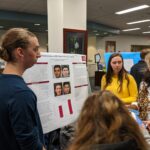
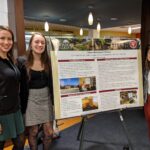
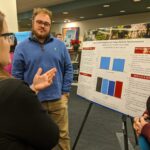
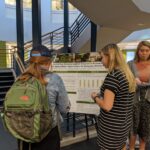
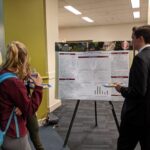
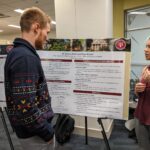
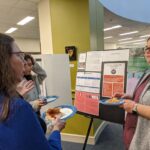
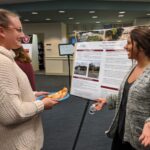
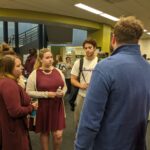
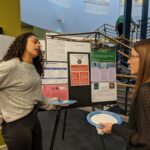
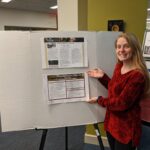
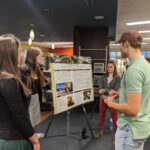
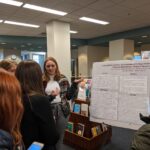
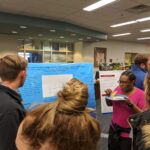
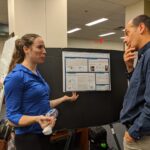
At the end of last semester on Thursday, December 5, students, faculty, and staff gathered in Fintel library to look at all of the amazing work the psychology department students have completed over the semester and summer. Various research posters and internship opportunities were shared and of course, the pizza was a hit among all session attendees! Check out the gallery of photos from the event below and congratulations to everyone who shared their research or internship on having a successful presentation and semester.
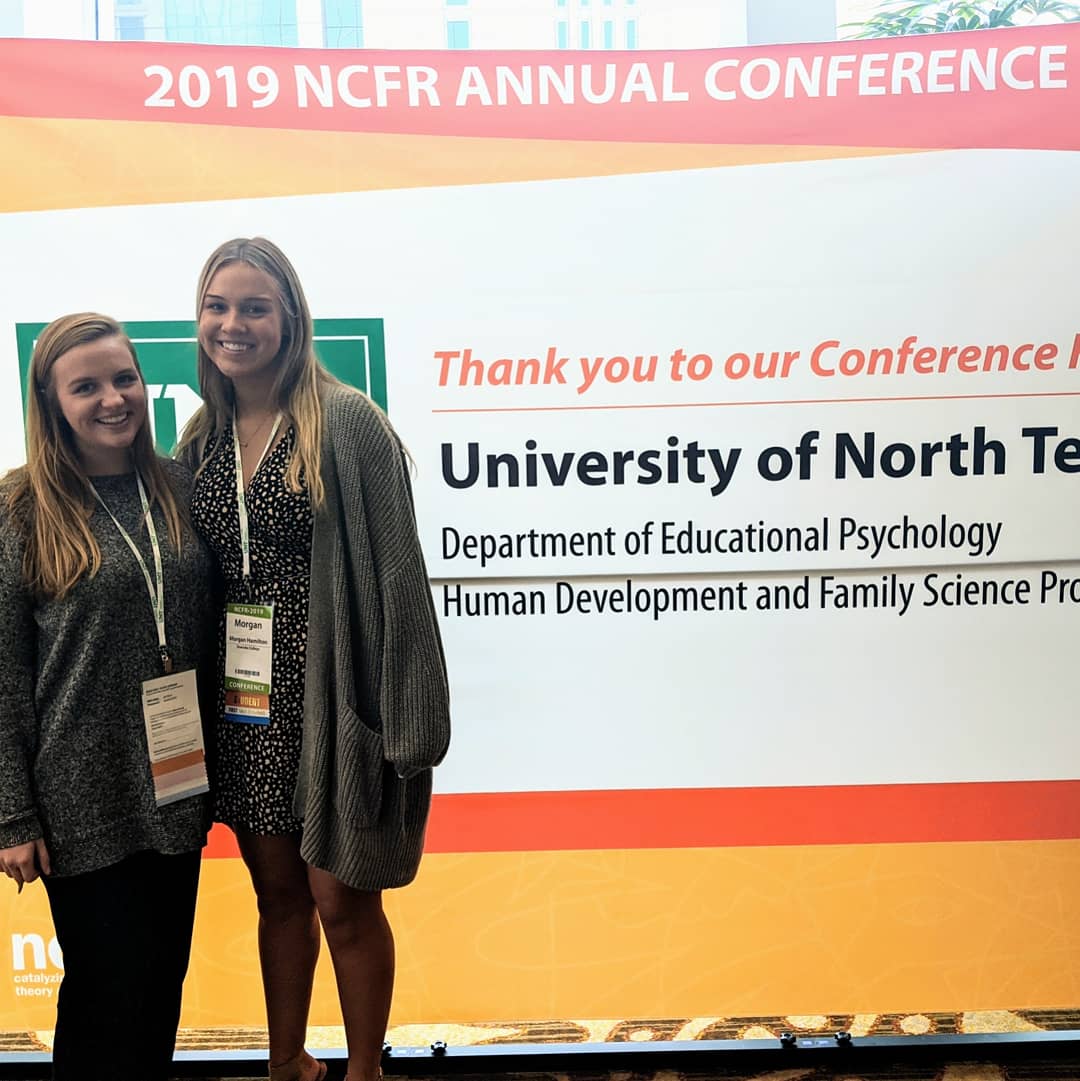
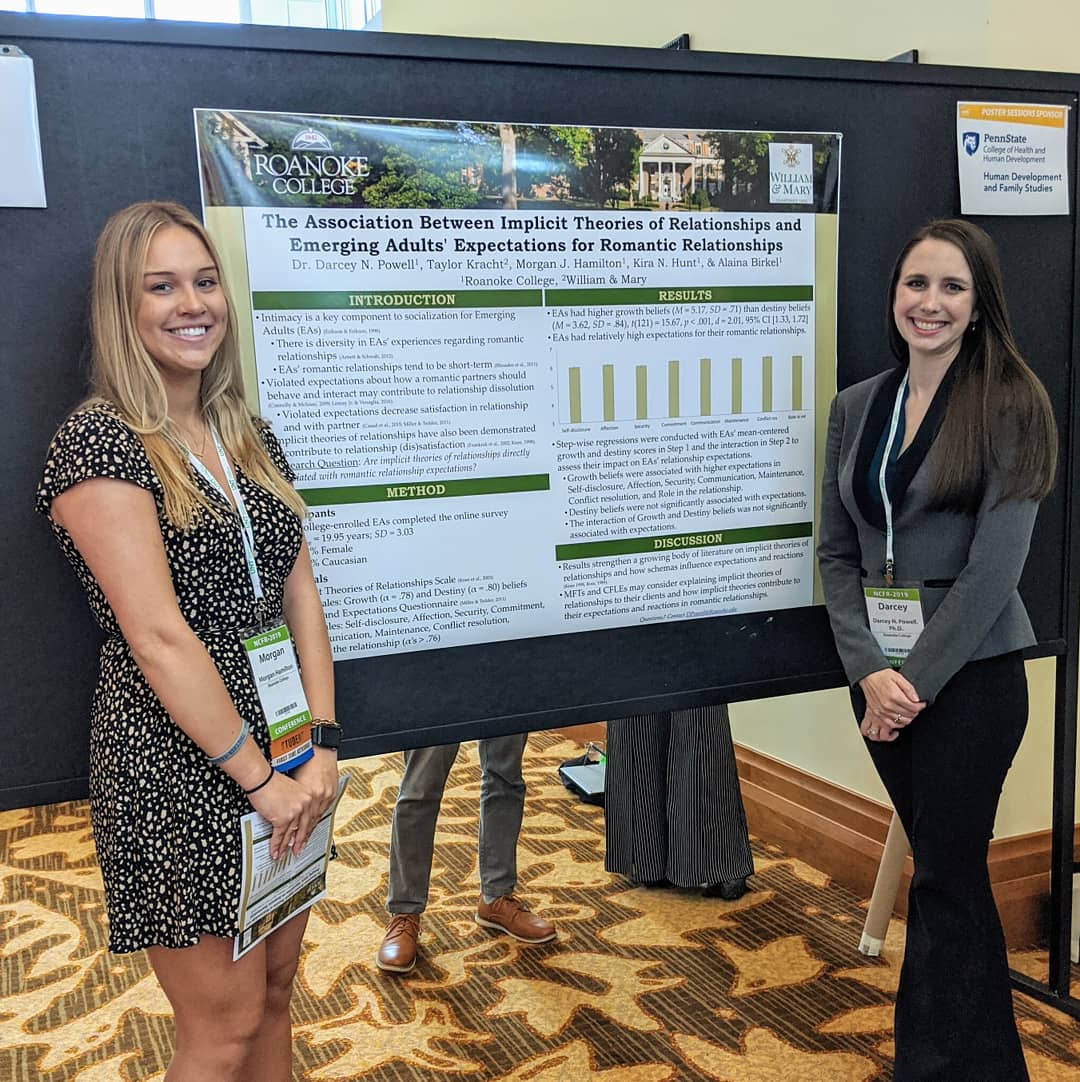
On November 20-23, Dr. Powell took two students to the National Council on Family Relations (NCFR) Conference in Fort Worth, Texas to present research through poster sessions and to attend presentations. These students included Rachel Harmon ’20 and Morgan Hamilton ’21.
Morgan Hamilton Worked alongside Dr. Powell and presented their poster titled “The Association Between Implicit Theories of Relationships and Emerging Adults’ Expectations for Romantic Relationships,” which was based on a subset of results from Taylor Kracht’s ’18 honors in the major study.
The students have since given some insight onto what it was like presenting at the conference as well as their reactions to the conference and Fort Worth, TX:
Rachel Harmon and Morgan Hamilton at the NCFR conference
Rachel Harmon
I attended the annual NCFR conference with Dr. Powell and my fellow lab-mate, Morgan. Although I did not present at the conference I enjoyed attending the poster sessions and symposiums that were relevant to my current and future research interests, as well as supporting Morgan and Dr. Powell during their presentation. I specifically enjoyed attending presentations on the topics of disability and immigrant youth and families. Attending this conference was beneficial for me as I am currently applying to graduate programs in Human Development and Family Studies and Clinical Psychology. While I was at the conference I was able to interact and network with professors in Human Development and Family Studies programs as well as to receive feedback on my own research. Attending NCFR also prepared me to present my own research at a conference next semester. I am very thankful that Dr. Powell and Roanoke College encourage their undergraduate students to attend conferences to gain valuable experience in their areas of interest. Overall, I really enjoyed exploring Fort Worth with Dr. Powell and Morgan. The things I enjoyed most about the city were the food and the nice weather!
Morgan Hamilton and Dr. Powell presenting their poster
Morgan Hamilton
The opportunity to present at NCFR was incredible. Leading up to the poster session, I was very nervous because I had never presented to a group of scholars. After the session began and I had spoken to a few people who gave high praise to our research, my nerves significantly calmed. It was so cool to hear people’s thoughts about how our research applied to their own work. Although presenting was a great experience, my favorite part of the conference was listening to other scholars talk about research they conducted on topics I want to pursue and am truly passionate about. I was able to sit in a room with thirty people who all cared about adolescent mental health and was also able to meet a few professors at graduate programs too. It was fascinating to see how Psychology is growing & gave me great ideas about potential future research I would like. Finally, Fort Worth was such an amazing city! Rachel, Dr. Powell and I spent a lot of time walking around the shops in the city and finding great food along the way. Overall, the experience was something I am super grateful to have been warranted and I’m sure it will stand out as a highlight of my academic career at Roanoke College.
Fort Worth, TX gearing up for the holiday season!
Congratulations to all those who attended the conference and for having a successful presentation!
With the start of finals week being just 2 weeks away, it is time to start studying and preparing for any final projects or assignments due. Students stress levels spike during this time of year and while the idea of having a week full of deadlines and exams can seem terrifying, if you start attacking the projects and studying now, finals week can become much less stressful.
This post is to help relieve some of the stress that comes with finals! Below is an action plan on how to attack projects and start studying early, as well as how to stay on top of deadlines before they come.
Step 1: Start early!
While this may be easier said than done, especially with Thanksgiving being this Thursday, starting on projects and studying early will help to relieve most tension and stress that is felt during finals week. Here is a simple way to get started early:
1. Start off my marking down the due dates of any final projects/assignments and dates of final exams. By putting the dates into a calendar you will be able to better visualize what needs to be completed and by when.
2. Write down each day leading up the final project/assignment/exam. Next to each day write down something to accomplish. Typically putting a little bit of time into each objective/goal daily is better than spending one whole day on one item. For example, if you have a final exam that includes a study guide attack 1 portion of the study guide (such as 1 chapter) daily, or every few days depending on how much is on the exam. Likewise, if you have a final paper try to work on a paragraph or portion each day or every few days depending on how much time you have.
This may seem like a lot at first but dividing each assignment or exam studying across multiple days will be much more efficient than waiting till the day before to write a whole paper or study for an entire exam.
Make the choice on what assignments/projects/exams are most important to you and put more of a focus on those. If there is a class you are struggling in or a class that has deadlines coming up sooner than others, you would want to put in more time preparing for the items due in that class.
Step 3: Talk to the Professor or classmates!
When you start studying and preparing early it gives you optimal time to ask for clarification from the Professor or from classmates. This will help to relieve any anxiety with topics or assignments that may stump you during your studying/prepping for the end of the semester.
Step 4: Relax, Breathe, and take time for yourself
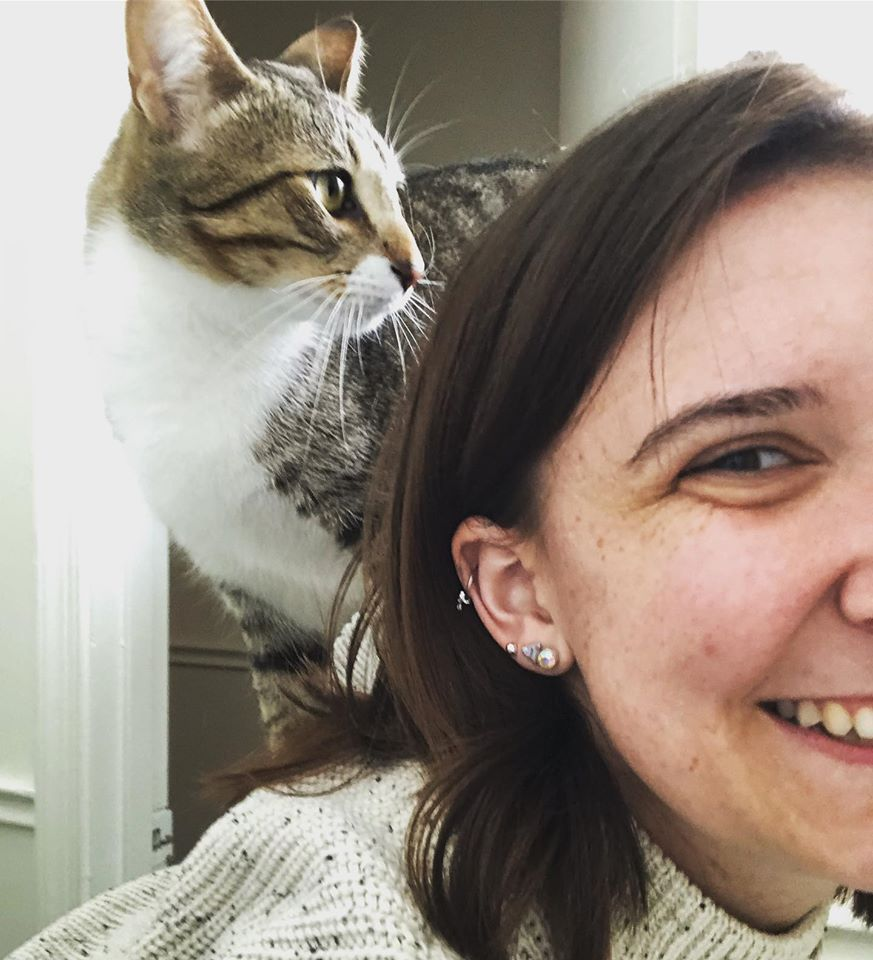
Make sure that during all of your prepping for finals week you take time for yourself. Whether it be meditating, exercising, shopping, or petting the campus cat or visiting dogs, make sure to take some much needed breaks and step away from the assignments, projects and studying. Not only will this allow you to clear your mind and come back with more ideas and a fresh head space, it is also extremely beneficial in increasing your moral and reducing the stress and anxiety that comes with finals.
This action plan may not work for everyone and is in no way exhaustive in terms of preparing for finals week. However, if you start early you will find that finals week is not as bad at it seems and you will be able to get through each exam, project, or assignment with much less stress than if you wait till the day or few days before.
While finals are fast approaching, there is more than enough time to get started and get ahead, and know that you can do it!
Good luck with your finals preparation and have a wonderful Thanksgiving break!
In an interview with a student assistant, recent graduate Noelle Warfford ’19 describes life after graduation, recalls on her favorite memories from Roanoke College, and shares about being Salutatorian for the class of 2019.
To start off, can you tell me a little about yourself?
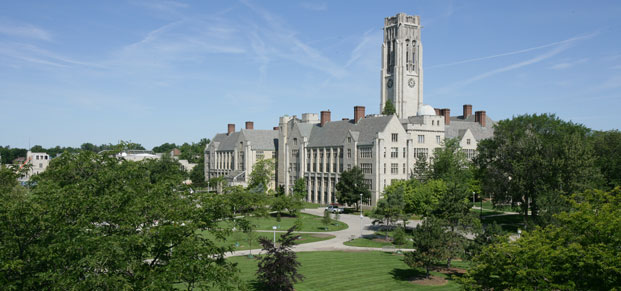
I’m Noelle, currently a graduate student at The University of Toledo studying Clinical Psychology. I would say I am a pretty friendly, hard-working person. I live with my cat Joshua, who is adorable, and I love to sing and watch movies whenever I get free time. Just not at the same time, to be clear. 😜
Congratulations on being a Salutatorian! What was it like when you found this out?
When I found out I was Salutatorian, I was so excited that I just wanted to tell everybody I knew. I found out while I was with Dr. Nichols, who was my advisor, which made it even more exciting!
Noelle and her friend Phillip
What was graduating like?
I remember graduation as being simultaneously incredibly fun and pretty stressful. There were so many events to go to that week and people to hang out with and talk to. The evening at President Maxey and Mrs. Maxey’s house was awesome, but nothing beats the feeling of hearing your name and walking across that stage!
How did it feel to finally step on the seal?
Stepping on the seal felt like one of my biggest accomplishments at Roanoke. We all spend four years avoiding it because we’re all at least a teeny bit superstitious. So when you finally get to do it, it’s such a relief! You really know you made it.
What do you miss about Roanoke College? What is your favorite thing about having graduated?
I miss so many things about Roanoke…but Commons honestly might be the thing I miss most. Especially all the kind staff, and the delicious desserts. I miss Olin Hall and of course the 5th floor of Life Science too, because I spent so much of my time in those places, usually with my closest friends. The best thing about graduating, though, is not having to worry about parking on campus anymore! And I mean, having a degree is great too. 🙂
Since I graduated I moved up to Ohio to go to UToledo. The PhD program I’m in is 5 years long, including one year of internship. As a first year student, I have a few different jobs as a graduate assistant, I have classes on psychological assessment, clinical practice, psychotherapy, and research methods. I’m also already starting research and get to sit in on a clinical practicum where advanced students discuss the clients they’re treating at the University Psychology Clinic.
What does a typical day consist of in Graduate school?
For me, a typical day in graduate school can range from a day where I only have meetings to attend throughout the day but no classes, to a full day where I have an hour-long lab at 8:15 (which I always grab a coffee on the way to campus for), a 2hr 40min class at 10:30, a brief time to grab lunch, and then another long class at 2pm. Since my classes only meet once a week, I usually have a lot of time to work on readings and assignments during the day and then have time to chill in the evening.
Noelle and Joshua
What has been your favorite part of graduate school so far? How about least favorite?
My favorite part of graduate school is getting to study topics I’m interested in in a lot of depth. For example, I’ve already gotten to practice administering two major cognitive tests, the WAIS-IV and the WIAT-III, on a volunteer. I’m always surrounded by students and faculty who are very passionate about what they do, so it’s an encouraging environment to be in. My least favorite part is the sheer amount of reading I have to do. I’m so thankful I got practice reading empirical articles while I was at Roanoke, because I feel like that’s all I do now!
Where do you hope this opportunity takes you in the future?
My hope is that during my time in this program, I’ll be able to make contributions to research on psychosis assessment, especially assessing thought disorder, and that I’ll be able to gain significant experience working with populations with psychotic disorders. From there, I hope I can find a job where I get to do assessments all the time and help train others to become experts in assessment as well.
Is there anything else you would like to tell us?
Hmm…I guess the only other thing I’d like to share is, look out for a chapter on psychosis that I’ll be co-authoring with my advisor in the 2nd edition of The Oxford Handbook of Personality and Psychopathology Assessment. I am psyched about getting to work with her on this project! We’re starting a lot of exciting work on assessing early symptoms of psychosis, and I’m focusing in on signs of thought disorder, like you often see in schizophrenia.
Congratulations on all of your accomplishments Noelle! We will be continuing to cheer you on from Roanoke College!