Category: Classes

  • Welcome Dr. Anthony Cate!: An Interview

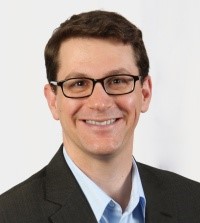
    Dr. Anthony Cate, Psychology Professor at Roanoke College


    The Psychology Department would like to welcome Dr. Anthony Cate to our faculty as our newest professor.  The following is an interview with Dr. Cate where he answers some questions about himself, his interests in psychology, and what he’s looking forward to in terms of teaching at Roanoke College.

    Where are you from?

    I was born in New Jersey, and I moved a lot when I was young.  I have lived in every state between Washington, D.C. and Boston, except for Delaware.  After I got my Ph.D. I also lived in Canada (Ontario) and northern California.

    Where did you receive your undergraduate degree from and what did you study in undergraduate? What was that experience like?

    I got my undergraduate degree from Yale University.  I began as a religious studies major, but I thought that those classes involved too much memorization of names and dates, so I switched to psychology.  Actually, I switched to being a triple major, at least on paper: psychology, linguistics, and East Asian studies.  I shed majors when I figured out that psychology interested me the most.

    I was lucky that I was able to help out in three research labs that had different missions and lab cultures.  I learned that I was bad at doing brain surgery in a rat lab.  I lost some patients.  Everyone there seemed anxious all the time too, which was poignant because anxiety was part of what they studied.  I conducted my first research project in a lab that studied human fear conditioning.  My advisor was a very kind scientist who helped me feel like an important part of the lab, but I disliked having to give participants electric shocks.  I also frequented the lab of my favorite professor, who had taught my perception course.  That lab was very welcoming.  People could just walk in to say hi and check out the experiments, there was a dog, and the students were very productive.  All of those experiences taught me to consider the social environment when I was choosing a graduate program.

    Have you received any other additional degrees? Where did you receive them from?

    I went to Carnegie Mellon University to get my Ph.D. in psychology, which was part of a joint neuroscience program with the University of Pittsburgh.

    Have you taught anywhere else besides Roanoke College?

    I first taught when I was a postdoctoral researcher at Western University in Canada.  My advisor talked me and two other postdocs into teaching one third of a course each, which seemed like a lot at the time.  Later I taught at Virginia Tech, where I worked for nine years before moving here to Roanoke.

    What are you most excited about teaching at Roanoke College?

    I am very excited to teach at Roanoke for many reasons!  It has been hard for me not to talk a mile a minute while teaching during these first few weeks.  It is exciting when students ask me questions, including when I don’t know the answer, because then I get to track the answers down later.  I was very eager to start teaching smaller class sizes.  I think personal interactions form the most effective ways to learn, and instructors get to learn from their students this way, too.  It is also a privilege to join an excellent psychology department where the faculty and staff are so engaged in their mission.

    Dr. Cate in front of MRI machine at Veterans Affairs Northern California Health Care System in Martinez, CA (2007)

    What are your research interests? Why are you interested in this/these field(s)?

    My research investigates how visual perception works, and how it influences other cognitive skills like memory and reasoning about numbers.  I am particularly interested in understanding how different parts of the brain work together.  I have studied techniques for visualizing computer models of brains in order to make maps of which cognitive skills are associated with different brain regions.

    Can you tell us about any research you have already completed in these areas?

    I have published some research about how we perceive the 3D structure of objects, and about how brain damage can alter these perceptions.  I enjoyed learning how to make 3D images using computer graphics, and I especially liked getting to learn what people living with brain damage had to teach me about perception.

    What course or courses are you currently teaching?

    I am teaching Introduction to Psychology and Cognitive Psychology this semester, which is a great combination.  I have been teaching Cognitive Psychology for over nine years, and it is so familiar to me that I get excited when my favorite topics are about to come up in class.  I have never taught Intro Psych before.  It feels like a big responsibility to introduce the entire field.

    Are you interested in taking on students as research assistants?

    Yes!  Students make research better.  I realized a few years ago that when undergraduates helped me with a project, we considered the problems less narrowly.  The projects were much more enjoyable because of all the conversations we got to have.

    What qualities are you looking for in any students who are interested in joining your lab?

    Mainly curiosity, and an appreciation of research for its own sake.  My research questions are usually less about “how can we apply this science?” and more about “how does this work?”  I have had wonderful contributions from students with backgrounds in art and design, but that’s because we had similar interests, and not because students need any particular artistic abilities.  The same has been true for students who are interested in neuroanatomy and computer science.  A passion for those topics makes for a good fit, but students definitely don’t need to have expertise already.

    Welcome to Roanoke College Dr. Cate! Thank you again for taking the time to answer our questions. We are excited to have you here and look forward to learning more about you in the semesters to come!

    .

    .

    .

    Get Connected!

    Bloghttps://psych.pages.roanoke.edu/
    Facebookhttps://www.facebook.com/rcpsychology
    Twitter: @RC_Psychology
    Linked In: https://www.linkedin.com/groups/RC-Psychology-8140491/about
    Website: https://www.roanoke.edu/inside/a-z_index/psychology
    Instagram: rcpsychology


  • HNRS 260 Creates Flyers to Stop the spread of Covid-19

    As a part of Dr. Powell’s HNRS 260 – Psychology in the Media course, students read Van Bavel and colleagues’ (2020) article, Using social and behavioural science to support COVID-19 pandemic response, and created flyers that they thought would grab RC students’ attention to reduce the spread of COVID-19 on campus.

    See what some students came up with below!

    Do the Right Thing

    Graphic designed by Madi Nuckles

    Uncle Sam

    Graphic designed by Hunter Haskins and Snigdha Somani

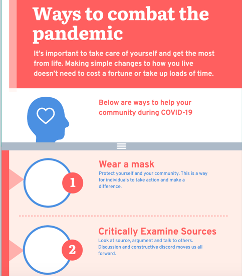
    Combatting the Pandemic

    Graphic designed by Ben Nelson

    COVID Practices

    Graphic designed by HNRS 260 student

    Great job to all the students who completed this project and created new graphics to share on campus!

    Continue to stay safe, and remember, keep wearing a mask, wash your hands, and social distance to help stop the spread of COVID-19 and keep all of the Roanoke College community safe!

    .

    .

    .

    Get Connected!

    Bloghttps://psych.pages.roanoke.edu/
    Facebookhttps://www.facebook.com/rcpsychology
    Twitter: @RC_Psychology
    Linked In: https://www.linkedin.com/groups/RC-Psychology-8140491/about
    Website: https://www.roanoke.edu/inside/a-z_index/psychology
    Instagram: rcpsychology
  • APA & GSA’S CAREERS IN AGING WEEK!

    April 19 to April 25 is APA and GSA’s careers in aging week! Psychology of aging focuses on applying knowledge and methods of psychology to understanding and helping older adults and their families to achieve well-being in later life. If you are interested in working with older adults and want to learn more then follow this link! Likewise, if this is a topic that interests you then check out Adult Development and Aging (PSYC-323), a course that is being offered this fall and likely will not be offered again until Fall 2022.

    Furthermore, if you are interested overall in human development then check out the human development concentration that is offered at Roanoke College! The human development concentration exposes students to the broader life-span perspective and allows students to focus on the stages (e.g., childhood, adolescence, adulthood) and the topics most applicable to their personal or professional goals.

    For more information on the human development concentration, reach out to Dr. Powell or Dr. FVN!

  • SUMMER INTERNSHIP AND EMPLOYMENT OPPORTUNITIES!

    Image result for psychology
    © Iowa State University

    With spring break being only one week away the thought of summer may still seem distant in some mind’s, but it is quickly approaching. Summer break is a great time to explore opportunities in psychology and get experiences that go beyond the classroom. With the multitude number of research or internship opportunities available to students it can sometimes be challenging to figure out where to begin. Likewise, with summer comes graduation and the rush to find jobs begins. However, this website has got your back!  

    Whether it be a summer opportunity or a long-term job, this website is regularly updated with information on psychology opportunities. Not only does this website offer a numerous amount of resources but it is also easy to navigate. By providing filtering options such as the type of position you are looking for and what state you are looking to be in, there are options that would align with each students needs and interests. Moreover, this website also filters the positions on areas of psychology and includes opportunities in clinical, cognitive, cultural, developmental, educational, health, neuroscience, positive, and social psychology. 

    While you may not know quite yet what you want to do this summer or after graduation, this website is a great place to start searching and a great starting point to familiarize oneself with the endless opportunities that those studying psychology have! This website is updated frequently so if you don’t find a position that suits your needs or interests now, check back later! 

    .

    .

    .

    Get Connected!

    Bloghttps://psych.pages.roanoke.edu/
    Facebookhttps://www.facebook.com/rcpsychology
    Twitter: @RC_Psychology
    Linked In: https://www.linkedin.com/groups/RC-Psychology-8140491/about
    Website: https://www.roanoke.edu/inside/a-z_index/psychology
    Instagram: rcpsychology
  • RC Psychology Offers Clinical Psychology Class

    Beginning this semester, Roanoke College’s Psychology Department began offering a class on Clinical Psychology taught by Dr. Hilton for those interested in learning more about the field.

    Image result for seinfeld happy gif

    Goals for the class include: 

    1. Clearly delineate the field of clinical psychology from all related professions
    2. Help students understand the unique skills and abilities of clinical psychologists and how these things can be used across the many settings we work in
    3. Give students the basic tools to think like clinical psychologists and learn how to approach things systematically and scientifically to be informed consumers and ethical providers in the future

    When asked about his hopes and expectations for the class, Dr. Hilton responded:

    I think the class is beneficial for anyone with an interest in the field of mental health broadly. Even if you don’t pursue a clinical doctorate, the clinical psychologist’s approach to studying and treating mental health problems can (and should) be applied to any other field.

    As part of the course, students will regularly be asked to apply their knowledge in the form of reaction papers, discussion, and research. Students will have the opportunity to speak with a licensed psychologist regarding their education, training and work life and will learn the basic skills of the assessment and therapy process, later applying these in a role play with the instructor.

    In recognition of this new course offering, a series of blog posts focusing on exploring what clinical psychology is, the process of becoming a clinical psychologist, and what other, similar career options will be posted over the new few weeks.

    We look forward to and are excited about this new opportunity for students at Roanoke College to learn more about what clinical psychology as, as well as hope that our future blog posts will also help aid students in learning more about what careers are available post-graduation.

    If you have any questions about the field of clinical psychology, or about the class at Roanoke, you are encouraged to contact Dr. Dane Hilton at hilton@roanoke.edu.

    .

    .

    .

    Get Connected!

    Bloghttps://psych.pages.roanoke.edu/
    Facebookhttps://www.facebook.com/rcpsychology
    Twitter: @RC_Psychology
    Linked In: https://www.linkedin.com/groups/RC-Psychology-8140491/about
    Website: https://www.roanoke.edu/inside/a-z_index/psychology
    Instagram: rcpsychology
  • Looking for Research Opportunities & Internships?

    Looking for research opportunities and/or internships this summer, but not sure where to start?

    Never fear! I bring you good news.

    The American Psychological Association provides a list of opportunities at major institutions for undergraduates. Such programs are available across the United States, from New York City to California.

    Take a look at a few of those offered below, you may be surprised at what’s out there.

    • Boston University Summer Undergraduate Research Fellowships (SURFs)
      • Particular focus on minority groups, those traditionally underrepresented in the sciences
      • Applications opened December 9th, 2019 and close on February 15th, 2020
      • Program runs from June 1st to August 1st
    • Harvard Lab for Developmental Studies
      • Students interested in research on language and/or cognitive development, have experience with research methods (especially psychology or linguistics), comfortable interacting with families in a professional setting, and have excellent problem-solving and teamwork abilities
      • Application deadline: 12:00 EST, 1 March 2020
      • Program runs from June 8th through August 14th
    • National Institute of Neurological Disorders and Stroke (NIH) Summer Program in the Neurological Sciences and Other Neuroscience Research Training and Funding Opportunities
      • Available to high school, undergraduate, graduate, and medical school students
      • Receive first-rate training in neuroscience, have opportunities to network, and obtain impressive credentials when competing for graduate school, medical school, predoc or postdoc fellowships, and tenure-track positions
      • Applications open from mid-December through March 1st
      • Requires: CV or resume, a list of coursework and grades (do not need a transcript at this time), a cover letter describing research interests and career goals, and the names and contact information for two references
    • University of South Florida Summer Research Institute (SRI)
      • Application deadline: 15 March 2020 at 11:59 pm
      • Acceptance notifications: 3 April 2020
      • Program is dedicated to research and education of substance use and co-occurring disorders, prepares students for graduate school and/or Senior thesis
      • Up to 12 students chosen, courses in statistics and research methodology are required to be eligible
      • 11-week program from May 27th through August 7th

    And there are plenty more opportunities as well. If you are interested in learning more, follow this link to the American Psychological Association’s website where all their recommended research/internships are listed.

    .

    .

    .

    Get Connected!

    Bloghttps://psych.pages.roanoke.edu/
    Facebookhttps://www.facebook.com/rcpsychology
    Twitter: @RC_Psychology
    Linked In: https://www.linkedin.com/groups/RC-Psychology-8140491/about
    Website: https://www.roanoke.edu/inside/a-z_index/psychology
    Instagram: rcpsychology
  • G.R.A.C.E. LAB SUMMER PROGRAM!

    Image result for spelman college logo"

    The Gender Race and Cultural Empowerment (G.R.A.C.E.) lab is hosting a 6-week summer program offering students the opportunity for one-on-one mentorship and research experience. The G.R.A.C.E. Lab’s emphasis is on social psychology with a focus on the experiences of Black women in STEM education.

    Responsibilities include:

    • Recruiting study participants
    • Data collection and analyses
    • Attending weekly lab meetings

    Qualifications for this position:

    • Strong academic performance in psychology,
      with a GPA requirement of 3.25 (overall and
      major)
    • Dependability and takes initiative
    • Excellent interpersonal and communication skills
    • Rising juniors and seniors preferred

    This program will run from June 8 – July 17, 2020, and will be hosted at Spelman College. You are expected to be committed for all 6 weeks. While attending this program, a stipend, housing for 6 weeks, and a campus meal plan will be included.

    They will begin selecting applicants into the program on a rolling basis until February 14, 2020.

    If you are interested in applying to this program follow this link and email your cover letter, curriculum vitae, and your most
    recent unofficial academic transcript to Dr. Maria Jones, Postdoctoral Research Associate, at mjones35@spelman.edu!

    . 

    . 

    . 

    Get Connected!

    Bloghttps://psych.pages.roanoke.edu/
    Facebookhttps://www.facebook.com/rcpsychology
    Twitter: @RC_Psychology
    Linked In: https://www.linkedin.com/groups/RC-Psychology-8140491/about
    Website: https://www.roanoke.edu/inside/a-z_index/psychology
    Instagram: rcpsychology
  • NIA’s Summer Research Opportunity: STAR Program

    Looking for a summer research opportunity?

    Applications are now open for the National Institute on Aging’s Summer Training in Aging Research (STAR) Program, based in Baltimore, Maryland. The deadline for college, graduate, and medical students is March 1, 2020.

    Part of the broader NIH Summer Internship Program in Biomedical Research, the STAR Program participants (ranging from high school students to graduate or medical students) work with NIH Scientific Staff mentors regarding age-related research, culminating in presenting their research findings at the NIA Summer Student Poster Day.

    While also there, participants learn about the scientific method, attend seminars, and may have the opportunity to co-author a journal article.

    The aim is to provide students with the opportunity to develop research skills through hands-on practice and seminars.

    The program also provides aid regarding professional development, through both the internship itself and assistance regarding applications to graduate or professional schools.

    NIA Summer Internships range from eight to ten weeks, beginning in late May and ending mid-to-late August.

    Participants will receive a stipend, with the amount depending on the level of education completed at the beginning of the internship.

    If the NIA is not of interest, there are a number of other research opportunities through different NIH institutions. If interested in the other NIH research opportunities, follow this link to the NIH OITE Training Website where everything is broken down regarding overall opportunities through NIH and more.

    For those interested in the NIA: applications will automatically be sent to the NIA if participants indicate such interest in the study of aging or designate the NIA as their NIH institute of choice on their application.  To confirm that said application has been received by the NIA, please contact Recruitment Specialist, Ms. Arlene Jackson at jacksona@nia.nih.gov.

    For advice in terms of writing a successful application, follow this link to a PDF provided by the NIH Office of Intramural Training & Education.

    Potential participants are also encouraged to contact either Ms. Jackson, as mentioned above, or Ms. Taya Dunn Johnson, Assistant to the NIA Deputy Scientific Director, at dunnt@mail.nih.gov, for further information.

    .

    .

    .

    Get Connected!

    Bloghttps://psych.pages.roanoke.edu/

    Facebookhttps://www.facebook.com/rcpsychology
    Twitter: @RC_Psychology

    Linked In: https://www.linkedin.com/groups/RC-Psychology-8140491/about
    Website: https://www.roanoke.edu/inside/a-z_index/psychology

    Instagram: rcpsychology

  • CONGRATULATIONS TO RACHEL HARMON AND DR. POWELL!

    © Rachel Harmon

    This past summer Rachel Harmon was selected as a recipient of the 2018-2019 Summer Mamie Phipps Clark Diversity Undergraduate Research Grant from Psi Chi, the international psychology honorary, where she spent several weeks in Mexico working on her project titled, “Cross-Cultural Comparison of Caregiver Concerns and Resources for Children with Disabilities.” 

    Rachel Harmon was in the list of top 11 applications and so Dr. Powell was awarded a faculty stipend as well. 

    A brief interview was done with Harmon to learn more about this project and process: 

    Thank you for taking time to answer some questions, to start off, can you describe what the grant process was like and how you discovered it?  

    I began the grant application process in December of last year but ended up not submitting the grant until the May due date. I heard about the grant through Dr. Powell, who recommended applying, and advised me throughout the process. The grant required me to provide a concise version of my Literature Review and a brief Methodology section, and all the scales that I would use. I found that the grant helped me to determine the specific methodology I would use for my project and helped me to determine the specific scales that I would use. 

    Can you tell me more about your project?  

    The title of my project is “Cross-Cultural Comparison of Caregiver Concerns and Resources for Children with Disabilities”. I have collected both observational and quantitative data in both Mexico and the United States to compare the resources that are available for children with disabilities in each country and how this impacts caregiver stress levels and the emotions they feel, regarding caring for their child with a disability. I originally got the idea for my project when I traveled to Nicaragua the summer before my freshman year. While I was walking through a market in Managua, I saw a woman who was working and had her daughter who had a disability in what we would consider a baby stroller. I have worked a lot with individuals, specifically with children with disabilities and developmental delays, and I was naturally compelled to investigate the topic further.  

    What drew you to Mexico for this project?  

    I was originally supposed to return to Nicaragua for my project, but due to the current political environment, it was not ideal for travel. Jesse Griffin, who serves on the committee of my project knew of several connections that our college has with research facilities and other institutions in the Yucatán. One of the facilities was conveniently across the street from a Centro de Atención Múltiple, which is a government funded special education school, which was a great resource for collecting observational data and distributing surveys.  

     What did a normal day look like for you in Mexico as you worked on this project?

    © Rachel Harmon

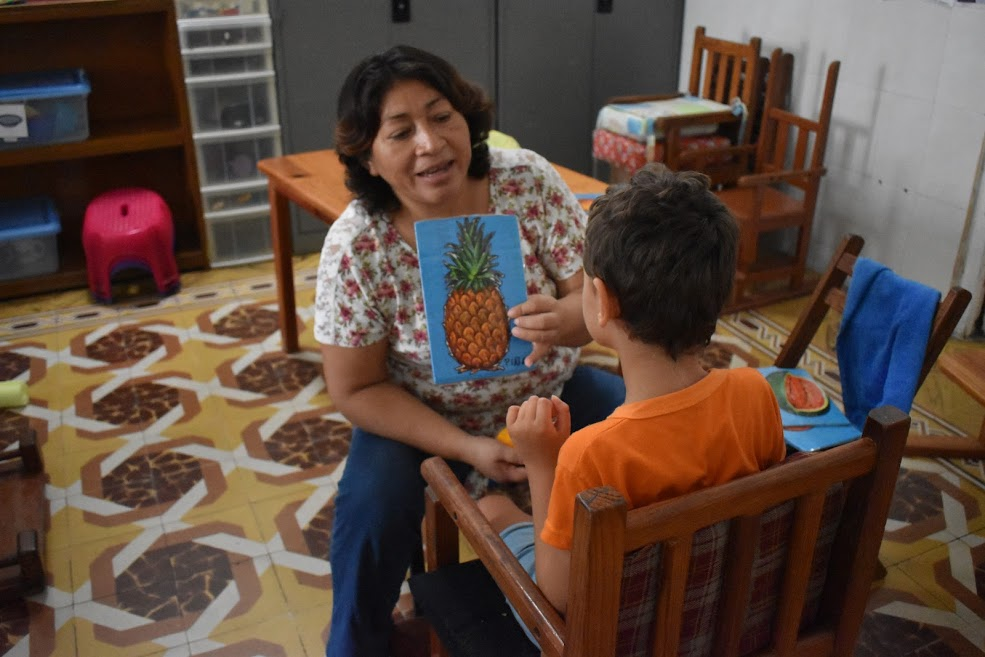
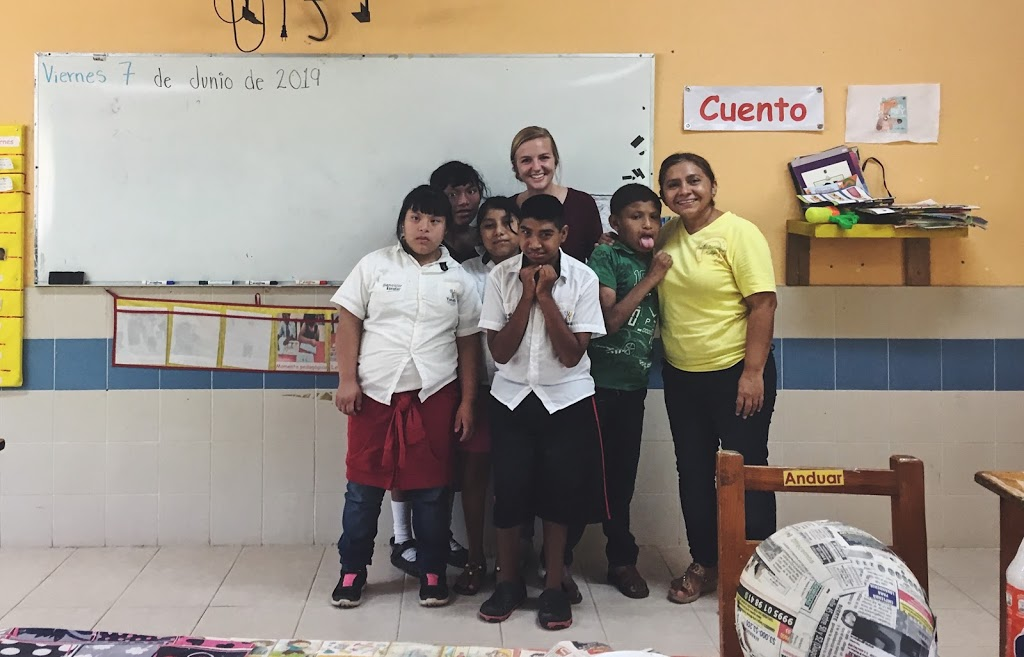
    For the first month I spent in Mexico I was in Oxkutzcab, which was a small, rural town. This was where the C.A.M. school was. Each weekday I would go to the school at 7:30, and I would rotate which classroom I was in each day. The school has seven classes serving student from ages 2-28. Depending on which classroom I was in, I would either observe the class, and participate in class activities, or work one on one with students who needed more individualized attention. The school days in Mexico only last from 7:30 to 12:30, so in the afternoons I would explore or relax, and work on other research tasks.  

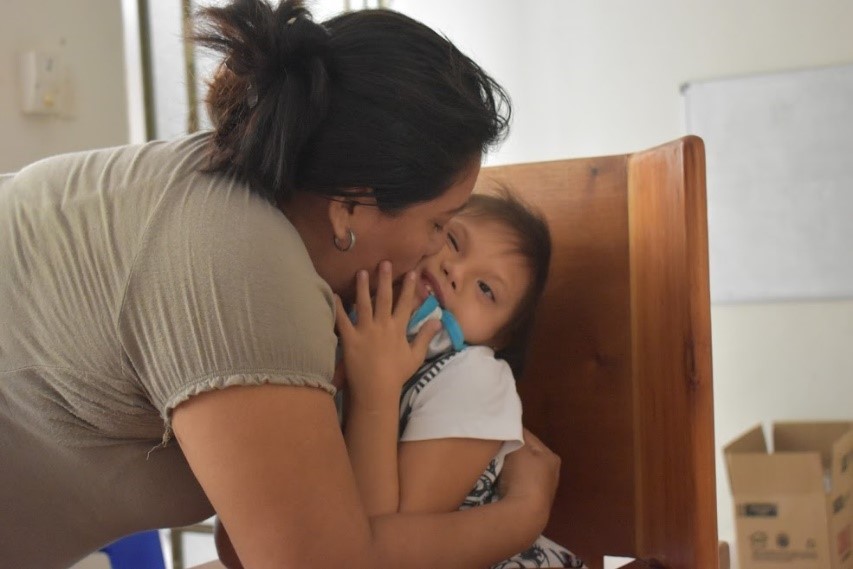
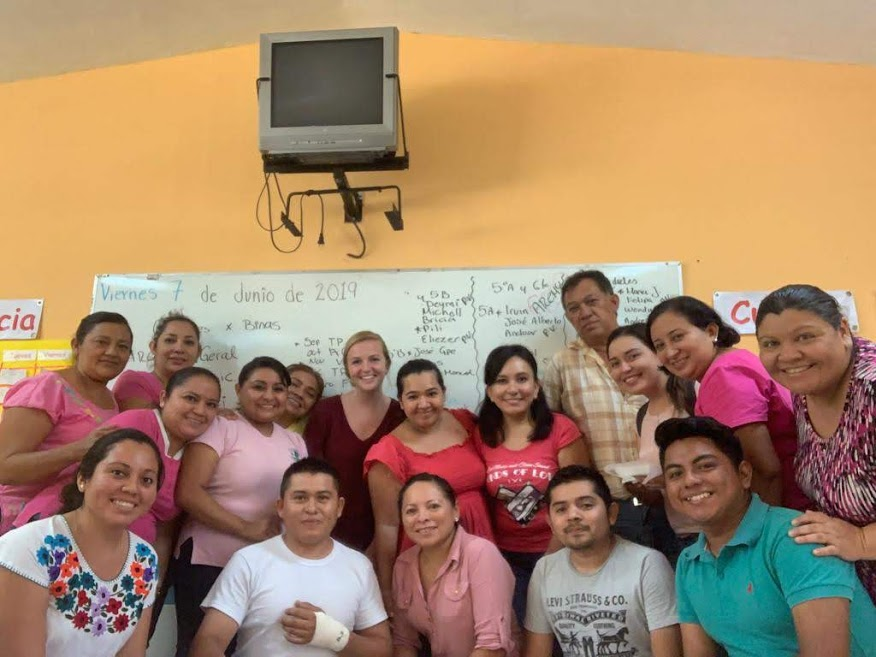
    I spent the second month in the capital of the Yucatán, Mérida. Here, I was working with an internationally run non-profit called SOLYLUNA. The organization provides special education opportunities and access to physical therapy, speech therapy, and occupational therapy for children who have a diagnosis of multiple disabilities and their caregivers. The dynamic of the organization was very different than the C.A.M. school, so it was an adjustment. The organization requires that a caregiver accompanies the child for the full day from 7:30-1:30. My job as a volunteer was to assist the parents when needed, and to observe the teachers and therapists. I also worked with the volunteer coordinator and director of the organization to create a document about potential resources to provide for caregivers, and I took pictures for them to use for promotion purposes. Since I was now in a larger city there was a lot more to explore in the afternoons, and I enjoyed travelling on the weekends.  

    You mentioned that you had opportunities to explore while in Mexico, what was the coolest place you visited/most favorite?

    © Rachel Harmon

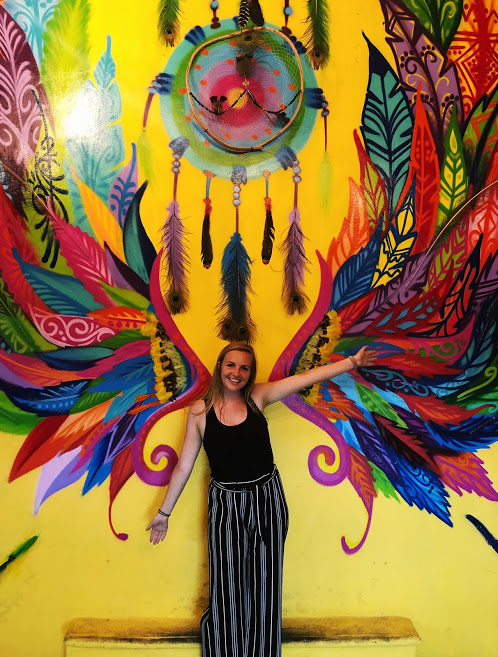
    I did have a lot of time to explore while I was in Mexico, especially on the weekends. I enjoyed exploring nearby towns and venturing further to other landmarks. I think my favorite place I traveled to while in Mexico was Isla las Mujeres. This was an island off the coast of Cancún, where we were able to hear lots of live music, enjoy the beach, and go snorkeling. I met a group of other students from Millsaps College, in Mississippi while I was there, and I enjoyed traveling with them and meeting them at different places on some weekends.   

    If given the opportunity would you go back and work, there again?  

    © Rachel Harmon
    © Rachel Harmon

    Absolutely! While I was there, I formed a lot of connections with the kids, caregivers, teachers and therapists that I was working with and I would love to see them again (I miss them a lot)! It was hard to leave such amazing people, and such an amazing place.   

     Is there anything else you would like us to know?  

    Overall, my experiences in Mexico taught me more than I could have ever imagined. I especially learned a lot about collecting data in another culture, which is an experience I consider myself lucky to have had at this point in my academic career. Whether it is through research, or a different study abroad program, I highly recommend spending time in another country to everyone, because it allows you to learn so much about yourself and the world.  

    Congratulations again to Rachel Harmon and Dr. Powell and thank you for taking time to answer some questions!

    . 

    . 

    . 

    Get Connected!

    Bloghttps://psych.pages.roanoke.edu/
    Facebookhttps://www.facebook.com/rcpsychology
    Twitter: @RC_Psychology
    Linked In: https://www.linkedin.com/groups/RC-Psychology-8140491/about
    Website: https://www.roanoke.edu/inside/a-z_index/psychology
    Instagram: rcpsychology


  • JOIN DR. POWELL AT THE MAY TERM TRAVEL EXPO THIS THURSDAY!

    Are you interested in taking a class in another part of the world? If so, come out to the Ballroom this Thursday, September 5 between 12 – 1 pm to hear about the awesome May Term Travel courses being offered this coming spring! Dr. Powell will be there sharing information on the course she is teaching, IL 377: Emerging Adults in Thailand – A Cross-Cultural Society, which counts as an elective for those in the Human Development concentration but is also a wonderful opportunity for all those interested in human development. Other faculty will be sharing about their courses that are also being offered as well!

    . 

    . 

    . 

    Get Connected!

    Bloghttps://psych.pages.roanoke.edu/
    Facebookhttps://www.facebook.com/rcpsychology
    Twitter: @RC_Psychology
    Linked In: https://www.linkedin.com/groups/RC-Psychology-8140491/about
    Website: https://www.roanoke.edu/inside/a-z_index/psychology
    Instagram: rcpsychology