Category: Classes

  • The False Paradox of Selflessness

    Related image

    As part of Dr. Carter’s Fall 2018 Social Psychology class, students worked in groups to analyze a study related to their coursework. They then wrote a blog post demonstrating their ability to summarize and analyze the study, describing any possible improvements that could be made along with ideas for future studies.

    Five of these posts were randomly selected to be posted to the Psychology Department’s official blog. This blog post, titled The False Paradox of Selflessness was written by Lynsey Wyatt (’21), Emily Deeds (’20), and Ciprianna Azar (’19) and is the first of the five to be posted.

    We hope you enjoy reading it!                        ___________________________________________________________________________

    If acting altruistically makes us happier, isn’t it a selfish act?

    Day to day, we observe acts that we may consider altruistic. Whether it be a small gesture of kindness or a heroic act of self-sacrifice, simply observing these behaviors influences our opinion of the actor. This leads us to question: how do we begin to judge someone’s true moral character? Prosociality refers to any behavior that intentionally benefits another, while altruism refers to more “selfless” actions. In contrast, egoistic forms of prosocial behavior tend to be motivated by attaining some benefit such as social or capital gain. A group of researchers sought to understand what truly makes us believe an act is altruistic. Carlson and Zaki (2018) conducted two studies examining the benefits of prosocial acts and the differences in perceptions of altruism by motive or consequence of benefit.

    In both studies, participants were randomly assigned to one of three conditions and tasked with reading through eight different scenarios and answering an online survey. In the control condition, the scenario only described a prosocial action such as “Jane gave blood at a local clinic”. In the other two experimental conditions, they were given more information about how Jane felt after giving blood, how much money she was given for donating, how many followers she gained on Instagram from her blood drive selfie or how she helped someone in need of blood. These scenarios highlighted four potential benefits including material, social, emotional, or other-oriented benefits. Participants were randomly assigned to read the actions as motivating or consequence. After reading the scenarios, the participants’ judgements were examined using multiple items: how altruistic they thought the prosocial agent was, how altruistic they thought the agent’s action was, and how altruistic they thought the agent’s motive for their action was.

    They first found that for participants who were shown that others performed the behavior and received benefits as a consequence or result, they believed that behaviors that resulted in material benefits or social benefits were of a less altruistic nature. We then infer that the person was motivated in the first place to engage in the act because they wanted a benefit such as monetary (material) or wanted praise (social). These same participants saw emotional benefits, such as feeling good about oneself, and other-oriented or directed towards others, as altruistic. This means that a sense of doing a good deed does not take away from the selfless act that was done.

    Participants who were led to believe the person had a motive or reason to engage in an altruistic behavior for benefits, material or social, were seen as significantly less altruistic. These participants saw motives for behavior that was other-oriented as more altruistic, and surprisingly, even saw emotional benefit as less altruistic. This suggests that people who are motivated to engage for selfish reasons are seen as less altruistic than those who do not have this motive but are unexpectedly rewarded.

    In the control group to which the participants had no information on the motive or consequential benefit to the actor, they rated the actor as altruistic no matter the benefit. This can be explained by the lack of information, as we tend to want to believe that people help others for selfless reasons.

    Through the psychological process of disambiguation, Carlson and Zaki were able to manipulate the participant’s judgements of the actors. This allowed them to examine whether or not perceptions of altruistic acts change when paired with different types of benefits, and if motive versus consequence conditions differentially affect this perception. Carlson and Zaki demonstrate a nuanced mechanism behind perceptions of “true altruism” that allow for an act to benefit both oneself and others, so long as one’s motive is other-oriented. More specifically, their findings suggest that when an observer is judging an actor that benefits themselves emotionally (as opposed to materially or socially) from a prosocial interaction, it differentially affects judgement of the actor’s motives. This suggests, according to the researchers, it is a better predictor of future generosity than extrinsic motivators.

    In ambiguous situations, what factors influence baseline assumptions? Zaki and Carlson’s study of lay theories of altruism and selfishness effectively highlights some of the nuances of social behavior and judgements. However, the studies lack the interpersonal dynamic facilitated by in-person interactions. Social interactions are based upon emotional exchanges. As social beings, we rely upon our ability to interpret others’ emotional states to understand their intentions and our relationship to others. In future work, it would be interesting to utilize confederates to simulate situations closer to real-world circumstances. Overall, Carlson and Zaki’s findings are consistent with what we may expect from the effects of altruism, despite a seemingly contradictory paradigm where a “selfless” act benefits the actor’s sense of self.

    Citation: Carlson, R. W., & Zaki, J. (2018). Good deeds gone bad: Lay theories of altruism and selfishness. Journal of Experimental Social Psychology, 75, 36-40.

    .

    .

    .

    Get Connected!

     Blog:  https://psych.pages.roanoke.edu/

    Facebook:  https://www.facebook.com/rcpsychology

    Twitter: @RC_Psychology

    Linked In:  https://www.linkedin.com/groups/RC-Psychology-8140491/about

    Website:  https://www.roanoke.edu/inside/a-z_index/psychology

    Instagram:  rcpsychology

  • A Brief Interview with Vanessa Pearson ’21, A Gilman Scholarship Recipient!

    A student assistant recently interviewed Vanessa Pearson ’21, a Gilman Scholarship recipient, on her plans for studying abroad this upcoming Spring semester and what the application process for the Gilman was like. 

    To start off, can you tell me a little about yourself? 

    I am a sophomore here at Roanoke. I am majoring in Psychology and Education with a concentration in Human Development. I am originally from Franklin County, VA, about forty minutes away from Salem. On campus, I am a part of Colleges Against Cancer and Habitat for Humanity. Off campus, I work a part time job as a waitress/cook/manager at a restaurant in my hometown. I also play rec volleyball in my free time.

    Congratulations on receiving the Gilman Scholarship! Can you tell me a little about program, what the application process was like, and where you are going to be studying?

    I am going through an international student exchange program to Australia. I will be studying at James Cook University in Queensland. The application process for James Cook University was surprisingly easy. I did not have to write any admission papers on anything like that. I think the hardest part about that application was trying to figure out what classes I wanted to take since they had to go on the application so that they could get approved. 

    The application for the Gilman Scholarship was a little more complex. There were a bunch of different parts to it. The biggest part of the Gilman was the essay section. You needed to have two essays explaining why you are a good candidate for it and what will you do to promote the Gilman and study abroad if you receive it.

    What drew you to studying abroad in Australia?

    I am not one hundred percent sure what drew me to studying in Australia. I was at a study abroad meeting and Dr. Boggs-Parker was going over all of the different places you could study [and] when she said Australia it clicked. [I felt like] that was it, that was where I needed to go.

    Also, the warmer weather doesn’t hurt.

    Another part of me going to Australia is that I want to work in the education system. I thought it would be really interesting to see how education works on a different side of the globe. I also needed to go somewhere that I would be able to understand what others are saying since I would not be studying a language while abroad.

    What are you the most excited about in terms of studying abroad (both in general and specific to Australia)?

    I am excited to experience something new. I am a commuter at Roanoke, so I [want] to [know] what it feels like to live on campus. I am also excited to travel around the world.

    In terms of sightseeing, I really want to go to the Great Barrier Reef and also hike around several places. I am excited to make new friendships and I really want to pet a kangaroo and hold a koala bear.

    What courses are you most interested in taking while there?

    I am really excited about taking Modern Australian History. I think that it is cool that I will be learning about history through the eyes of a different country. I am also excited to take my education class because I want to see and learn from different education systems.

    What advice would you have for those interested in applying to competitive scholarships/grants like Gilman?

    I would say do not wait until the last minute. Start the application process as soon as possible; have someone read over your draft and, for lack of better words, tear it apart. I wrote four drafts before making small corrections to the final one. I would also go through the application and make sure you are not going to have any last-minute questions [to complete] before the deadline, that way you can ensure they are answered.

    Is there anything else you would like add?

    The only thing that I would add is that there is always hope for getting a scholarship you want. Write your application with purpose and meaning. Also, get Dr. Rosti to read over your application, that woman is a saint.

    Thank you, Vanessa, for taking time to answer our questions! We know you will have a fantastic time studying abroad and hope you will share some of your favorite memories upon returning to campus next school year (including petting kangaroos and holding koalas)!

    For those interested in learning more about the Gilman Scholarship, click on the logo below to go to their official website.

    Get Connected!

     Blog:  https://psych.pages.roanoke.edu/

    Facebook:  https://www.facebook.com/rcpsychology

    Twitter: @RC_Psychology

    Linked In:  https://www.linkedin.com/groups/RC-Psychology-8140491/about

    Website:  https://www.roanoke.edu/inside/a-z_index/psychology

    Instagram:  rcpsychology

  • An Interview with Thompson ’19

    What is your name, class year, and your majors/minors/concentrations?

    My name is Becca Thompson and I am a senior. I will be graduating with a major in Psychology and concentration in Human Development. I also have minors in Spanish and Sociology.

    Where did you study abroad?

    I studied abroad in Palmerston North, New Zealand.

    What was your favorite moment while abroad?

    My favorite moments while abroad (because they are tied!!) would be going to an All Blacks Rugby game, skydiving from 17,000 feet over the gorgeous Lake Taupo, and exploring the only active marine volcano in New Zealand on an island named White Island or Whakaari.

    What were you most worried about in terms of studying abroad?

    I was worried about being literally on the other side of the world from my family (Maryland to NZ, couldn’t have gone any further away!) I was also worried about missing my pets, let’s be honest.

    What did you learn while abroad? (Not just in terms of coursework, but about the culture and, cheesy as it is, yourself?)

    I learned about different mental healthcare practices through my abnormal psychology class, which I found very interesting. I also learned about the indigenous people to New Zealand, the Māori. About myself, I learned how strong I am and I furthered my passion of traveling!

    Palmerston North

    Did anything happen that you weren’t expecting? Similarly, were there any moments that particularly struck you while abroad?

    I definitely did not expect to meet some of my best friends while abroad. Although we are located all over the place, we still talk often and cannot wait to plan a reunion. There were many twists and turns during my time abroad, but each adventure had its own purpose and lessons.

    What are your plans for the future and how will you use what you learned while studying abroad to help you?

    Studying abroad helped me to realize my interest in social work through the introduction class I took with one of the best professors I’ve ever had. This class helped me to realize that I would like to pursue child advocacy/family law in order to create change here in America. I would love to go to school in NZ to gain a better and more in-depth understanding of their social work practices, which strive to include all cultures and all people in a respectful manner.

    Any advice for other students interested in studying abroad?

    Just GO! Studying abroad changed my life and opened up so many doors for me. My time in New Zealand helped me to realize what I would like to pursue after college. I met so many incredible people and I now have an incredible core group of friends spread throughout the United States, as well as an extended family in Palmerston North.

    .

    .

    .

    Get Connected!

     Blog:  https://psych.pages.roanoke.edu/

    Facebook:  https://www.facebook.com/rcpsychology

    Twitter: @RC_Psychology

    Linked In:  https://www.linkedin.com/groups/RC-Psychology-8140491/about

    Website:  https://www.roanoke.edu/inside/a-z_index/psychology

    Instagram:  rcpsychology

  • Medical Research Opportunity at the VA Medical Center

    Interested in doing research?

    The Salem VA Medical Center offers the chance for Roanoke College undergraduates to gain experience working in research with a seasoned Principal Investigator (PI) on current medical research. Available research projects have included topics such as “Predictors of Treatment Response Among Veterans with PTSD”, “Mental Health in Rural Veterans with and without Traumatic Brain Injury”, and “Effect of Exercise Training on Inflammation and Function in HIV Infected Veterans”.

    If you are interested in completing research with the Salem VA Medical Center, please meet with the Director of Undergraduate Research (Dr. Chris Lassiter, Associate Professor of Biology) in the fall semester or early in spring semester to discuss the program.

    Application and Requirements:

    • An overall GPA of 3.4 or higher is preferred (though an overall GPA of 3.0 or higher will be considered).
    • Materials to submit include:
      • cover letter (with research interests),
      • CV,
      • unofficial transcript and
      • two letters of recommendation

    Please submit the above materials to the Director of Undergraduate Research by February 15 for research in the summer or the next academic year (fall and spring semester).

    .

    .

    .

    Get connected!
    Instagram & Twitter:  #PsychRC @RC_Psychology
    Facebook:  https://www.facebook.com/rcpsychology
    Blog:  https://psych.pages.roanoke.edu/
    Linked In:  https://www.linkedin.com/groups/RC-Psychology-8140491/about
    Website:  https://www.roanoke.edu/inside/a-z_index/psychology

  • Undergraduate Research Published

    Alumni Lauren Ratcliffe, Sabrina McAllister, Jacob Johnson, and Paige Dzindolet published their research seminar in neuroscience project from fall of 2016 in IMPULSE, an undergraduate neuroscience journal.

    Their project, titled ‘During Ascending and Descending Limbs of the Blood Alcohol Concentration Curve’ uses a computerized trail making test in place of driving performance tests in order to better ascertain neurocognitive impairments associated with varying blood alcohol concentration (BAC) levels.  Follow this link to go to the original article.

    Students in Dr. Nichols’ research seminar in neuroscience have published their projects at a rate of one student publication per year.

    Congratulations to our alumni on their recent publication!

    Alumni Updates:

    Lauren Ratcliffe

    Graduating Magna Cum Laude with Honors in Psychology from Roanoke College in 2017, Ratcliffe obtained a B.S. in Psychology and a concentration in Neuroscience.  Ratcliffe is currently pursuing a Psy.D. at Mercer University in Clinical Medical Psychology with an emphasis on posttraumatic stress disorder (PTSD). Ratcliffe also works as a research assistant at Mercer.

    A Phi Beta Kappa member, McAllister obtained a B.S. in Psychology, a minor in Biology, and a concentration in Neuroscience from Roanoke College. McAllister graduated with ten semesters of psychology research experience in 2018. She is currently working as a psychometrist at Carilion Clinic in Roanoke, VA, with a goal of pursuing her Ph.D. in Clinical Psychology.

    Graduated in 2017 from Roanoke College with Honors in Psychology, a minor in Biology, and a concentration Neuroscience. He studied in Germany in the summer of 2016  and was recruited to Phi Beta Kappa as a junior. Johnson intends on pursuing a Ph.D. in Clinical Psychology to teach college-level courses and perform therapy.

    Dzindolet graduated in 2017 with a B.S. in Psychology and a minor Biology. In 2016, Dzindolet interned at Virginia Museum of Natural History where she worked with dinosaur bones and fossils, among other things. She is currently interested in obtaining a position involving Forensic Psychology and Criminology.

    .

    .

    .

    Get connected!
    Instagram & Twitter:  #PsychRC @RC_Psychology
    Facebook:  https://www.facebook.com/rcpsychology
    Blog:  https://psych.pages.roanoke.edu/
    Linked In:  https://www.linkedin.com/groups/RC-Psychology-8140491/about
    Website:  https://www.roanoke.edu/inside/a-z_index/psychology

  • A Quick Look: Thompson in New Zealand

    Rebecca Thompson ’19

    During the spring of 2018, I had the incredible opportunity to study abroad in Palmerston North, New Zealand. While abroad I had the chance to take ‘Abnormal and Therapeutic Psychology,’ which gave an interesting overview to how different countries treat different psychological conditions. My favorite part of the class came through the literature review project we had at the end of the semester. I chose to complete my literature review on eating disorders. My future career plans are veering more towards social work and a law degree, but my background in psychology will help me to understand some of the situations my future clients may be going through. My favorite memory while abroad is skydiving from 17,000 feet over Lake Taupo!

    Thanks to Rebecca Thompson for providing this cool description of her study abroad experience in Palmerston North, New Zealand! It sounds like an incredible and worthwhile adventure, though we are glad to have you back on campus.

    .

    .

    .

    Get connected!
    Instagram & Twitter:  #PsychRC @RC_Psychology
    Facebook:  https://www.facebook.com/rcpsychology
    Blog:  https://psych.pages.roanoke.edu/
    Linked In:  https://www.linkedin.com/groups/RC-Psychology-8140491/about
    Website:  https://www.roanoke.edu/inside/a-z_index/psychology

  • How Much to Pay?

    The fifth and final article written for Dr. Carter’s Social Psychology course, Bailey Ratfliff and Erin Kosmowski discuss an article dealing with how much are people willing to pay depending on the situation.

    When you go to buy something, like a t-shirt of your favorite band, wouldn’t it be nice if you could just pay what you want? Then, you could go through the drive-thru at Chick-Fil-A and be told the car in front of you paid for your meal! These methods are called, respectively, pay what you want and pay it forward, two forms of consumer elective pricing. How much would you pay for that t-shirt if you got to choose the price?  What if you decided to pay for the next car’s lunch, how much would you be willing to pay?  These studies by Nelson, A. Gneezy, and U. Gneezy, seek to find the relationship between pay what you want and pay it forward amounts.  In which method are people willing to pay more?

    In study one, which was conducted at Cartoon Art Museum in San Francisco, participants were told either they could pay their entrance fee forward for another museum goer instead of paying for their own admission, in one condition, or pay what you want in another condition.  It was found, in accordance to the experimenters’ prediction, that the pay it forward condition paid more money than the pay what you want condition.  In study two, the conditions were the same at the same museum, but the wording of what the people in the pay it forward condition were told was changed.  People paid more in both conditions for this study, but still paid more for the pay it forward condition than the pay what you want condition.  In study three, study two was replicated but participants were given a colored sticker, blindly labeling them as pay it forward or pay what you want group.  The cashier in the gift store then recorded their purchases and their colored stickers to see if either condition spent more in the gift shop.  The conditions were found to have spent around the same amount of money.  For the final study, conditions were set as in study two but at a coffee shop instead of a museum.  Again, those in the pay it forward condition paid more than those in the pay what you want condition.

    The researchers believed that descriptive norms were playing a role in the participants’ actions. In the first two studies, people fell subject to the norm of reciprocity. Since another person paid for them, the participants’ felt that they had to do the same for a future attendee. Subjects experienced kindness and generosity and felt as if they must pass it on to reciprocate.  There was also some pluralistic ignorance occurring, leading the participants to believe the norm was to pay more and followed suit.  People may have privately believed they should pay less but decided to pay more because they believed that’s what others did.

    The study does a good job supporting its hypothesis and eliminating any confounding variables that may have also explained the results, though it does not go into further details. They do not discuss if witnessing an act of generosity will impact the participant’s amount paid. Another thing that would have added to the study was to see how the amount paid could be manipulated through a third party’s actions, such as having the earlier guest pay more for the participants’ ticket or witnessing someone pay more for the pay what you want than average. They also focus on for profit organizations so adding a nonprofit organization to the study could show very different results.

    Get connected!
    Instagram & Twitter:  #PsychRC @RC_Psychology
    Facebook:  https://www.facebook.com/rcpsychology
    Blog:  https://psych.pages.roanoke.edu/
    Linked In:  https://www.linkedin.com/groups/RC-Psychology-8140491/about
    Website:  https://www.roanoke.edu/inside/a-z_index/psychology

  • How Many “Likes” Did I Get?

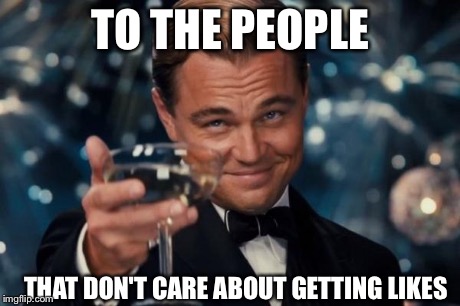
    Image result for likes meme

    The fourth article written for Dr. Carter’s Social Psychology course, this post discusses the power of the “like” system. Written by Julian Edwards, Emily Jones, and Brice Hinkle, the original source can be found here.

    Have you ever felt inadequate after seeing only one like on your selfie? If you are an avid Facebook, Twitter, Instagram, or some other social media user, the culmination of likes on a picture or video is crucial. The incorporation of the “like” system in social media has changed the way in which people view themselves. You expect people such as your family or close friends to like your posts, but what if that is only 10 to 20 people? What does this say about you
    as a person? It is common to believe that the more likes one receives the better they believe others see them, thus determining how they see themselves. The presence of active and/or immediate feedback on a picture you are proud of can make or break how you view yourself. Because of this, social media has become a large factor in the level of self-esteem a user may have. The more likes someone receives the greater self-esteem they will have. Also in contrast, if a person were to receive little to no likes on a selfie or family picture they may begin to suffer through low self-esteem. To help support this claim a study was conducted by researchers Anthony L. Burrow and Nicolette Rainone titled “How many likes did I get?:
    Purpose moderates links between positive social media feedback and self-esteem” (Burrow & Rainone, 2016).

    Image result for likes meme

    In this study, participants first had to complete several forms and surveys – demographics form, a survey measuring their purpose in life, and a personality inventory (which was not used in the experiment). After this was completed, the experimenters told the
    participants they were there to test a new social media site a lot like Facebook and to get started, they had to set up a profile and take a picture of themselves for the experimenter to upload (Burrow & Rainone, 2016). The experimenter told the participants that their picture would be shown on the test site for five minutes and that other users could see and like it. Five minutes later, the experimenter came in the room and told them how many likes their picture got. The amount of likes the experimenter told the participants that they got were a randomized average number of likes, more than average number of likes, or below average number of likes. Afterwards, participants completed another survey, which measured their self-esteem. The results found that the groups that showed a low purpose and low self-esteem were affected more by their number of likes more than the groups with high purpose and high self-esteem, who were not as affected by the likes (Burrow & Rainone, 2016).

    Image result for likes meme

    The researchers established two groups: high purpose and low purpose. In each group, the self-esteem manipulator was introduced to affect self-esteem positively, negatively, or not at all (high, low, and average likes). The participants in each group then reported their post-experiential self-esteem (Burrow & Rainone, 2016). Because the experiment showed no correlation between high purpose and a high number of likes, it can be assumed that the
    participants with high purpose also have self-esteem high enough that it is unaffected by an otherwise effective self-esteem booster: a high number of likes that they receive. Those with low purpose can be said to have a lower baseline self-esteem and so are more affected by a high number of likes (Burrow & Rainone, 2016).

    One critique would be that the researchers should have included an “average purpose” group apart from the “high purpose” group to be manipulated to see more precise results.

    Additionally, it would have been nice to have reported any findings on a decrease in self-esteem for a fuller picture of the effects.
    The lesson that can learned from this article is that self-esteem is that although there are a countless number of things that go into a person’s self-esteem and sense of purpose in life, social media affects them much more than someone thinks.

    Get connected!
    Instagram & Twitter:  #PsychRC @RC_Psychology
    Facebook:  https://www.facebook.com/rcpsychology
    Blog:  https://psych.pages.roanoke.edu/
    Linked In:  https://www.linkedin.com/groups/RC-Psychology-8140491/about
    Website:  https://www.roanoke.edu/inside/a-z_index/psychology

  • What Makes A Great Leader

    Image result for leader

    In another post written by students of Dr. Carter’s Social Psychology course, Corey Woodford, Hannah Lester, Michaela Hicks discuss an article on leadership titled “Two ways to the top: Evidence that dominance and prestige are distinct yet viable avenues to social rank and influence.” The original article can be found here. 

    How do people reach leadership positions? Is it because they are generally likable and compassionate about the group? Or is it because they are ruthless and their followers are too scared to do anything but listen to them? Maybe it is a combination of both. Researchers Cheng, Tracy, Foulsham, Kingstone and Henrich formed an experiment that tests these theories. They wanted to know if dominance and prestige work together to get people to the top. In the case of this study, dominance is a force and intimidation and prestige is being able to share your experiences and knowing how to gain respect. Cheng et al. performed two studies that tested the roles in which dominance and prestige play in the selection of a leader. They used students from the University of British Columbia, who had no prior knowledge of each other before the study, as participants for both of the studies.

    The first study’s goal was to distinguish whether or not dominance and prestige are acceptable ways of predicting social influence. It was set up as a round robin setting where groups of 4 to 6 of the same gender, not already acquainted with each other, completed an assignment, then interacted with each other, and then were asked to fill out a questionnaire at the end. Each side of the table was recorded by a video camera looking exclusively at one side of the table. The questionnaire provided peer ratings on who seemed to have more influence, who had more “dominance and prestige” in their group, and the likeability of the group members. The results of the study concluded that, in fact, both dominance and prestige predict greater social influence, but that they are different paths to attaining social rank, with prestige seen as more likeable than dominance.

    Going off the first study, the second study’s goal was to “determine whether gaze allocation patterns corresponded to perceived Dominance and Prestige”. In other words, do dominant or more prestigious individuals receive more visual attention? The participants watched a series of video clips used from the first study, and were asked to think of who they would want to work with on the same task if they were in the room doing the same thing. The participants were wearing eye trackers so the researchers were able to see who they looked at the most while watching these video clips. The results showed that people do tend to notice who the dominant or more prestigious person in the room is, and they subconsciously do visually fixate on them, meaning they receive more visual attention.

    Study 1: with 191 participants, this study compensated them with a chance of extra compensation during the study. The participants first completed an individual activity and then a group activity. The group activity was recorded for 20 minutes.

    Study 2: 59 participants were involved and were instructed to watch 6 twenty-second videos. This study was used to determine a relationship between gaze allocation patterns and perceived Dominance and Prestige.

    While the study was something always relevant and very interesting, it did have some aspects that it did not take into consideration. First, the study did not use co-ed groups. Especially in today’s time, gender norms are a hot topic and are of interest to many people. A future study could use co-ed groups to help distinguish between gender norms that influence leadership positions. Second, the participants of the study were of all different ages. Age is indicative of knowledge and when you are older you can be seen as more superior of those who are younger than you.  Keeping age brackets for each group would have been a beneficial addition to the parameters of the study. With these critiques in mind, a future study would be beneficial to really dive into the psychology of leadership positions from a non-age or non-gender biased study.

    Get connected!
    Instagram & Twitter:  #PsychRC @RC_Psychology
    Facebook:  https://www.facebook.com/rcpsychology
    Blog:  https://psych.pages.roanoke.edu/
    Linked In:  https://www.linkedin.com/groups/RC-Psychology-8140491/about
    Website:  https://www.roanoke.edu/inside/a-z_index/psychology

  • Strategies to Combat Threatened Masculinity

    An analysis of the study “Manning Up: Threatened men compensate by disavowing feminine preferences and embracing masculine attributes” for Dr. Carter’s Social Psychology course. This article was written by Sophie Bacon, Cristoni Couvrette, and Carter Smith.

    In society, men are expected to conform to gender-stereotypic attributes in order to prove their masculinity. Some of these attributes include; being tall, athletic, having an active sex life,
    and being assertive or dominant. Studies have shown if a
    man is in a sense “less masculine” they will compensate
    for this by presenting themselves in a more stereotypical
    masculine manner. In the study, Manning Up, researchers, Sapna Cheryan, Jessica Schwartz Cameron, Zach Katagiri, and Benoît Monin conducted two experiments, in which they examined three techniques that men may use when they perceive a threat to their
    masculinity: avoid feminine preferences, embrace masculine preferences, and claim masculine attributes. The question the researchers were asking is whether or not men are more likely to distance themselves from feminine preferences when their masculinity is threatened versus the responses of those men who are not threatened.

    In the first study some of the male participants were randomly assigned to receive false feedback that they had failed a test of masculinity (a score of 26 out of 100) while the other
    participants received a non-threatening score (73 out of 100). The participants were then asked to rate how much they would like to receive three very masculine products and three very feminine products. Results from study one suggest that men who have their masculinity threatened are more likely to distance themselves from stereotypically feminine preferences, but do not embrace stereotypically masculine preferences more than non-threatened men.

    In the second study, researchers tried to instill a different type of threat to masculinity (telling participants they were
    physically weaker than other males) to see if threatening
    one specific aspect of masculinity causes men to embrace
    another aspect in order to compensate. Participants were
    asked to take a test of handgrip strength. Having a strong
    hand grip is associated with being more masculine.

    Some of the participants received false feedback that their score fell along the female distribution while the other participants were told their score fell into the male distribution. Afterwards they were asked to complete a questionnaire which included masculine and feminine attributes such as: height, handiness with tools, number of previous relationships (all masculine attributes), and personality traits (both masculine and feminine attributes). Participants then
    repeated the grip test which reinforced their false feedback and were asked to rate their interest in receiving five masculine, three feminine, and seven neutral products. Results from this study
    found that men who did not have their masculinity threatened showed no difference in their preference for masculine and feminine products while men who were threatened showed less interest in feminine products. Researchers also found that men who had their masculinity threatened were more likely to exaggerate their other masculine attributes; they claimed to be taller, have more past relationship partners, and higher levels of athleticism and aggressiveness than men in the non-threatened condition

    Researchers examined the strategies used when there is a perceived threat to masculinity. They threatened masculinity as a whole as well as physical masculinity and then examined the ways the participants compensated for the blow. Researchers also said that men who are threatened are more likely to embrace masculine attributes over preferences. An example being, if a man feels his masculinity is being attacked it weighs more for him to defend his physical traits (strength, height and build), compared to him trying to declare his masculinity through his masculine preferences (liking trucks and hunting). Researchers discovered that rejecting
    feminine preferences was more reassuring to their self image rather than restating their masculine preferences.

    In this study, researchers provided insight into the strategies men employ when they feel their masculinity has been
    threatened. However, there are three limitations that can be
    observed in this study. The first limitation of this study is the
    fact that they only focused on how masculine attributes were
    affected when men were under masculinity threat. If they
    wanted to get a more well-rounded perspective, they should
    have also examined how feminine attributes were affected by
    masculine threats. In addition, in two of the studies, they used a
    subset of product preferences making it difficult to decipher the
    results of masculine versus feminine preferences. Finally, when
    concluding this study, it wasn’t clear from the results whether or not distancing oneself from a stigmatized outgroup versus a
    related identity would be sufficient in responding to masculinity
    threats.

    Get connected!
    Instagram & Twitter:  #PsychRC @RC_Psychology
    Facebook:  https://www.facebook.com/rcpsychology
    Blog:  https://psych.pages.roanoke.edu/
    Linked In:  https://www.linkedin.com/groups/RC-Psychology-8140491/about
    Website:  https://www.roanoke.edu/inside/a-z_index/psychology