Category: Undergraduate News

  • Congratulations Casey Jo Gough: Honors Defense!

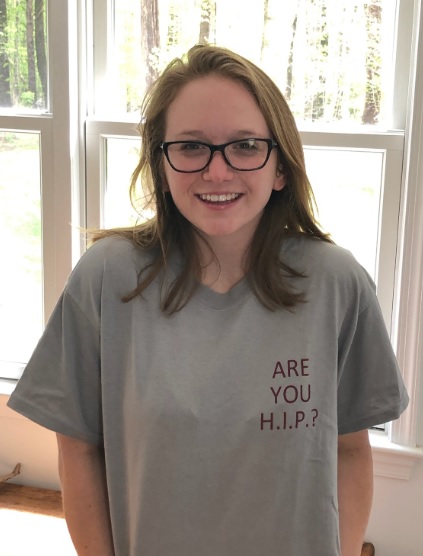
    Casey Jo Gough wearing her Honors in the Major t-shirt!

    Congratulations to Casey Jo Gough ’20 for the successful defense of her Honors in the Major Project! Her Project was titled “Adverse Peer Experiences on Social Media: Adjustment of Emerging Adults and Moderation by Social Support”. Her project advisor, Dr. Danielle Findley-Van Nostrand was joined by committee members, Dr. Darcey Powell and Dr. Johanna Sweet, to oversee her defense.

    Project Abstract: Although data suggests adverse peer experiences persist past adolescence, studies beyond this cohort are limited (Kochenderfer & Ladd, 1996). Peer rejection and bullying research have recently expanded to examine online experiences (Landoll et al., 2013), but there is an inadequate understanding of adverse peer experiences via social networking sites. The purpose of this study was to examine the relationship between adverse peer experiences online and the adjustment factors of stress and loneliness among emerging adults. In child and adolescent cohorts, social support has buffered the maladjustment impacts of bullying (Hong & Espelage, 2012). We hypothesize this trend will continue into emerging adulthood; specifically, people who are high in social support will feel less loneliness and less stress from adverse online experiences than those who are low in social support. Results indicated significantly more stress among females, but also more overall support. Further, college students received more belonging support than non-college students. Stress and loneliness were positively related to adverse peer experiences and negatively related to support. Social support did not moderate this relationship as expected. There was a significant interaction between high appraisal support and loneliness. Further analysis is recommended on the subscales of support concerning cohorts and adjustment variables.

    Congratulations again to Casey Jo Gough on a successful defense and we look forward to seeing all you accomplish in the future!

    .

    .

    .

    Get Connected!

    Bloghttps://psych.pages.roanoke.edu/
    Facebookhttps://www.facebook.com/rcpsychology
    Twitter: @RC_Psychology
    Linked In: https://www.linkedin.com/groups/RC-Psychology-8140491/about
    Website: https://www.roanoke.edu/inside/a-z_index/psychology
    Instagram: rcpsychology
  • Senior Highlights: Emily Jones, Lauren Furlow, Kinsey Overfelt, Hayley Mulford and Dionne-Louise Liberia!

    Over the next few days, we will be highlighting the Psychology Department graduating seniors! This post will highlight 5 seniors: Emily Jones, Lauren Furlow, Kinsey Overfelt, Hayley Mulford, and Dionne-Louise Liberia!

    Emily Jones

    After graduation, I plan on working with children for a few years before I go to pursue a career in guidance counseling.


    Lauren Furlow

    One of my favorite memories from being in the Psychology Department was watching Dr. Buchholz cover Dr. Osterman’s office with googly eyes for April Fools. I definitely had nothing to do with the prank. 

    After graduation, I am starting a PsyD program at Marshall University in August 2020. 

    Kinsey Overfelt

    After graduation, I will be continuing my education at Virginia Tech by pursuing a Master’s Degree in Counselor Education. 


    Hayley Mulford

    My favorite memory from being the Psychology Department was getting the chance to attend the SPSP Conference in New Orleans 2020!

    After graduating I will be attending Florida State University to get my Master’s in Applied Behavior Analysis! This will allow me to become a Board Certified Behavior Analyst!


    Dionne-Louise Liberia

    After graduation, I plan on finding a full-time job as a Graphic Designer, dealing with digital marketing.


    Congratulations to you all on the success you have achieved while at Roanoke College and we look forward to seeing all that you do in the future!

    .

    .

    .

    Get Connected!

    Bloghttps://psych.pages.roanoke.edu/
    Facebookhttps://www.facebook.com/rcpsychology
    Twitter: @RC_Psychology
    Linked In: https://www.linkedin.com/groups/RC-Psychology-8140491/about
    Website: https://www.roanoke.edu/inside/a-z_index/psychology
    Instagram: rcpsychology
  • Congratulations Senior Class of 2020!

    At the end of each year, the Roanoke College Psychology Department decorates a bulletin board and holds a reception to celebrate the accomplishments of the graduating senior class. Unfortunately due to the current circumstances, these events are unable to take place this year. Nonetheless, the graduating seniors of 2020 deserve to be recognized! For that reason, over the course of the next few days, we will be sharing the senior class and their plans after graduating from Roanoke College.

    To the seniors, congratulations on all you have accomplished at Roanoke College. The Psychology department is so proud of each of you and we will continue to cheer you on from the fifth floor of Life Science no matter where you end up!

    .

    .

    .

    Get Connected!

    Bloghttps://psych.pages.roanoke.edu/
    Facebookhttps://www.facebook.com/rcpsychology
    Twitter: @RC_Psychology
    Linked In: https://www.linkedin.com/groups/RC-Psychology-8140491/about
    Website: https://www.roanoke.edu/inside/a-z_index/psychology
    Instagram: rcpsychology
  • Congratulations Sophie Bacon: Honors Defense

    (Left to right) Dr. FVN, Sophie Bacon, (row 2) Dr. Osterman, Dr. Schorpp on Zoom where Sophie completed her defense!

    Congratulations to Sophie Bacon ’20 for the successful defense of her Honors in the Major Project! Her Project was titled “Peer Group Motives and Authenticity: Associations with Self-Presentational Strategies on Social Media “. Her project advisor, Dr. Danielle Findley-Van Nostrand was joined by committee members, Dr. Lindsey Osterman and Dr. Kristen Schorpp, to oversee her defense.

    This research was the culmination of over a year of work, and the next steps are to work towards presenting the findings at a conference and submitting for publication in a peer-reviewed journal.

    Project Abstract: Research has shown that social networking platforms provide a space for identity development, specifically through engaging in different types of self-presentation.  However, research on the relationship between social networking sites (SNS) and identity development is limited and has not been tied directly to peer relationship mechanisms. In this study, I aimed to integrate recent research on self-processes on social media and recent theoretical advances in the role of social media in peer relationships during emerging adulthood. This study looked at social motives including the need for popularity, and the need for belonging, authenticity, and presentation of the real, ideal, and false self. Correlational analyses indicated that authenticity was positively related to real self-presentation and negatively to false self-presentation. The need for popularity was negatively related to real self-presentation and positively to false self-presentation, whereas the need for belonging was unrelated to real-self presentation but was positively associated with false and ideal self-presentation. Regression analyses controlling for each predictor indicated that authenticity was a positive predictor of real self-presentation and a negative predictor of false self-presentation. The need for popularity negatively predicted real self-presentation and positively predicted false self-presentation. The need for belonging and ideal self-presentation were positively associated.

    Congratulations again to Sophie Bacon on a successful defense and we look forward to seeing all you accomplish in the future!

    .

    .

    .

    Get Connected!

    Bloghttps://psych.pages.roanoke.edu/
    Facebookhttps://www.facebook.com/rcpsychology
    Twitter: @RC_Psychology
    Linked In: https://www.linkedin.com/groups/RC-Psychology-8140491/about
    Website: https://www.roanoke.edu/inside/a-z_index/psychology
    Instagram: rcpsychology
  • Congratulations Riker Lawrence: Honors Defense!

    Riker Lawrence wearing her new Honors in the Major t-shirt!

    Congratulations to Riker Lawrence ’20 for the successful defense of her Honors in the Major Project! Her Project was titled “Couples’ Leisure Activity and Expectations for Parenthood”. Her supervisor, Dr. Darcey N. Powell was joined by committee members, Dr. Osterman and Dr. Sweet, to oversee her defense.

    Riker Lawerence presenting her project over Zoom!

    Abstract: This study aimed to explore how cohabitating individuals’ engagement in leisure activity with their partner is associated with their expectations for parenthood. Specifically, the study examined how individuals’ engagement in and their satisfaction with leisure activities with their partner is associated with their expectations for parenting; specifically, their co-parenting relationship, gatekeeping behaviors, and division of caregiving labor. Using Prolific Academic, participants (N=247) completed an online survey. Correlations were found between participants’ engagement and satisfaction of these leisure activities and their expectations for co-parenting relationship, gatekeeping behaviors, and division of caregiving labor, regardless of their intention to parent and other demographic characteristics. Furthermore, satisfaction of leisure activities was more consistently associated with the parenting expectations than the frequency of engagement in leisure activities. These findings can serve as useful information for marital and family therapists as they work with couples considering adding a baby to their family unit or during the transition to parenthood.

    Riker Lawrence received funding for this project through the Roanoke College Research Fellows program and through a portion of Dr. Powell’s Faculty Scholar funds.

    Congratulations again to Riker Lawrence on a successful defense and we look forward to seeing all you accomplish in the future!

    .

    .

    .

    Get Connected!

    Bloghttps://psych.pages.roanoke.edu/
    Facebookhttps://www.facebook.com/rcpsychology
    Twitter: @RC_Psychology
    Linked In: https://www.linkedin.com/groups/RC-Psychology-8140491/about
    Website: https://www.roanoke.edu/inside/a-z_index/psychology
    Instagram: rcpsychology
  • Congratulations Rachel Harmon: Honors Defense!

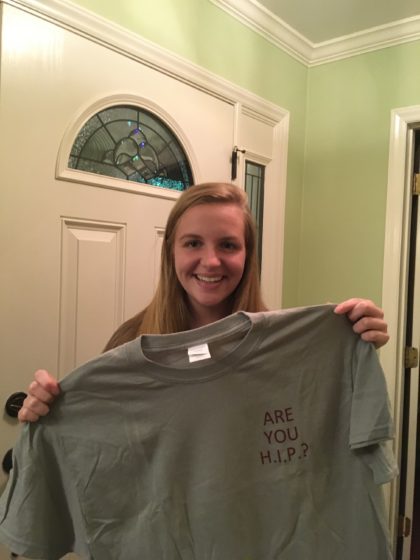
    Rachel Harmon holding up her Honors in Psychology t-shirt!

    Congratulations to Rachel Harmon ’20 for the successful defense of her Honors in the Major and Honors Distinction Project! Her Project was titled “Cross-Cultural Comparison of Caregiver Concerns and Resources for Children with Disabilities”. Her supervisor, Dr. Darcey N. Powell was joined by committee members, Dr. Osterman, Dr. Chad Morris, and Jesse Griffin, to oversee her defense.

    Due to having to work remotely off-campus, Rachel Harmon is pictured above on Zoom, the platform in which she used to defend her project!

    Abstract: The purpose of the current study was to address a gap in the literature through investigating the differences in experiences of caring for a child with a disability between a developed country, the United States, and a developing country, Mexico. Participants included caregivers of children with disabilities in the US (N = 25) and Mexico (N = 45). Self-report data were collected to measure caregivers’ demographic information, knowledge of resources, positive and negative emotional response, and stress level. Additional observational data was collected regarding the physical resources, educational resources, therapy services, government policies, caregiver reactions, child behavior, and transportation services in each location. Analyses revealed that caregivers in the US reported significantly higher levels of stress compared to caregivers in Mexico. No significant differences were found in caregivers’ knowledge of government policies; however, Mexico caregivers were significantly more satisfied with the policies that they were aware of compared to US caregivers. US caregivers were more aware of support groups/organizations for themselves or their child and were more likely to participate in known support groups. There was no difference in reports of access to educational opportunities; however, US caregivers reported significantly more inclusion opportunities compared to Mexico caregivers. No significant differences were found in caregivers’ belief that their child would one day be employed. There were significant differences in the number of observations made regarding educational resources, therapy services, government policies, and transportation services between the US and Mexico. The findings of the current study provide important information about the effect of culture on the experiences of caring for a child with a disability, which could be useful for professionals who work directly with families and for the development of future resources.

    Highlights of the project: Collected research in both southwest VA and the Yucatan of Mexico. To facilitate her data collection, she completed an internship in southwest VA, as well as two internships in Mexico during the summer between her Jr and Sr years. 

    Rachel Harmon received funding for this project through Roanoke College Honors Program Downing Distinction Project Award and Psi Chi’s Mamie Phipps Clark Diversity Research Grant. To learn more about this award and on how Rachel collected data while in the Yucatan of Mexico refer back to this blog post, in which she was interviewed last fall!

    Congratulations again to Rachel Harmon on a successful defense and we look forward to seeing all you accomplish in the future!

    .

    .

    .

    Get Connected!

    Bloghttps://psych.pages.roanoke.edu/
    Facebookhttps://www.facebook.com/rcpsychology
    Twitter: @RC_Psychology
    Linked In: https://www.linkedin.com/groups/RC-Psychology-8140491/about
    Website: https://www.roanoke.edu/inside/a-z_index/psychology
    Instagram: rcpsychology
  • Associations of Attachment Style and Romantic Relationship Satisfaction

    Rachel Harmon, Emily Jones, Carter Smith, Shannon Blair Snyder, Kayleigh Walker

     (Advisor: Dr. Findley-Van Nostrand)

    Background Information

    There have been many studies conducted on attachment styles (i.e., characteristic ways of emotionally connecting with others) between parents and their children, and studies performed to evaluate romantic relationship satisfaction, but there are few studies combining the two concepts in young adults (Xia et al., 2018). Attachment style is developed through an individual internalizing their relationship, or lack thereof, with a primary caregiver in infancy and early childhood (Searle & Meara, 1999). We wanted to look at whether attachment style is associated with emerging adults’ current romantic relationship satisfaction. We also explored additional variables such as gender and length of the relationship. We chose to focus on individuals in emerging adulthood for several reasons. First, it is during this formative stage individuals are considering life-changing decisions regarding education, friendships, careers, and romantic relationships (Arnett, 2000). Second, romantic relationships in this stage differ from those experienced in adolescence because they tend to be longer in duration and more serious in intention (Arnett, 2000). Finally, little research has been done on emerging adults’ romantic relationships and our research can provide insight into this newly defined developmental stage.

    Methods

    Participants in our study were students from Roanoke College who were at least 18 years old and in a committed romantic relationship. Participants for this study were recruited through the Roanoke College Psychology Department via SONA, as well as within the greater campus community. Participants who were enrolled in a psychology course received a half SONA credit for participating. Eighty-five total participants completed the study.

    Our study was an online survey through Qualtrics. Participants were asked to answer questions regarding gender, gender of their partner, their sexuality, age, relationship length, whether they and their significant other have “taken a break” and if so, the number of “breaks” they’ve taken. To measure attachment style, we used the 36-item Experiences in Close Relationships-Revised Questionnaire. Scores on the ECR-R were calculated to reflect overall attachment insecurity, and anxious- and avoidant-attachment security as subscales. For relationship satisfaction, we used the 32-item Couple Satisfaction Index.

     Results and Discussion

              As expected, participants with secure attachment style reported higher relationship satisfaction (see Figure below- low scores on the ECR-R indicate more secure attachment). Also as expected, attachment-related anxiousness and attachment-related avoidance explained a pretty large amount of relationship satisfaction. Contrary to expectations, the association between attachment style and relationship satisfaction was stronger for participants who identified as male compared to participants who identified as female. Additionally, participants who reported higher levels of attachment-related anxiety and attachment-related avoidance had been in their current romantic relationship for a shorter-duration compared to participants with secure attachment. However, participants who had been with their current romantic partner for a longer amount of time reported higher levels of romantic relationship satisfaction. Participants who had not previously broken up with their current romantic partner also recorded significantly higher levels of relationship satisfaction compared to those who had previously broken up or “taken a break”.

    Romantic relationships are an important part of emerging adulthood (Arnett, 2000). The results of the current study indicate that attachment style may influence satisfaction within romantic relationships during this phase of development. The results expand upon previous literature by investigating these associations specifically in emerging adulthood, while exploring the additional factors of gender, relationship duration and whether couples had previously broken up or “taken a break”.

    Reflection

    This research process has been one that challenged us all in various ways throughout the semester. The first obstacle we faced was developing a study that interested us all and was relevant to the course. Our original goal with this study was to have the Roanoke College student and their significant other complete the survey in person. Requiring both the SONA student and their significant other to complete an in-person questionnaire limited our pool of students to those in relationships with a peer and those in a relationship with someone who is local. This meant that students who are in long distance relationships, and who may have had a lot to offer the research, were unable to partake in it. The original goal with having both individuals in a relationship complete the survey was to be able examine relationship satisfaction and attachment style within a relationship.

    We originally decided to make this an in-person survey to increase validity. However, due to the COVID-19 pandemic, and the transition to remote learning, our study had to be switched to online only. With this new requirement of the study having to be online, we had to re-evaluate our methods. We changed the study requirement of both partners needing to complete it, to only surveying one partner. This increased the number of students who could participate in our study, which we believe improved our sample size. Conducting the study online may have eliminated any response bias that would have occurred in the lab because originally they would have been taking the survey across from their significant other, and may have felt pressure or guilt to respond a certain way, which could have altered their initial thoughts or feelings. Overall, working remotely on this has been challenging and time consuming. Having to completely rethink our study methods and then communicate with one another via WIFI when two group members have poor connection was difficult. We no longer had the option to meet whenever was convenient and work on the data analyses as a group. We instead had to find time where we could all video chat and then have one person screen share, running analyses, while the others watched. In the end, switching to online research was beneficial because we were able to broaden our pool of participants, adjust our research in an efficient way, and find significant associations.

     Conclusion

              The main finding of our study indicates that the attachment style is associated with romantic relationship satisfaction. It is important to remember that attachment styles begin forming soon after birth and continue to evolve through the lifespan (Searle & Meara, 1999). While attachment-related anxiety and attachment-related avoidance were found to be significantly associated with romantic relationship satisfaction, we were also able to conclude that male romantic relationship satisfaction is somewhat more likely to be dependent upon attachment style in comparison to females.

    References

    Arnett, J. J. (2000). Emerging adulthood: A theory of development from the late teens through the twenties. American Psychologist, 55(5), 469-480.https://doi.org/10. 1037/0003-066X.55.5.469

    Searle, B., & Meara, N. M. (1999). Affective dimensions of attachment styles: Exploring self-reported attachment style, gender, and emotional experience among college students. Journal of Counseling Psychology, 46(2), 147–158. https://doi.org/10.         1037/0022-0167.46.2.147

    Xia, M., Fosco, G., Lippold, M., & Feinberg, M. (2018). A developmental perspective on young adult romantic relationships: Examining family and individual factors in adolescence. Journal of Youth and Adolescence, 47(7), 1499-1516.  doi:10.1007/s10964-018-0815-8

  • Does Art Affect Our Self-Certainty?

    Ashley Rioux, Jordyn Markle, and Dionne Liberia

    (Advisor: Dr. Danielle Findley-Van Nostrand)

    How well do you really know yourself? Limited research has been done on the relationship between creativity and self-concept clarity. There is some evidence that people who have reached a higher status of identity are more likely to be creative while the antithesis is true for those in lower stages of identity development (Dollinger, Dollinger, & Centeno 2005). As the identity crisis is a common problem in adolescents (Riley, 1999), some art therapy techniques are designed to aid in the development of one’s identity (Beaumont, 2015). This is useful because self-concept clarity is related to positive adjustment. The current experiment was aimed at developing a more thorough understanding of how the expression of creativity affects self-concept clarity, particularly in individuals who already identify as artistic.

    58 participants from Roanoke College psychology classes were gathered through the SONA online research management system. Participants, emerging adults who earned credit in class for their participation, were then randomly assigned to either complete a 2-D art task (a self-portrait) or to write about their last 24 hours (this was the control group). Before the task,  we collected information about level of artistic ability and experience in art. Before and after the task, they completed self-concept questionnaires, including indicating how certain they were (on a scale of 0-100) in each personality trait rated, and a self-report measure of self-concept clarity.

    We found that overall, self-certainty (the average certainty in personality ratings) didn’t seem to differ based on doing the art task or not. But, then we ran tests separately for people who have an art background or not and found that if an individual already has an artistic background, they had higher self-concept certainty after doing a creative task than individuals who have no artistic background (see Figure 1). We expected this experiment would result in evidence indicating that creative outlets aid in one’s sense of self-concept clarity, and found that this was true only for people with an artistic background. However, other measures of creativity and experience in art were not related to certainty in self-concepts, and responses on the self-reported self-concept clarity scale were not related to participation in the task.

    Since only one finding reached statistical significance, it is important to consider possible sources of error. Due to some unforeseen issues, we were forced to adapt our study into an online-only study. This may have been an issue because one group of participants was prompted to complete a drawing task. Without being able to supervise the participants, there was no way to control the conditions under which each participant completed the task. Another issue we faced was participants submitting incomplete surveys. This too may be due to the shift to online-only studies. One way we may have been able to get better results would be to have a larger sample size with more participants in each group, completing the study in person.

    The purpose of this study was to determine if creative outlets are an effective way to aid in the development of self-concept clarity in college students. We wanted to expand upon the existing research by comparing 2-D art to a non-creative task, as well as further defining the effect creativity has on self-concept clarity in emerging adults. The evidence suggests a relationship between artistic expression and identity exploration, but only in those who already have an artistic background. So, creative outlets may be less helpful to self-concept clarity for people with little or no prior background in art. This study has helped us understand the relationship between artistic expression and the self-clarity concept in emerging adults.

    Figure 1: Average Self-Concept Certainty by Art Task/Control group and by Previous Art Experience.

    References

    Beaumont, Sherry. (2015). Art Therapy Approaches for Identity Problems during Adolescence. Canadian Art Therapy Association Journal. 25. 7-14.

    Dollinger, Stephen & Dollinger, Stephanie & Centeno, Leslie. (2005). Identity and Creativity. Identity. 5. 315-339. 10.1207/s1532706xid0504_2.

    Riley, S. (1999). Contemporary art therapy with adolescents. London: Jessica Kingsley

  • A Study Examining Responses to Overt Versus Relational Aggression in College Students

    Hailey Davis, Jon Cody Mactutus, Alina Marino, and Hayley Mulford

    Advisor: Dr. Findley-Van Nostrand

    [Picture of Girl Being Bullied] (2015). Retrieved from https://www.texasconflictcoach.com/2015/adolescent-relational-aggression-how-to-diminish-the-damage/

    Background Information

    The present study evaluated whether type of aggression (overt, relational) witnessed towards a peer impacted likelihood to intervene and/or desire to punish the aggressor, considering desensitization as a factor. Most peer aggression studies focus on childhood and adolescence, but we used emerging adults (18-24) instead because it would be further expansion as less is known about peer aggression in this age group.

    Relational aggression is indirect, status hurting actions whereas overt aggression is direct actions with the intent to cause harm (Cairns, Neckerman, Ferguson, & Gariépy, 1989). Previous research has found that aggression has negative impacts on all involved; aggressors, victims, bystanders (Rivers, Poteat, Noret, & Ashurst, 2009). Both relational and overt aggression have internalizing and externalizing problems as negative possible outcomes for experiencing these types of aggression (Casper, Card, Bauman, & Toomey, 2017). The current study aimed to explore the differences in outcomes (intervening and punishing) based on the form of aggression (overt or relational). Although relational aggression is more common, especially in this age group, and just as problematic, people are less likely to recognize it as aggression (Crick & Grotpeter, 1995). So, we also tested whether people are more likely to perceive overt or relational aggression as aggression. Finally, we also explored the relationship of mood and previous exposure to aggression in these responses.

    Methods

    We recruited our participants through SONA, Roanoke College’s online psychology research website. Participants were awarded credit for their participation in this study. Everything was conducted in accordance with the guidelines of the Roanoke College Institutional Review Board, with participants supplying informed consent. In an online survey, participants were assigned to read a vignette about either relational or overt aggression where a familiar peer is aggressed upon by a stranger. First, they were asked questions to determine their current emotional state, then read a singular vignette, and then were asked if they thought the scene they read about was aggression. We also included a question to ensure that participants paid attention. 26 failed the check, leaving our final number of participants to be 130. We asked each participant whether what they just read about was aggression (and to what extent they thought it was aggression), how likely they would be to intervene in the situation, and to what extent they believed the aggressor should be punished. Participants were then asked about their previous exposure to either type of aggression. Lastly, participants were asked demographic information.

    Results and Discussion

    The results of the project were not as promising as we hoped. We had 60 participants in the relational aggression group and 69 participants in the overt aggression group. There was no significant difference in desire to punish between types of aggression. There was also no significant difference in likelihood to intervene between types of aggression. Sadly, the predictions that there would be a difference among the type of aggression and how a by-stander would feel and react were not found to be supported (see Figure 1). However, we did find that the type of aggression had an effect on the perception of whether the act was aggression or not- people were more likely to perceive overt aggression as aggression relative to relational aggression. Unfortunately, the predictions that prior exposure would account for some variance and predictive value in both intervening and punishing was not found to be supported either. Finally, emotion was not found to have a relationship with the likelihood to punish. We did not expect for most of our predictions to be rejected, but there are some promising ideas still prevalent. It is important that there is a relationship between how someone perceives aggression and the type because this can play a role in bullying. It seems from this study that relational aggression is not seen as aggression, which could help in efforts to reduce bullying. The statistical analyses we used may not have been complicated enough to reveal complex structures and relationships, but future studies could delve deeper.

    Figure 1

    Perception of Aggression, Likelihood to Intervene, and Desire to Punish Based  on Type of Aggression

    Note. All variables were on a scale from 1-10. Perception of aggression (blue bars) differed significantly by type of aggression. The other variables did not.

    Reflection

    Despite our results not being what we anticipated them to be, we were able to find out how people interpreted aggression. Fortunately, we did not have any problems with our research when we were no longer on campus and able to access the lab. The only difference with having to make our study online was the amount of credit the participants received. Our study took into account a wide range of variables so we could look at multiple factors that could possibly have an influence on the participants’ answers.

    Conclusion

    In conclusion, thoughts about the aggression witnessed did not seem to differ much between type of aggression, current state of emotions, or prior exposure to aggression. Some of our results might contradict other research, like our finding that prior exposure did not influence intervention or punishing, but some of our results match very well. Our study, as well as many others, found that people correctly identified overt aggression as a form of aggression. So, people know overt aggression when they see it which means you can rest assured that people are watching out for you! However, it seems relational aggression is less recognizable, which could say something about the way college students interact.

    References

    Cairns, R.B., Cairns, B.D., Neckerman, H.J., Ferguson, L.L., & Gariepy, J.-L. (1989).  Growth and aggression: I. Childhood to early adolescence. Developmental Psychology, 25, 320– 330. https://doi.org/10.1037/0012-1649.25.2.320

    Casper, D. M., Card, N. A., Bauman, S., & Toomey, R. B. (2017). Overt and relational aggression participant role behavior: Measurement and relations with sociometric status and depression. Journal of Research on Adolescence, 27(3), 661–673.      https://doi.org/10.1111/jora.12306

    Rivers, I., Poteat, V. P., Noret, N., & Ashurst, N. (2009). Observing bullying at school: The mental health implications of witness status. School Psychology Quarterly, 24(4), 211–223. https://doi.org/10.1037/a0018164

  • WELL WISHES & UPDATES FROM THE PSYCHOLOGY DEPARTMENT!

    These last few weeks have no doubt been challenging for everyone in some way, shape, or form. With finals starting tomorrow and being away from Roanoke College, we wanted to share some well wishes and updates from some of the Psychology Department professors!

    Dr. Buchholz:

    We are living through strange and trying times; however, I am heartened by the way we, the students, faculty, and staff of Roanoke College, have risen to the occasion. I am encouraged by the leadership of President Maxey, Dean Smith, and many other staff during these difficult times. I am thankful for our departmental secretary, Ellen, who continues to be the glue that holds our department together. I am proud of the faculty in our department for handling this moment with grace and compassion. Likewise, I am proud of our students for how they have reacted to these challenges. From the many kind words expressed in emails, to the understanding we receive when we can’t figure out zoom or have had some other problem adjusting to teaching online; I am thankful for the kindness and patience of our students. The way our community has come together, even if apart, reminds me of why I love Roanoke College.

     For those of you who are struggling during this moment, I wish you and your families the best, and I want you to know that we are all here for you. For those of you who are graduating, congratulations and I hope to see you at the rescheduled graduation; and for the rest of you, I look forward to seeing you in the fall. Be well, stay safe, and take care of yourselves.

    Dr. Carter:

    I miss my students! My stats jokes are wasted on my family. I don’t even get an eye roll from a good t-test pun.

    Dr. Carter making his kids breakfast during the quarantine (aka Will Forte in The Last man on Earth)
    Dr. Carter’s kids completing a puzzle!

    I’m extremely, extremely jealous of the people who don’t have anything to do during this quarantine. My wife and I are both trying to work full time while also taking care of two children under three (i.e., requiring constant supervision). So if I’ve learned anything new, it’s just how effective an active bird feeder can be as a babysitter. (Seriously though, getting to spend a lot of time with my kids is really nice. It’s just stressful trying to do so much at once.)


    Dr. FVN:

    I miss my students! I am super proud of everyone in my classes and in my lab, who have all worked super hard to make the most of this situation. It’s been an experience, but it’s been one we are all figuring out together. 

    Dr. FVN’s son and dog!

    I’ve especially appreciated the love during student meetings when my son or dog pop in for a hello! They have filled my days while my husband and I juggle our work. In fact, my favorite (non-work) thing has been going on backyard adventures and spending time on creative ways to stay entertained and engaged, like building obstacle courses.


    I can’t wait to get back to in-person teaching, I miss my people! And, congratulations to the seniors! 

    Dr. Hilton

    I have been encouraged in speaking with students in my courses to hear about the diligent work you are all putting in amidst this almost overwhelming uncertainty we face on a daily basis. I applaud all of you for continuing to do your best and finding ways to make this unexpected challenge a time of growth. In addition- I also want to encourage you all to keep in mind that now is the time to practice that self-care we all talk about, yet rarely put into practice if we’re honest…We will have bad days in the coming weeks and we will have good days. Take them in stride, do your best (the definition of which might change daily…), and find whatever ways you can to keep your spirits and hopes up.

    I’ve been reading a lot- which is a welcome change; watching a lot of TV (I’m rewatching Community on Netflix right now); and finding time for both quiet space alone and not so quiet time with my family. I also built a pull-up bar on the rafters in my basement with steel pipe so once this thing is all over- I may be able to do a few of those!

    Dr. Nichols:

    Dr. Nichols and Alumni hanging out on Zoom!

    I was able to gather with some alumni from my lab on Zoom on Friday, 4/17, with graduates from 2011 to 2019. All but one of them are in graduate school now, the other one has a PhD and is currently in a post-doc position. The alumni present (in order of graduation) are: Madison Elliott & Paige Arrington (2011), Nikki Hurless, Lauren Kennedy-Metz, & Victoria Godwin (2014), Stephanie Shields & Lauren Ratcliffe (2017), Alex Grant (2018), Noelle Warfford (2019).

    Dr. Osterman:

    There’s a quote from Freud that has occurred to me a few times since all of this started: “One day, in retrospect, the years of struggle will strike you as the most beautiful.” I’m not sure if that’s exactly an encouraging or optimistic sentiment, exactly, but if Freud is right, it does suggest that our future selves will be overly sentimental and a little callous toward this very difficult situation we’re all going through right now, which makes them a common enemy against whom we can all fight. That’s something.

    The deck couldn’t have been done without this helper!
    The deck couldn’t have been done without this helper!

    For myself, I walked 101 km in a week and learned that I have no desire to ever walk 101 km in a week ever again. Dr. B and I built a deck, with some help from Dr. B’s son James and our cats. I also took a quiz about which characters from various TV shows I am (it’s actually a very cool quiz by a psychometrician) and learned that I am Tyrion Lannister… I think because I drink and I know things? 

    Dr. Powell

    This video depicts wow we’re all feeling

    There’s a lot of fails when trying to find that perfect backdrop for Zoom sessions #Halo #SpaceShipEncounter

    Dr. Powell’s out of this world zoom background!

    We’re missing our 5th-floor co-workers and the students, soo much! Our new Coworkers are soo needy!

    Dr. Powell’s new needy co-worker!

    From the Psychology Department, we wish you all the best with conquering finals this week and next! Stay strong Maroons!

    .

    .

    .

    Get Connected!

    Bloghttps://psych.pages.roanoke.edu/
    Facebookhttps://www.facebook.com/rcpsychology
    Twitter: @RC_Psychology
    Linked In: https://www.linkedin.com/groups/RC-Psychology-8140491/about
    Website: https://www.roanoke.edu/inside/a-z_index/psychology
    Instagram: rcpsychology