Category: Research

  • Effects of a Relational Maintenance Intervention on Relationship Satisfaction During COVID-19

    Melissa DeShaw, Abbie Joseph, and Grace Page (Advisor: Danielle Findley-Van Nostrand)
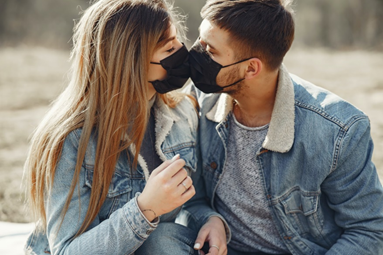
    Image found on: https://divine.ca/en/how-to-look-after-your-relationship-during-covid-19/

    Background Information

    In the midst of a pandemic, how have our relationships changed? Due to the COVID-19 pandemic, we suspected that the number of individuals in long-distance relationships may have increased as a result of quarantine and travel restrictions. We also thought this may have disproportionately affected college students who were used to being in geographically-close relationships when they were living on their school’s campus. This shift from being in a geographically-close relationship to being in a long-distance relationship could be a major source of stress that ultimately decreases couples’ satisfaction, and we were interested in considering how this relational dissatisfaction could potentially be reduced in such unprecedented times. After researching relational maintenance behaviors, we decided to examine how the education and implementation of relational maintenance behaviors in college students’ romantic relationships during the COVID-19 pandemic could potentially affect satisfaction in their relationships. Relational maintenance behaviors refer to the several behaviors used to maintain a healthy and successful relationship (Weigel & Ballard-Reisch, 2001). The most common way to measure this is by using the Relational Maintenance Strategy Measure (RMSM) which contains five groups of strategies: positivity, openness, assurances, social networks, and sharing tasks (Stafford & Canary, 1991). These behaviors have been proven to increase satisfaction levels when implemented into a relationship (Weigel & Ballard-Reisch, 2001). Satisfaction was measured using the Relationship Assessment Scale (RAS) which describes several relationship dimensions such as love, problems, and expectations (Hendrick, 1988). Several studies have been conducted on how the use of relational maintenance behaviors correlates with satisfaction, but there are no studies that have used an experiment to test this like ours did. An experiment allows us to determine whether something like relational maintenance behaviors may have a causal impact on satisfaction, and whether they may be able to change through intervention.

    Methods

    The 36 participants were recruited through Roanoke College’s SONA system in the psychology department and received 2 SONA credits for participating in all parts of the study. Participants had to have been in a romantic relationship. Participants signed up for a Zoom session where they were asked to complete a pre-survey in order to measure satisfaction within their current relationships. After the completion of the pre-survey, participants were asked to return to the Zoom session. Those in the experimental group were read a list of examples from the RMSM and encouraged to try some in their current romantic relationships, and those in the control group were asked to watch a 5 minute video about helpful habits for better sleep. The purpose of a control group is to have a base-line to be able to compare the changes in the experimental group to. Within a week, all participants received an email with a link for a post-survey, and their satisfaction in their romantic relationship was once again assessed using the RAS.

    Results and Discussion

    Contrary to expectations, participants in the experimental group, who received the informational session on relational maintenance behaviors, did not report more satisfaction at the time of the post-survey compared to the time of the  pre-survey. Additionally, participants in the experimental group did not report more satisfaction than participants in the control group at the time of the post-survey. However, we did find that participants in both the control and experimental groups who reported using more relational maintenance behaviors at the post-survey also reported more satisfaction at the post-survey. Participants in both the control and experimental groups who reported more use of relational maintenance behaviors at the time of the pre-survey also reported more use of these maintenance behaviors at the time of the post-survey. Also, participants from both groups who reported high satisfaction at the pre-survey also reported high satisfaction at the post-survey.

    Relational Maintenance Behaviors (Post-Survey) 
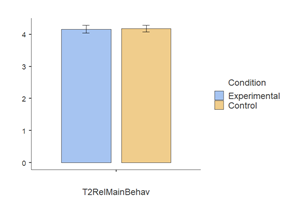
    Satisfaction (Post-Survey)
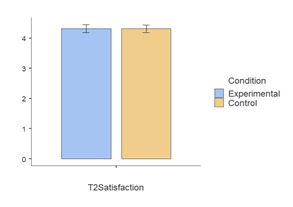
    Due to our very low sample size, the inability to have face-to-face sessions, and the inability for us experimenters to monitor the relational maintenance behaviors of participants, we did not find what we had previously expected. We did, however, find what previous studies have found, as the participants reported more satisfaction when they used more relational maintenance behaviors in their romantic relationships.

    Reflection                                                                                                                                 

    Through this process, we gained some much needed insight on what was beneficial to the success of this study, as well as what kept the study from reaching its full potential. First, we believe this study aimed to measure important variables and believe that a replication or partial replication of this study could result in significant and useful findings. Considering the majority of our findings were insignificant, however, we noted a few different aspects of our study that, if changed, may have led to greater significance. For example, the outcome of our study might have been significantly different if everything did not have to be done through online surveys and Zoom sessions. Additionally, we believe that the pressing SONA credit requirement for Psychology students at Roanoke College may have encouraged students to complete our survey for the sake of completion, rather than to provide quality data. If this study were replicated in the future, it would be important to ensure that the participants take the study seriously.

    Conclusion

    While we found that an information session regarding relational maintenance behaviors given to some participants did not significantly increase satisfaction, we found that all participants seem to already implement these maintenance behaviors in their relationships. The main finding from our study suggests that the use of relational maintenance behaviors in college students’ romantic relationships is associated with their relationship satisfaction, even during a global pandemic.

    References

    Hendrick, S. S. (1988). A generic measure of relationship satisfaction. Journal of Marriage and the Family, 50(1), 93–98.

    Stafford, L., & Canary, D. J. (1991). Maintenance strategies and romantic relationship type, gender and relational characteristics. Journal of Social and Personal Relationships, 8(2), 217–242.

    Weigel, D.J., & Ballard-Reisch, D.S. (2001). The impact of relational maintenance behaviors on marital satisfaction: A longitudinal analysis. Journal of Family Communication, 1(4), 265-279.
  • Coping, Locus of Control, and Intolerance of Uncertainty in Emerging Adulthood

    Ethan Abbott, Sydney Caulder, & Morgan Hamilton (Advisor: Danielle Findley-Van Nostrand)

    Image from thesheaf.com

    Background Info

    Emerging adulthood is a highly exploratory and developmentally rich period of time in an individual’s life. Between the ages of 18 to 29 is a big transitional phase for young adults to develop their own identity and find their niche in society. There are frequent changes experienced through changing vocations, relationships, and living situations attributed to a significantly reduced sense of stability as compared to parts of life prior to and after emerging adulthood (Arnett 2000; Arnett et al., 2014). In order to properly evaluate how young adults are handling the transitional stressors of their lives coupled with the extenuating circumstances brought on by COVID-19 pandemic, we wanted to see if individual’s locus of control helped mitigate stress. Specifically, an internal locus of control refers to how much one believes their actions are the result of their own efforts, relative to the belief that outside events influence their future (external locus of control). If individuals perceive to have some form of control over a situation then they will find the aversive stimulus to be less threatening.

    Another facet of stress management we wanted to measure is an individual’s intolerance of uncertainty. This term refers to the cognitive ability to compartmentalize unknown potentially negative events so that it won’t hinder mental health or physical actions. This anticipation of uncertainty derives from the desire for predictability and an active engagement in seeking certainty and paralysis of cognition and action in the face of uncertainty (Birrell, Meares, Wilkinson, & Freeston, 2011). Emerging adults will also employ various coping strategies for the sake of their physical and psychological well-being. Coping mechanisms are vital towards a young adult maintaining proper mental health because poor maintenance of mental thoughts and adjustment can lead to instability. The four types of core coping mechanisms that young adults utilize are problem-solving, support-seeking, escape, & accommodation (Skinner, Edge, Altman, & Sherwood, 2003). Given the current circumstances of the world at large, we thought it wise to conduct and evaluate a survey administered to the Roanoke College student body to see how these three facets of handling mental stressors are being employed amongst the young adult student population. For the sake of our study we used locus of control and intolerance of uncertainty as predictors of various coping mechanisms.

    Methods

    Participants in this study were recruited from current students at Roanoke College through the Psychology Department’s SONA system. Participants who were enrolled in psychology courses eligible for extra credit upon participation received one half credit. In total, 145 participants completed the study.

    The survey was administered online through Qualtrics where participants were asked demographic information including gender, race, age, year in school, and impact of COVID-19. Previously constructed measurements were used for locus of control, intolerance of uncertainty, and coping. For locus of control, the 24-item Multidimensional Locus of Control Scale was used. Intolerance of uncertainty was measured using the 27-item Intolerance of Uncertainty Scale. Finally, coping was measured using the 60-item COPE inventory.

    Results & Discussion

    We decided to focus on intolerance of uncertainty and locus and control as predictors of coping in a multiple regression model. A multiple regression model demonstrates the strength of two individual predictors controlling for one another while also controlling for shared variance in a single outcome. The COPE inventory included different subscales focusing on specific forms of coping such as focus on venting of emotions or active coping. There were several significant associations found among the different subscales of coping when intolerance of uncertainty and locus of control were used as predictors. And, in each set of tests, there was a large effect size, meaning that these explained a fairly significant amount of the individual type of coping.

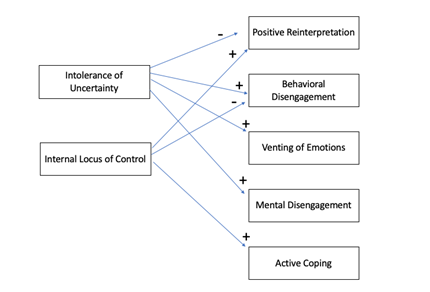
    Having a higher internal locus of control was related to greater use of managing distress emotions rather than dealing with the stressor (positive reinterpretation) and less use of behavioral disengagement when controlling for intolerance of uncertainty which was related to less use of positive reinterpretation and more behavioral disengagement.

    Internal locus of control was unrelated to, and intolerance of uncertainty positively related to both venting of emotions and mental disengagement.

    There was one subscale, active coping, that was positively related to internal locus of control but unrelated to intolerance of uncertainty. See the figure below for an overview of regression results across models; the positive sign indicates as the level of the predictor increases the level of the outcome also increases, and the negative sign indicates that as the level of the predictor increases or decreases the outcome would do the opposite of that increase or decrease).

    We also explored differences of mean scores between males and female participants. There were no significant differences based on gender in internal locus of control and intolerance of uncertainty scores, or coping subscales of use of instrumental social support, positive reinterpretation, active coping or behavioral disengagement. There were significant differences in scores based on gender for the coping subscales of focus on venting of emotions, use of emotional support, and mental disengagement.

    Our data collection and analysis produced logical results that were mostly as expected. Our research can open the door to future research on how different forms of coping may indicate how individuals perceive changes within their life or the amount of control they feel they have over those changes. This research was especially meaningful given the current COVID-19 pandemic and associated mental health difficulties. Intolerance of uncertainty and internal locus of control may be influential in encouraging adaptive forms of coping.

    Figure: Visual Representation of Regression Results: Intolerance of Uncertainty and Internal Locus of Control as Predictors of Forms of Coping.

    Reflection

    Creating a study which was interesting to all of us and able to be done efficiently through remote learning certainly posed a tough challenge to our group. Initially we thought a study more focused on the current challenges for emerging adults amidst the COVID-19 pandemic would be interesting, but we ultimately decided emerging adults face many challenges with uncertainty regardless of if they are enduring a pandemic or not. The beginning stages were relatively easy to manage by dividing up the work and checking in on each other periodically, but as we started using Jamovi our difficulties took a turn. One of the many challenges posed due to remote learning was the opportunity to learn an entirely new data analysis application, Jamovi. Although Jamovi is user friendly when conducting data, we struggled getting it to be compatible with Qualtrics, and those problems were difficult to work through together. Ultimately these issues were ironed out through many meetings with our group and Dr. Findley-Van Nostrand via Zoom trying to figure it out. Although ultimately our outcome of our research was largely unchanged, it was difficult to manage each challenge together while completing our tasks remotely, but I think we all understood the value of good communication and patience through completing this experience remotely.

    References

    Arnett, J.J. (2000). Emerging adulthood: a theory of development from the late teens through the twenties. American Psychologist, 55(5), 469–480.

    Arnett, J.J. (2014). The new life stage of emerging adulthood at ages 18-29 years: implications for mental health. The Lancet Psychiatry, 1(7), 569–576.

    Birrell, J., Meares, K., Wilkinson, A., & Freeston, M. (2011). Toward a definition of intolerance of uncertainty: A review of factor analytical studies of the Intolerance of Uncertainty Scale. Clinical Psychology Review, 31(7), 1198-1208. doi:10.1016/j.cpr.2011.07.009

    Skinner, E.A., Edge, K., Altman, J., & Sherwood, H. (2003). Searching for the structure of coping: a review and critique of category systems for classifying ways of coping.. Psychological Bulletin, 129(2), 216-269.

  • Need for Structure and Academic Motivation as Predictors of Psychological Well-Being during COVID-19

    Caelan DeMuth, Mason Wheeler, Maggie Lewis (Advisor: Dr. Findley Van-Nostrand)

    Image taken fromL Harris, M. (2015). Top Valentine’s places to cry alone on campus. photograph. https://thetab.com/uk/lancaster/2016/02/12/top-valentines-places-cry-alone-campus-4936.

    Background Information

    Many changes brought on by the COVID-19 pandemic have affected well-being of individuals, with college students being uniquely affected given the changes in their academic environment. Specifically, remote learning during the COVID-19 pandemic has changed the way students are expected to learn, potentially driving issues related to focus and to social isolation. Younger students with less experience in university level education may be at higher risk of struggling more than their older peers during the pandemic (Ledman, 2008). In this study, we students’ psychological well-being in relation to their individual need for structure (that is, the extent to which they desire structure and clarity and find ambiguity troubling), academic motivation (the extent to which they are motivated to remain in and do well in school), and academic year. We expected responses that underclassmen or younger students would report higher levels of a need for structure and lower levels of academic motivation, and that both motivation and need for structure would predict well-being. As motivation in academic settings during the ongoing pandemic had yet to be assessed this research may be used to provide insight into how to provide resources to students during upcoming academic terms.

    Methods and Measures

    Participants for this research were individuals currently enrolled at Roanoke College. There were 115 participants, of which 39 were freshmen, 39 were sophomores, 21 were juniors, and 16 were seniors; 30 identified as male, 83 identified as female, and 2 identified as nonbinary.  Participants were recruited via the Roanoke College Psychology Department through SONA and led to an external survey using Qualtrics. Participants answered a combination of questions pertaining to their academic year, gender, and demographics in addition to questions intended to assess individual needs for structure, academic motivation and well-being. Questions pertaining to structure were taken from the Personal Need for Structure scale. Academic motivation was assessed via questions in the Academic Motivation scale. Psychological Well-Being scale was used to gauge the well-being of participants. Ultimately the three scales demonstrated relationships between individualized preferences for structure, mental health and motivation to remain focused and engaged in coursework during COVID-19.

    Results and Discussion

    This study was facilitated successfully, especially given the challenges of a nontraditional semester. Contrary to the initial expectation for this study, participants enrolled in their senior year reported the lowest scores for perceived wellness whereas underclassmen reported the highest scores for this criteria. Although students in lower academic years reported higher values of perceived wellness, responses from first years did have the largest standard deviation, suggesting that there was more variation among participants in lower academic years. However, it was found that there was no statistically significant differences when separating between  the psychological well-being subscales (autonomy, environmental mastery, personal growth, positive relations, purpose in life, self-acceptance) between academic years.

    Personal need for structure was unrelated to academic motivation. Academic motivation was positively related to psychological well-being in the era of COVID-19 learning. Academic motivation is the voluntary engagement with coursework in terms of intrinsic and extrinsic variables (Cerino, 2014), suggesting that those who can maintain high levels of motivation are likely also experiencing higher well-being in other areas. It was found that personal need for structure statistically significantly predicted the psychological well-being subscale of purpose in life, while academic motivation as a whole statistically significantly predicted the psychological well-being subscale of personal growth, and somewhat significantly predicted the psychological well-being subscale of autonomy. Overall, results suggest that need for structure and academic motivation during the pandemic are related to well-being, but this depends on type of well-being.

    Reflection

    This research study challenged each of us extensively throughout the duration of the semester. The first and largest obstacle we as a group encountered was transitioning Research Seminar class typically taught in person to a fully remote and functional formatt. We were given the additional task to complete the workload together across time zones via Zoom rather than have the ease of access to be able to meet whenever necessary in person. Our initial research topic was a much broader version of our final product, with the first intent to be to examine COVID-19 impact on wellness in all of its dimensions and definitions. This was evidently too broad as the eight clinical dimensions of wellness (Stoewen, 2017) would have introduced a myriad of confounds to our research. The goal of our work was to examine if academic motivation and perceived wellness had been impacted during a semester of exclusively remote learning.

    As our study was conducted via online survey, the ease in accessibility for participants was likely beneficial to the recruitment process. The convenience of the survey being administered online allowed for more people to complete it on their own time. An additional positive to the survey being conducted online eliminated the risk of observer bias and made participants more comfortable by removing the risk of potential exposure to COVID-19. Despite the challenges of conducting research in a fully remote manner, our group was able to find significant associations within our data and report conclusive findings.

    Conclusion

    The main findings of this study indicate that college underclassmen are experiencing higher perceived wellness than upperclassmen in the era of COVID-19, and that personal need for structure and academic motivation only significantly correlate with three of the six psychological well-being subscales (purpose in life, autonomy, and personal growth). COVID-19 has caused significant changes to what is defined as a normal academic setting. With this knowledge moving forward, academic institutions may use this information to provide adequate mental health resources for students as well as modify course plans to proceed in more academically efficient means.

    References

    Cerino, Eric. S. (2014). Relationships between academic motivation, self-efficacy, and academic procrastination. Psi Chi Journal of Psychological Research, 19(4).

    Ledman, R. (2008). Comparing student learning in online and classroom formats of the same course. Retrieved September 15, 2020, from https://absel-ojs-ttu.tdl.org/absel/index.php/absel/article/view/424/390.

    Stoewen, D. (2017). Dimensions of wellness: Change your habits, change your life. Retrieved September 15, 2020, from https://www.ncbi.nlm.nih.gov/pmc/articles/PMC5508938/.

  • Has COVID-19 Impacted Introverts’ School Performance More Adversely Than Extraverts’?

    Autumn Cox, Christian Galleo, & Celine Taylor (Advisor: Chris Buchholz)

    Background Information

    Our study investigated how COVID-19 suddenly reshaped the school environment and whether this change has influenced introverts’ and extraverts’ perceived performance differently. While previous research from Teichner, Areess, and Reilly (1963) has examined the relationship between one’s degree of extraversion and the impact noise has on performance, there has been little research into how COVID-19 has modified today’s learning environment. This study intended to examine the auditory changes COVID-19 has had on the work environment and how this has affected introverts’ and extroverts’, and their perceived performance. We hypothesized that introverts would be more adversely affected by their home’s auditory environment and that they would have a larger decrease in perceived performance from pre-COVID-19 to the present. Meanwhile, we predicted that extraverts would not be as adversely affected by the auditory environment and may even display a slight increase in their perceived performance compared to their pre-COVID-19 perceived performance rating.

    Methods

    Ninety-four participants from Roanoke College completed our online survey. Participants completed measures of introversion/extroversion, as well as a Perceived Performance Questionnaire, Change in Auditory Environment Questionnaire, and a Noise Sensitivity Questionnaire (measures how sensitive an individual is to auditory disruptions while working). Many of these scales were created to evaluate how variables such as auditory environment and perceived performance changed from before COVID-19 to now, so that we can examine whether perceived performance has been negatively impacted by environmental changes.

    Results & Discussion

    Our analysis revealed that our results supported several of our hypotheses; college students indicated that not only had their auditory environment become more distracting but that their performance had worsened during the COVID-19 crisis (see Figure 1). When evaluating the relationship between time period (Pre-COVID-19, Post-COVID-19), perceived performance, and auditory environment, we found that both perceived performance and auditory environment were negatively impacted by COVID-19. This indicates that COVID-19 is responsible for increasing the amount of auditory disturbances that are experienced while working and that it has also decreased students’ perceived performance.

    Figure 1. The effect that time period has on auditory environment and perceived performance

    Our results also supported our prediction that introverts would be more sensitive to noise disturbances, and that introverts would also have lower levels of post-COVID-19 perceived performance than extraverts would. A possible explanation for the poorer performance may be that introverts are more sensitive to noise disturbances, which means that an increase in auditory disruptions, caused by COVID-19, would result in this group’s poorer perceived performance. This supports Eysenck’s theory of personality, which theorizes that introverts’ performance would be more adversely affected by, in this case, their sensitivity to noise disturbances than extroverts would be (Eysenck, 1997). Therefore, the more sensitive an introvert (i.e. high introversion) is to noise the worse their perceived performance is, but the more sensitive an extravert (i.e. low introversion) is to noise the better their perceived performance is (see Figure 2). Overall, our results indicate that the current school environment has been detrimental to the introvert’s perceived school performance and should be changed.

    Figure 2. The effect that introversion level has on an individual’s noise sensitivity and perceived performance after COVID-19.

    Reflection

    The data collection process was a limitation because we could only obtain participants through Roanoke College’s SONA system which limited our pool of participants. Our limitations also included a lack of accessible research, the convenience sample, and the necessity to develop many of our own measures. Although there is very little research available, we learned how greatly COVID-19 has impacted the work and school environment and believe that further efforts should be made to understand the impacts of this ongoing pandemic.

    Conclusion

    Our results indicate that the new work environment, initiated by COVID-19, has not adversely affected extraverts and their perceived performance, which suggests that they may be able to continue functioning in this work environment after the conclusion of the COVID-19 pandemic. However, our results also indicate that the new work environment has brought on higher levels of auditory distractions into the work environment, which have negatively impacted introverts and their perceived performance. Our results indicate that, as COVID-19 comes to a close, employers and schools should give introverts the opportunity to return to their work environment and to work in a quieter environment that maximizes their performance.

    References

    Eysenck, H. J. (1977). Personality and factor analysis: A reply to Guilford. Psychological Bulletin, 84, 405-411.

    Teichner, W. H., Arees, E. & Reilly, R. (1963). Noise and human performance, a psychological approach. Ergonomics, 6, 83-97.

  • The Effects of Covid-19 and Social Isolation on Depression and Daily Stress

    Aaron Rogers, Vanessa Pearson, Courtney Ashley, & Ayars Lamar (Advisor: Chris Buchholz) 

    Background Information

    Humans are in fact social beings by nature—in addition to food and water, we also need social interaction to be healthy. For instance, research shows that that social isolation can lead to an increase in mental disorders (Santini et al., 2020). When considering the Covid-19 pandemic, we have seen a divide between individuals through the promotion of social distancing and the temporary closure of recreational businesses such as movie theaters and amusement parks. Institutions have implemented guidelines that have affected college students to limit the spread of the virus on campus. These guidelines are seen in various ways such as online teaching, social distancing of 6 feet in food courts, and the elimination of sporting events. These necessary precautions from institutions to prevent the spread of Covid-19 have also decreased social connectivity. The point of this study is to determine if increased social isolation causes increased levels of depression and daily stress in college students.  There is limited research on the effects of social isolation from the pandemic on college students.

    Methods

    Our study included 52 college students as participants. In order to run the study, we had participants complete three questions on depression, daily stress, and social isolation. The participants went through each of the scales twice. The first time the participants completed the section, they had to reflect on how they remember themselves feeling before Covid struck around January of 2020. Once the participants completed each section reflecting back to January, they were given the exact same questionnaire but asked to answer it with how they are feeling now in the current semester. Researchers then compared their answers pre-Covid to how they were feeling post-Covid.

    Results and Discussion

    We found that both social isolation and daily stress increased during the pandemic; however, only the increase in stress was statistically significant (see Figure 1). We also found that depression showed an increase that was statistically significant from pre-Covid compared to post-Covid. (see Figure 2). This indicates, that contrary to our predictions, on average participants were not reporting significant increases in social isolation. However, this is an average and the reality is that some participants did see an increase. In conclusion, the increase in depression and stress is consistent with larger national trends and that is concerning.

    Figure 1. Social Isolation and Daily Stress over time.

    Figure 2.  Depression levels from pre-Covid to post-Covid.

    Reflection

    As a group, and individually, we have learned a lot about this pandemic and how it has affected the college-aged population in terms of depression and stress levels. A new normal has been set for the foreseeable future and that has been a tough pill to swallow for the Roanoke College community and for the entire world. All of us are upper-level college students, so we have seen the contrast between in-person schooling and online schooling, and it is not the same. We empathize with the new freshman because they may not have some of the same college experiences that we once had in a pre-pandemic world. Conducting this study and analyzing the data gave us an idea of how our community is feeling, and we cannot stress how important maintaining your mental health during these times are.

    Conclusion

    We would like people to realize how important it is to stay connected and to check up on each other during these extremely tough times. Being socially isolated has major effects on the psyche and realizing that is so important. Check in on your friends, family members, significant others, and try not to assume that everyone is doing okay during these times because more than likely someone is struggling.

    References

    Santini, Z. I., Jose, P. E., Cornwell, E. Y., Koyanagi, A., Nielsen, L., Hinrichsen, C., Meilstrup, C., Madsen, K. R., & Koushede, V. (2020). Social disconnectedness, perceived isolation, and symptoms of depression and anxiety among older Americans: A longitudinal mediation analysis. The lancet public health, 5(1), e62-e70.

  • Welcome Dr. Anthony Cate!: An Interview

    Dr. Anthony Cate, Psychology Professor at Roanoke College


    The Psychology Department would like to welcome Dr. Anthony Cate to our faculty as our newest professor.  The following is an interview with Dr. Cate where he answers some questions about himself, his interests in psychology, and what he’s looking forward to in terms of teaching at Roanoke College.

    Where are you from?

    I was born in New Jersey, and I moved a lot when I was young.  I have lived in every state between Washington, D.C. and Boston, except for Delaware.  After I got my Ph.D. I also lived in Canada (Ontario) and northern California.

    Where did you receive your undergraduate degree from and what did you study in undergraduate? What was that experience like?

    I got my undergraduate degree from Yale University.  I began as a religious studies major, but I thought that those classes involved too much memorization of names and dates, so I switched to psychology.  Actually, I switched to being a triple major, at least on paper: psychology, linguistics, and East Asian studies.  I shed majors when I figured out that psychology interested me the most.

    I was lucky that I was able to help out in three research labs that had different missions and lab cultures.  I learned that I was bad at doing brain surgery in a rat lab.  I lost some patients.  Everyone there seemed anxious all the time too, which was poignant because anxiety was part of what they studied.  I conducted my first research project in a lab that studied human fear conditioning.  My advisor was a very kind scientist who helped me feel like an important part of the lab, but I disliked having to give participants electric shocks.  I also frequented the lab of my favorite professor, who had taught my perception course.  That lab was very welcoming.  People could just walk in to say hi and check out the experiments, there was a dog, and the students were very productive.  All of those experiences taught me to consider the social environment when I was choosing a graduate program.

    Have you received any other additional degrees? Where did you receive them from?

    I went to Carnegie Mellon University to get my Ph.D. in psychology, which was part of a joint neuroscience program with the University of Pittsburgh.

    Have you taught anywhere else besides Roanoke College?

    I first taught when I was a postdoctoral researcher at Western University in Canada.  My advisor talked me and two other postdocs into teaching one third of a course each, which seemed like a lot at the time.  Later I taught at Virginia Tech, where I worked for nine years before moving here to Roanoke.

    What are you most excited about teaching at Roanoke College?

    I am very excited to teach at Roanoke for many reasons!  It has been hard for me not to talk a mile a minute while teaching during these first few weeks.  It is exciting when students ask me questions, including when I don’t know the answer, because then I get to track the answers down later.  I was very eager to start teaching smaller class sizes.  I think personal interactions form the most effective ways to learn, and instructors get to learn from their students this way, too.  It is also a privilege to join an excellent psychology department where the faculty and staff are so engaged in their mission.

    Dr. Cate in front of MRI machine at Veterans Affairs Northern California Health Care System in Martinez, CA (2007)

    What are your research interests? Why are you interested in this/these field(s)?

    My research investigates how visual perception works, and how it influences other cognitive skills like memory and reasoning about numbers.  I am particularly interested in understanding how different parts of the brain work together.  I have studied techniques for visualizing computer models of brains in order to make maps of which cognitive skills are associated with different brain regions.

    Can you tell us about any research you have already completed in these areas?

    I have published some research about how we perceive the 3D structure of objects, and about how brain damage can alter these perceptions.  I enjoyed learning how to make 3D images using computer graphics, and I especially liked getting to learn what people living with brain damage had to teach me about perception.

    What course or courses are you currently teaching?

    I am teaching Introduction to Psychology and Cognitive Psychology this semester, which is a great combination.  I have been teaching Cognitive Psychology for over nine years, and it is so familiar to me that I get excited when my favorite topics are about to come up in class.  I have never taught Intro Psych before.  It feels like a big responsibility to introduce the entire field.

    Are you interested in taking on students as research assistants?

    Yes!  Students make research better.  I realized a few years ago that when undergraduates helped me with a project, we considered the problems less narrowly.  The projects were much more enjoyable because of all the conversations we got to have.

    What qualities are you looking for in any students who are interested in joining your lab?

    Mainly curiosity, and an appreciation of research for its own sake.  My research questions are usually less about “how can we apply this science?” and more about “how does this work?”  I have had wonderful contributions from students with backgrounds in art and design, but that’s because we had similar interests, and not because students need any particular artistic abilities.  The same has been true for students who are interested in neuroanatomy and computer science.  A passion for those topics makes for a good fit, but students definitely don’t need to have expertise already.

    Welcome to Roanoke College Dr. Cate! Thank you again for taking the time to answer our questions. We are excited to have you here and look forward to learning more about you in the semesters to come!

    .

    .

    .

    Get Connected!

    Bloghttps://psych.pages.roanoke.edu/
    Facebookhttps://www.facebook.com/rcpsychology
    Twitter: @RC_Psychology
    Linked In: https://www.linkedin.com/groups/RC-Psychology-8140491/about
    Website: https://www.roanoke.edu/inside/a-z_index/psychology
    Instagram: rcpsychology


  • SPSP Conference 2020!

    On February 27-29, four students and three psychology professors attended the Society for Personality and Social Psychology (SPSP) Conference in New Orleans, Louisiana,  to present research through poster sessions and to attend presentations. The students included Hayley Mulford ’20, Naomi Painter ’22, Kaillee Philleo ’21, and Lauren Powell ’21. These students were joined by Dr. Buchholz, Dr. Carter, and Dr. Osterman.

    Those in attendance have since given some insight onto what it was like presenting at the conference as well as their reactions to the conference and New Orleans, LA: 

    Hayley Mulford

    While I did not present at the conference, It was so cool to see how many different research projects were being done and how enthusiastic people were! Everyone was really professional and genuinely interested in the research. Moreover, people held such intellectual conversations. I got to talk to some people that go to grad school at FSU, which is where I am going, so I was so excited! New Orleans is one of the coolest places I have ever been to. I loved the culture, the people, the food, and the area. I would go back in a heartbeat! 

    Naomi Painter

    Dr. Buchholz and Naomi Painter standing in front of the poster Naomi Presented on – “Assessing the effects of participant inattentiveness on data quality across the semester”
    Presenting at the SPSP 2020 conference was a wonderful experience in communicating our research projects and findings. I had a great time interacting with students and faculty members through discussion of projects and questions. Being able to see the wide variety of ongoing research was quite exciting, as many of the research topics correlated with ongoing issues that one often reads about or experiences each day.
    One of the best parts of the New Orleans SPSP conference was being able to walk around and visit Bourbon Street, Jackson Square, and other popular sites while witnessing firsthand the fascinating and entertaining atmosphere of the great city of New Orleans.


    Kaillee Philleo

    Kaillee Philleo and Dr. Osterman standing in front of the poster Kaillee presented on – “Listener attitudes and social media engagement after offenses by podcast hosts”

    Going into SPSP I was quite nervous, as I have never presented at a conference before. However, after attending a few presentations and talking with other poster presenters, when it came time to present on my own research, it was not nearly as nerve-racking. I loved getting to learn about the variety of research topics in the field of psychology and enjoyed getting to meet other psychologists from across the world and discuss their projects and my own. Beyond the conference, we were able to explore New Orleans and I was able to try gumbo, which has since become my newfound favorite meal. I cannot wait to return to New Orleans in the future and hope to return to SPSP one day as well.

    Lauren Powell

    Lauren Powell and Dr. Buchholz standing in front of the poster Lauren presented on – “Are liberals more empathic than conservatives?”

    This was my second conference but it was the first conference that I have attended that I presented my work independently! It’s not as scary as it seems, and you get to meet a lot of cool people who have the same interests as you – I had a lot of great conversations with people from all over the world!  Moreover, it was fun to see what other people were there to present. It’s always interesting to see that there are so many unexplored topics within the broad category of psychology. Beyond the conference, New Orleans was so much fun and I definitely plan on going back! I am really glad we were all able to experience New Orleans for just long enough to enjoy it but not long enough to be affected by the COVID-19 outbreak that has been happening.  

    Dr. Buchholz

    I always enjoy going to the Society of Personality and Social Psychology annual conference. This year it was in New Orleans, which was a lot of fun. At the conference, we have a chance to interact with some of the leading scientists in the field and to hear about cutting-edge research.  It is also a great opportunity for our students to present research that they have been conducting in our research labs. This year Naomi Painter and Lauren Powell were both able to present as first authors on our research examining empathy. 

    Dr. Carter

    Dr. Carter’s lunch one day!

    I had a great time at SPSP! I wasn’t able to attend last year due to the birth of my son, so it was great to catch up with colleagues and friends from graduate school that I hadn’t seen in a while, and of course to soak up some culture in New Orleans (and several really good meals). I saw a number of really excellent talks, learned a lot, and took inspiration for a few new research projects. My favorite part, however, was getting to see one of my graduate advisors (Tom Gilovich) win the society’s prestigious Campbell Award. He’s a giant in the field, and he absolutely deserves the recognition.

    Dr. Osterman

    SPSP was a blast as always, and I’m so proud of how well our students did with presenting their research! They represented the college and department well. Kaillee even talked to some people from NPR about her podcasting research!

    Congratulations to all those who attended the conference and for having successful presentations!

    . 

    . 

    . 

    Get Connected!

    Bloghttps://psych.pages.roanoke.edu/
    Facebookhttps://www.facebook.com/rcpsychology
    Twitter: @RC_Psychology
    Linked In: https://www.linkedin.com/groups/RC-Psychology-8140491/about
    Website: https://www.roanoke.edu/inside/a-z_index/psychology
    Instagram: rcpsychology
  • Congratulations Casey Jo Gough: Honors Defense!

    Casey Jo Gough wearing her Honors in the Major t-shirt!

    Congratulations to Casey Jo Gough ’20 for the successful defense of her Honors in the Major Project! Her Project was titled “Adverse Peer Experiences on Social Media: Adjustment of Emerging Adults and Moderation by Social Support”. Her project advisor, Dr. Danielle Findley-Van Nostrand was joined by committee members, Dr. Darcey Powell and Dr. Johanna Sweet, to oversee her defense.

    Project Abstract: Although data suggests adverse peer experiences persist past adolescence, studies beyond this cohort are limited (Kochenderfer & Ladd, 1996). Peer rejection and bullying research have recently expanded to examine online experiences (Landoll et al., 2013), but there is an inadequate understanding of adverse peer experiences via social networking sites. The purpose of this study was to examine the relationship between adverse peer experiences online and the adjustment factors of stress and loneliness among emerging adults. In child and adolescent cohorts, social support has buffered the maladjustment impacts of bullying (Hong & Espelage, 2012). We hypothesize this trend will continue into emerging adulthood; specifically, people who are high in social support will feel less loneliness and less stress from adverse online experiences than those who are low in social support. Results indicated significantly more stress among females, but also more overall support. Further, college students received more belonging support than non-college students. Stress and loneliness were positively related to adverse peer experiences and negatively related to support. Social support did not moderate this relationship as expected. There was a significant interaction between high appraisal support and loneliness. Further analysis is recommended on the subscales of support concerning cohorts and adjustment variables.

    Congratulations again to Casey Jo Gough on a successful defense and we look forward to seeing all you accomplish in the future!

    .

    .

    .

    Get Connected!

    Bloghttps://psych.pages.roanoke.edu/
    Facebookhttps://www.facebook.com/rcpsychology
    Twitter: @RC_Psychology
    Linked In: https://www.linkedin.com/groups/RC-Psychology-8140491/about
    Website: https://www.roanoke.edu/inside/a-z_index/psychology
    Instagram: rcpsychology
  • Congratulations Sophie Bacon: Honors Defense

    (Left to right) Dr. FVN, Sophie Bacon, (row 2) Dr. Osterman, Dr. Schorpp on Zoom where Sophie completed her defense!

    Congratulations to Sophie Bacon ’20 for the successful defense of her Honors in the Major Project! Her Project was titled “Peer Group Motives and Authenticity: Associations with Self-Presentational Strategies on Social Media “. Her project advisor, Dr. Danielle Findley-Van Nostrand was joined by committee members, Dr. Lindsey Osterman and Dr. Kristen Schorpp, to oversee her defense.

    This research was the culmination of over a year of work, and the next steps are to work towards presenting the findings at a conference and submitting for publication in a peer-reviewed journal.

    Project Abstract: Research has shown that social networking platforms provide a space for identity development, specifically through engaging in different types of self-presentation.  However, research on the relationship between social networking sites (SNS) and identity development is limited and has not been tied directly to peer relationship mechanisms. In this study, I aimed to integrate recent research on self-processes on social media and recent theoretical advances in the role of social media in peer relationships during emerging adulthood. This study looked at social motives including the need for popularity, and the need for belonging, authenticity, and presentation of the real, ideal, and false self. Correlational analyses indicated that authenticity was positively related to real self-presentation and negatively to false self-presentation. The need for popularity was negatively related to real self-presentation and positively to false self-presentation, whereas the need for belonging was unrelated to real-self presentation but was positively associated with false and ideal self-presentation. Regression analyses controlling for each predictor indicated that authenticity was a positive predictor of real self-presentation and a negative predictor of false self-presentation. The need for popularity negatively predicted real self-presentation and positively predicted false self-presentation. The need for belonging and ideal self-presentation were positively associated.

    Congratulations again to Sophie Bacon on a successful defense and we look forward to seeing all you accomplish in the future!

    .

    .

    .

    Get Connected!

    Bloghttps://psych.pages.roanoke.edu/
    Facebookhttps://www.facebook.com/rcpsychology
    Twitter: @RC_Psychology
    Linked In: https://www.linkedin.com/groups/RC-Psychology-8140491/about
    Website: https://www.roanoke.edu/inside/a-z_index/psychology
    Instagram: rcpsychology
  • Congratulations Riker Lawrence: Honors Defense!

    Riker Lawrence wearing her new Honors in the Major t-shirt!

    Congratulations to Riker Lawrence ’20 for the successful defense of her Honors in the Major Project! Her Project was titled “Couples’ Leisure Activity and Expectations for Parenthood”. Her supervisor, Dr. Darcey N. Powell was joined by committee members, Dr. Osterman and Dr. Sweet, to oversee her defense.

    Riker Lawerence presenting her project over Zoom!

    Abstract: This study aimed to explore how cohabitating individuals’ engagement in leisure activity with their partner is associated with their expectations for parenthood. Specifically, the study examined how individuals’ engagement in and their satisfaction with leisure activities with their partner is associated with their expectations for parenting; specifically, their co-parenting relationship, gatekeeping behaviors, and division of caregiving labor. Using Prolific Academic, participants (N=247) completed an online survey. Correlations were found between participants’ engagement and satisfaction of these leisure activities and their expectations for co-parenting relationship, gatekeeping behaviors, and division of caregiving labor, regardless of their intention to parent and other demographic characteristics. Furthermore, satisfaction of leisure activities was more consistently associated with the parenting expectations than the frequency of engagement in leisure activities. These findings can serve as useful information for marital and family therapists as they work with couples considering adding a baby to their family unit or during the transition to parenthood.

    Riker Lawrence received funding for this project through the Roanoke College Research Fellows program and through a portion of Dr. Powell’s Faculty Scholar funds.

    Congratulations again to Riker Lawrence on a successful defense and we look forward to seeing all you accomplish in the future!

    .

    .

    .

    Get Connected!

    Bloghttps://psych.pages.roanoke.edu/
    Facebookhttps://www.facebook.com/rcpsychology
    Twitter: @RC_Psychology
    Linked In: https://www.linkedin.com/groups/RC-Psychology-8140491/about
    Website: https://www.roanoke.edu/inside/a-z_index/psychology
    Instagram: rcpsychology