Looking for research opportunities and/or internships this summer, but not sure where to start?
Never fear! I bring you good news.
The American Psychological Association provides a list of opportunities at major institutions for undergraduates. Such programs are available across the United States, from New York City to California.
Take a look at a few of those offered below, you may be surprised at what’s out there.
Students interested in research on language and/or cognitive development, have experience with research methods (especially psychology or linguistics), comfortable interacting with families in a professional setting, and have excellent problem-solving and teamwork abilities
Available to high school, undergraduate, graduate, and medical school students
Receive first-rate training in neuroscience, have opportunities to network, and obtain impressive credentials when competing for graduate school, medical school, predoc or postdoc fellowships, and tenure-track positions
Applications open from mid-December through March 1st
Requires: CV or resume, a list of coursework and grades (do not need a transcript at this time), a cover letter describing research interests and career goals, and the names and contact information for two references
Program is dedicated to research and education of substance use and co-occurring disorders, prepares students for graduate school and/or Senior thesis
Up to 12 students chosen, courses in statistics and research methodology are required to be eligible
11-week program from May 27th through August 7th
And there are plenty more opportunities as well. If you are interested in learning more, follow this link to the American Psychological Association’s website where all their recommended research/internships are listed.
The Gender Race and Cultural Empowerment (G.R.A.C.E.) lab is hosting a 6-week summer program offering students the opportunity for one-on-one mentorship and research experience. The G.R.A.C.E. Lab’s emphasis is on social psychology with a focus on the experiences of Black women in STEM education.
Responsibilities include:
Recruiting study participants
Data collection and analyses
Attending weekly lab meetings
Qualifications for this position:
Strong academic performance in psychology,
with a GPA requirement of 3.25 (overall and
major)
Dependability and takes initiative
Excellent interpersonal and communication skills
Rising juniors and seniors preferred
This program will run from June 8 – July 17, 2020, and will be hosted at Spelman College. You are expected to be committed for all 6 weeks. While attending this program, a stipend, housing for 6 weeks, and a campus meal plan will be included.
They will begin selecting applicants into the program on a rolling basis until February 14, 2020.
If you are interested in applying to this program follow this link and email your cover letter, curriculum vitae, and your most
recent unofficial academic transcript to Dr. Maria Jones, Postdoctoral Research Associate, at mjones35@spelman.edu!
Applications are now open for the National Institute on Aging’s Summer Training in Aging Research (STAR) Program, based in Baltimore, Maryland. The deadline for college, graduate, and medical students is March 1, 2020.
Part of the broader NIH Summer Internship Program in Biomedical Research, the STAR Program participants (ranging from high school students to graduate or medical students) work with NIH Scientific Staff mentors regarding age-related research, culminating in presenting their research findings at the NIA Summer Student Poster Day.
While also there, participants learn about the scientific method, attend seminars, and may have the opportunity to co-author a journal article.
The aim is to provide students with the opportunity to developresearchskills through hands-on practice and seminars.
The program also provides aid regarding professionaldevelopment, through both the internship itself and assistance regarding applications to graduate or professional schools.
NIA Summer Internships range from eight to ten weeks, beginning in late May and ending mid-to-late August.
Participants will receive a stipend, with the amount depending on the level of education completed at the beginning of the internship.
If the NIA is not of interest, there are a number of other research opportunities through different NIH institutions. If interested in the other NIH research opportunities, follow this link to the NIH OITE Training Website where everything is broken down regarding overall opportunities through NIH and more.
For those interested in the NIA: applications will automatically be sent to the NIA if participants indicate such interest in the study of aging or designate the NIA as their NIH institute of choice on their application. To confirm that said application has been received by the NIA, please contact Recruitment Specialist, Ms. Arlene Jackson at jacksona@nia.nih.gov.
For advice in terms of writing a successful application, follow this link to a PDF provided by the NIH Office of Intramural Training & Education.
Potential participants are also encouraged to contact either Ms. Jackson, as mentioned above, or Ms. Taya Dunn Johnson, Assistant to the NIA Deputy Scientific Director, at dunnt@mail.nih.gov, for further information.
The Center for Children and Families at Florida International University announces Summer Treatment Program Counselor, Research Assistant, and Teacher/Classroom Aide positions for 2020. The Summer Treatment Program (STP) provides services to children with Attention-Deficit Hyperactivity Disorder (ADHD), Conduct Disorder, Oppositional-Defiant Disorder, learning problems, and related behavior problems. The program provides treatment tailored to children’s individual behavioral and learning difficulties. The Center for Children and Families is directed by William E. Pelham, Jr., Ph.D., who is a Distinguished Professor of Psychology and Psychiatry at Florida International University.
By participating in the STP, students will:
· Learn evidence-based techniques for working with children who have disruptive behavior disorders
· Gain valuable clinical and research experience to prepare for career and graduate school
· Help children to improve their social skills, sports skills, and academic skills
· Network with faculty members at the Center for Children and Families, as well as students from across the country.
Positions are available in three related programs serving children between the ages of 3-12. In each program, children and counselors are assigned to groups of four or five counselors and 10 to 15 children of similar age. Children participate in a variety of classroom-based and recreational activities. Staff members implement an extensive behavior modification treatment program during all program activities. The behavior modification program includes feedback and associated consequences for positive and negative behaviors, daily and weekly rewards for appropriate behavior, social praise and attention, appropriate commands, and age-appropriate removal from positive reinforcement. Staff members will also be responsible for recording, tracking, and entering daily records of children’s behavior and response to the treatment. Staff members will work under the supervision of experienced faculty and staff members and will receive regular feedback about their performance.
Experience in the STP may be helpful to prepare students for further study or employment in the fields of education, mental health, physical education, pediatrics, psychiatry, recreational therapy, behavior analysis, social work, counseling, and related areas. Staff members have uniformly reported the experience to be the most demanding but also the most rewarding clinical experience of their careers.
More than 100 positions are available across the three programs. Positions are available forundergraduate students, postbaccalaureate students, and graduate students. Detailed descriptions of each program, position descriptions, and application instructions are available at this link!
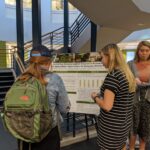
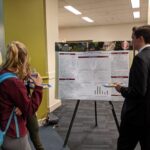
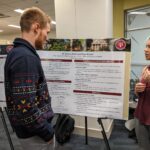
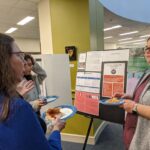
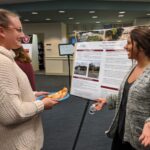
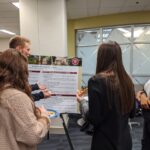
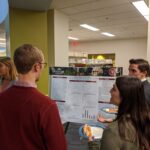
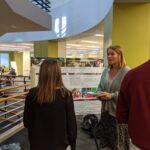
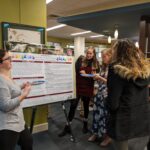
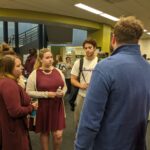
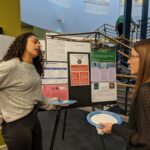
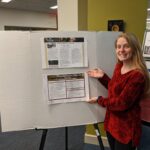
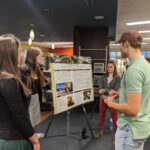
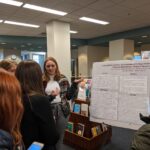
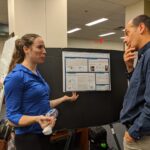
At the end of last semester on Thursday, December 5, students, faculty, and staff gathered in Fintel library to look at all of the amazing work the psychology department students have completed over the semester and summer. Various research posters and internship opportunities were shared and of course, the pizza was a hit among all session attendees! Check out the gallery of photos from the event below and congratulations to everyone who shared their research or internship on having a successful presentation and semester.
Roanoke College offers an amazing opportunity to do research with the Salem VA Medical Center. If you are looking to do research and think this could be something for you then continue reading to learn more about the program!
The Salem VA Medical Center offers the chance for Roanoke College undergraduates to gain experience working in research with a seasoned Principal Investigator (PI) on current medical research. Available research projects have included topics such as “Predictors of Treatment Response Among Veterans with PTSD”, “Mental Health in Rural Veterans with and without Traumatic Brain Injury”, and “Effect of Exercise Training on Inflammation and Function in HIV Infected Veterans”.
Students participate in research, analyze data, and present their work. Internship or Independent Study course credit is available through various departments at Roanoke College based on the particular project and student major.
Students interested should meet with the Director of Undergraduate Research, Dr. Chris Lassiter, in the fall semester or early in spring semester to discuss the program. An overall GPA of 3.4 or higher is preferred. An overall GPA of 3.0 or higher will be considered. To apply, submit a cover letter (with research interests), a CV, unofficial transcript, and two letters of recommendation to the Director of Undergraduate Research by February 28 for research in the summer or the next academic year (fall and spring semester).
For more information and other documents about this program you can follow this link.
Then this is the study for you! Even if you have no experience acting, everyone is welcome to participant so long as you are comfortable being recorded while acting out different scenes.
Dr. Dane Hilton is conducting a study in which you will be acting out different scenes and then evaluating your performance. These videos will be used in future research studies. but don’t stress if you have no experience acting, you can still come and participate!
Participants will be getting a $15 gift card for participating. This study is not being run through SONA, so if you are interested in signing up or have further questions then email Dr. Dane Hilton at hilton@roanoke.edu.
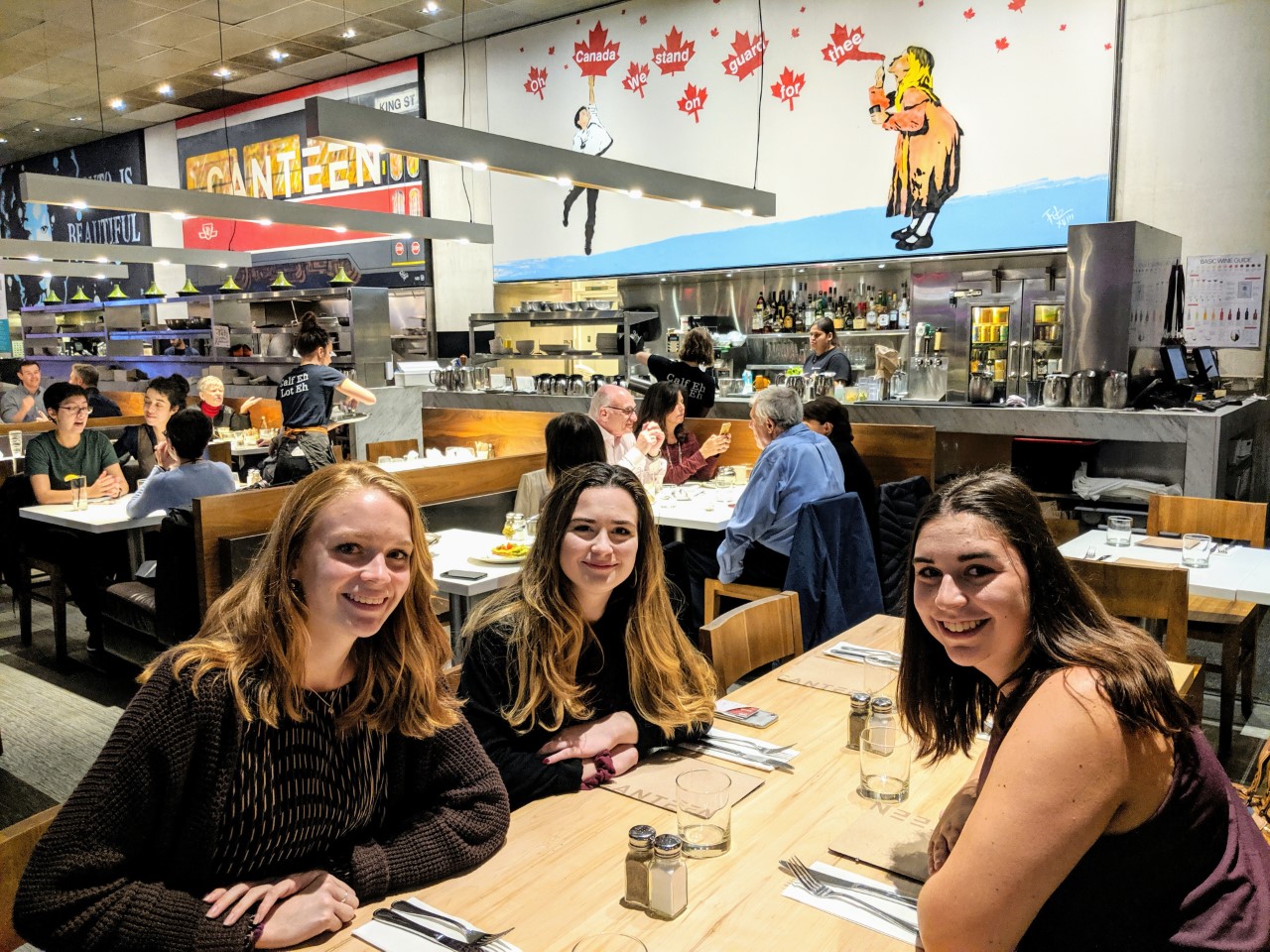
On October 10–12, Dr. Findley-Van Nostrand and Dr. Powell took three students to the Society for the Study of Emerging Adulthood (SSEA) Conference in Toronto, Canada to present research through poster sessions and presentations. These students included Casey Jo Gough ‘20, Sophie Bacon ‘20, and Abbey Packard ‘21.
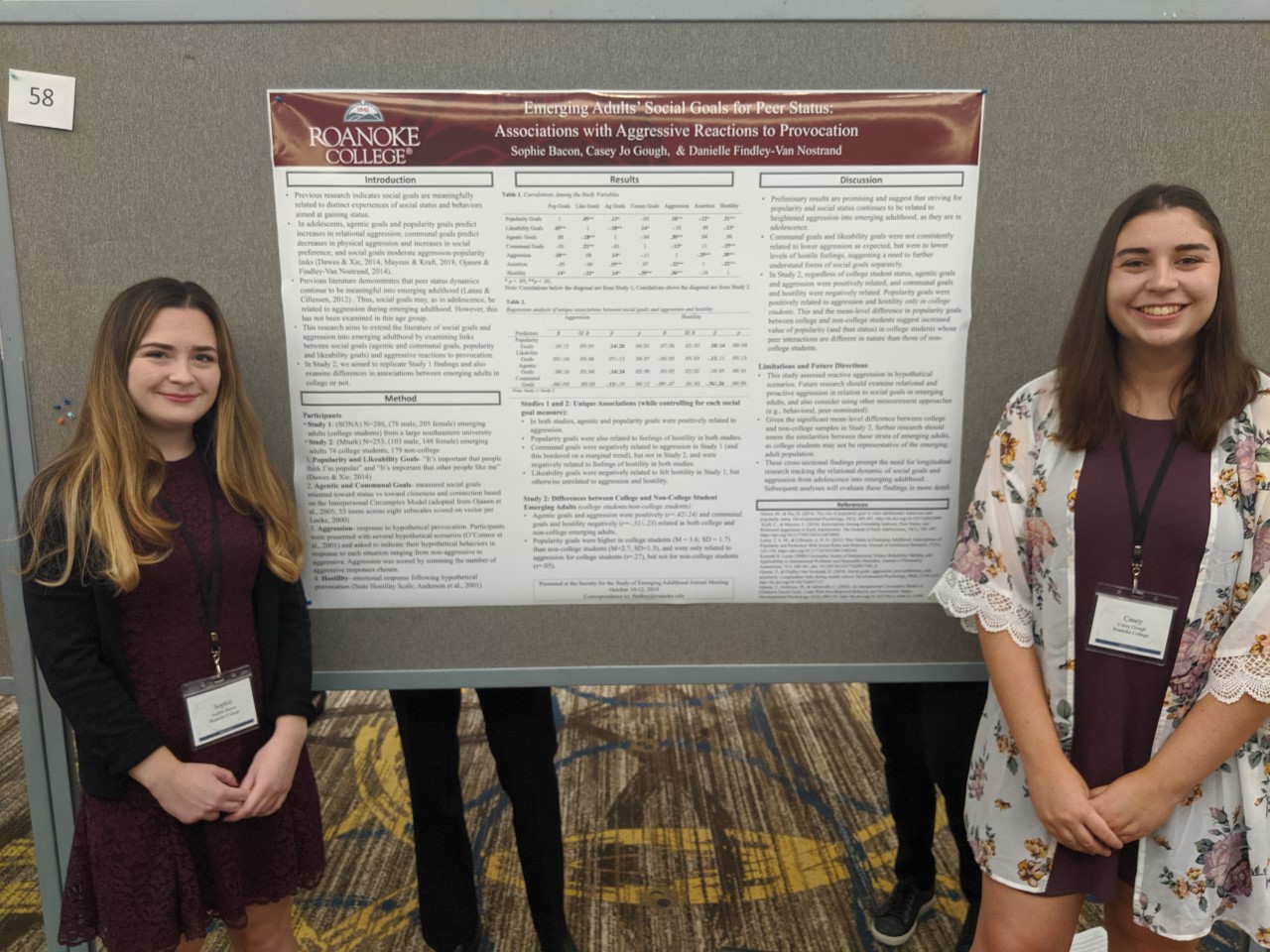
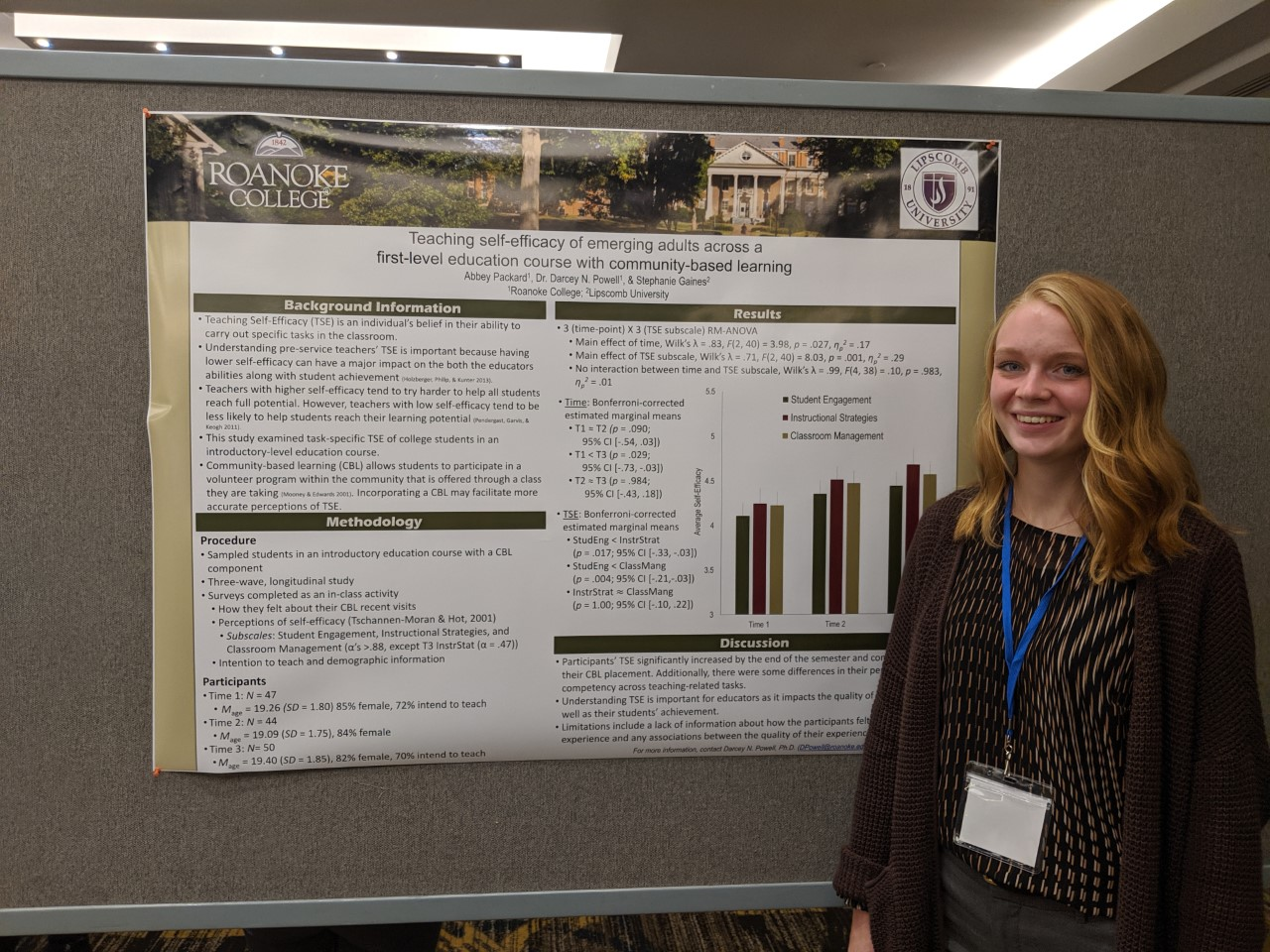
Students presented research through two different poster presentations.Casey Jo Gough and Sophie Bacon both worked alongside Dr. Findley-Van Nostrand and presented their poster titled “Emerging Adults’ Social Goals for Peer Status: Associations with Aggressive Reactions to Provocation”.Abbey Packard worked alongside Dr. Powell and presented her poster titled “Teaching self-efficacy of emerging adults across a first-level education course with community-based learning”.
The students have since given some insight onto what it was like presenting at the conference as well as their reactions to Toronto:
Sophie Bacon and Casey Jo Gough with the poster they presented
Casey Jo Gough
The opportunity to not only partake in undergraduate research but to then fly out of the country to present at a professional conference was an unforgettable learning experience. This was my first experience leaving the country, and it was fun to explore the streets of Toronto and take in all the sights. Presenting at the conference gave me confidence in my research abilities as I prepare for grad school. I was able to speak to other researchers and received great advice about my career path as a future school psychologist. I think the best part of the conference experience was the opportunity to attend lectures and poster sessions of unpublished research. I was able to speak to other researchers about their studies and look at exciting unpublished data in my areas of interest. I can’t wait to see where my research will take me next!
Sophie Bacon
Attending SSEA in Toronto was an incredible experience. Presenting our poster and findings was a really fulfilling experience and everyone who we talked to was so friendly and excited about our interest in research. Also, because I am still unsure of the direction that I want to go in when pursing graduated school, it was so helpful to talk to others who were recently in my shoes! I found walking and looking at all of the other posters to be really informative and eye-opening regarding the knowledge that we can learn about this newly defined stage of life. I felt very lucky that we were able to travel to such a cool place like Toronto, the city felt so walkable and had an abundance of hip-restaurants and soaring skyscrapers!
Abbey Packard
Abbey Packard with the poster she presented
Canada was an amazing experience overall and as an undergraduate research student I gained lots of insight into graduate level research and felt confident being able to present my work to graduate and PhD students. The other presentations were extremely impressive and networking opportunities were all around which is always a bonus! Being able to go to Toronto was a wonderful experience thanks to the help of Dr. Powell! The city was beautiful and was an experience I’ll never forget.
Dr, Powell
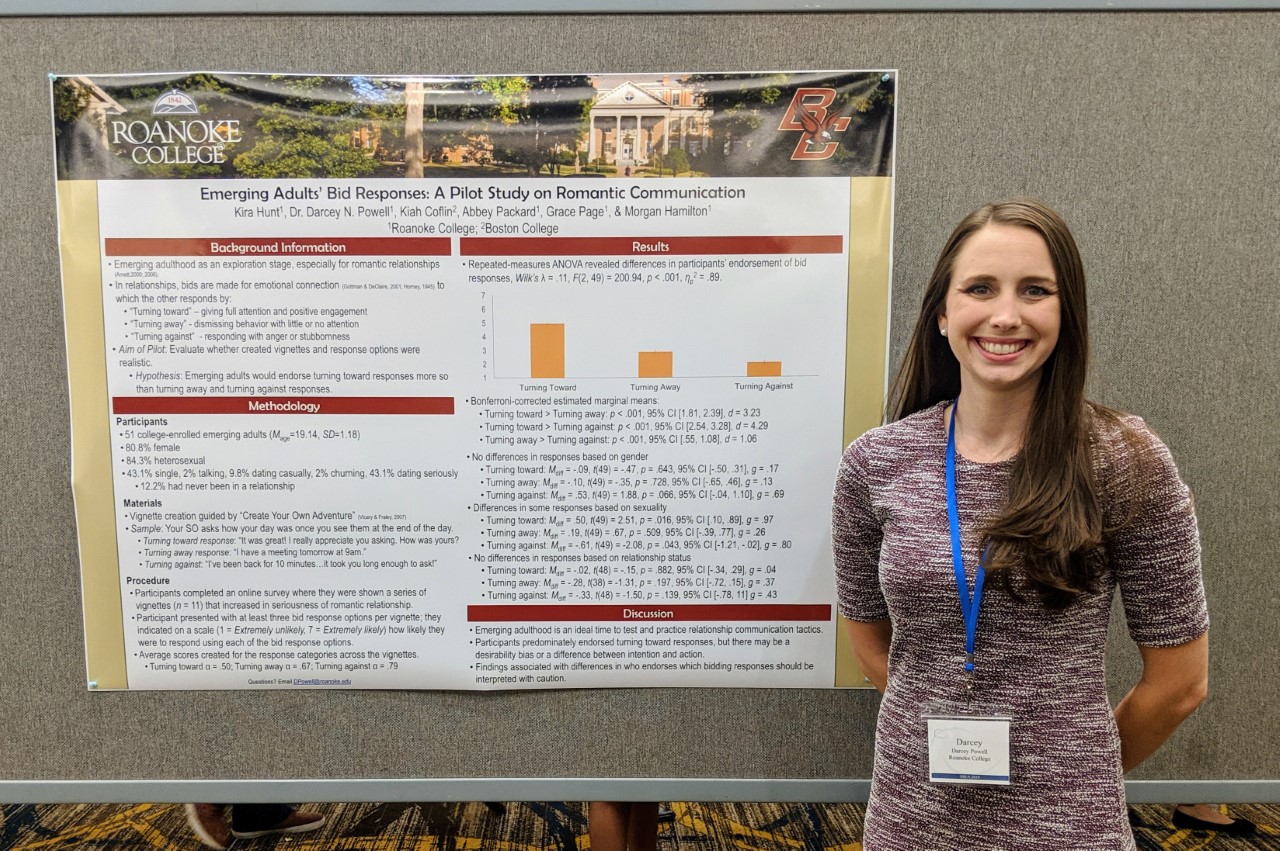
Dr. Powell standing beside the poster students have been working on alongside her
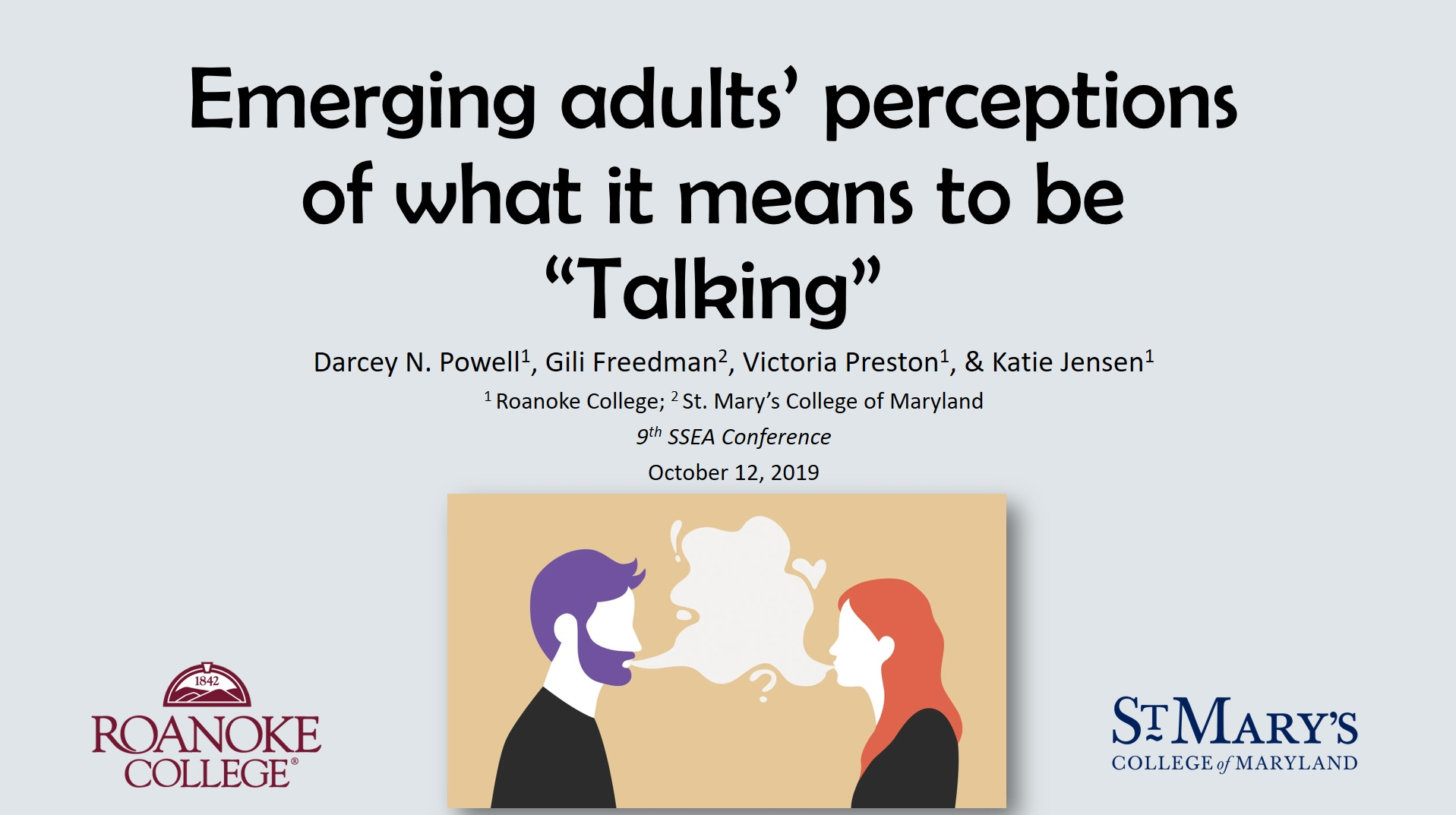
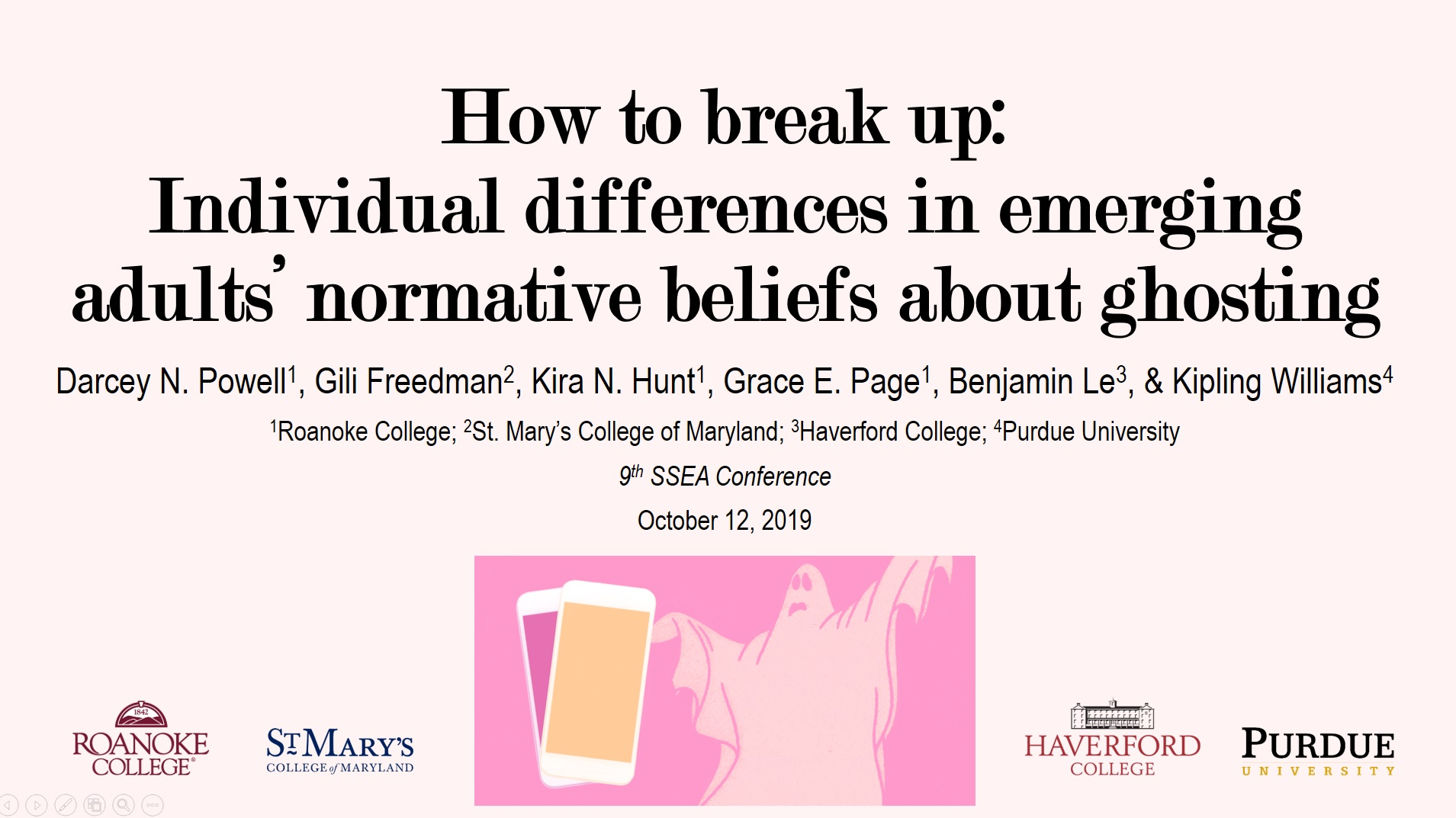
Dr. Powell also presented one poster titled “Emerging Adults’ Bid Responses: A Pilot Study on Romantic Communication” as well as two papers, “How to break up: Individual differences in emerging adults’ normative beliefs about ghosting” and “Emerging adults’ perceptions of what it means to be “Talking””.
One of the paper presentations Dr. Powell gaveThe second paper presentation Dr. Powell gave
Congratulations to all those who attended the conference and for having successful presentations!
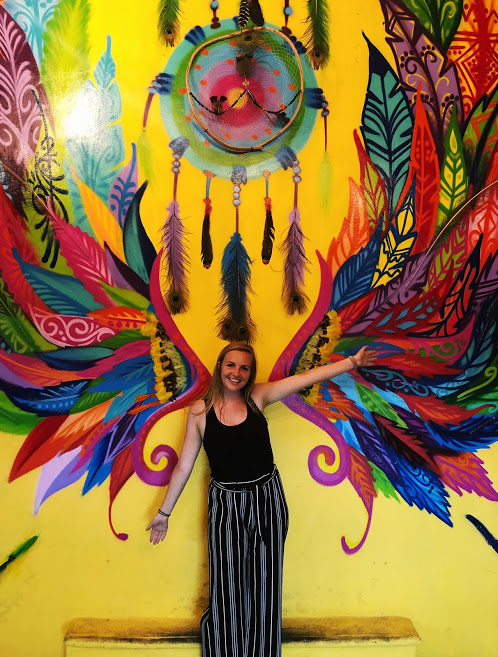
This past summer Rachel Harmon was selected as a recipient of the 2018-2019 Summer Mamie Phipps Clark Diversity Undergraduate Research Grant from Psi Chi, the international psychology honorary, where she spent several weeks in Mexico working on her project titled, “Cross-Cultural Comparison of Caregiver Concerns and Resources for Children with Disabilities.”
Rachel Harmon was in the list of top 11 applications and so Dr. Powell was awarded a faculty stipend as well.
A brief interview was done with Harmon to learn more about this project and process:
Thank you for taking time to answer some questions, to start off, can you describe what the grant process was like and how you discovered it?
I began the grant application process in December of last year but ended up not submitting the grant until the May due date. I heard about the grant through Dr. Powell, who recommended applying, and advised me throughout the process. The grant required me to provide a concise version of my Literature Review and a brief Methodology section, and all the scales that I would use. I found that the grant helped me to determine the specific methodology I would use for my project and helped me to determine the specific scales that I would use.
Can you tell me more about your project?
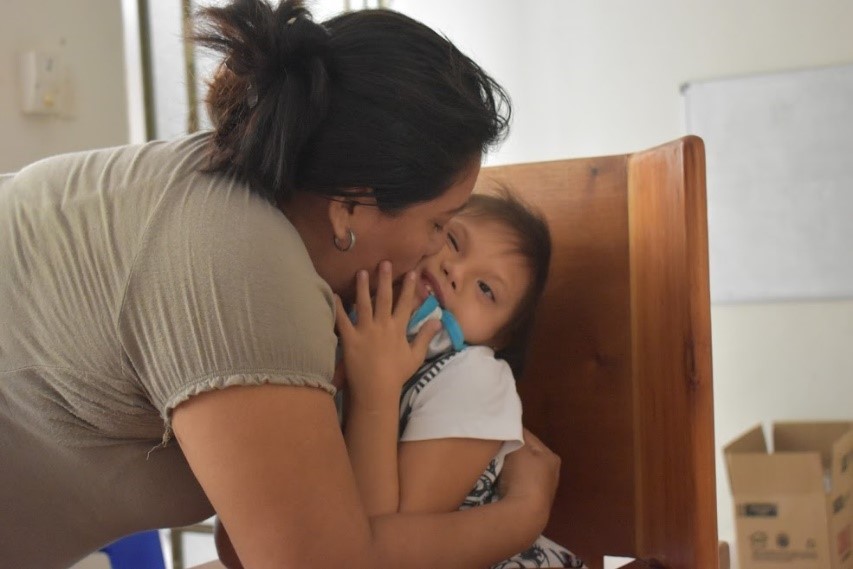
The title of my project is “Cross-Cultural Comparison of Caregiver Concerns and Resources for Children with Disabilities”. I have collected both observational and quantitative data in both Mexico and the United States to compare the resources that are available for children with disabilities in each country and how this impacts caregiver stress levels and the emotions they feel, regarding caring for their child with a disability. I originally got the idea for my project when I traveled to Nicaragua the summer before my freshman year. While I was walking through a market in Managua, I saw a woman who was working and had her daughter who had a disability in what we would consider a baby stroller. I have worked a lot with individuals, specifically with children with disabilities and developmental delays, and I was naturally compelled to investigate the topic further.
What drew you to Mexico for this project?
I was originally supposed to return to Nicaragua for my project, but due to the current political environment, it was not ideal for travel. Jesse Griffin, who serves on the committee of my project knew of several connections that our college has with research facilities and other institutions in the Yucatán. One of the facilities was conveniently across the street from a Centro de AtenciónMúltiple, which is a government funded special education school, which was a great resource for collecting observational data and distributing surveys.
What did a normal day look like for you in Mexico as you worked on this project?
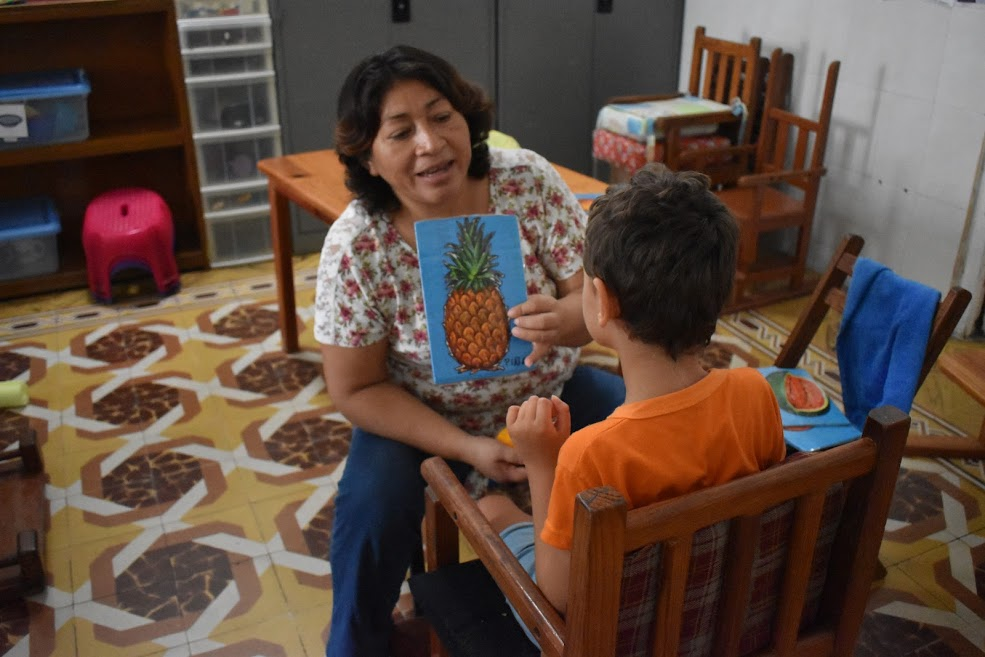
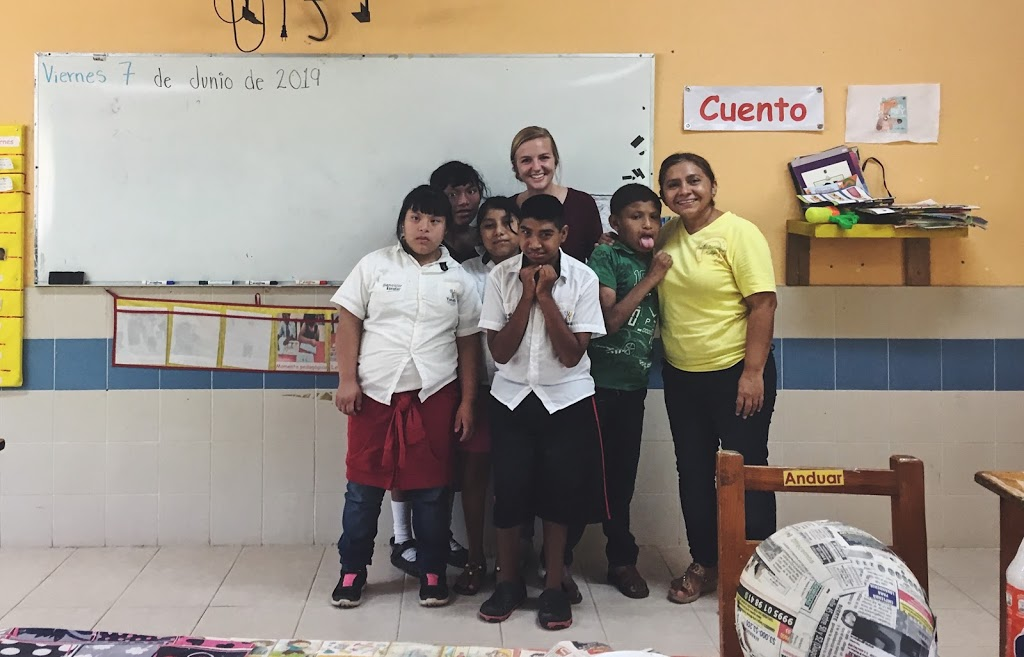
For the first month I spent in Mexico I was in Oxkutzcab, which was a small, rural town. This was where the C.A.M. school was. Each weekday I would go to the school at 7:30, and I would rotate which classroom I was in each day. The school has seven classes serving student from ages 2-28. Depending on which classroom I was in, I would either observe the class, and participate in class activities, or work one on one with students who needed more individualized attention. The school days in Mexico only last from 7:30 to 12:30, so in the afternoons I would explore or relax, and work on other research tasks.
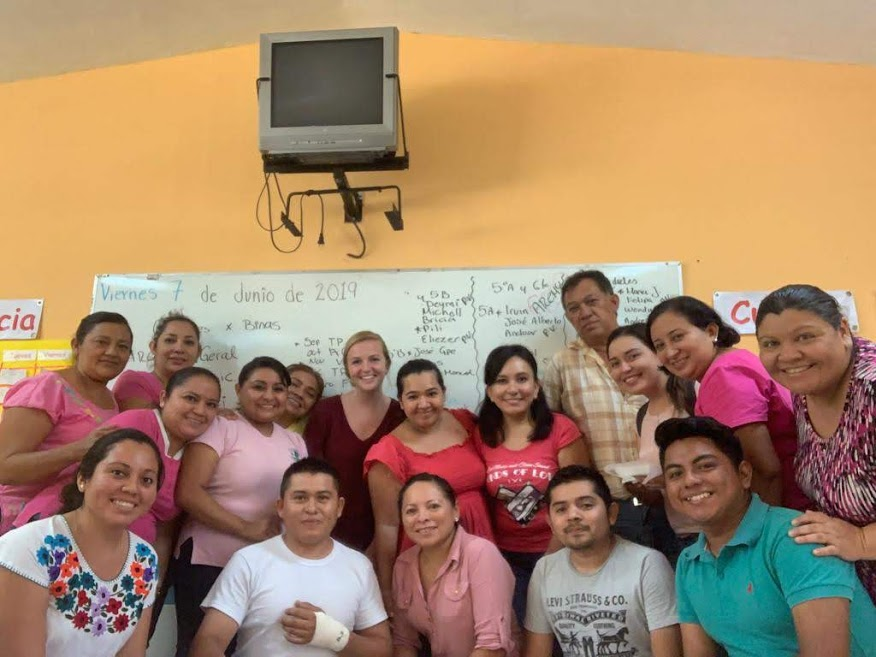
I spent the second month in the capital of the Yucatán, Mérida. Here, I was working with an internationally run non-profit called SOLYLUNA. The organization provides special education opportunities and access to physical therapy, speech therapy, and occupational therapy for children who have a diagnosis of multiple disabilities and their caregivers. The dynamic of the organization was very different than the C.A.M. school, so it was an adjustment. The organization requires that a caregiver accompanies the child for the full day from 7:30-1:30. My job as a volunteer was to assist the parents when needed, and to observe the teachers and therapists. I also worked with the volunteer coordinator and director of the organization to create a document about potential resources to provide for caregivers, and I took pictures for them to use for promotion purposes. Since I was now in a larger city there was a lot more to explore in the afternoons, and I enjoyed travelling on the weekends.
You mentioned that you had opportunities to explore while in Mexico, what was the coolest place you visited/most favorite?
I did have a lot of time to explore while I was in Mexico, especially on the weekends. I enjoyed exploring nearby townsand venturing further to other landmarks. I think my favorite place I traveled to while in Mexico was Isla las Mujeres. This was an island off the coast of Cancún, where we were able to hear lots of live music, enjoy the beach, and go snorkeling. I met a group of other students from Millsaps College, in Mississippi while I was there, and I enjoyed traveling with them and meeting them at different places on some weekends.
If given the opportunity would you go back and work, there again?
Absolutely! While I was there, I formed a lot of connections with the kids, caregivers, teachers and therapists that I was working with and I would love to see them again (I miss them a lot)! It was hard to leave such amazing people, and such an amazing place.
Is there anything else you would like us to know?
Overall, my experiences in Mexico taught me more than I could have ever imagined. I especially learned a lot about collecting data in another culture, which is an experience I consider myself lucky to have had at this point in my academic career. Whether it is through research, or a different study abroad program, I highly recommend spending time in another country to everyone, because it allows you to learn so much about yourself and the world.
Congratulations again to Rachel Harmon and Dr. Powell and thank you for taking time to answer some questions!
Are you interested in taking a class in another part of the world? If so, come out to the Ballroom this Thursday, September 5 between 12 – 1 pm to hear about the awesome May Term Travel courses being offered this coming spring! Dr. Powell will be there sharing information on the course she is teaching, IL 377: Emerging Adults in Thailand – A Cross-Cultural Society, which counts as an elective for those in the Human Development concentration but is also a wonderful opportunity for all those interested in human development. Other faculty will be sharing about their courses that are also being offered as well!