
Category: Faculty News

  • NCFR Conference 2019!

    © ncfr.org

    On November 20-23, Dr. Powell took two students to the National Council on Family Relations (NCFR) Conference in Fort Worth, Texas to present research through poster sessions and to attend presentations. These students included Rachel Harmon ’20 and Morgan Hamilton ’21.

    Morgan Hamilton Worked alongside Dr. Powell and presented their poster titled “The Association Between Implicit Theories of Relationships and Emerging Adults’ Expectations for Romantic Relationships,” which was based on a subset of results from Taylor Kracht’s ’18 honors in the major study.

    The students have since given some insight onto what it was like presenting at the conference as well as their reactions to the conference and Fort Worth, TX: 
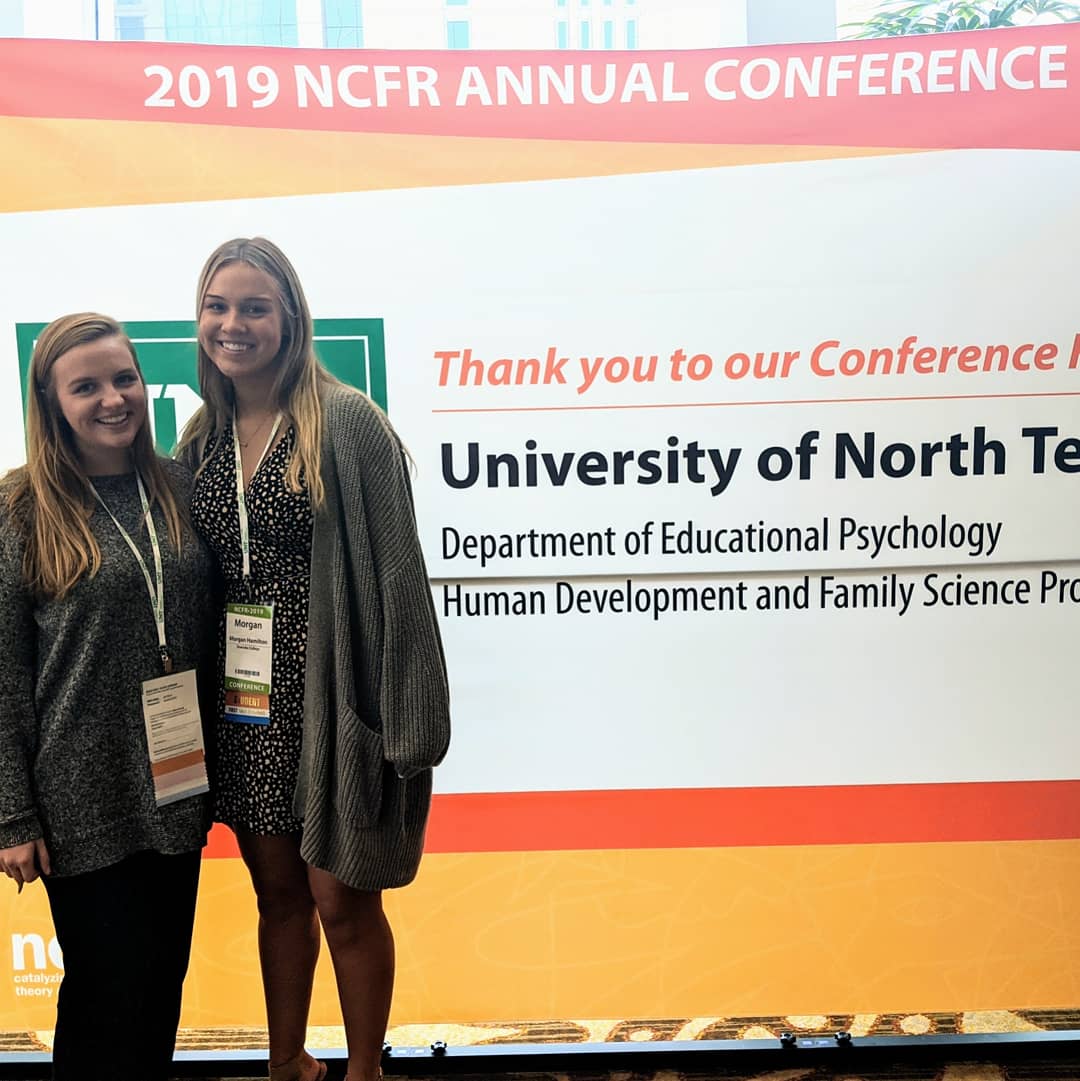
    Rachel Harmon and Morgan Hamilton at the NCFR conference

    Rachel Harmon

    I attended the annual NCFR conference with Dr. Powell and my fellow lab-mate, Morgan. Although I did not present at the conference I enjoyed attending the poster sessions and symposiums that were relevant to my current and future research interests, as well as supporting Morgan and Dr. Powell during their presentation. I specifically enjoyed attending presentations on the topics of disability and immigrant youth and families. Attending this conference was beneficial for me as I am currently applying to graduate programs in Human Development and Family Studies and Clinical Psychology. While I was at the conference I was able to interact and network with professors in Human Development and Family Studies programs as well as to receive feedback on my own research. Attending NCFR also prepared me to present my own research at a conference next semester. I am very thankful that Dr. Powell and Roanoke College encourage their undergraduate students to attend conferences to gain valuable experience in their areas of interest. Overall, I really enjoyed exploring Fort Worth with Dr. Powell and Morgan. The things I enjoyed most about the city were the food and the nice weather! 
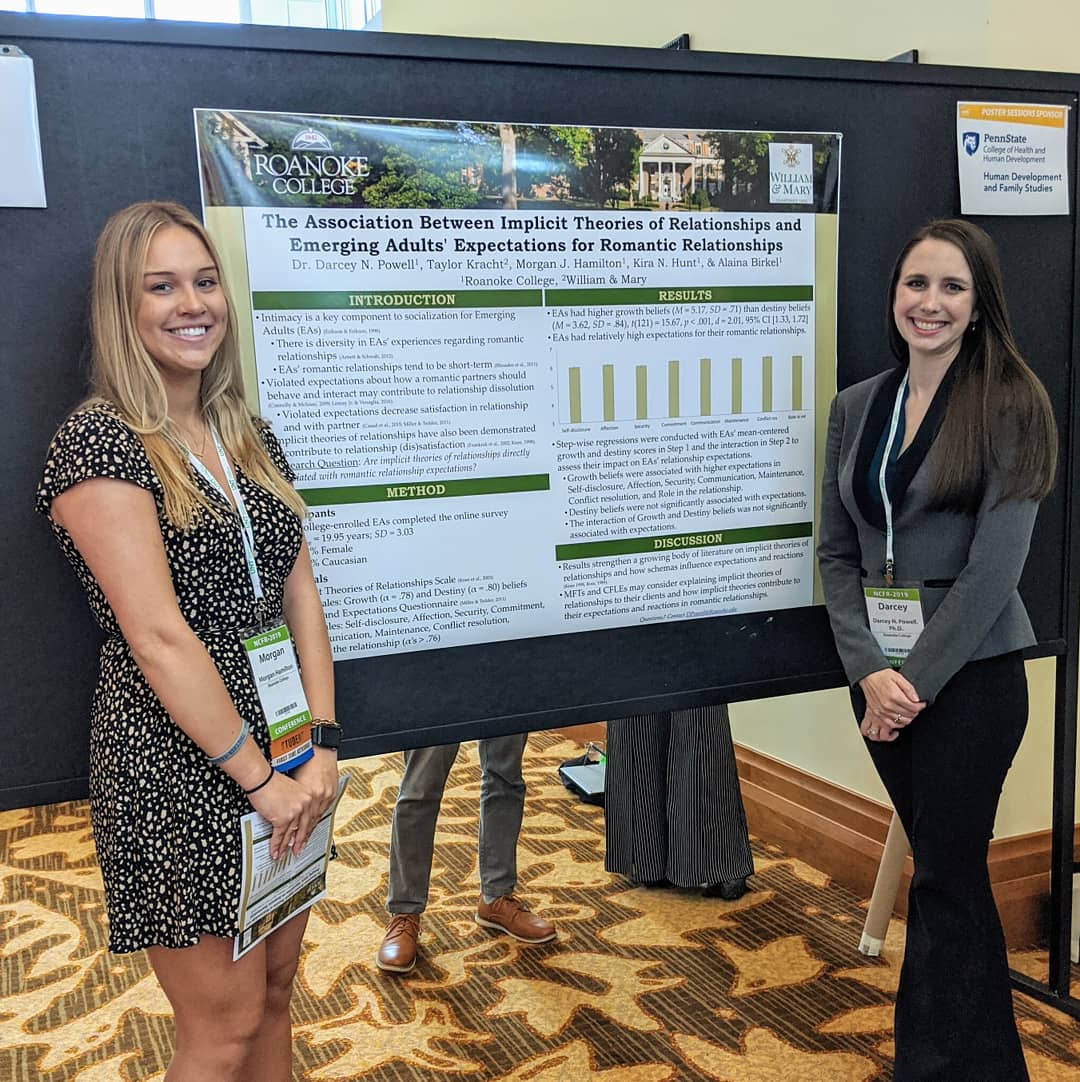
    Morgan Hamilton and Dr. Powell presenting their poster

    Morgan Hamilton

    The opportunity to present at NCFR was incredible. Leading up to the poster session, I was very nervous because I had never presented to a group of scholars. After the session began and I had spoken to a few people who gave high praise to our research, my nerves significantly calmed. It was so cool to hear people’s thoughts about how our research applied to their own work. Although presenting was a great experience, my favorite part of the conference was listening to other scholars talk about research they conducted on topics I want to pursue and am truly passionate about. I was able to sit in a room with thirty people who all cared about adolescent mental health and was also able to meet a few professors at graduate programs too. It was fascinating to see how Psychology is growing & gave me great ideas about potential future research I would like. Finally, Fort Worth was such an amazing city! Rachel, Dr. Powell and I spent a lot of time walking around the shops in the city and finding great food along the way. Overall, the experience was something I am super grateful to have been warranted and I’m sure it will stand out as a highlight of my academic career at Roanoke College.
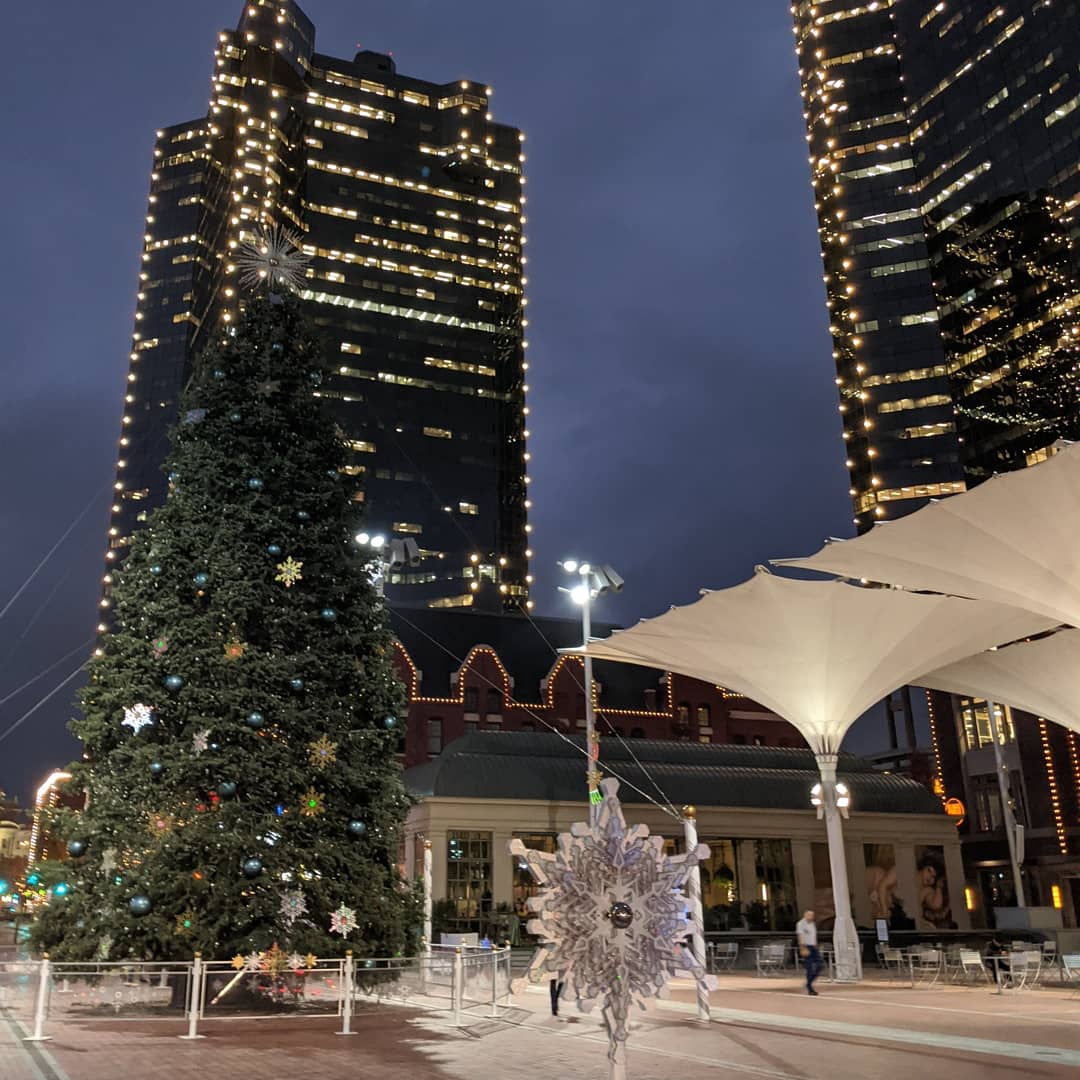

    Fort Worth, TX gearing up for the holiday season!

    Congratulations to all those who attended the conference and for having a successful presentation! 

    . 

    . 

    . 

    Get Connected!

    Bloghttps://psych.pages.roanoke.edu/
    Facebookhttps://www.facebook.com/rcpsychology
    Twitter: @RC_Psychology
    Linked In: https://www.linkedin.com/groups/RC-Psychology-8140491/about
    Website: https://www.roanoke.edu/inside/a-z_index/psychology
    Instagram: rcpsychology
  • CALLING ALL ACTORS!

    Do you enjoy acting?

    Then this is the study for you!  Even if you  have no experience acting, everyone is welcome to participant so long as you are comfortable being recorded while acting out different scenes.

    Dr. Dane Hilton is conducting a study in which you will be acting out different scenes and then evaluating your performance. These videos will be used in future research studies. but don’t stress if you have no experience acting, you can still come and participate!

    Participants will be getting a $15 gift card for participating. This study is not being run through SONA, so if you are interested in signing up or have further questions then email Dr. Dane Hilton at hilton@roanoke.edu.

    Hope to see some of you there!

    ©GIPHY

    . 

    . 

    . 

    Get Connected!

    Bloghttps://psych.pages.roanoke.edu/
    Facebookhttps://www.facebook.com/rcpsychology
    Twitter: @RC_Psychology
    Linked In: https://www.linkedin.com/groups/RC-Psychology-8140491/about
    Website: https://www.roanoke.edu/inside/a-z_index/psychology
    Instagram: rcpsychology
  • SSEA CONFERENCE 2019!

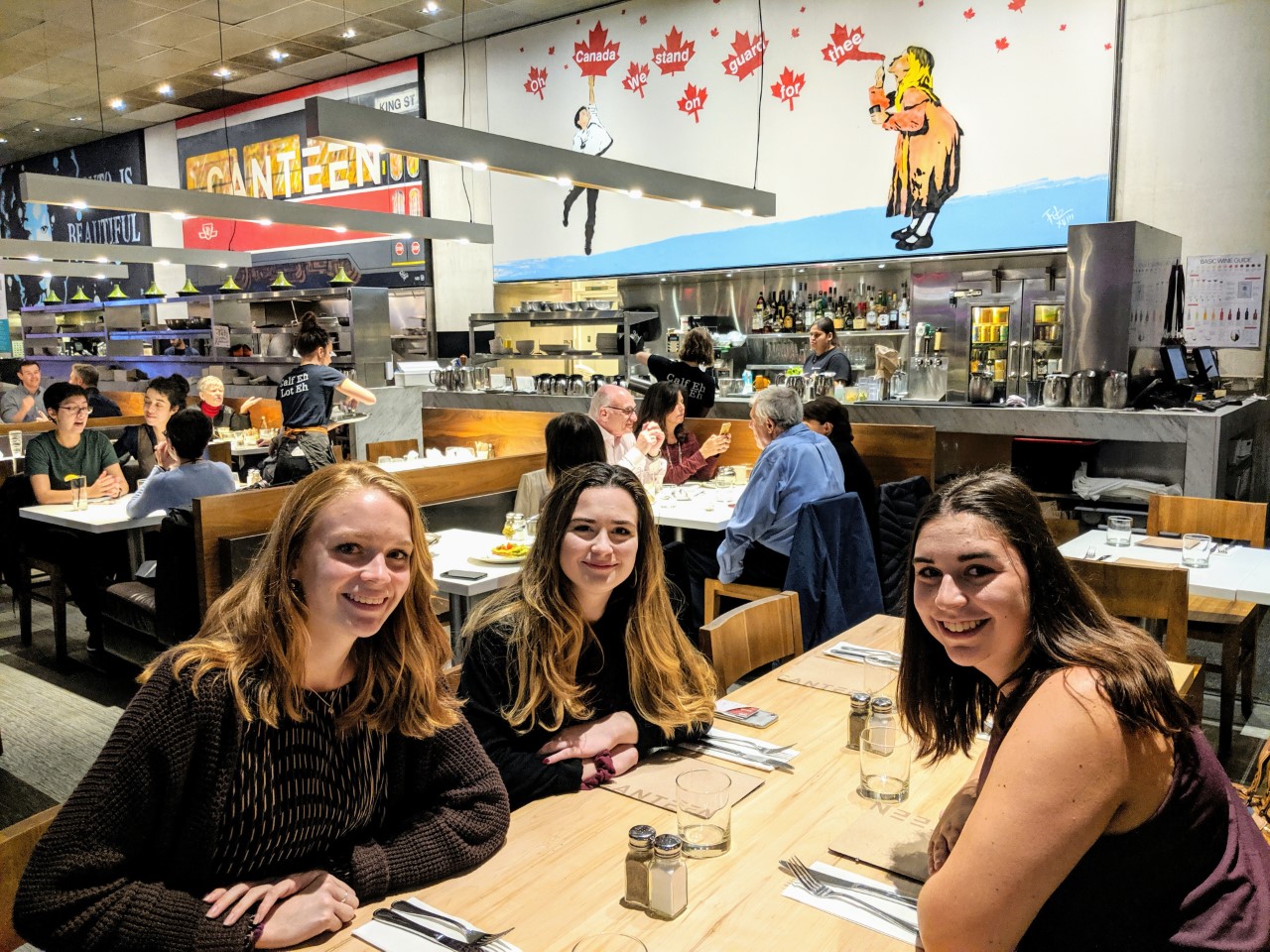
    The students who attended SSEA at dinner

    On October 1012, Dr. Findley-Van Nostrand and Dr. Powell took three students to the Society for the Study of Emerging Adulthood (SSEA) Conference in Toronto, Canada to present research through poster sessions and presentations. These students included Casey Jo Gough ‘20, Sophie Bacon ‘20, and Abbey Packard ‘21. 

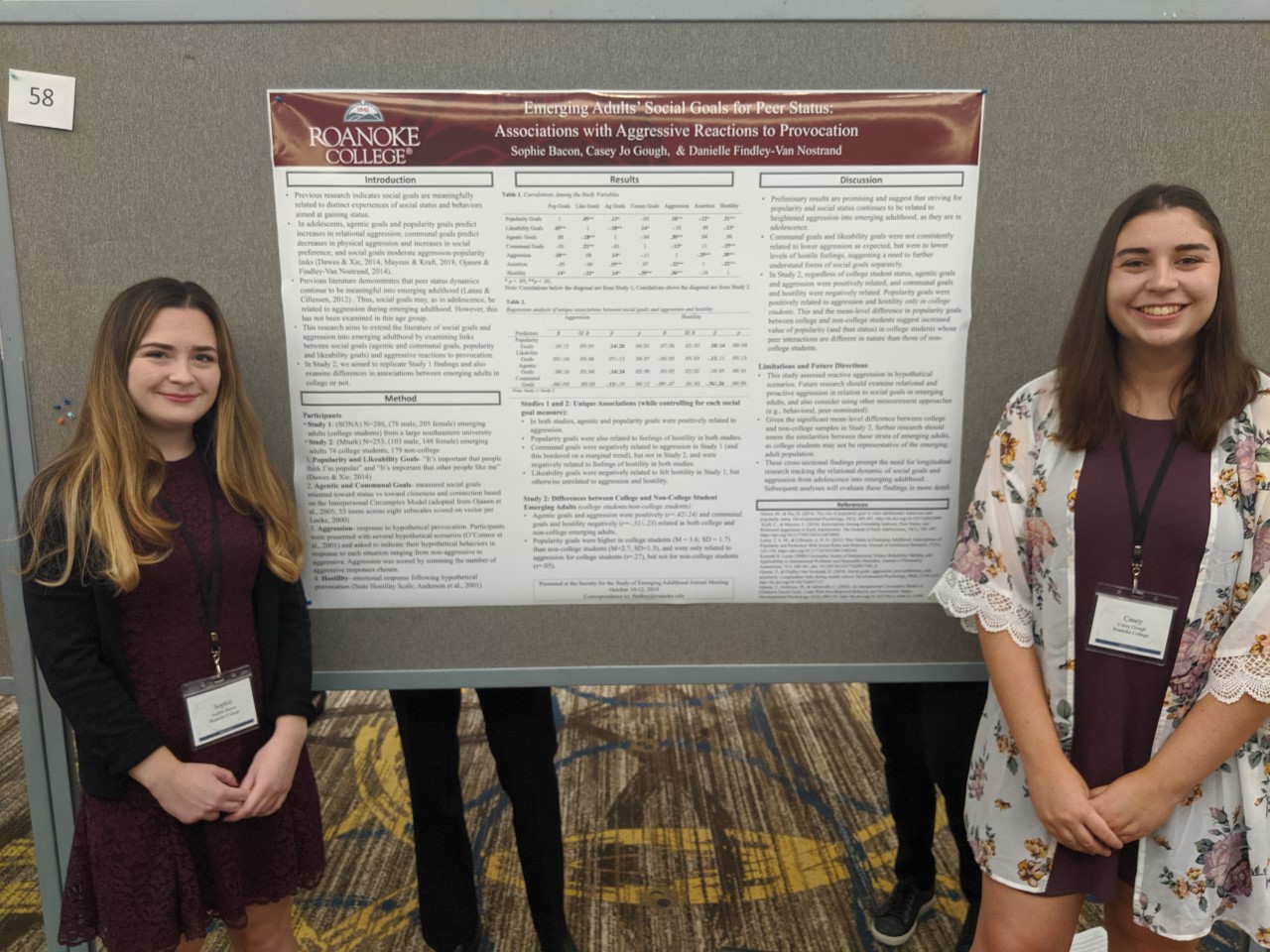
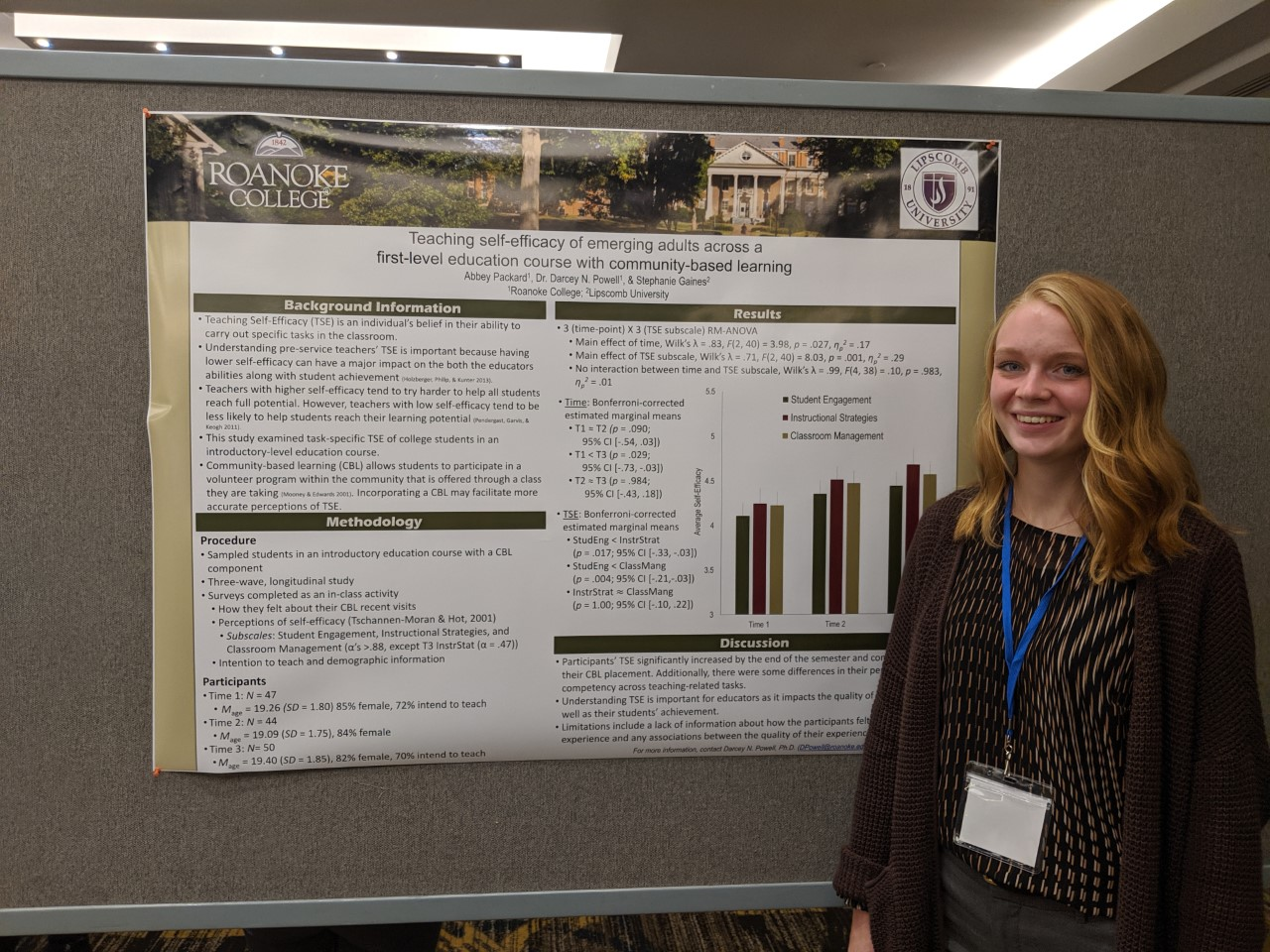
    Students presented research through two different poster presentations. Casey Jo Gough and Sophie Bacon both worked alongside Dr. Findley-Van Nostrand and presented their poster titled “Emerging Adults’ Social Goals for Peer Status: Associations with Aggressive Reactions to Provocation”. Abbey Packard worked alongside Dr. Powell and presented her poster titled “Teaching self-efficacy of emerging adults across a first-level education course with community-based learning”. 

    The students have since given some insight onto what it was like presenting at the conference as well as their reactions to Toronto: 

    Sophie Bacon and Casey Jo Gough with the poster they presented

    Casey Jo Gough

    The opportunity to not only partake in undergraduate research but to then fly out of the country to present at a professional conference was an unforgettable learning experience. This was my first experience leaving the country, and it was fun to explore the streets of Toronto and take in all the sights. Presenting at the conference gave me confidence in my research abilities as I prepare for grad school. I was able to speak to other researchers and received great advice about my career path as a future school psychologist. I think the best part of the conference experience was the opportunity to attend lectures and poster sessions of unpublished research. I was able to speak to other researchers about their studies and look at exciting unpublished data in my areas of interest. I can’t wait to see where my research will take me next! 

    Sophie Bacon 

    Attending SSEA in Toronto was an incredible experience. Presenting our poster and findings was a really fulfilling experience and everyone who we talked to was so friendly and excited about our interest in research. Also, because I am still unsure of the direction that I want to go in when pursing graduated school, it was so helpful to talk to others who were recently in my shoes! I found walking and looking at all of the other posters to be really informative and eye-opening regarding the knowledge that we can learn about this newly defined stage of life. I felt very lucky that we were able to travel to such a cool place like Toronto, the city felt so walkable and had an abundance of hip-restaurants and soaring skyscrapers!

    Abbey Packard

    Abbey Packard with the poster she presented

    Canada was an amazing experience overall and as an undergraduate research student I gained lots of insight into graduate level research and felt confident being able to present my work to graduate and PhD students. The other presentations were extremely impressive and networking opportunities were all around which is always a bonus! Being able to go to Toronto was a wonderful experience thanks to the help of Dr. Powell! The city was beautiful and was an experience I’ll never forget. 

    Dr, Powell

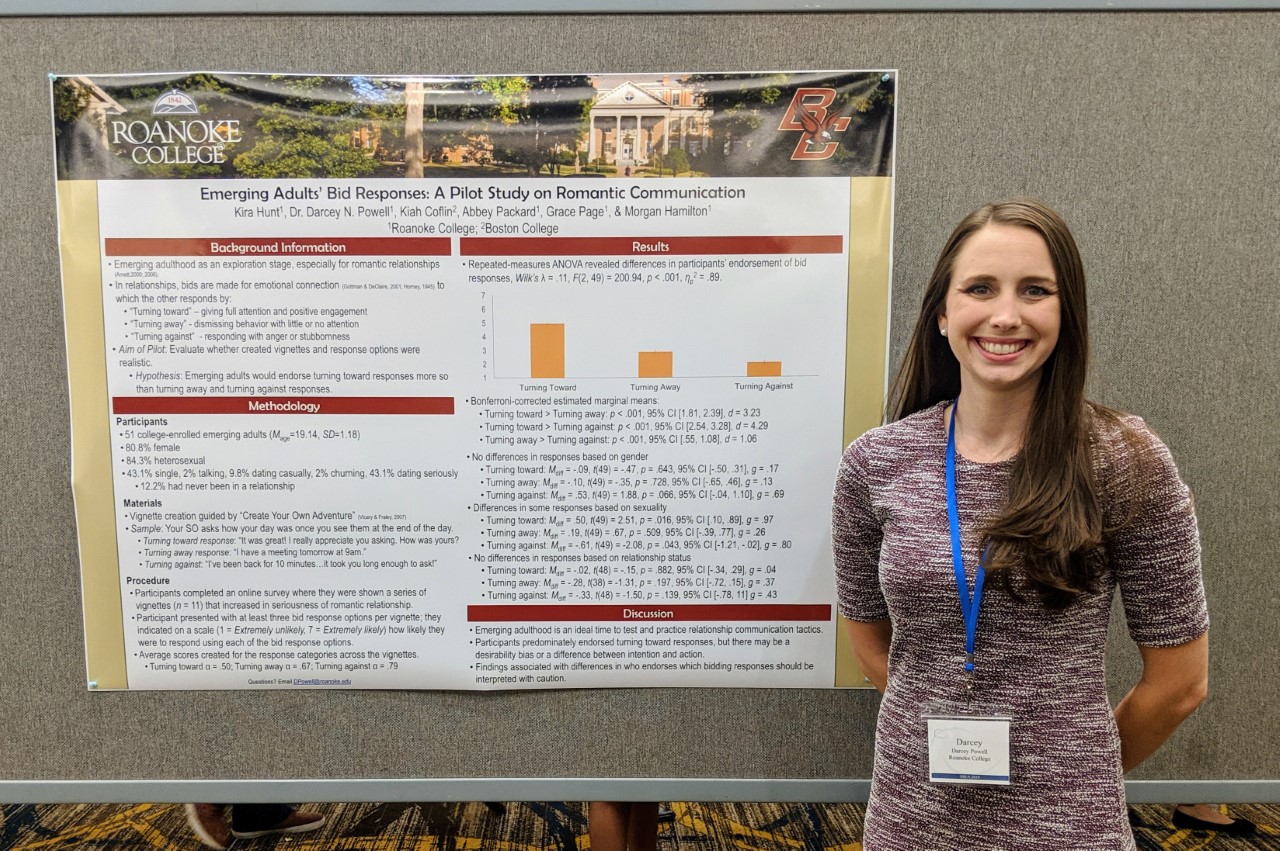
    Dr. Powell standing beside the poster students have been working on alongside her

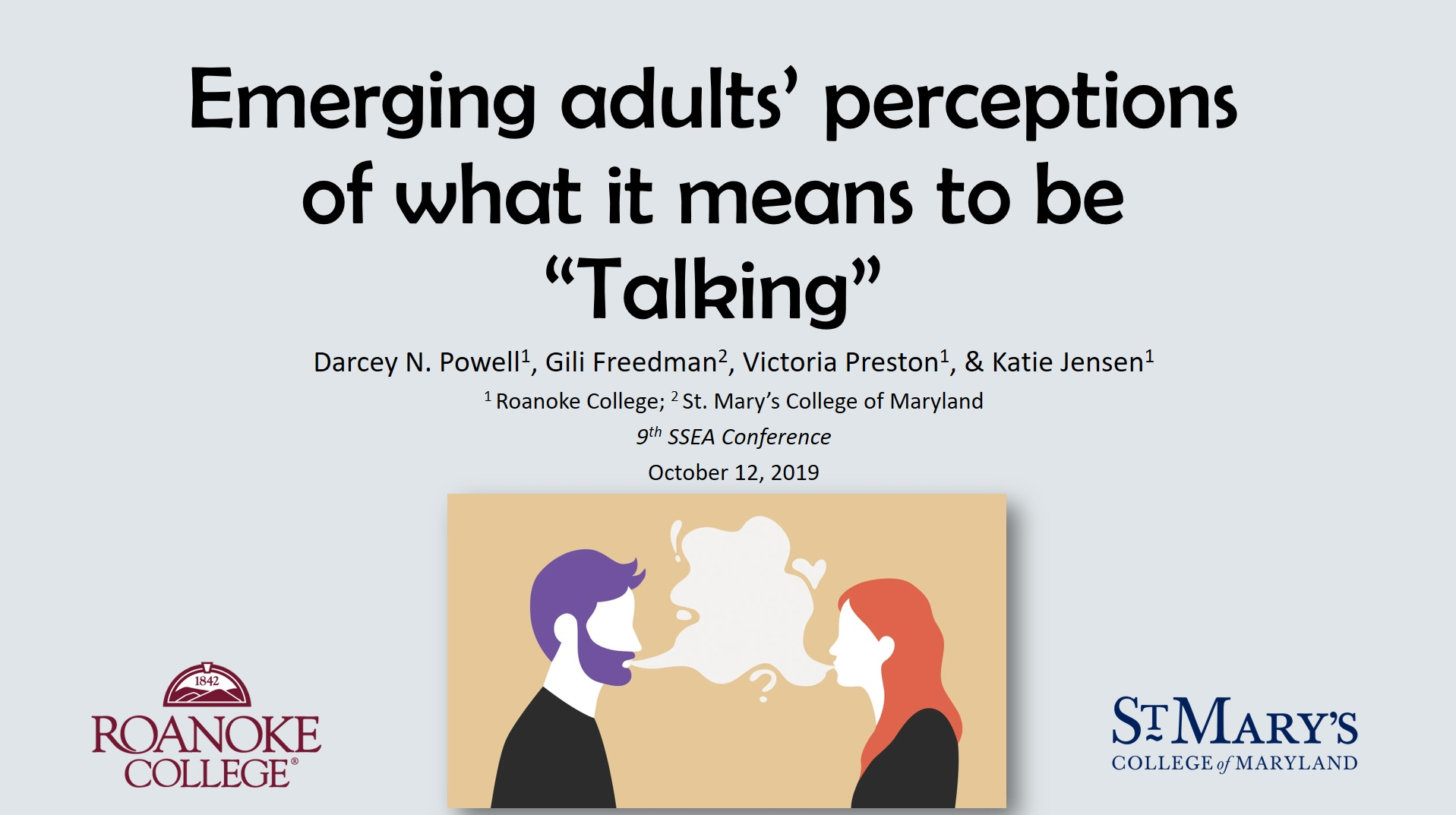
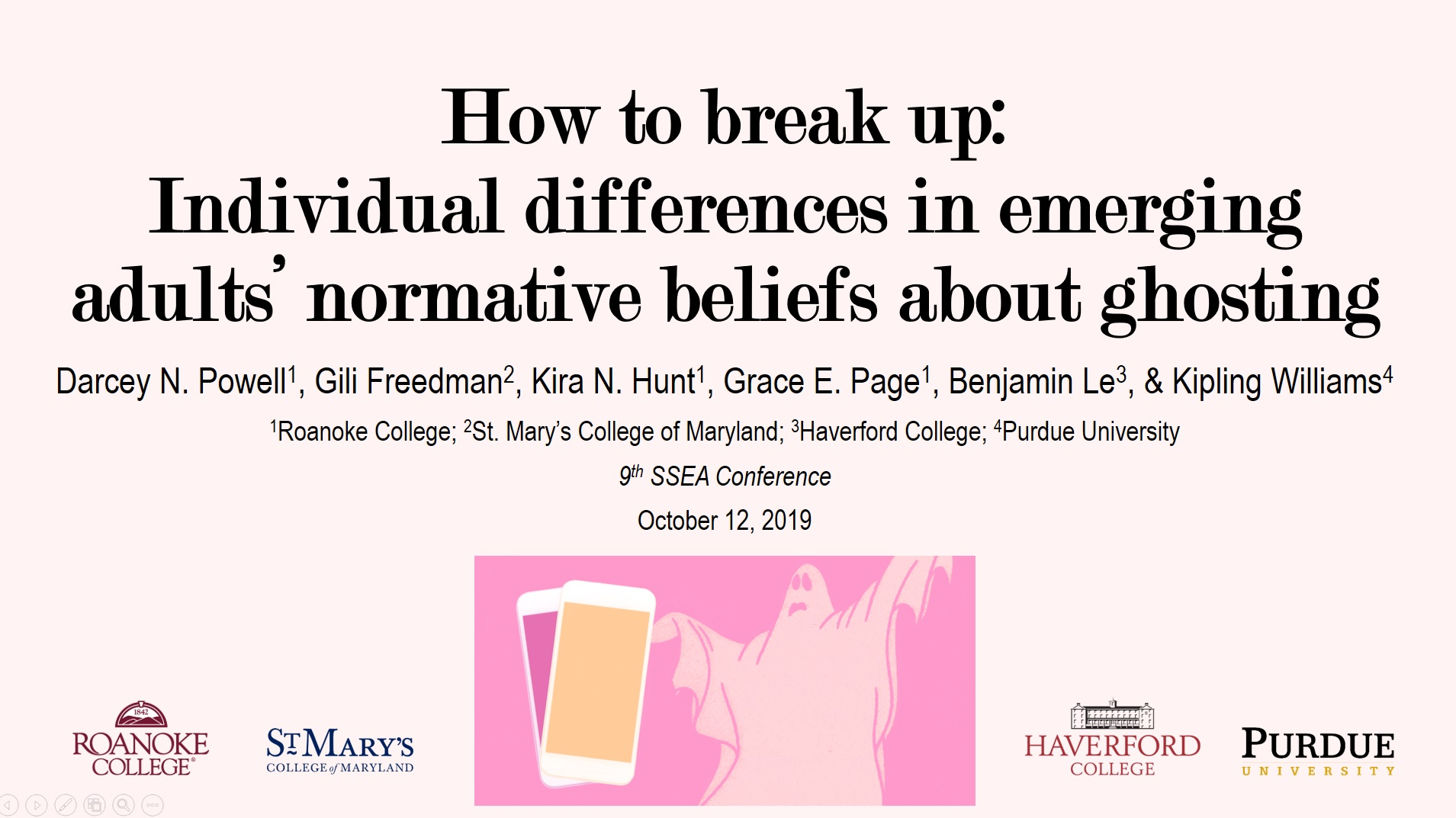
    Dr. Powell also presented one poster titled “Emerging Adults’ Bid Responses: A Pilot Study on Romantic Communication” as well as two papers, “How to break up: Individual differences in emerging adults’ normative beliefs about ghosting” and “Emerging adults’ perceptions of what it means to be “Talking””. 


    One of the paper presentations Dr. Powell gave
    The second paper presentation Dr. Powell gave

    Congratulations to all those who attended the conference and for having successful presentations! 

    . 

    . 

    . 

    Get Connected!

    Bloghttps://psych.pages.roanoke.edu/
    Facebookhttps://www.facebook.com/rcpsychology
    Twitter: @RC_Psychology
    Linked In: https://www.linkedin.com/groups/RC-Psychology-8140491/about
    Website: https://www.roanoke.edu/inside/a-z_index/psychology
    Instagram: rcpsychology
  • CONGRATS DR. OSTERMAN AND THERESA HECMANCZUK ON RECENT PUBLICATION!

    © someecards.com

    Congratulations to Dr. Osterman (Roanoke College) and recent graduate Theresa Hecmanczuk ‘19 on their recent publishing in the Journal of Social and Personal Relationshipstitled “Parasocial forgiveness: The roles of parasocial closeness and offense perceptions.” 

    In this article Dr. Osterman and Theresa Hecmanczuk expand on research that investigates how predictors of interpersonal forgiveness, such as relationship closeness and offense severity, also predict forgiveness of a parasocial target. Using an interpersonal forgiveness measure to examine forgiveness of parasocial targets as a function of parasocial closeness and offense perceptions, they used two studies and found that pre-offense closeness was associated with greater forgiveness and current closeness, and that forgiveness significantly mediated the relationship between pre-offense and current closeness. They also found that perceptions of apology sincerity were associated with greater forgiveness and current parasocial closeness, and that a brief measure of parasocial closeness was comparable to the Parasocial Interaction Scale in its associations with forgiveness and related outcomes.    

    For more information on the article, follow this link and once again congratulations to Dr. Osterman and Theresa Hecmanczuk for their publishing! 

    . 

    . 

    . 

    Get Connected!

    Bloghttps://psych.pages.roanoke.edu/
    Facebookhttps://www.facebook.com/rcpsychology
    Twitter: @RC_Psychology
    Linked In: https://www.linkedin.com/groups/RC-Psychology-8140491/about
    Website: https://www.roanoke.edu/inside/a-z_index/psychology
    Instagram: rcpsychology
  • CONGRATS DR. HILTON ON RECENT PUBLICATION!

    Congratulations to Dr. Hilton (Roanoke College), Dr. Jarrett (The University of Alabama), Dr. Rondon (The University of Alabama), Josh Tutek (The University of  Alabama) and Mazheruddin Mulla (The University of Alabama) for their recent publishing in the Child Psychiatry & Human Development Journaltitled “Increased Working Memory Load in a Dual‑Task Design Impairs Nonverbal Social Encoding in Children with High and Low Attention‑Deficit/Hyperactivity Disorder Symptoms.” 

    In this article, Dr. Hilton and fellow researchers look into the relationship between working memory and nonverbal social cues. By testing children with High and Low ADHD symptoms through computerized tasks of social encoding and working memory in both single- and dual-task conditions, they revealed that both children with High ADHD and Low ADHD performed significantly worse during the dual-task condition compared to the single task conditions. They also found that children with High ADHD
    had significantly lower performance than Low ADHD children on task-based social encoding and working memory.

    For more information on the article, follow  this link and once again congratulations  Dr. Hilton and his fellow researchers for their publishing!

    . 

    . 

    . 

    Get Connected!

    Bloghttps://psych.pages.roanoke.edu/
    Facebookhttps://www.facebook.com/rcpsychology
    Twitter: @RC_Psychology
    Linked In: https://www.linkedin.com/groups/RC-Psychology-8140491/about
    Website: https://www.roanoke.edu/inside/a-z_index/psychology
    Instagram: rcpsychology
  • CONGRATS DR. FINDLEY-VAN NOSTRAND ON RECENT PUBLICATION!

    ...Congratulations to Dr. Kuchynka (University of South Florida), Dr. Findley-Van Nostrand (Roanoke College), and Dr. Pollenz (University of South Florida) for their recent publishing in the CBE-Life Sciences Education Journal, titled “Evaluating Psychosocial Mechanisms Underlying STEM Persistence in Undergraduates: Scalability and Longitudinal Analysis of Three Cohorts from a Six-Day Pre–College Engagement STEM Academy Program.” 

    In this article, Dr. Findley-Van Nostrand and fellow researchers look into the ability to scale the size of the SA program to accommodate more students and replicate the previous findings with two additional cohorts.  Through longitudinal analysis of three different cohorts, they were able to discover that the SA program increases sense of belonging and science identity, and that these attitudinal changes promote undergraduate persistence in STEM.

    For more information on the article, follow this link and once again congratulations to Dr. Findley-Van Nostrand and her fellow researchers for their publishing!

    . 

    . 

    . 

    Get Connected!

    Bloghttps://psych.pages.roanoke.edu/
    Facebookhttps://www.facebook.com/rcpsychology
    Twitter: @RC_Psychology
    Linked In: https://www.linkedin.com/groups/RC-Psychology-8140491/about
    Website: https://www.roanoke.edu/inside/a-z_index/psychology
    Instagram: rcpsychology
  • CONGRATULATIONS TO RACHEL HARMON AND DR. POWELL!

    © Rachel Harmon

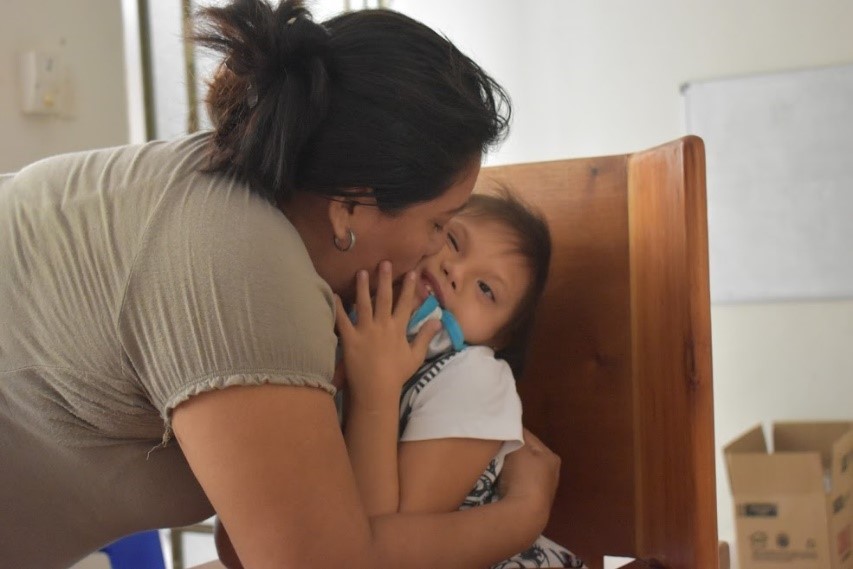
    This past summer Rachel Harmon was selected as a recipient of the 2018-2019 Summer Mamie Phipps Clark Diversity Undergraduate Research Grant from Psi Chi, the international psychology honorary, where she spent several weeks in Mexico working on her project titled, “Cross-Cultural Comparison of Caregiver Concerns and Resources for Children with Disabilities.” 

    Rachel Harmon was in the list of top 11 applications and so Dr. Powell was awarded a faculty stipend as well. 

    A brief interview was done with Harmon to learn more about this project and process: 

    Thank you for taking time to answer some questions, to start off, can you describe what the grant process was like and how you discovered it?  

    I began the grant application process in December of last year but ended up not submitting the grant until the May due date. I heard about the grant through Dr. Powell, who recommended applying, and advised me throughout the process. The grant required me to provide a concise version of my Literature Review and a brief Methodology section, and all the scales that I would use. I found that the grant helped me to determine the specific methodology I would use for my project and helped me to determine the specific scales that I would use. 

    Can you tell me more about your project?  

    The title of my project is “Cross-Cultural Comparison of Caregiver Concerns and Resources for Children with Disabilities”. I have collected both observational and quantitative data in both Mexico and the United States to compare the resources that are available for children with disabilities in each country and how this impacts caregiver stress levels and the emotions they feel, regarding caring for their child with a disability. I originally got the idea for my project when I traveled to Nicaragua the summer before my freshman year. While I was walking through a market in Managua, I saw a woman who was working and had her daughter who had a disability in what we would consider a baby stroller. I have worked a lot with individuals, specifically with children with disabilities and developmental delays, and I was naturally compelled to investigate the topic further.  

    What drew you to Mexico for this project?  

    I was originally supposed to return to Nicaragua for my project, but due to the current political environment, it was not ideal for travel. Jesse Griffin, who serves on the committee of my project knew of several connections that our college has with research facilities and other institutions in the Yucatán. One of the facilities was conveniently across the street from a Centro de Atención Múltiple, which is a government funded special education school, which was a great resource for collecting observational data and distributing surveys.  

     What did a normal day look like for you in Mexico as you worked on this project?

    © Rachel Harmon

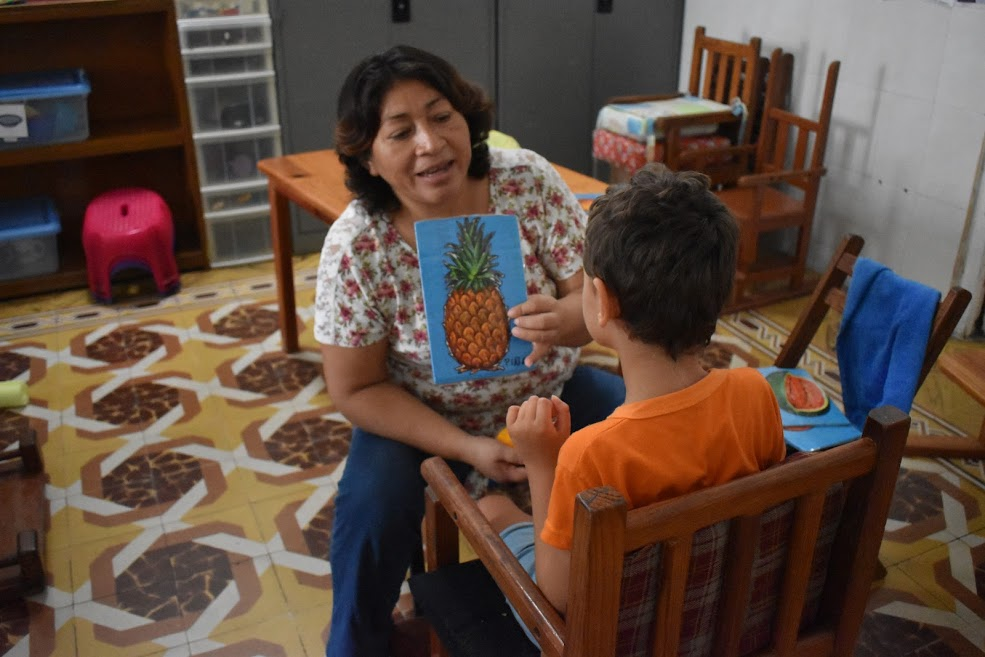
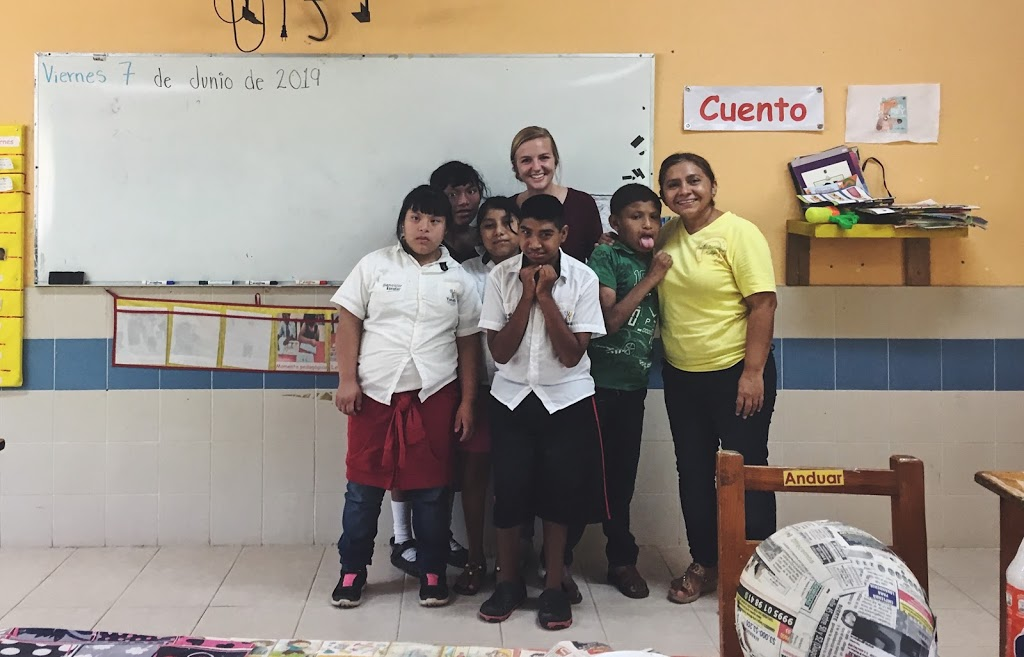
    For the first month I spent in Mexico I was in Oxkutzcab, which was a small, rural town. This was where the C.A.M. school was. Each weekday I would go to the school at 7:30, and I would rotate which classroom I was in each day. The school has seven classes serving student from ages 2-28. Depending on which classroom I was in, I would either observe the class, and participate in class activities, or work one on one with students who needed more individualized attention. The school days in Mexico only last from 7:30 to 12:30, so in the afternoons I would explore or relax, and work on other research tasks.  

    I spent the second month in the capital of the Yucatán, Mérida. Here, I was working with an internationally run non-profit called SOLYLUNA. The organization provides special education opportunities and access to physical therapy, speech therapy, and occupational therapy for children who have a diagnosis of multiple disabilities and their caregivers. The dynamic of the organization was very different than the C.A.M. school, so it was an adjustment. The organization requires that a caregiver accompanies the child for the full day from 7:30-1:30. My job as a volunteer was to assist the parents when needed, and to observe the teachers and therapists. I also worked with the volunteer coordinator and director of the organization to create a document about potential resources to provide for caregivers, and I took pictures for them to use for promotion purposes. Since I was now in a larger city there was a lot more to explore in the afternoons, and I enjoyed travelling on the weekends.  

    You mentioned that you had opportunities to explore while in Mexico, what was the coolest place you visited/most favorite?

    © Rachel Harmon

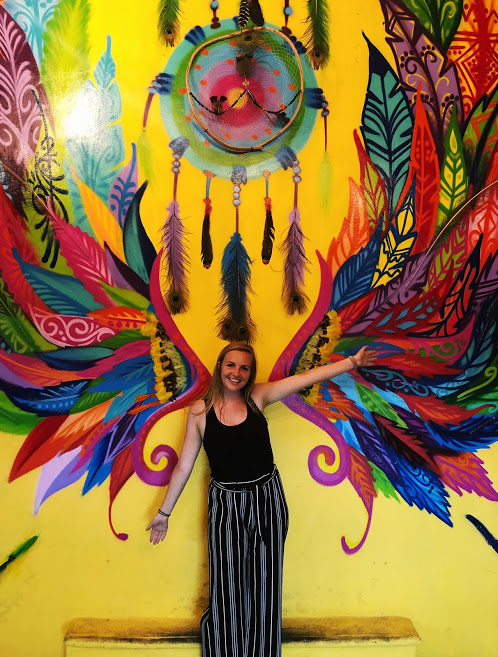
    I did have a lot of time to explore while I was in Mexico, especially on the weekends. I enjoyed exploring nearby towns and venturing further to other landmarks. I think my favorite place I traveled to while in Mexico was Isla las Mujeres. This was an island off the coast of Cancún, where we were able to hear lots of live music, enjoy the beach, and go snorkeling. I met a group of other students from Millsaps College, in Mississippi while I was there, and I enjoyed traveling with them and meeting them at different places on some weekends.   

    If given the opportunity would you go back and work, there again?  

    © Rachel Harmon
    © Rachel Harmon

    Absolutely! While I was there, I formed a lot of connections with the kids, caregivers, teachers and therapists that I was working with and I would love to see them again (I miss them a lot)! It was hard to leave such amazing people, and such an amazing place.   

     Is there anything else you would like us to know?  

    Overall, my experiences in Mexico taught me more than I could have ever imagined. I especially learned a lot about collecting data in another culture, which is an experience I consider myself lucky to have had at this point in my academic career. Whether it is through research, or a different study abroad program, I highly recommend spending time in another country to everyone, because it allows you to learn so much about yourself and the world.  

    Congratulations again to Rachel Harmon and Dr. Powell and thank you for taking time to answer some questions!

    . 

    . 

    . 

    Get Connected!

    Bloghttps://psych.pages.roanoke.edu/
    Facebookhttps://www.facebook.com/rcpsychology
    Twitter: @RC_Psychology
    Linked In: https://www.linkedin.com/groups/RC-Psychology-8140491/about
    Website: https://www.roanoke.edu/inside/a-z_index/psychology
    Instagram: rcpsychology


  • JOIN DR. POWELL AT THE MAY TERM TRAVEL EXPO THIS THURSDAY!

    Are you interested in taking a class in another part of the world? If so, come out to the Ballroom this Thursday, September 5 between 12 – 1 pm to hear about the awesome May Term Travel courses being offered this coming spring! Dr. Powell will be there sharing information on the course she is teaching, IL 377: Emerging Adults in Thailand – A Cross-Cultural Society, which counts as an elective for those in the Human Development concentration but is also a wonderful opportunity for all those interested in human development. Other faculty will be sharing about their courses that are also being offered as well!

    . 

    . 

    . 

    Get Connected!

    Bloghttps://psych.pages.roanoke.edu/
    Facebookhttps://www.facebook.com/rcpsychology
    Twitter: @RC_Psychology
    Linked In: https://www.linkedin.com/groups/RC-Psychology-8140491/about
    Website: https://www.roanoke.edu/inside/a-z_index/psychology
    Instagram: rcpsychology
  • How the Psychology Department Celebrated April Fools 2019

    Dr. Camac and Ellen Dyer laughing at something Dr. Osterman said

    Walking past the elevator, you might notice the new pictures for the faculty members, where their representations if they were South Park characters have been carefully designed by the Master of Photoshop, Dr. Lindsey Osterman.

    Further in to the Psychology Department, you might notice the googly eyes staring back at you from Dr. Osterman’s door frame. If you walk inside her office, you will quickly realize that you are being stared at from multiple googly eyes, including those on her phone, lampshade, chairs, books and the different memes she has on her walls for decoration.

    “They missed a few good opportunities. I’m kind of disappointed,” said Dr. Osterman as we examined her room a few weeks ago and found more and more googly eyes.

    The Googly Eyed April Fools Prank

    If you were part of Dr. Allen’s class, you were likely suddenly told that you had an exam without any previous mention and were given a link that took you directly to a certain music video titled “Never Gonna Get Over You.”

    You were properly rickrolled.

    This is how the Psychology Department celebrated April Fools Day 2019.

    What will happen next year? No one knows, but that’s the fun of it.

    Dr. Osterman confirmed that she is already planning her revenge.

    Want to see what happened last year, including another tale of revenge that occurred after years of planning? Click here.

    .

    .

    .

    Get Connected!

    Bloghttps://psych.pages.roanoke.edu/
    Facebookhttps://www.facebook.com/rcpsychology
    Twitter: @RC_Psychology
    Linked In: https://www.linkedin.com/groups/RC-Psychology-8140491/about
    Website: https://www.roanoke.edu/inside/a-z_index/psychology
    Instagram: rcpsychology
  • Dr. Powell’s Research Lab at SRCD Conference 2019

    Image result for srcd 2019
    Click on the image to go to SRCD’s official website.

    Overview:

    The second part of the blog posts discussing the students and professors who traveled to Baltimore on March 21st through 23rd to present research at the Society for Research in Child Development Biennial Conference, this post will focus on Dr. Powell’s Research Lab.

    Students and professors presented research through six different poster presentations, as well as one essay presentation that was part of a symposium. Dr. FVN and Dr. Powell presented one poster together, titled “Variations on a Lifespan Development Project Intended to Enhance Quality of Student Outcomes and Reflection of Reality.”  Dr. Buchholz’s and Dr. FVN’s labs collaborated to present their work on “Early Adolescent Cognitive and Affective Empathy: Direct and Interactive Ties to Social-Emotional Adjustment.”

    The students who traveled include: Taylor Kracht ’18 (alumna; Dr. Powell’s lab), Cody Dillon-Owens ’19 (worked with both Dr. FVN and Dr. Buchholz; officially part of Dr. Buchholz’s lab), Aislinn Foutz ’19 (Dr. FVN’s lab), Kiah Coflin ’19 (Dr. Powell’s lab), Ciprianna Azar ’19 (Dr. FVN’s lab), Rachel Harmon ’20 (Dr. Powell’s lab) , and Alaina Birkel ’21 (Dr. Powell’s lab).

    Descriptions of the presentations have been included to learn more about the types of research the two labs are doing.

    Left to right: Dr. Powell. Alaina Birkel, and Taylor Kracht

    Dr. Powell’s Research Lab

    Statements: 

    Dr. Powell: 

    The first disciplinary conference that I attended was SRCD during my senior year of college. I was not presenting that year, but rather I tagged along with the faculty member and graduate students with whom I was working. I am very appreciative that Roanoke College also supports undergraduates to attend and present at disciplinary conferences! Hearing the students enthusiastically discuss the scholars they heard from and the ideas it provoked related to their research between sessions and over group dinners is exactly why I encourage my research assistants to attend a disciplinary conference.

    SRCD’s biennial conference is quite large and so it can be difficult choosing between sessions to attend, as so many overlap at a single time. However, I was able to attend several that are related to my research agenda as well as a few related to topics that I teach in my Life-Span and Child Development courses. Another thing that I make it a point to do at conferences is to reconnect with colleagues. My Alma mater, WVU, hosted a social for current students and alumni of their developmental program, and I was able to grab lunch with a few other colleagues. It was enjoyable catching up with them and updating each other on the status of our careers.

    Left to right: Dr. Powell, Rachel Harmon, and Kiah Coflin

    Kiah Coflin ’19: 

    This year’s biennial SRCD conference was held at the Baltimore convention center and it was huge! I have attended a poster presentation before, but my expectations were exceeded by SRCD, its number of intriguing speakers and talk topics, and its overall expanse across the convention center. It was certainly unique to see so many approaches to childhood and development, and an incredible experience to network with other students, professors, and scholars!

    Personally, I presented a poster with my fellow lab mate, Rachel Harmon, on preliminary data exploring the impact of short-term, study-abroad programs on the Intercultural Competencies (ICCs) of Emerging Adults (EAs)… AKA I got to talk about my amazing May Term! We discussed the changes my May Term class perceived in our ICCs from a month before our trip, the middle of our trip, and a week after we returned. Our poster was well received and many were interested in how the data collection will progress when Dr. Powell continues to bring more students on future May Terms to Thailand!

    Who says conferences can’t be fun? – Left to right: Kiah Coflin, Rachel Harmon, Alaina Birkel, and Dr. Powell

    Posters:

    Overall, there were three posters presented from this lab, though one was presented by Dr. FVN and Dr. Powell.

    This particular poster was presented at the “Developmental Teaching Institute pre-conference on possible modifications to the life-span paper project.”

    Left to right: Dr. Powell and Dr. FVN

    The other two posters were presented by students and Dr. Powell. As mentioned above, Kiah Coflin, Dr. Powell, and Rachel Harmon discussed their findings in conjunction with Dr. Nipat Pichayayothin of Chulalongkorn University “on the development of students’ intercultural competencies” during their May Term course to Thailand in 2017.

    The other poster was presented by Taylor Kracht (an alumna, now studying at William & Mary), and Alaina Birkel, who presented a poster based on Kracht’s “Honors in the Major project at the conference on how emerging adults’ implicit theories of relationships can be modified after watching certain types of romantic media.”

    .

    .

    .

    Get Connected!

    Bloghttps://psych.pages.roanoke.edu/
    Facebookhttps://www.facebook.com/rcpsychology
    Twitter: @RC_Psychology
    Linked In: https://www.linkedin.com/groups/RC-Psychology-8140491/about
    Website: https://www.roanoke.edu/inside/a-z_index/psychology
    Instagram: rcpsychology