Dr. Powell’s Interpersonal Relationships course discusses family, peer, and romantic relationships. Delving into the science of relationships, students read an empirical article related to the day’s topic and then discuss the article, as well as other research, on the day’s topic in class. Throughout the semester, students are assisted in the development of an infographic on a topic of their choosing. A sampling of the infographics completed by the students this past fall semester are shared below!
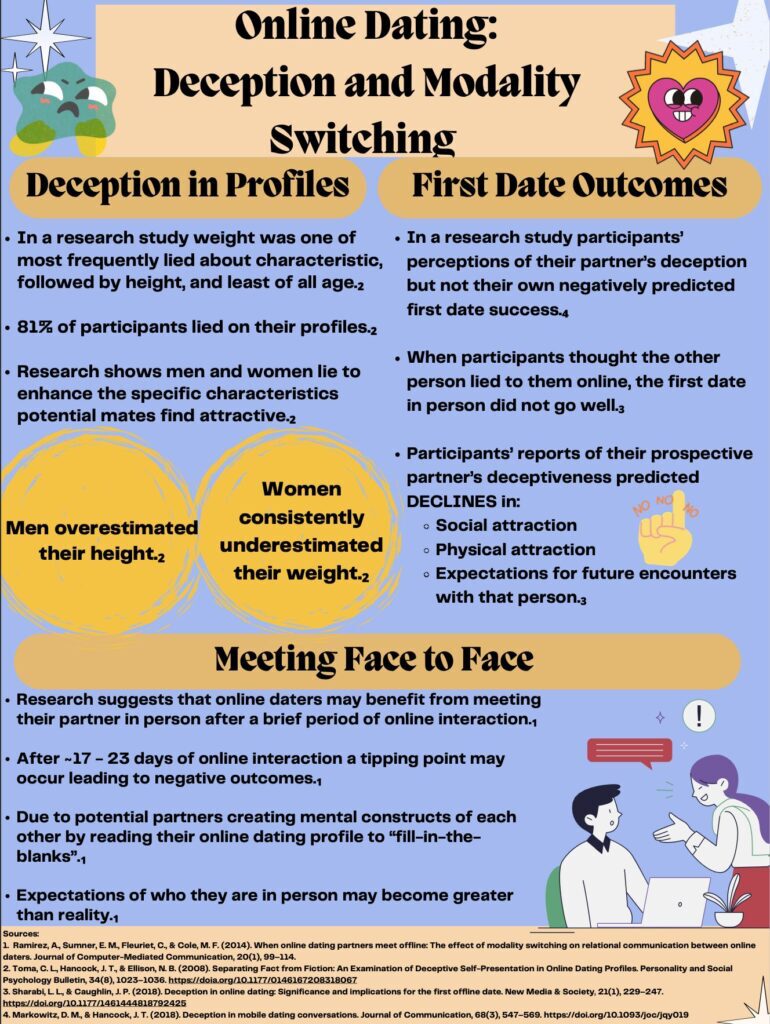
Christopher Resendiz’ Infographic, “Online Dating: Deception and Modality Switching”
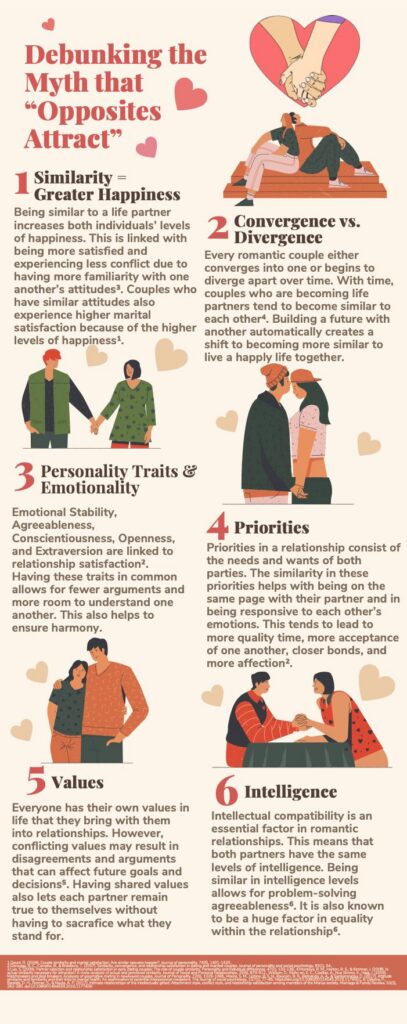
Sydney Wagner’s Infographic, “Debunking the Myth that ‘Opposites Attract’”
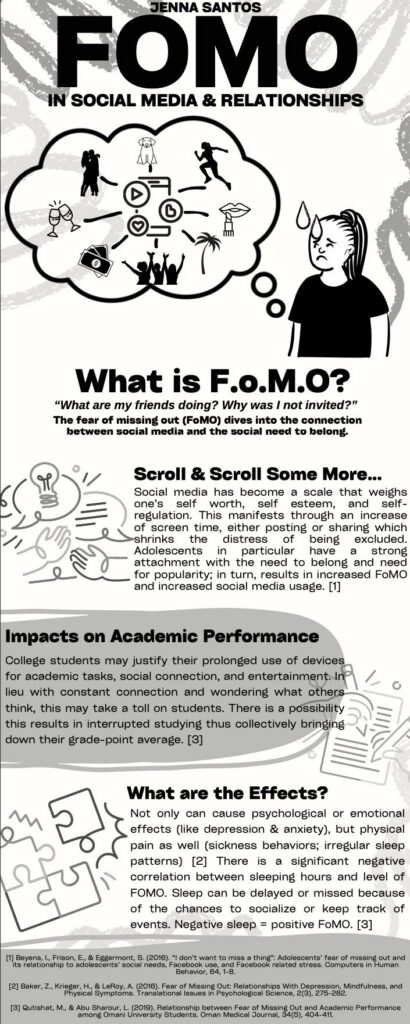
Jenna Santos’ Infographic, “FOMO In Social Media & Relationships”
Interested in graduate school? If so, the APA Education Directorate has announced that they will be hosting a Virtual Psychology Graduate School Fair on Wednesday, April 17th from 12pm-4pm! This may be 3 months away, but save your spot by registering today! Registration for all prospective psychology graduate students is FREE through this link.
Students who register will have the opportunity to meet virtually with recruiters from any of the participating programs during the event hours. Individuals can come for a short time and meet with a select few recruiters or stay for the whole event and meet with everyone, depending on their schedule and interest. Similarly, participating graduate schools will be able to contact registered student both before and after the event to distribute information about their program or to arrange meetings with prospects at the event.
Goals of The Event:
APA intends to virtually connect graduate psychology programs with a diverse group of students seeking to further their education beyond their current degree. The APA Psychology Graduate School Fair is open to all graduate psychology degree (MA/MS/PsyD/PhD/EdD/Other) granting institutions in the U.S. and Canada, and all areas of psychology are encouraged to participate, including health service psychology, scientific and applied psychology, and general psychology programs.
Recent Roanoke College graduate, Maryam Nishtar, was recently published based on research that she completed during Summer Scholars and for her Honors in the Major! Her and Dr. Nichols had worked on this research through her time at Roanoke, but she has been working on it independently since her graduation last spring. What an achievement this is for you, Maryam! Find the full article published here, and the abstract below.
Abstract:
Alzheimer’s Disease (AD) is a progressive, neurodegenerative disorder where two-thirds of the affected population are women. Along with cognitive impairments, AD is associated with behavioral changes such as aggression towards caretakers. The limbic system consists of various brain structures that play a role in emotions and behavioral reactions. Some of the limbic system- related areas are the amygdala, hippocampus, thalamus, corpus collosum (CC), and white matter (WM). Cognitive changes with AD can be measured using the clinical dementia rating (CDR) scale. Physical changes in living patients require brain imaging tools, such as Magnetic Resonance Imaging (MRI). As there is currently sparse research present for these areas relating to the female brain, we used clinical data and FreeSurfer-processed imaging data from an open-access database, OASIS-3, to explore the associations between dementia severity and the volume of the limbic system-related brain components in women. A control group consisted of participants with no dementia and multiple brain scans while comparison groups consisted of participants with a single brain scan and 1) no dementia 2) mild dementia or 3) moderate/severe dementia. Hemisphere differences with increasing CDR were found for the thalamus as well as simple hemisphere differences for the hippocampus, thalamus, and WM. When using age-matched controls and normalized volume data, the amygdala, hippocampus, thalamus, and CC volumes for subjects with AD were different than those in the control group, with the amygdala and hippocampus also showing statistically significant volume loss with increasing dementia severity. As the areas included in this study are related to the limbic system, this provides insight into the physical changes occurring in the brain of women with increasing AD, who often show changes in emotions. This can be an area to longitudinally explore whether there are associated behavioral changes as physical changes at the individual level occur over time.
Our very own Roanoke alum and now professor, Dr. Kennedy-Metz, has been published! Her collaborative work entitled “Behavioral sciences applied to acute care teams: a research agenda for the years ahead by a European research network” was released by the BMC Health Services Research journal. Congratulations, Dr. Kennedy-Metz, on this wonderful accomplishment! Please read the abstract below, or view the article here.
Abstract:
Background: Multi‑disciplinary behavioral research on acute care teams has focused on understanding how teams work and on identifying behaviors characteristic of efficient and effective team performance. We aimed to define important knowledge gaps and establish a research agenda for the years ahead of prioritized research questions in this field of applied health research.
Methods: In the first step, high‑priority research questions were generated by a small highly specialized group of 29 experts in the field, recruited from the multinational and multidisciplinary “Behavioral Sciences applied to Acute care teams and Surgery (BSAS)” research network – a cross‑European, interdisciplinary network of researchers from social sciences as well as from the medical field committed to understanding the role of behavioral sciences in the con‑text of acute care teams. A consolidated list of 59 research questions was established. In the second step, 19 experts attending the 2020 BSAS annual conference quantitatively rated the importance of each research question based on four criteria – usefulness, answerability, effectiveness, and translation into practice. In the third step, during half a day of the BSAS conference, the same group of 19 experts discussed the prioritization of the research questions in three online focus group meetings and established recommendations.
Results: Research priorities identified were categorized into six topics: (1) interventions to improve team process; (2) dealing with and implementing new technologies; (3) understanding and measuring team processes; (4) organizational aspects impacting teamwork; (5) training and health professions education; and (6) organizational and patient safety culture in the healthcare domain. Experts rated the first three topics as particularly relevant in terms of research priorities; the focus groups identified specific research needs within each topic.
Conclusions: Based on research priorities within the BSAS community and the broader field of applied health sciences identified through this work, we advocate for the prioritization for funding in these areas.
It is with great enthusiasm that we announce the achievement of Raegan Middelthon, a senior in the psychology department! She has been awarded a 2023-24 Fall Undergraduate Research Grant from Psi Chi, the International Honor Society in Psychology. Her research proposal titled “The Influence of Tik Tok on Perceptions of Relationships: Is Tik Tok Associated with Relationship Dissatisfaction, Sexism, and the Desire for a Partner”, has earned a well-deserved place among the select few recognized by the Psi Chi Grants Committee and the Board of Directors. She has been working with Dr. Buchholz on this project, and they were even given the opportunity to present their research at a recent conference!
Psi Chi is contributing $1,500 to Raegan’s research project, aimed to unveil the influence of social media, and its potential impact on relationship perceptions. The psychology department echoes our sincerest congratulations to both Raegan Middelthon and Dr. Buchholz. Their dedication to advancing psychological research is commendable and inspiring!
Are you interested in doing research while studying at Roanoke? Talk to your psychology advisor to learn more about the opportunities that await you!
Renewable $5,000 and $10,000/year Scholarships for future Teachers, Counselors, Social Workers, Psychologists, and Nurses.
The Essential Visionaries Scholarship is awarding 100 renewable scholarships to help students pursuing degrees in Education, Counseling, Social Work, Psychology or Pre-Nursing/Nursing.
To apply applicants must:
Be high school seniors or graduates or current college undergraduates in the United States
Plan to enroll in part-time or full-time undergraduate study at an accredited two- or four-year college, university or vocational-technical school for the entire upcoming academic year
Be seeking a degree or certificate in Education, Counseling, Social Work, Psychology or Pre-Nursing/Nursing
Demonstrate Financial Need
Have a minimum grade point average of 2.5 on a 4.0 scale (or its equivalent)
To learn more and apply, click here.Deadline to apply is January 8, 2024.
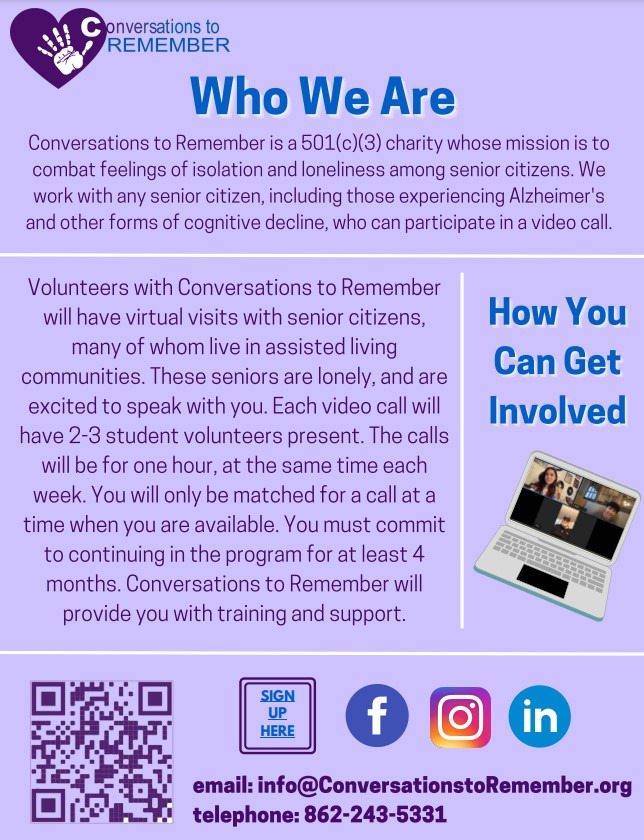
Conversations to Remember is a 501(c)(3) nonprofit, dedicated towards combating loneliness and isolation felt by senior citizens. The organization has created a virtual visit program which 2-3 college students with residents of long-term care, assisted living, and memory care communities for virtual video visits.
These residents have been suffering from isolation, and you could really brighten their days just by speaking with them. Conversations to Remember provides training and support throughout your service. Since these visits are virtual, you can do it without any travel! This is both convenient, and allows more of your valuable time to be spent volunteering, rather than commuting to the volunteering location. This program is offered free of charge to seniors across the country, and there are active student volunteers from around the country as well.
Typically, you will volunteer 1-2 hours per week. Each call lasts up to one hour, based on the senior’s attention span and mood on each day. Conversations to Remember expects students to volunteer for approximately 16 weeks, so that you can build a friendship with the senior. This does not need to coincide with the start of a semester, as new seniors start all the time, and new volunteers are trained weekly. Volunteers are matched based on the times that they’re available, with a senior who is available at the same time, and they will have a regular, weekly appointment for their visit. Students wishing for more visits or other opportunities that allow them to volunteer more frequently can be accommodated with different ways to volunteer, such as assisting us with the organization’s social media, call support, or outreach.
Please feel free to look through the organization’s website here. You can register to volunteer by filling out a volunteer interest form here.
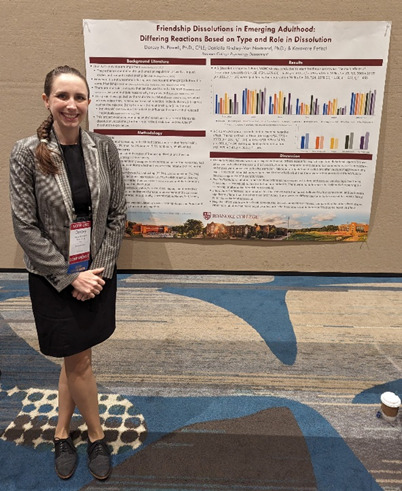
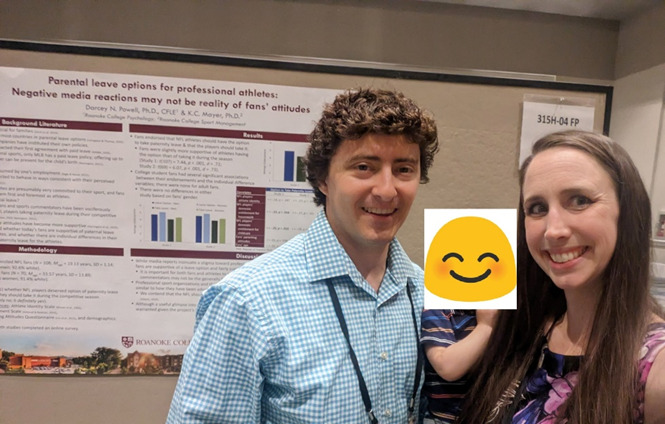
The psychology department is excited to share a glimpse into a recent conference experience that not only showcased a depth of academic exploration but also highlighted the power of collaboration and shared passion. This year Dr. Powell presented the work of herself and co-authors, Dr. FVN, and Kosovare Fetinci (’23) at the National Council on Family Relations (NCFR) 2023 Annual Conference in Florida. She also presented a second research poster with Dr. Mayer (sport management), and their son!
The above image displays on a remarkable poster featuring Dr. Powell and co-authors, Dr. FVN and, Roanoke alum, Kosovare Fetinci (’23). The collaborative effort was rooted in Kosovare’s senior independent study project, a testament to the dedication and enthusiasm that students bring to their academic endeavors. The title of the project was “Friendship Dissolutions in Emerging Adulthood: Differing Reactions Based on Type and Role in Dissolution”.
A second presentation by Dr. Powell was a joint effort with Dr. Mayer, a dynamic combination of expertise that undoubtedly brought a unique perspective to the conference. What’s even more special is that their son joined in on the presentation, turning it into a family affair! This research was titled “Parental Leave Options For Professional Athletes: Negative Media Reactions May Not Be Reality of Fans’ Attitudes”
The great positive feedback received from fellow conference attendees is a testament to the quality and impact of their work. It’s always gratifying when your efforts are not only recognized but also appreciated by your peers. The exchange of ideas and the validation of hard work create an inspiring environment that fuels further academic exploration. Conferences are a great way to expand your knowledge and share your research!
In addition the two noted presentations, Morgan Hamilton’s (Roanoke alum, ’21) oral presentation based on her master’s thesis was also a great success. Titled “Now I understand who I am and where I came from: The tribal reunification of indigenous fostered/adopted relatives,” Morgan’s presentation delved into a crucial and often overlooked aspect of identity and belonging. Congratulations Morgan – you are absolutely representing the Roanoke psychology department well!
As we reflect on these academic triumphs, let us celebrate the dedication, passion, and collaborative spirit that drive the pursuit of knowledge. To all the authors and presenters of the NCFR conference, congratulations!
Please consider this amazing opportunity for mentored studies and career development! The program focuses on supporting undergraduate students who are looking to pursue graduate work or a career in adolescent development. You can find the link to more information and the application at the bottom of this post.
IT’S TIME TO APPLY FOR THE 2024 UNDERGRADUATE SCHOLARS PROGRAM! The Undergraduate Scholars Program is designed to support junior and senior undergraduate students from racial/ethnic minority groups in North America to pursue graduate work and careers in adolescent development. Selected scholars attend the SRA Annual Meeting and participate in special activities that focus on careers in adolescent research, applying to graduate school and funding, curriculum vitae workshops, and navigating the Annual Meeting. The Undergraduate Scholars will receive mentorship from graduate students and senior scholars who are active in the field of adolescent research. Junior/senior undergraduate students from North America who are interested in pursuing a career in the field of adolescence and are a member of an underrepresented ethnic/racial minority group (African American, Latino/Hispanic, Native American/American Indian, Asian and/or Pacific Islander) are eligible. Applicants must become SRA members.
As a scholar, students will: – Attend the SRA Annual Meeting, including Undergraduate Scholars Program events. – Receive complimentary travel to the meeting and hotel accommodations. – Receive mentorship by graduate students and senior scholars before, during, and after the meeting. – Maintain contact with mentors before, during, and after attending the meeting. – Keep the SRA office informed of contact information for five years following the meeting.
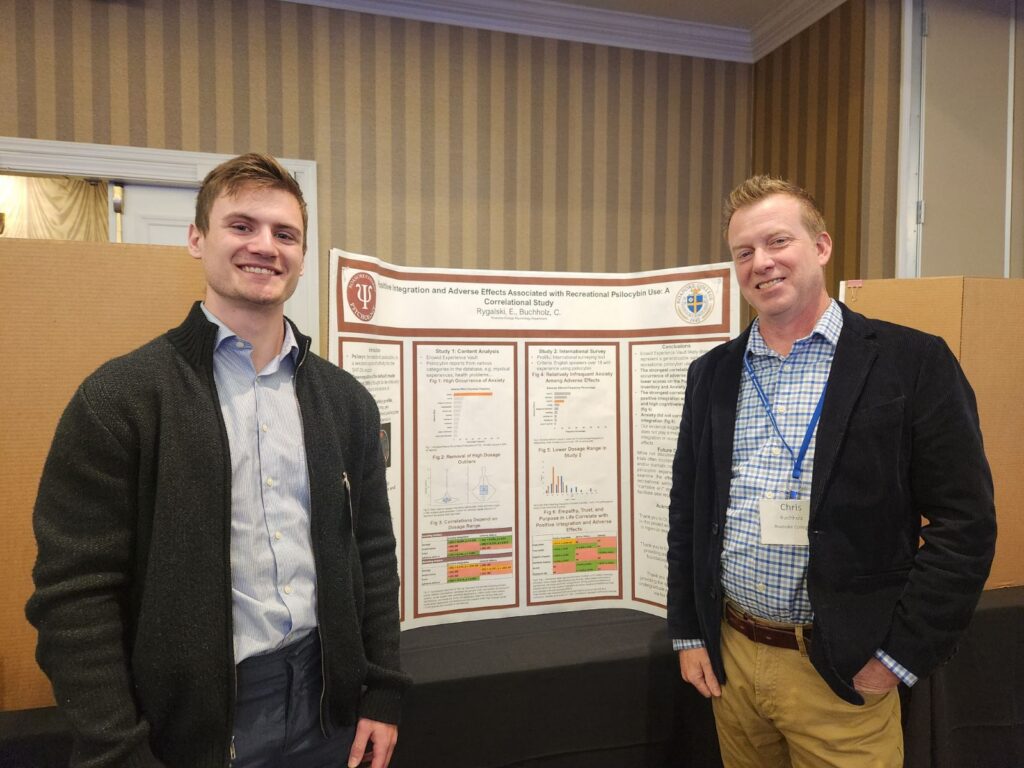
The image above depicts Eddie Rygalski (left) and Dr. Buchholz (right) presenting their research during the poster session. All featured Roanoke authors included: Eddie Rygalski, Reagan Middelthon, Dr. Findley-Van-Nostrand, Dr. Carter, and Dr. Buchholz.
Over this past weekend, the Roanoke College psychology department was represented well at the Society of Southeastern Social Psychologists (SSSP) 2023 Annual Conference in Charlotte, NC. Two students and three faculty members were named authors on research presented during the conference. Congratulations to all of our presenters, the psychology department commends you for your excellent research and dedication to the field. Please find their research titles and abstracts below.
PERSONALIZED ACCOUNTS OF HARM LEAD TO INCREASED EMPATHY FOR WOMEN WHO HAVE SUFFERED BECAUSE OF THE OVERTURNING OF ROE V. WADE (Raegan Middelthon, Eddie Rygalski, and Dr. Chris Buchholz) Many women have been harmed by the limitations placed on abortion after the overturning of Roe v. Wade. Research in empathy has pointed to a spotlight effect, where we feel more empathy in response to personalized accounts of suffering than more generalized accounts. In this study, we randomly assigned participants to read a personalized account of a woman who suffered medical complications because of the restrictive nature of abortion access in her state, a more generalized account, or a control group. As expected, liberals expressed significantly higher levels of empathy for women who have suffered as a result of the overturning of Roe v. Wade. We also found a significant effect for condition, where the highest empathy was reported for the personalized story followed by the generalized story and finally the control group. This pattern held up for conservatives; they reported significantly more empathy when they read the personalized story. Women expressed significantly more empathy than men. Interestingly, women expressed high levels of empathy regardless of which story they read, while men reported the highest empathy for the personal story.
POSITIVE INTEGRATION AND ADVERSE EFFECTS ASSOCIATED WITH RECREATIONAL PSILOCYBIN USE: A CORRELATIONAL STUDY (Edward Rygalski and Dr. Christopher Buchholz) This exploratory study sought to determine the relationship between positive integration of the psilocybin experience, occurrence of adverse effects, dosage, and factors including age, gender, as well as a variety of other measurements. Clinical literature suggests that psilocybin, when paired with psychotherapy, is a relatively safe and effective treatment for conditions such as depression, anxiety, and addiction. As many people use psychedelics outside the clinic, we sought to determine whether predictors of adverse events and positive integration were consistent between clinical and recreational use. Using two studies, first a content analysis of online reports, and second an international survey of those with experience with psilocybin, we determined that doses greater than 5g expose individuals to increased and unnecessary risk and that a lack of trust in co-present individuals may exacerbate adverse effects. Finally, we found that those who scored higher on measures of empathy tended to also report positive integration, and those who scored lower on measures of purpose in life reported more adverse effects. However, directional causality remains unresolved.
FACT OR FICTION: DO FACIAL AUGMENTATION FILTERS ON TIK TOK IMPACT SELF ESTEEM AND PERCEPTIONS OF ATTRACTIVENESS? (Raegan Middelthon, and Dr. Christopher Buchholz) The popular social sharing app “Tik Tok” has become a cultural staple. Alongside its increasing popularity, public concern has risen over its unique hyper-realistic facial augmentation filters. Many users have claimed that these filters are facilitating the creation of unattainable beauty standards, and damaging self esteem. While work has been done exploring social media’s role in these areas, to our knowledge, the current study is the first to explore the impact of Tik Tok’s filters on self esteem and the perception of both individual and others’ attractiveness. In a series of 3 studies, we presented subjects on Prolific with women in filtered and unfiltered videos. Though many are worried that users cannot detect a filter on a video, we found that users were generally able to tell when one was being used. The presence of a filter did not impact ratings of self attractiveness. However, we discovered that men’s state self esteem was negatively affected when confronted with filtered videos; this effect was not found in women, contrary to our hypothesis. Filtered videos were also rated as more attractive, mainly due to male ratings.
SHORT-TERM LONGITUDINAL ASSOCIATIONS AMONG YOUNG ADULTS’ SOCIAL GOALS, RELATIONAL AGGRESSION, FORMS OF PROSOCIAL BEHAVIORS, AND SELF-PERCEIVED STATUS (Dr. Danielle Findley-Van Nostrand) Adolescent relational aggression (RA) is consistently related to popularity and status striving, and adolescent use of prosociality for self-gain is related to higher striving for status and peer-reported popularity, whereas prosociality aimed at benefitting others is related to higher communal motives and being liked by peers. Emerging adults also experience RA by peers, and show distinctive use of forms of prosociality. However, these peer dynamics are not well-understood in emerging adults. The present study tested whether social goals for popularity and social preference predict changes in self-reported RA and forms of prosocial behaviors (altruistic and public forms) across two time points, 8 months apart (data collected via Prolific; N=215; using existing and reliable assessments). Path modeling found popularity goals predict increases in RA and public prosociality and decreases in altruistic prosociality, whereas preference goals show the inverse of each of these associations over time. RA partially mediated effects of both popularity and preference goals at T1 on dominance at T2. Results suggest that use of RA for enhancing peer social status is not limited to adolescence.
REFLECTING ON EXPERIENTIAL PURCHASES HAS DOWNSTREAM CONSEQUENCES ON COGNITION (Dr. Travis Carter) Prior research has found that experiences tend to be more satisfying than material possessions in part because they are more closely associated with the self-concept. The present studies aim to examine whether spending some time reflecting on material or experiential purchase would impact downstream cognitive processing. In Study 1, participants who first reflected on an experience, rather than a possession, exhibited more global (vs. local) processing of stimuli on the Navon (1977) letter task. In Study 2, after a purchase reflection, participants performed an approach/avoidance task, using a joystick to categorize trait words as positive or negative. There was an interaction such that participants in the experiential condition were generally faster to categorize self-relevant traits across trial types. However, material participants were only faster to categorize self-relevant traits on the congruent trials, but not incongruent trials. Thus, the act of reflecting on a recent experiential (vs. a material) purchase had downstream consequences on cognitive tasks: participants adopted a more global mindset (Study 1) and processed self-relevant stimuli more quickly (Study 2).
Because of involvement like this, the psychology department at Roanoke College remains well-renowned. Congratulations, again, to all of our presenters!