Category: Undergraduate News

  • Paranoia and Attitudes on Covid-19 Health Guidance

    Alise Bennett, Savannah Brown, Emily Gabrielian, & Alyssa Mattson (Advisor: Dr. Chris Buchholz)

    Background

    A little over a year ago, our world was quickly turned upside down once the news broke that we were heading into a global pandemic due to the coronavirus. With the rise of the pandemic, we also saw a rise in beliefs in conspiracy theories related to the coronavirus. COVID-19 skepticism became extremely present across the United States as some people demonstrated that they did not believe in the seriousness of the virus or that the pandemic was a hoax (Latkin et al., 2021). Recent research has demonstrated that COVID-19 skepticism is strongly associated with a decrease in engagement in COVID-19 prevention behaviors, such as isolating at home, social distancing, and wearing a face mask (Latkin et al., 2021).

    Additionally, the research conducted on COVID-19 skepticism noted that the skepticism was associated with political conservation because there was a relationship between the sources of news that individuals consumed, the negative attitudes towards government spending on public health, and believing in conspiracy theories (Latkin et al., 2021). This current study aims to examine the relationship between paranoia levels and compliance in COVID-19 guidelines, such as wearing facial coverings and social distancing, in order to better understand the conspiracy theories surrounding the coronavirus. The possible limitations that may be present throughout this study are that we used a convenience sample from the Roanoke College student population, meaning that our data is not representative of the general population. Additionally, it is possible that when we were analyzing the data that we overlooked certain responses that may have been associated with the objective of the study. Overall, the findings of this study may reveal how paranoia contributes to these greater sociological problems as well as how to effectively address conspiratorial thinking as it affects our daily lives.

    Method

    Participants. 96 participants were sourced from either INQ-260 Psychology or Psychology 101 classes at Roanoke College. The students were notified about the survey through SONA, a subject pool software, and were given credit for completing the survey thoroughly and fully.

    Materials. We used a survey platform called Qualtrics to build and conduct the following survey:

    • Experimental condition: Participants were assigned to one of two conditions: an experimental condition (a short video from John Hopkins University on COVID-19 vaccinations), or a control condition (a short video from Harvard University on mindfulness.)

    Following the video, all participants were directed to the main survey:

    • Paranoia scale: a 10-item scale assessing paranoid tendencies.
    • Dark triad scale (Jonastan and Webster, 2010): a 12-item scale assessing the three dark triad traits, such as narcissism, Machiavellianism, and psychopathy.
    • Covid Compliance scale: an 11-item scale created based on the Health Belief Model assessing compliance with COVID-19 public health guidance. Additional questions included whether participants had previously contacted COVID-19 and their access to protective measures.

    Procedure. The survey was live for a roughly three-week period. The participants were randomly assigned to one of two experimental conditions (videos). After finishing the video, participants will move on to the questionnaire part of the survey. In this section, participants will answer a series of questions ranging from personality and paranoia to questions regarding COVID-19 prevention practices engaged in. At the end of the survey, participants were given the option to redirect to another survey to enter personal information to receive credit. Following the data collection period, data was analyzed and interpreted by our group.

    Results

    A 2 x 2 between-subjects analysis of variance (ANOVA) was conducted to examine the effects of paranoia on compliance with COVID-19 public health guidance. It was predicted that participants who viewed the vaccination video would be more likely to respond positively to questions relating to compliance with COVID-19 guidelines. A second hypothesis suggested that those who score high in paranoia will score low in compliance to COVID-19, given a perceived tendency towards conspiratorial thinking and a resulting mistrust or disbelief in the effectiveness of COVID-19 preventative measures.

    Our results indicated that the experimental condition (watching the John Hopkins University on COVID-19 vaccinations) did not significantly improve compliance with COVID-19 guidelines. As shown in Figure 1, those low in paranoia did show increased compliance with COVID-19 preventative measures; however, this difference was not statistically significant.
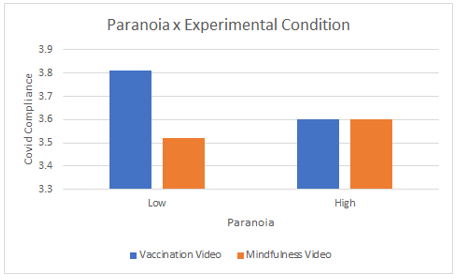
    Figure 1. Experimental condition and paranoia on compliance with COVID-19 public health guidance.

    Between both experimental conditions, narcissism and psychopathy were two dark personality traits found to be significant in compliance with COVID-19 guidelines. Those scoring high in narcissism were most likely to report low compliance with COVID-19 public health guidance (see Figure 2). Similarly, those high in trait psychopathy had much lower compliance with COVID-19 protective measures (see Figure 3).
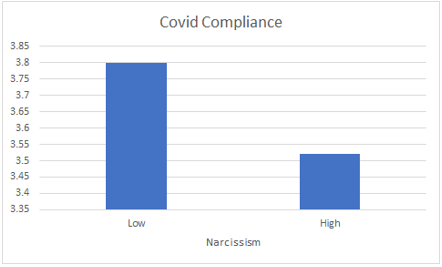
    Figure 2. Experimental condition and paranoia on compliance with COVID-19 public health guidance.
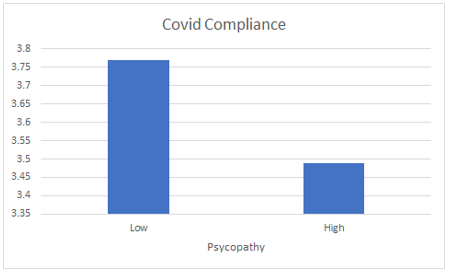
    Figure 3. Psychopathy and paranoia on compliance with COVID-19 public health guidance.

    While our main hypotheses could not be confirmed by this study, our exploratory variables yielded results in line with our predictions. One may attribute our findings to the multiple ways in which paranoia might play out given the context of COVID-19. For example, someone scoring high in paranoia may score low in compliance given a mistrust in these guidelines, or high in compliance given anxiety around contracting the virus. Regarding our experimental conditions, perhaps a short video, regardless of context, is not a “strong enough” stimulus to influence how people would respond to survey questions relating to an event such as COVID-19.

    In contrast, our findings suggest that individuals high in narcissism and psychopathy are more likely to disregard COVID-19 public health guidance, in line with behaviors generally observed from individuals with these traits. In the case of narcissism, a preoccupation with one’s own interests, regardless of the consequences or harm it may cause others, may explain this relationship. A general disregard for others and their safety may characterize this relationship as applied to psychopathy.

    Reflection

    After completing this assignment, as a group, we have a better understanding of research methods overall. While we have participated in other experiments, now we more fully grasp how to design an experiment, clean and analyze data, and write formally for research. Essentially, this class allowed for the hands-on application of the knowledge we learned over our college careers. Additionally, we believe that it may be beneficial if this study was replicated in order to see if our results would be significant or stay the same. It is certainly possible that our participants were only completing our survey for credit in their course, which may have resulted in students not taking the time to provide complete answers to our questions.

    Conclusion

    The main findings of this study indicate that the Roanoke College students that participated in the survey demonstrated that paranoia had an effect on compliance to COVID-19 guidelines; however, this finding was not significant. Additional findings indicate that the relationship between both experimental conditions and the two dark personalities (narcissism and psychopathy) and compliance to COVID-19 guidelines was found to be significant. Moving forward, academic institutions may be interested in expanding upon this study in order to further understand the association between beliefs in conspiracy theories about COVID-19 and paranoia in order to see if there is a significant relationship. Additionally, it would be very interesting if academic institutions also conducted future studies on the association between narcissism and psychopathy and beliefs in conspiracy theories about COVID-19.

    References

    Latkin, C. A., Dayton, L., Moran, M., Strickland, J. C., & Collins, K. (2021). Behavioral and psychosocial factors associated with COVID-19 skepticism in the United States. Current Psychology, 1-9. doi: 10.1007/s12144-020-01211-3.

  • The Effects of Music Genres on Aggression

    Luke Harbison, MaryDrew Collier, Hunter Andrews,  and                    Alice Chandler (Advisor: Dr. Buchholz)

    Background Information

    Why are people inclined to form mosh pits at heavy music concerts (Thrash, Death Metal etc.) but wouldn’t at something like a Barry Manilow concert? Do various genres have respectively different effects on human emotions and behavior?  Prior research studies have investigated these questions with findings supporting the supposed answer. Some studies show heavier music made subjects more likely to report negative feelings while other studies demonstrated that songs with negative lyrical content can make people report a higher frequency of aggression (Shafron & Karno, 2013; Anderson & Carnagey, 2003). In this study, we predicted the conditions of aggressive music (Drowning Pool-Bodies) or soft music (Claude DeBussy-Clair De Lune) would produce different results of aggression levels, specifically a greater level when listening to aggressive music compared to soft and no music conditions. Our study specifically focused on state aggression rather than trait aggression, while also taking gender differences into account (male, female) to look for possible interactions. The key aspect of this study revolves around examining participant’s current aggression levels.  By examining the participants’ current levels, we should gather results on the immediate effect music has on a person.

    Methods

    Our study was conducted entirely online. We created a survey on the website Qualtrics and received our participant pool by providing class credit for people in introductory-level psychology courses through a website called SONA. The survey respondents listened to one of three music clips: clip 1 being no music, clip 2 being Clair De Lune by Claude DeBussy, a representation of soft music, and clip 3 being Bodies by Drowning Pool, a representation of aggressive music. Respondents then answered questions related to their current emotional state, particularly how aggressive they felt. Results were put into a Jamovi where it was analyzed. In addition, we also asked respondents to tell us their gender (male and female) so we could look for possible interactions. We had two other gender selections (prefer not to say, non-binary) but they were not used in the analysis.

    Results and Discussion

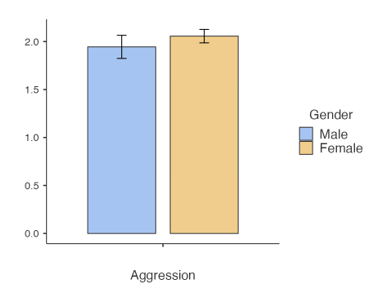
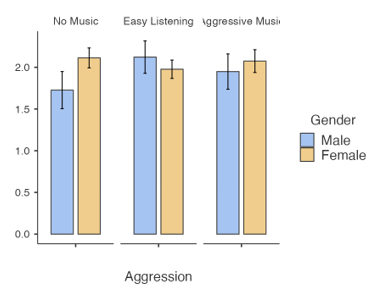
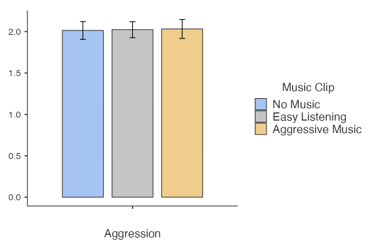
    In order to evaluate the effects of gender and music genres on aggression, a 2 (male/female) x 3 (no music, easy listening, and aggressive music) between-subjects analysis of variance was conducted. There were 15 questions related to aggression and 5 related to negative feelings in general. Our analysis found that there was no difference in aggression level across the three groups. We did find a difference between men and women but it was not found to be significantly different. Additionally, we found no interaction between the main groups.

    We anticipated that there would be significant findings, but our results show the likelihood of no change in aggression level being present.  However, other potential factors are present including the music clips being too short or respondents not paying attention and rushing through the survey. Although females reported higher levels of aggression, this could be affected by other factors that weren’t accounted for. While we did not have any significant findings, this information could benefit future researchers who want to examine aggression and its relationship to music. If this study were to be conducted in the future, we could potentially lengthen music clips and control the setting of where the survey is being taken at. Ultimately, we found no strong evidence that aggressive music poses a difference in state aggression in comparison to no music and soft music.

    Figure 1. The effects of music genres on aggression.

    Figure 2. The effects of gender on aggression.

    Figure 3. The interaction between gender and music genres.

    Reflection

    Based on this study’s findings, we can conclude that our hypothesis was not supported. In examining the possible reasons for this, we determined there are multiple possibilities. The phenomena of mosh pits may be related to other factors such as drinking and the influence of people being around other people who are all in a highly stimulating environment. Additionally, our study had flaws that could result in missing the real effect that could be present. Our findings do not firmly guarantee that no effect occurs, conducting a different study could potentially identify it. Another important piece of information that we learned was how complex the process of creating a study, getting the study approved, gathering respondents, and compiling data all truly was. Going forward, researchers in the fields of musicology and the behavioral sciences may be able to use our research to examine the phenomena of music genres on behavior even further than us.

    References

    Anderson C.A., Carnagey N.L. (2003). Exposure to Violent Media: The effects of songs with violent lyrics on aggressive thoughts and feelings. Journal of Personality and social Psychology, 84(5), 960-71. doi: 10.1037/0022-3514.84.5.960

    Shafron, G.R., & Karno, M.P. (2013). Heavy metal music and emotional dysphoria among listeners. Psychology of Popular Media Culture, 2(2), 74-85. doi: 10.1037/a0031722.


  • Can You Control It?

    Curtis Kingery, Lauren Powell, and Alex Upright (Advisor: Dr. Buchholz)

    Background Information

    “Genius Grant” award winner Angela Duckworth recently asked, “What is the single most significant choice a human being can make in their life?” Distinguished Psychology researcher David Buss responded, “The selection of a long-term mate.” Since he is esteemed for research in human mating, he might be biased to answer that way. However, it is undeniable that mating is a critical part of human existence. In mate selection, most traits and qualities are considered essential by both sexes (e.g., kind, trustworthy, intelligent), yet some traits are prioritized more by one sex than the other. These differences in preferences on traits most valued in an opposite-sex partner are well documented, along with an evolutionary rationale for their existence. On average, men disproportionately favor youthfulness and physical attractiveness in female mates. Women’s preferences show an asymmetry, on average, towards a man’s ability to acquire resources (Buss, 1989; Li et al., 2002; Walter et al., 2020). These traits may vary in one’s ability to control them. That is, there may be a significant difference between the ability to control one’s level of attractiveness versus the amount of control one has over their earning potential. Prior research on this topic found just that. Traits highly associated with female mate value are perceived as less controllable, by females, relative to traits highly associated with male mate value—and their perceived controllability by men (Ben Hamida et al., 1998). However, there is individual variation within the sexes on how they perceive their control over these traits. That is, males will vary in the extent to which they perceive control over characteristics suggestive of resource acquisition ability. We sought to account for these individual differences, generally, in perceived controllability of traits and, specifically, on critical mating dimensions. (Mis)perceptions of control could inform our understanding of documented differences in human behavior between males and females.

    Methods

    Participants were recruited from a pool of current students attending Roanoke College through the College’s Psychology department SONA system, primarily students enrolled in PSYC 101 or INQ260-PY who were eligible for extra credit received a half-credit as compensation for the participation. There were 26 male participants and 69 female participants, for a total of 95 participants who completed the study.

    Our survey was administered using Qualtrics where participants were asked to respond to a variety of different scales, including the Locus of Control, the Scale for Intrasexual Competition (specified for either male or female, depending on the participant’s indicated gender) and a controllability questionnaire. Participants in the manipulation group were shown eight images, one of a person’s body ‘before’ working out and getting fit, and the second of the same person’s body ‘after’ working out. This particular manipulation was used in order to explore the possibility of intervention where countermessaging could increase people’s perceptions of control of traits that they wish to improve. Participants were also asked demographic questions such as gender identity and sexual orientation.

    Results and Discussion

    We expected to find a relationship between one’s level of intrasexual competitiveness and their perceived controllability of myriad traits. Although the relationship wasn’t strong enough to make any reliable conclusions, we did see a reduction in perceived controllability as participants, on average, increased in intrasexual competitiveness. See figure 1.

    Figure 1: The effect of intrasexual competitiveness and sex on self-perceived controllability

    Figure 1 implies that as one focuses more on competing with same-sex peers for mates, their perceptions of control over their traits could be influenced by that preoccupation.

    Similarly, we expected our experimental manipulation, where half of the participants saw body transformation images, to increase that group’s average perception of controllability. We did not find evidence for this relationship. This could mean that our manipulation wasn’t strong enough or it could imply that perceptions of controllability may be stable traits within individuals that are unlikely to be influenced in this manner.

    As predicted, we did find that males and females, on average, showed substantial differences in their general perceptions of controllability of traits. See figure 2.

    Figure 2: Self-perceived controllability of traits by sex

    Moreover, we found a statistically significant result for differences in males’ and females’ perceptions of controllability, specifically on the dimensions regarded as critical to men when choosing a female mate. That is, traits related to youthfulness and attractiveness were considered more controllable by men than women. There was no evidence for these sex differences on perceptions of controllability for resource acquisition traits. These sex differences in perceptions of controllability could inform our understanding of behaviors that show increased or decreased occurrence in one sex versus the other (e.g., mate preferences, risk-taking, aggression, jealousy, and several psychological disorders such as depression and eating disorders).

    Reflection

    Unfortunately, while we were unable to find a strong enough relationship between competitiveness and controllability to make any conclusions, we were still able to determine a statistically significant difference in males’ and females’ perception of how well they can control their youthfulness and attractiveness.

    Conclusion

    We are all different people with different experiences and lives. There is no need to stress unnecessarily about being as attractive or successful as possible for fear of missing out on the perfect spouse. There is no need to compare yourself to others or feel that you must complete with them to find “the perfect mate.” Be patient, focus on the things that will not be changed by time, such as humor or personality, and make sure that you can be the best you can be, and the right person will be there at the right time.

     References

    Ben Hamida, S., Mineka, S., & Bailey, J. M. (1998). Sex differences in perceived controllability of mate value: An evolutionary perspective. Journal of Personality and Social Psychology, 75(4), 953–966. https://doi.org/10.1037/0022-3514.75.4.953

    Buss, D. M. (1989). Sex differences in human mate preferences: Evolutionary hypotheses tested in 37 cultures. Behavioral and Brain Sciences, 12, 1–14. doi:10.1017/ S0140525X00023992

    Li, N. P., Bailey, J. M., Kenrick, D. T., & Linsenmeier, J. A. W. (2002). The necessities and luxuries of mate preferences: Testing the tradeoffs. Journal of Personality and Social Psychology, 82(6), 947–955. https://doi.org/10.1037/0022-3514.82.6.947

    Walter, K. V., Conroy-Beam, D., Buss, D. M., Asao, K., Sorokowska, A., Sorokowski, P., Aavik, T., Akello, G., Alhabahba, M. M., Alm, C., Amjad, N., Anjum, A., Atama, C. S., Atamtürk Duyar, D., Ayebare, R., Batres, C., Bendixen, M., Bensafia, A., Bizumic, B., … Zupančič, M. (2020). Sex differences in mate preferences across 45 countries: A large-scale replication. Psychological Science, 31(4), 408–423. https://doi.org/10.1177/0956797620904154


  • Congratulations Kira Hunt: Honors Defense

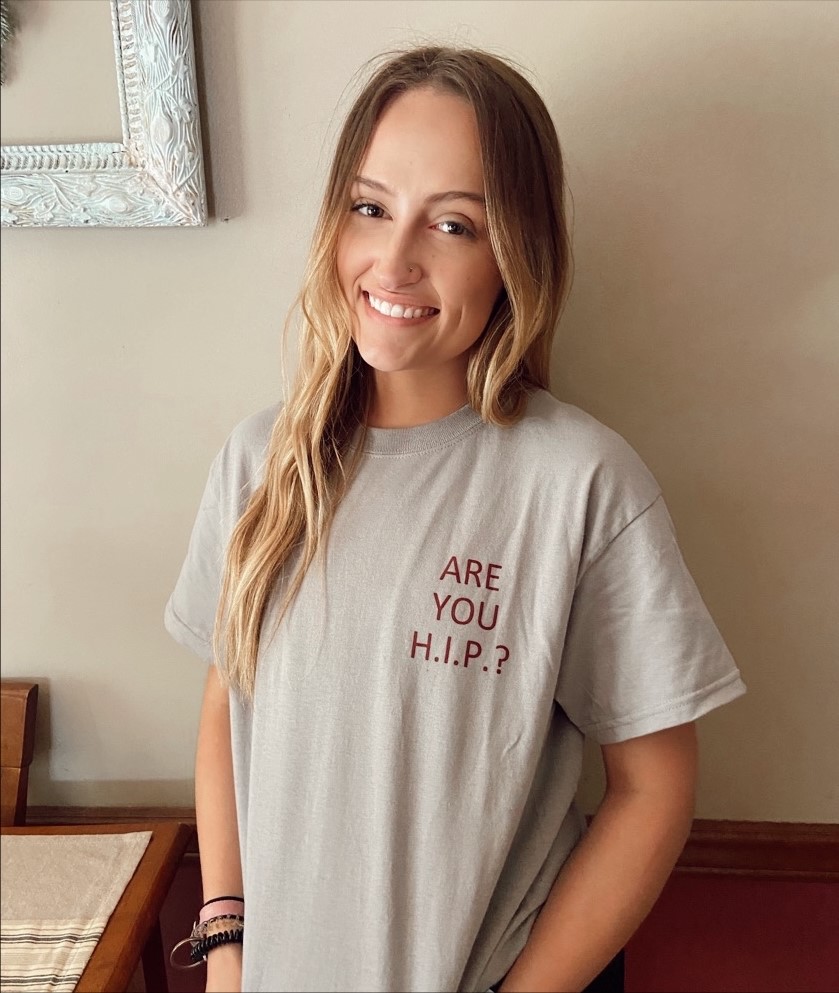
    Kira wearing her new Honors in the Major t-shirt!

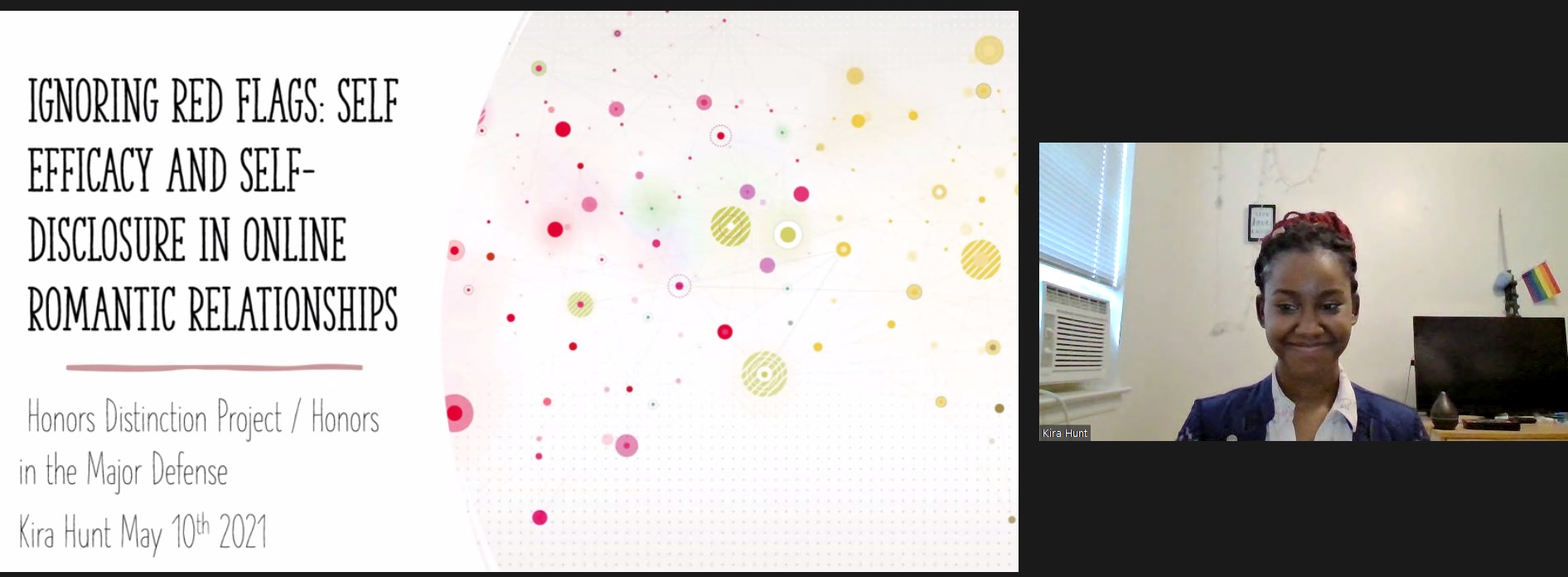
    On May 10th, Kira Hunt successfully defended her Honors in the Major and Honors Distinction Project. Congratulations Kira! The psychology department faculty/staff and your fellow departmental student assistants are so proud of you.

    Her project was titled: “Ignoring Red Flags: Self Efficacy and Self-Disclosure in Online Romantic Relationships”. In addition to a successful defense, Kira completed an impressive two-lab project working in both Dr. Powell and Dr. Nichols’ labs. Her work beautifully combines aspects from multiple disciplines, including psychology and sociology.

    Kira defending her project on zoom!

    Project Abstract:

    With the advancement of technology, dating has changed drastically, especially for emerging adults who make up a considerable portion of online daters. However, dangers surrounding dating someone met online (e.g., misrepresentation) are a major concern. Additionally, without the social cues usually gathered from face-to-face interactions, individuals often have intense feelings of intimacy and are more willing to self-disclose more than in face-to-face interactions. The first study aimed to examine if romantic self-efficacy and target attractiveness impacted the likeliness to self-disclose in online initiated relationships. There were no significant differences in likelihood to self-disclose based on romantic self-efficacy or target attractiveness. However, likeliness to disclose did appear to be affected by whether misleading information was included, and the depth or level of the information being disclosed. The second study utilized electroencephalogram (EEG) to determine if target attractiveness and presence of misleading information impacted brain activity. There were no significant differences in brain activity based on target attractiveness or vignette type, nor was amount of self-disclosure associated with brain activity. Although most of the hypotheses were unsupported, the current study suggests more research needs to be done to determine what characteristics of individuals or of potential partners might influence online dating behaviors (e.g., falling victim to online romance scams).

    . 

    . 

    . 

    Get Connected!

    Blog: https://psych.pages.roanoke.edu/
    Facebook: https://www.facebook.com/rcpsychology
    Twitter: @RC_Psychology
    Linked In: https://www.linkedin.com/groups/RC-Psychology-8140491/about
    Website: https://www.roanoke.edu/inside/a-z_index/psychology
    Instagram: rcpsychology
  • Congratulations to Psychology Department Award Winners for 2021!

    Please join us in congratulating the following students for their hard work and dedication within the psychology department! These students were honored in a ceremony on May 3, 2021. 

    Senior Scholar in Psychology 

    Autumn T. Cox

    The psychology major who has the highest overall grade point average (a minimum of 3.2 is required) after completion of at least 27 units is designated as the Senior Scholar in Psychology.


    Karl W. Beck Memorial Prize

    Kaillee M. Philleo and Carly M. Shepacarter

    A monetary prize that is made possible by gifts of friends in memory of the late Karl W. Beck, who was a professor and chair of the Roanoke College Psychology Department. This award is given for excellence in Psychology.


    Curt R. Camac Student Research Award

    Sydney M. Caulder, Kira N. Hunt, Abbie L. Joseph, and Curtis E. Kingery

    From 1986 to 2012, Dr. Curt Camac was one of the leaders of a campus-wide movement to increase student-faculty research. As an inspiration to both students and faculty, he helped pave the way for the tremendous growth in research experiences we offer at Roanoke. This grant was developed in his honor to support student research.


    The Charles E. Early Award

    Aaron J. Rogers

    In honor of Dr. Charles Early, retired Professor of Psychology, who taught at Roanoke from 1988

    to 2015, this award goes to the student who best embodies Dr. Early’s love of learning, powerful work ethic, keen intellect, warm humor, and deep appreciation for pie.


    The Jan H. Lynch Human Development Concentration Award

    Morgan J. Hamilton, Abbie L.  Joseph, and Grace E. Page

    In honor of Dr. Jan Lynch, retired Professor of Psychology, who taught at Roanoke from 1980 to 2015. This award goes to the students who have demonstrated excellence in the Human Development Concentration.


    Outstanding Junior Psychology Majors 

    Hunter J. Andrews, Kyra R. Baker, Benjamin S. Campbell,  Alice R. Chandler, Jessica A. Fritz, Emily P. Gabrielian, Kaitlyn S. Gifford, Carey S. Linkous, Claire M. McDonald, Sara C. Moody, Naomi H. Painter, Carrie N. Pohlman, Kaeley E. Pollock, Kristi R. Rolf, Hannah N. Schetselaar, Rebecca A. Shannon, and Sarah E. Young

    Recognition given to the junior students who are deemed by the faculty as having demonstrated outstanding academic achievement and potential for continued success in Psychology.


    Outstanding Student in the Neuroscience Concentration

    Kira N. Hunt

    This award is given annually to the student who has demonstrated outstanding academic achievement in the neuroscience concentration and has shown potential for continued success in the field.


    Psi Chi Achievement Award 

    Kaillee M. Philleo 

    A gift given to the Psi Chi member who has best exemplified excellence in scholarship, leadership, and service. The recipient is chosen by student and faculty members of Psi Chi, the honorary society in Psychology.


    Again, please wish these students congratulations if you see them around campus! Additionally, thank you to our amazing faculty and staff who help guide our students towards success! We are so very grateful to you!


    Get Connected!

    Blog: https://psych.pages.roanoke.edu/
    Facebook: https://www.facebook.com/rcpsychology
    Twitter: @RC_Psychology
    Linked In: https://www.linkedin.com/groups/RC-Psychology-8140491/about
    Website: https://www.roanoke.edu/inside/a-z_index/psychology
    Instagram: rcpsychology
  • Summer Job/Internship Opportunity: Camp Easterseals

    Are you looking for a summer job? How about an internship experience? Well, look no further, because Camp Easterseals is hiring summer staff!
     

    The Assistant Director states, “Camp Easterseals is an overnight camp that serves both children and adults with disabilities.  We offer our campers and staff an unique, fun, and supportive camp experience.  Many of our staff have called their time at Camp Easterseals a “Life-Changing” experience. Right now, we are currently hiring staff to join us for Summer 2021. (Per the Governor’s recent executive orders Overnight Summer Camps can open and operate starting May 1st).”


    Camp Easterseals is currently looking for camp counselors, volunteers, horse specialists, lifeguards, and overall just people looking for fun and to make an impact.


    More information can be found here,as well as feel free to contact Dr. FVN for ways in which these opportunities can translate into internship credit.
  • Congratulations Abbie Joseph: Honors Defense!

    Abbie Joseph wearing her new Honors in the Major t-shirt!

    Congratulations to Abbie Joseph ’21 for the successful defense of her Honors in the Major Project! Her project was titled  “Cyberstalking Behaviors After the Use of Ghosting”. Her supervisor, Dr. Darcey N. Powell was joined by committee members, Dr. Osterman and Dr. Berntson, to oversee her defense.

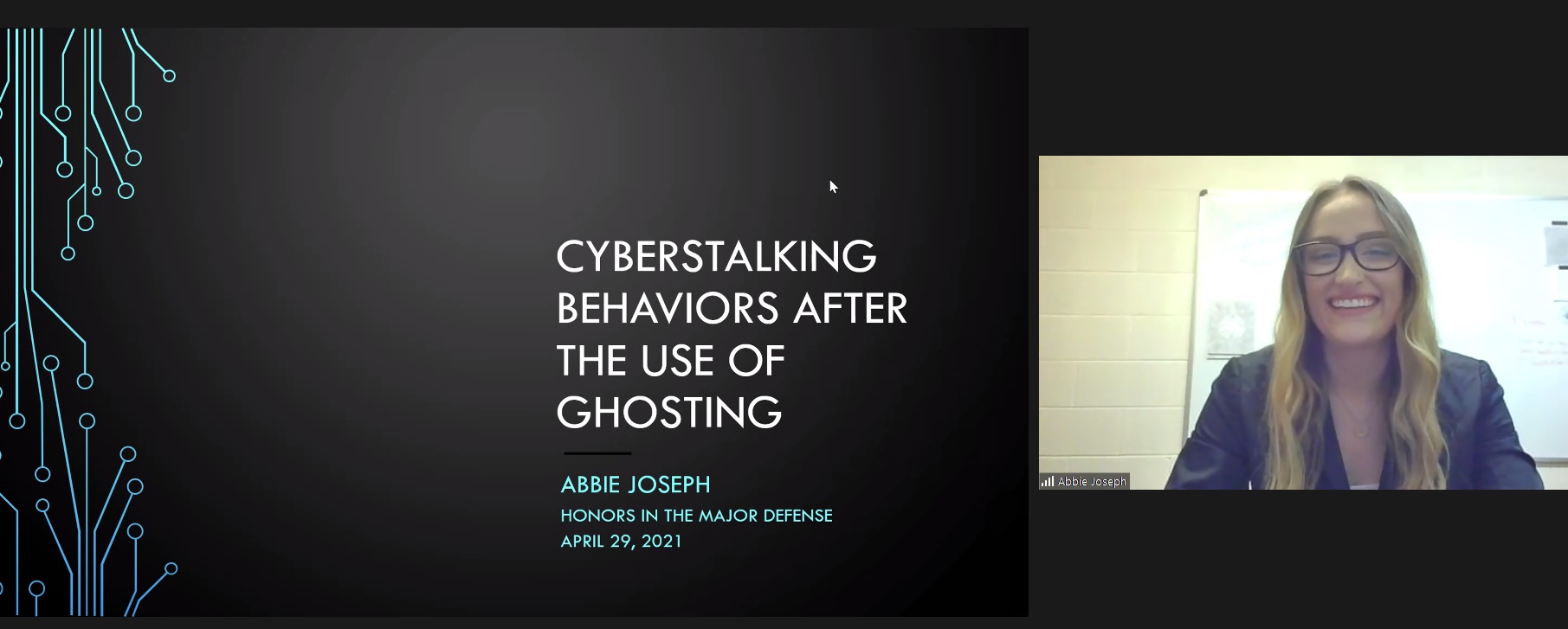
    Abbie Joseph defending her project on zoom!

    Project Abstract:

    The purpose of the current study was to examine the differences in cyberstalking behaviors after the dissolution of a romantic interaction based on the dissolution strategy used (i.e., ghosting or explicit reasoning). Participants included emerging adults between the ages of 18 and 29 (N = 240) who had a romantic interaction end. A survey was used to collect information regarding participants’ most recent relationship dissolution, their experiences with ghosting and cyberstalking, their engagement in cyberstalking behaviors towards an ex-partner and the ex-partner’s new partner, their social media app usage, and their relationships with their ex-partner. Analyses revealed that participants whose most recent romantic interaction ended via ghosting did not engage in significantly more cyberstalking behaviors than participants whose most recent romantic interaction ended via explicit reasoning. There were no significant differences in the length of engagement in cyberstalking behaviors after the breakup between participants whose relationship ended through ghosting and participants whose relationship ended explicitly. There were no significant differences in engagement of cyberstalking behaviors between participants who initiated the ghosting and participants who were ghosted. Participants who were ghosted engaged in cyberstalking behaviors to seek out information about their ex-partner and the ex-partner’s new partner. The findings of the current study provide information on how the dissolution strategy is associated with post-dissolutional cyberstalking behaviors.

    Congratulations again to Abbie Joseph on a successful defense and we look forward to seeing all you accomplish in the future!

    . 

    . 

    . 

    Get Connected!

    Blog: https://psych.pages.roanoke.edu/
    Facebook: https://www.facebook.com/rcpsychology
    Twitter: @RC_Psychology
    Linked In: https://www.linkedin.com/groups/RC-Psychology-8140491/about
    Website: https://www.roanoke.edu/inside/a-z_index/psychology
    Instagram: rcpsychology
  • Upcoming Event: New Majors Orientation

    Calling all recently declared psychology majors! The Psychology Department is excited about your interest in the field that we love, and are passionate about working with you to explore the many facets of psychology and prepare you for life after graduation!

    If you have recently declared the major, we want to welcome you to the department this Wednesday or Thursday through the New Majors Orientation event! This event will be held via Zoom and all-new majors, including those who missed the event in the past, are welcome to join!

    New Majors Orientations

    When: Wednesday, April 28

    Time: 4:00 PM-5:00 PM

    Where: Click this Zoom link to join!

    or

    When: Thursday, April 29

    Time: 12:00 PM – 1:00 PM

    Where: Click this Zoom link to join!

    We look forward to welcoming you to the department then!

    .

    . 

    . 

    Get Connected!

    Blog: https://psych.pages.roanoke.edu/
    Facebook: https://www.facebook.com/rcpsychology
    Twitter: @RC_Psychology
    Linked In: https://www.linkedin.com/groups/RC-Psychology-8140491/about
    Website: https://www.roanoke.edu/inside/a-z_index/psychology
    Instagram: rcpsychology
  • Psychology Summer Courses 2021

    Want to get ahead or catch up? Just want to take an interesting course? You might be interested in taking summer courses.

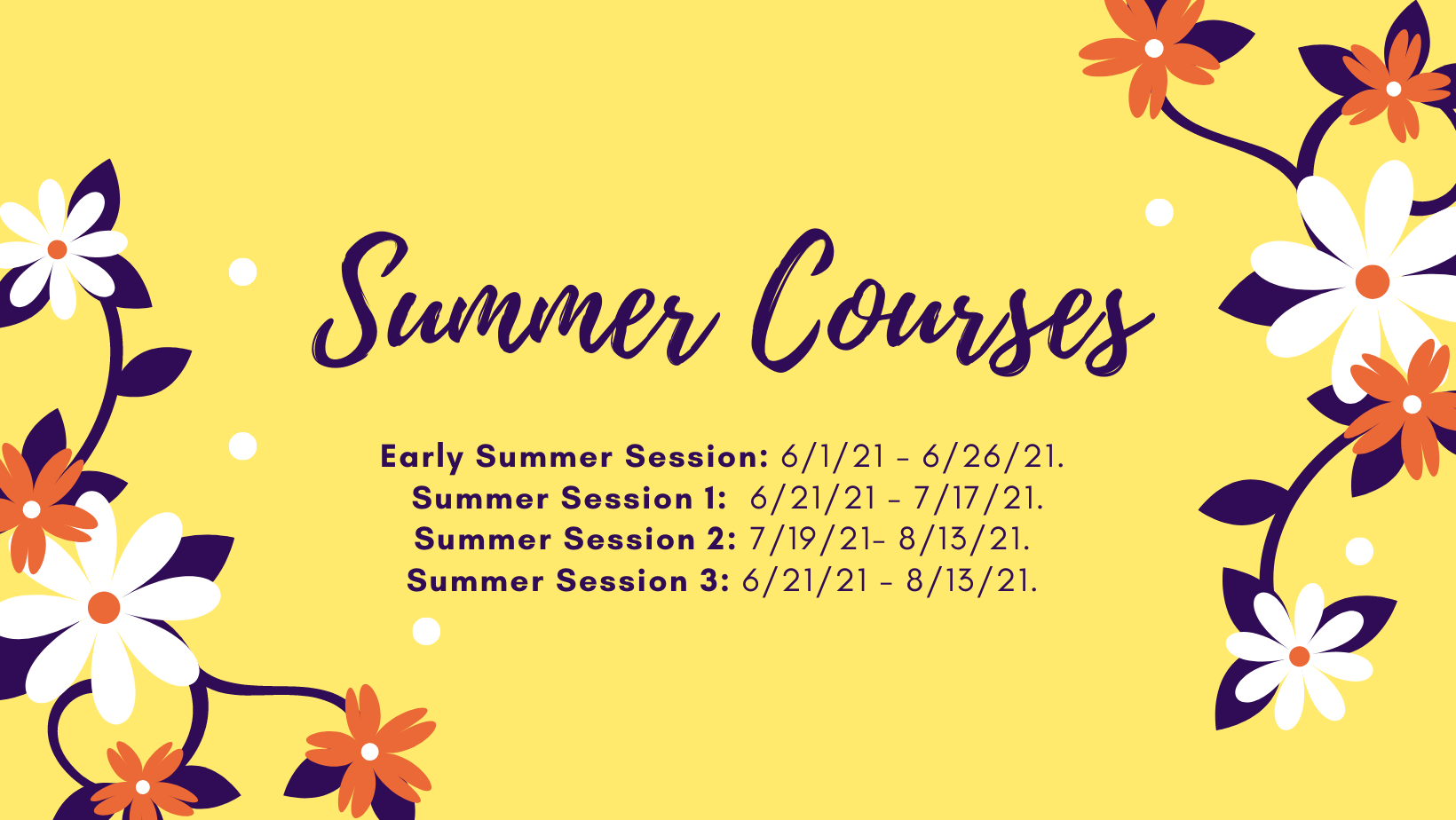
    This summer the psychology department is offering five summer classes in 2021, three in the first term and two in the second term. All courses still have seats available. See below for which classes are being taught in which term, who they are being taught by, and their times. This information can also be found on self-service which is also where you can sign up for these courses.

    See our class registration 101 blog post found here to refresh on how to do so.

    Summer Session 1

    Psych 381: Abnormal Psychology TBD (Dr. Hilton)

    PSYC 251: Personality 10:50 AM-1:00 PM (Dr.Whitson)

    PSYC 332: Drugs and Behavior 8:30 AM-10:40 AM  (Dr. Allen)

    Summer Session 2 

    PSYC 354: Evolutionary Psychology 8:30 AM-10:40 AM (Dr. Osterman)

    PSYC-390: History of Psychology TBD (Dr. Buchholz)

    . 

    . 

    . 

    Get Connected!

    Blog: https://psych.pages.roanoke.edu/
    Facebook: https://www.facebook.com/rcpsychology
    Twitter: @RC_Psychology
    Linked In: https://www.linkedin.com/groups/RC-Psychology-8140491/about
    Website: https://www.roanoke.edu/inside/a-z_index/psychology
    Instagram: rcpsychology
  • 2021 Summer Scholars

    banner 3.jpg

    Congratulations to Naomi Painter and Ben Campbell for being selected as Summer Scholars!

    Roanoke College’s Summer Scholar Program is designed for serious students who want to use their summers wisely and work one-on-one with faculty. Every year, students compete for selection to receive one of the summer scholarships. Faculty from across the college review student research proposals and decide these prestigious awards.

    Naomi will be working with Buchholz on her project in light of the occurrence of the COVID-19 pandemic and issues involving prejudice and discrimination where she intends to examine the effects of disgust on the presence of prejudicial responses and the individual differences that contribute to said relationship.

    Ben will be working with Dr. Findley-Van Nostrand on his project, inspired by his interest in traditional or toxic masculinity, where he intends to research the effects of jealousy on threatened masculinity and relational aggression (i.e., aggression used to harm peer relationships) use.

    . 

    . 

    . 

    Get Connected!

    Blog: https://psych.pages.roanoke.edu/
    Facebook: https://www.facebook.com/rcpsychology
    Twitter: @RC_Psychology
    Linked In: https://www.linkedin.com/groups/RC-Psychology-8140491/about
    Website: https://www.roanoke.edu/inside/a-z_index/psychology
    Instagram: rcpsychology