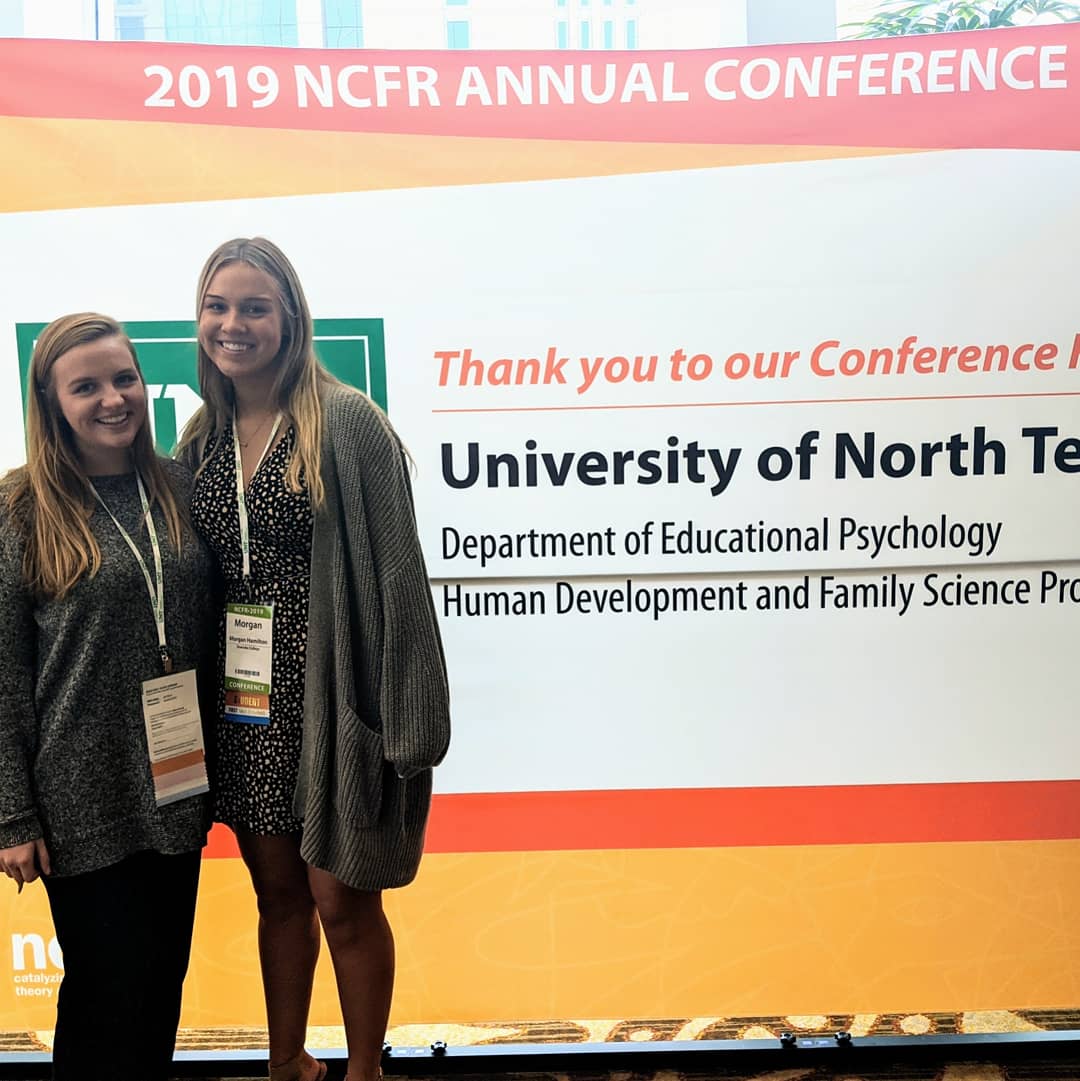
Roanoke College had some outstanding psychology students present their research at the UVA Starling Reid Conference last week!
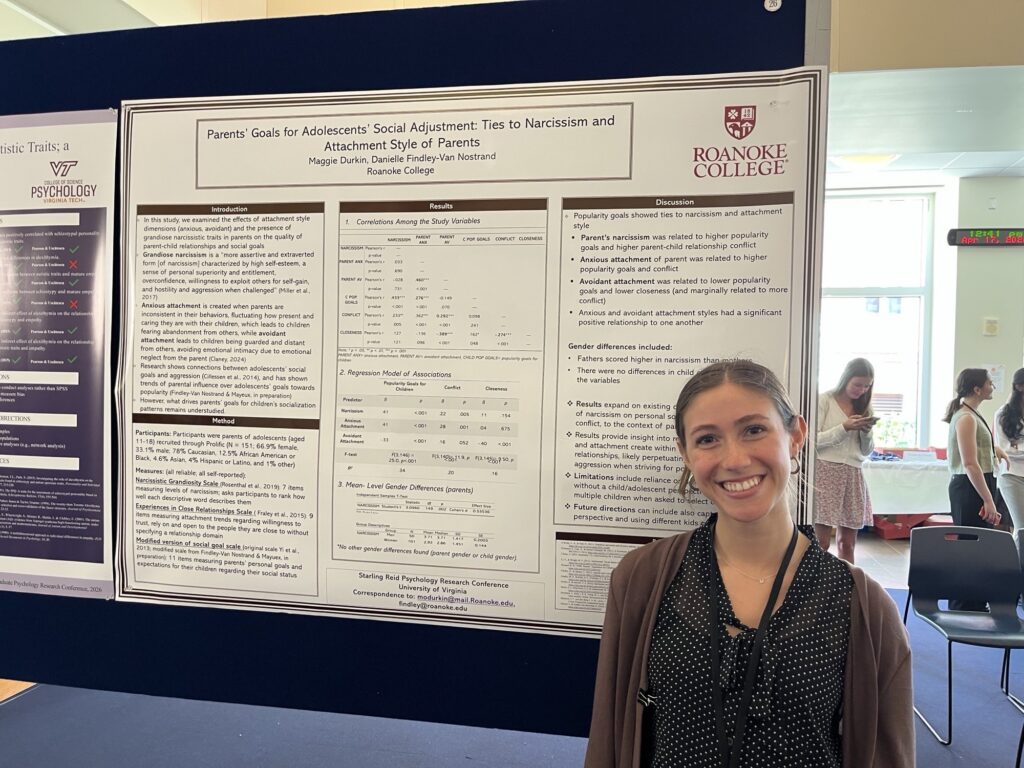
Maggie Durkin presented “Parents’ Goals for Adolescents’ Social Adjustment:Ties to Narcissism and Attachment Style of Parents”, supervised by Dr. Findley-Van Nostrand.
Lauren Gregory’s poster is titled, “Choose Your Leader: An Experiment Evaluation of Emerging Adults’ Reactions to Dominance and Prestige Orientations of Leaders“, supervised by Dr. Findley-Van Nostrand.
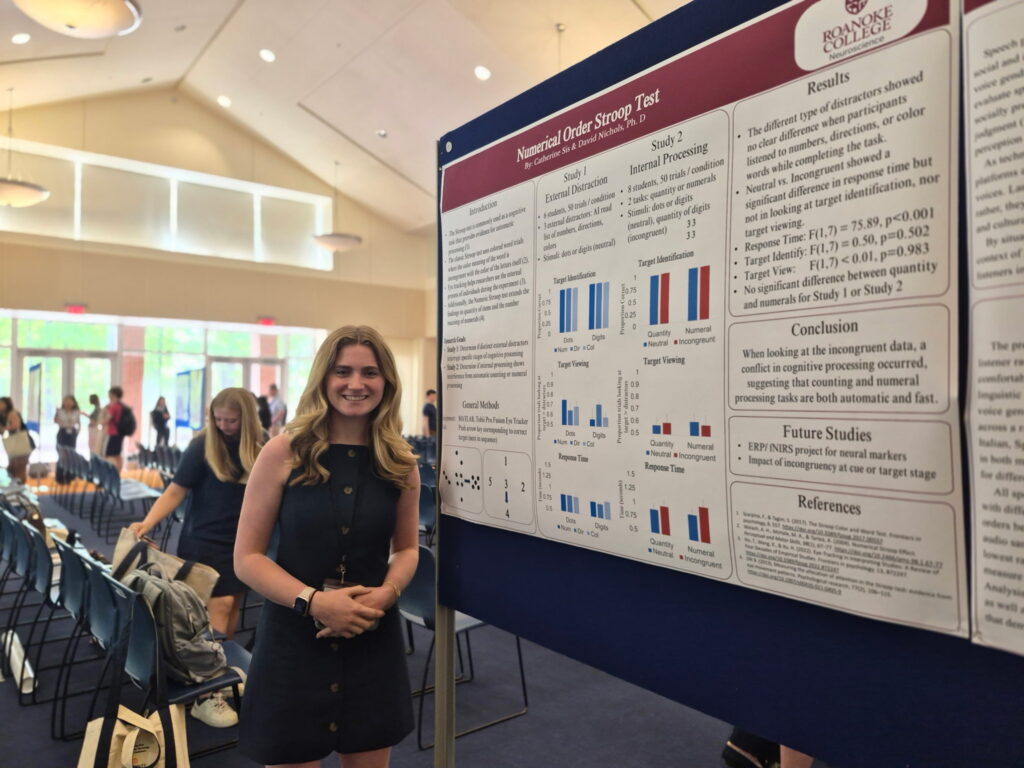
The image above is Catherine Sis presenting her research called “Numerical Order Stroop Test“, supervised by Dr. David Nichols.
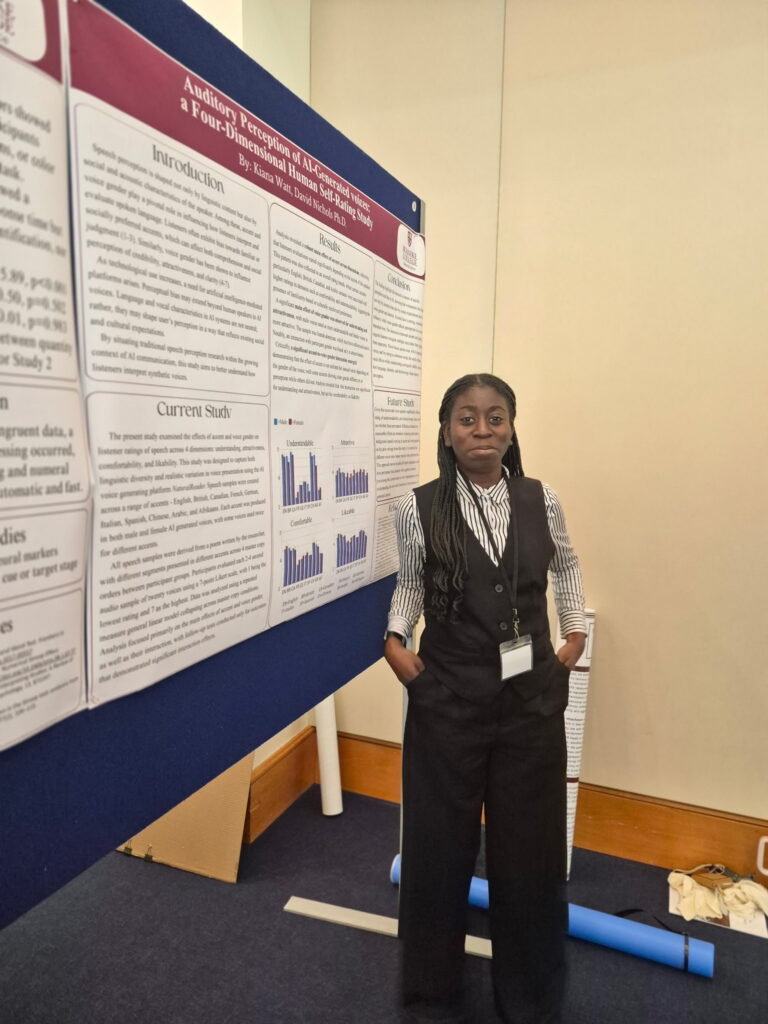
The image above is of Kiana Watt presenting “Auditory Perception of AI-Generated Voices: a Four-Dimensional Human Self-Rating Study“, supervised by Dr. David Nichols.
Congratulations to our wonderful students for presenting!
This year the conference took place in St. Petersburg, Florida between November 7th and 8th, 2025.
The Society of Southeastern Social Psychologists (SSSP) was created in 1978 by social psychologists at the University of Georgia. It has since grown into a welcoming community of more than 400 students, faculty, and professional psychologists across the United States. While its membership spans the nation, most participants come from states throughout the Southeast and attendance reaches around 200 each year. Each year, SSSP hosts its Annual Conference, a tradition that brings together personality and social psychologists for a day of research presentations, networking, and lively discussions. Known for its welcoming atmosphere, the conference highlights graduate and undergraduate student contributions and features interactive group lunches that encourage meaningful connections.
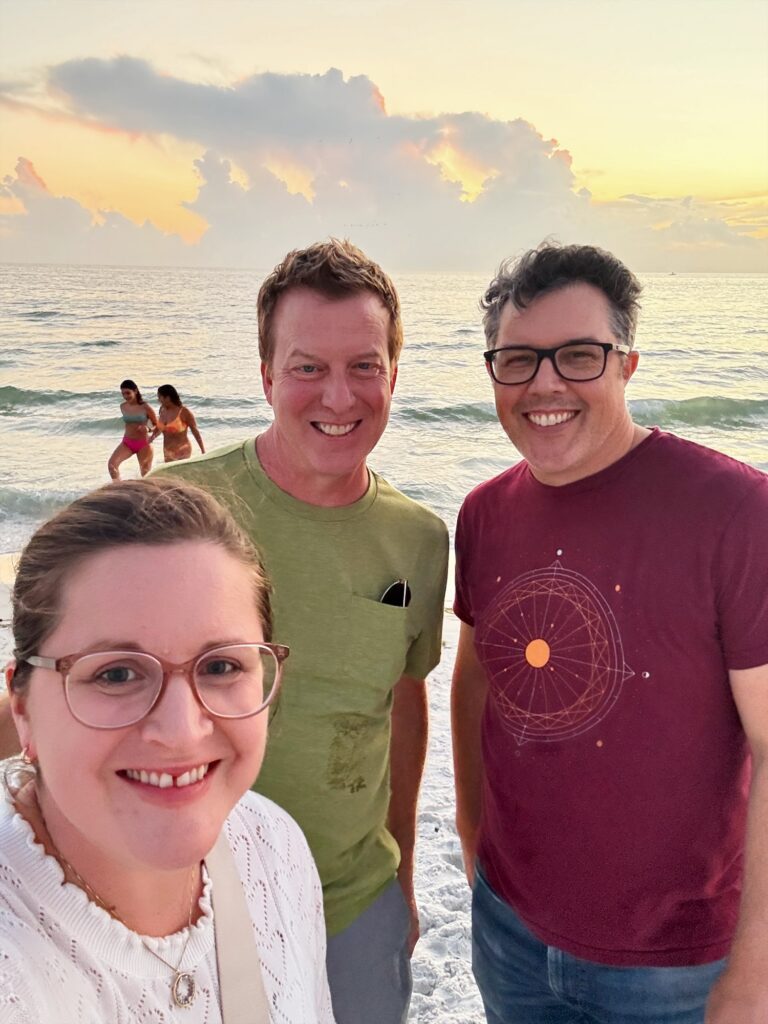
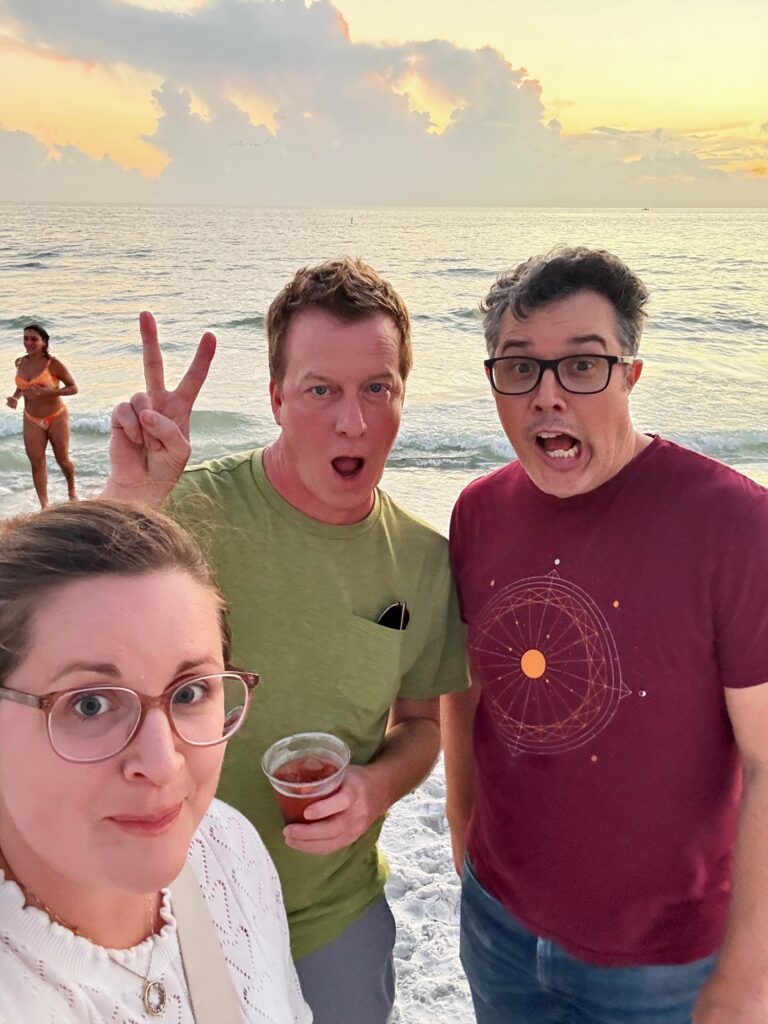
A few of our professors got the opportunity to attend this conference and present their research! They also enjoyed ending the night at the beach.
Dr. Travis Carter presented Response to unfair offers by political ingroup and outgroup members in the ultimatum game.
Dr. Christopher Buchholz presented Increasing mindfulness in the college classroom.
Dr. Danielle Findley-Van Nostrand presented Parents’ goals for popularity are related to different forms of (aggression and) prosocial tendencies in emerging adults.
The psychology team is hoping to bring future Roanoke College M.S. psychology students to present at this conference!
The Society of Southeastern Social Psychologists (SSSP) conference was a fantastic opportunity for our Roanoke College psychology students and faculty to engage with cutting-edge research and network with peers across the field. Professors FVN, Dr. Bu, and Dr. Carter attended the event alongside students Sydney Pennix, Ivy Phillips, Gabby Bosch, Shannon Dennehey, and Cassie Eddins.
We recently connected with some of the attending students to hear about their unique experiences, the research they presented, and the advice they have for students considering attending similar events.
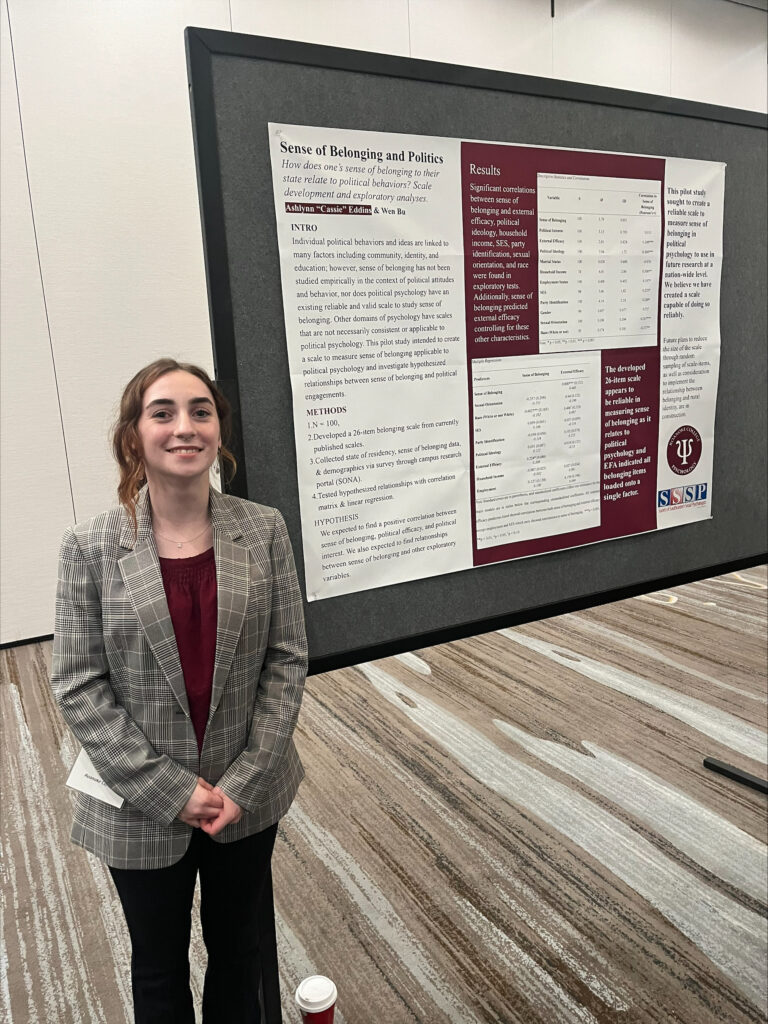
Cassie Eddins collaborated with Dr. Bu on research developing a new scale to measure sense of belonging within political psychology—an area with no current standardized measures. Although she doesn’t plan to pursue research as a career, Cassie found inspiration at the conference and is now interested in exploring how sense of belonging manifests in third-culture children, such as those from military or immigrant families.
Cassie also had the chance to explore other undergraduates’ research projects. One presentation that stood out to her focused on the relationship between personal sexuality and the ability to accurately perceive others’ sexual orientations. “It was fascinating to see how personal biases might influence these perceptions,” Cassie shared, “Discovering unique topics like this made the experience even more enriching and broadened my understanding of the diverse areas being explored in psychology.”
Cassie shared her perspective of the experience in saying that, “SSSP was very non-threatening, especially for those of us who might not feel super confident with public speaking,” she continued, “I would definitely recommend attending—it’s a welcoming environment with fascinating research to explore.”
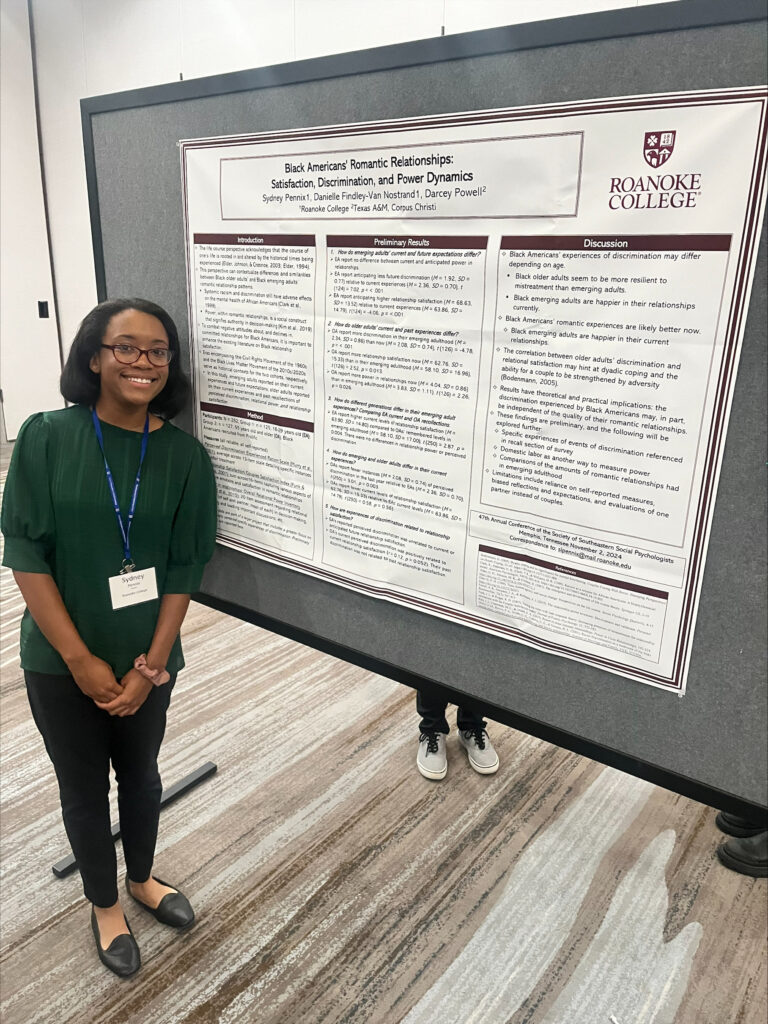
Sydney Pennix presented her study on how discrimination affects the romantic relationships of emerging and older Black Americans. “Conducting this research was fulfilling and eye-opening,” Sydney reflected, noting that her findings were surprising to both herself and her audience. She also found the graduate student panel to be particularly valuable, offering insights she’s already applying in her professional journey.
Sydney’s advice for her peers? “Take opportunities to present your research or attend others’ presentations. It’s incredible to converse with people who share your interests, especially outside of the classroom.”
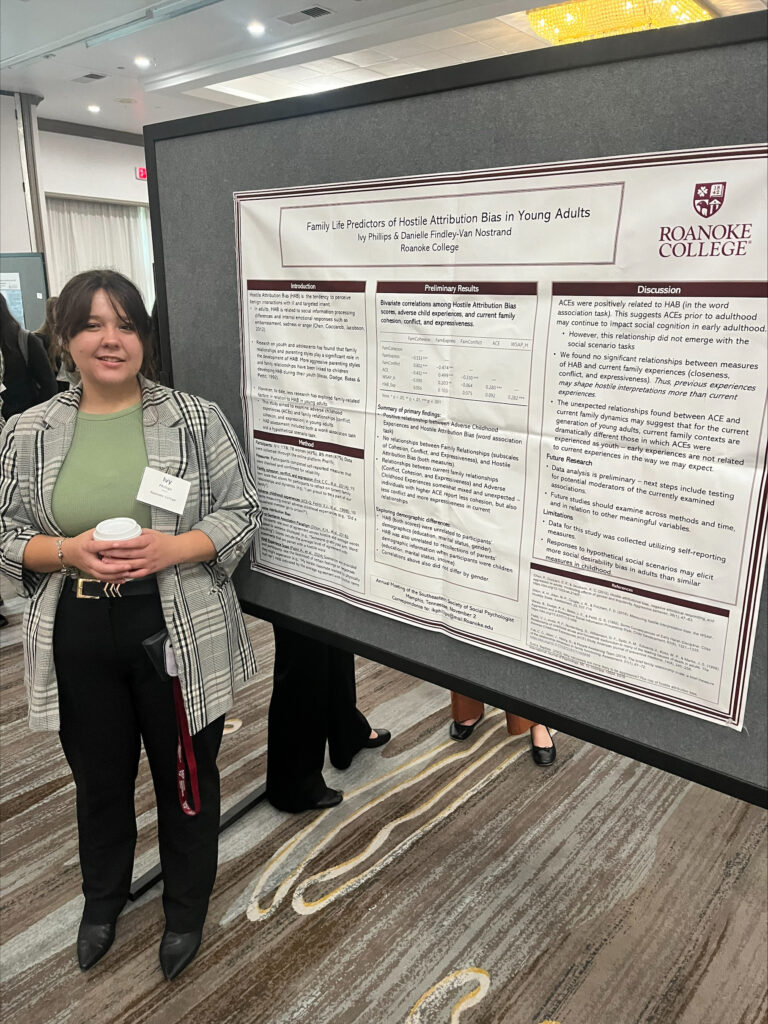
Ivy Phillips is researching predictors of Hostile Attribution Bias in young adults with Dr. FVN, focusing on the influence of family relationships and adverse childhood experiences. The critical analysis of her data was challenging but rewarding, and Ivy appreciated the insights shared at the graduate school panel.
For Ivy Phillips, the Conference offered valuable insights that align with her long-term goal of working in Community Psychology. “My personal highlights included research on youth development in community settings and how individuals’ experiences and relationships shape their views on specific policies and laws,” Ivy shared. “These topics were not only fascinating but also inspired me to consider exploring them further in my own future research.”
Her biggest takeaway? “Get involved in as many experiences as possible, even if it feels outside your comfort zone. These opportunities build valuable skills and provide great stories that will benefit you long-term.”
More Photos From The Conference!
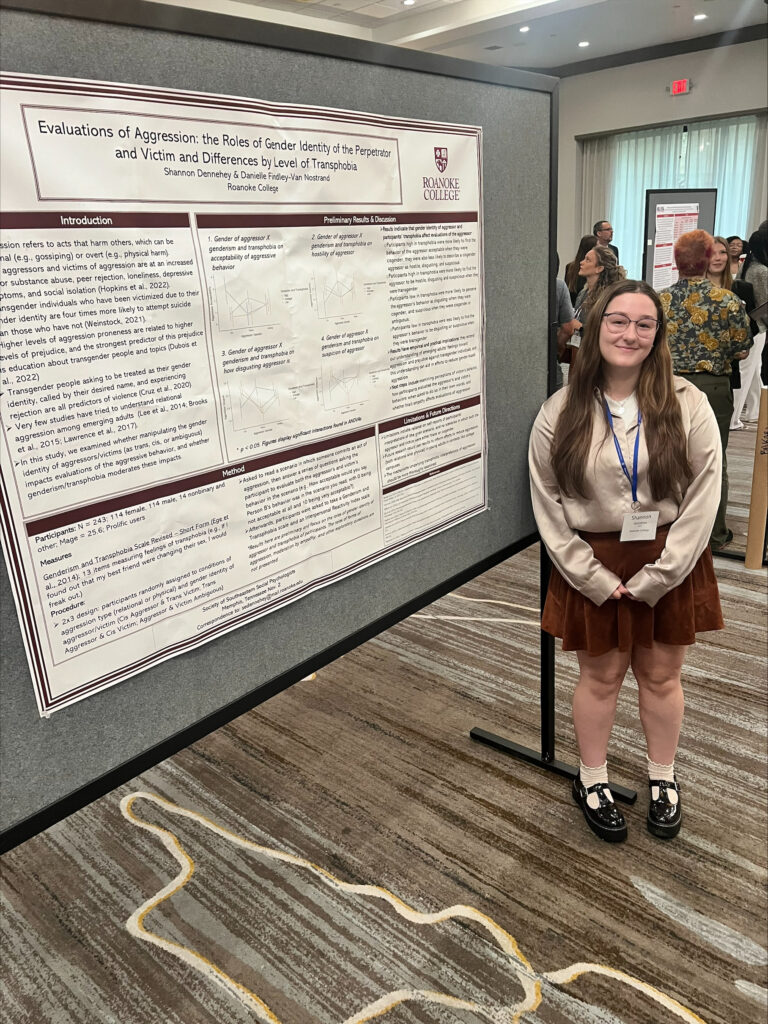
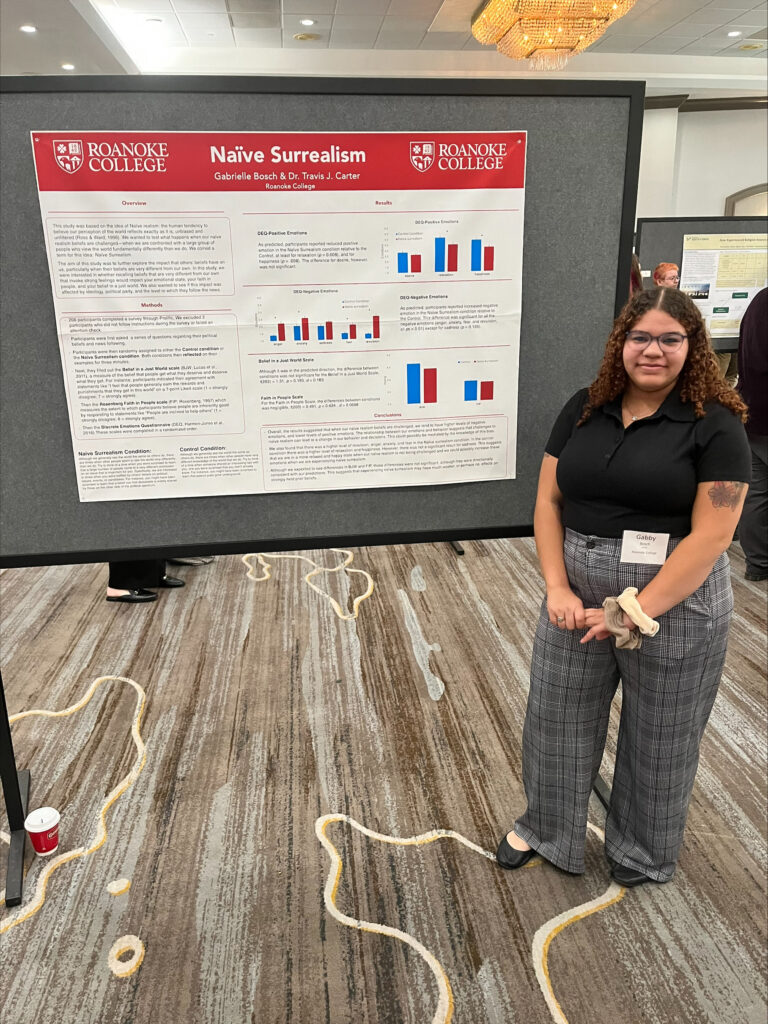
Shannon Dennehey and Gabby Bosch: Both Shannon and Gabby presented their research at the SSSP Conference alongside their peers. Check out their posters highlights in the photos attached!
Why Attend SSSP, or Any Conference For That Matter?
All our attendees—students and faculty alike—highly recommend participating in the SSSP Conference, as well as attending any psychology conference during your undergraduate years. Conferences like SSSP offer a welcoming environment and showcase a wide range of research presentations. Whether you go as a presenter or a spectator, these events provide a unique opportunity to explore new fields, connect with professionals, and deepen your understanding of psychology.
As Ivy put it best: “Talk to your professors and advisors to learn more about these opportunities—they can be incredibly valuable stepping stones for your future.”
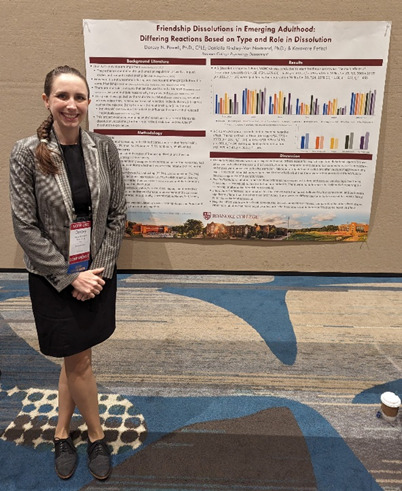
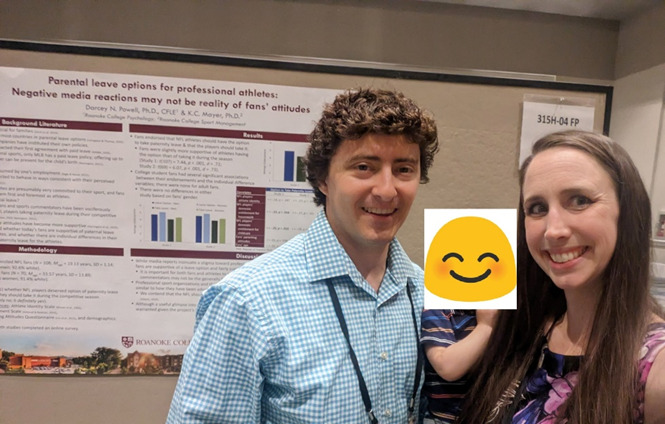
The psychology department is excited to share a glimpse into a recent conference experience that not only showcased a depth of academic exploration but also highlighted the power of collaboration and shared passion. This year Dr. Powell presented the work of herself and co-authors, Dr. FVN, and Kosovare Fetinci (’23) at the National Council on Family Relations (NCFR) 2023 Annual Conference in Florida. She also presented a second research poster with Dr. Mayer (sport management), and their son!
The above image displays on a remarkable poster featuring Dr. Powell and co-authors, Dr. FVN and, Roanoke alum, Kosovare Fetinci (’23). The collaborative effort was rooted in Kosovare’s senior independent study project, a testament to the dedication and enthusiasm that students bring to their academic endeavors. The title of the project was “Friendship Dissolutions in Emerging Adulthood: Differing Reactions Based on Type and Role in Dissolution”.
A second presentation by Dr. Powell was a joint effort with Dr. Mayer, a dynamic combination of expertise that undoubtedly brought a unique perspective to the conference. What’s even more special is that their son joined in on the presentation, turning it into a family affair! This research was titled “Parental Leave Options For Professional Athletes: Negative Media Reactions May Not Be Reality of Fans’ Attitudes”
The great positive feedback received from fellow conference attendees is a testament to the quality and impact of their work. It’s always gratifying when your efforts are not only recognized but also appreciated by your peers. The exchange of ideas and the validation of hard work create an inspiring environment that fuels further academic exploration. Conferences are a great way to expand your knowledge and share your research!
In addition the two noted presentations, Morgan Hamilton’s (Roanoke alum, ’21) oral presentation based on her master’s thesis was also a great success. Titled “Now I understand who I am and where I came from: The tribal reunification of indigenous fostered/adopted relatives,” Morgan’s presentation delved into a crucial and often overlooked aspect of identity and belonging. Congratulations Morgan – you are absolutely representing the Roanoke psychology department well!
As we reflect on these academic triumphs, let us celebrate the dedication, passion, and collaborative spirit that drive the pursuit of knowledge. To all the authors and presenters of the NCFR conference, congratulations!
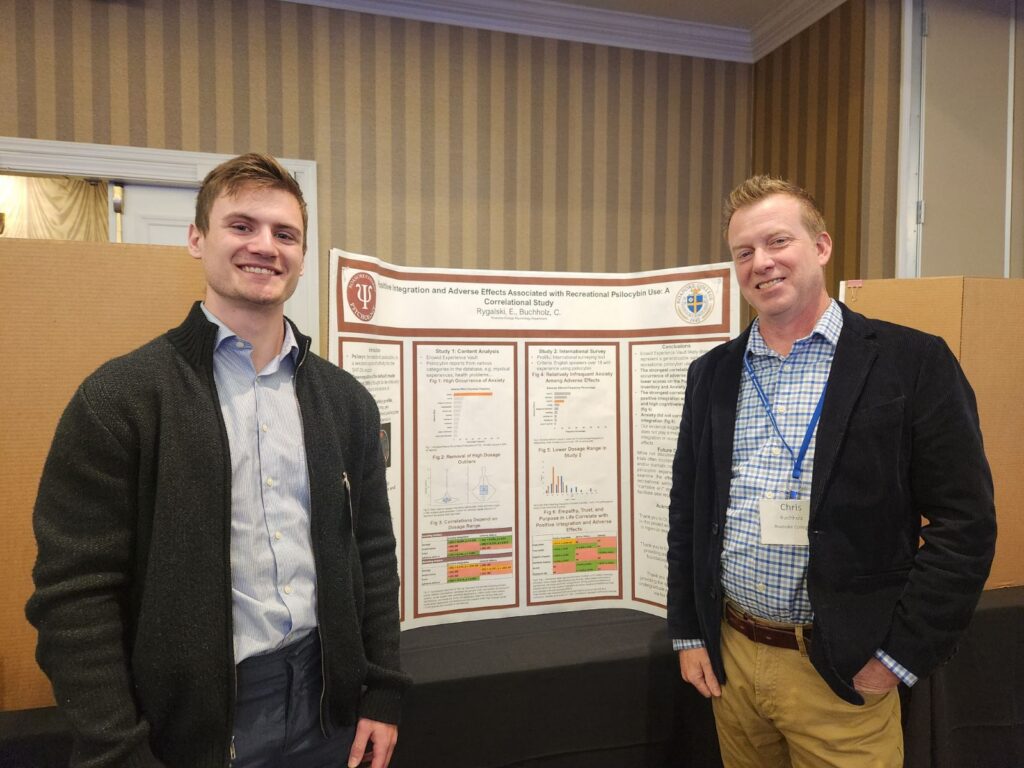
The image above depicts Eddie Rygalski (left) and Dr. Buchholz (right) presenting their research during the poster session. All featured Roanoke authors included: Eddie Rygalski, Reagan Middelthon, Dr. Findley-Van-Nostrand, Dr. Carter, and Dr. Buchholz.
Over this past weekend, the Roanoke College psychology department was represented well at the Society of Southeastern Social Psychologists (SSSP) 2023 Annual Conference in Charlotte, NC. Two students and three faculty members were named authors on research presented during the conference. Congratulations to all of our presenters, the psychology department commends you for your excellent research and dedication to the field. Please find their research titles and abstracts below.
PERSONALIZED ACCOUNTS OF HARM LEAD TO INCREASED EMPATHY FOR WOMEN WHO HAVE SUFFERED BECAUSE OF THE OVERTURNING OF ROE V. WADE (Raegan Middelthon, Eddie Rygalski, and Dr. Chris Buchholz) Many women have been harmed by the limitations placed on abortion after the overturning of Roe v. Wade. Research in empathy has pointed to a spotlight effect, where we feel more empathy in response to personalized accounts of suffering than more generalized accounts. In this study, we randomly assigned participants to read a personalized account of a woman who suffered medical complications because of the restrictive nature of abortion access in her state, a more generalized account, or a control group. As expected, liberals expressed significantly higher levels of empathy for women who have suffered as a result of the overturning of Roe v. Wade. We also found a significant effect for condition, where the highest empathy was reported for the personalized story followed by the generalized story and finally the control group. This pattern held up for conservatives; they reported significantly more empathy when they read the personalized story. Women expressed significantly more empathy than men. Interestingly, women expressed high levels of empathy regardless of which story they read, while men reported the highest empathy for the personal story.
POSITIVE INTEGRATION AND ADVERSE EFFECTS ASSOCIATED WITH RECREATIONAL PSILOCYBIN USE: A CORRELATIONAL STUDY (Edward Rygalski and Dr. Christopher Buchholz) This exploratory study sought to determine the relationship between positive integration of the psilocybin experience, occurrence of adverse effects, dosage, and factors including age, gender, as well as a variety of other measurements. Clinical literature suggests that psilocybin, when paired with psychotherapy, is a relatively safe and effective treatment for conditions such as depression, anxiety, and addiction. As many people use psychedelics outside the clinic, we sought to determine whether predictors of adverse events and positive integration were consistent between clinical and recreational use. Using two studies, first a content analysis of online reports, and second an international survey of those with experience with psilocybin, we determined that doses greater than 5g expose individuals to increased and unnecessary risk and that a lack of trust in co-present individuals may exacerbate adverse effects. Finally, we found that those who scored higher on measures of empathy tended to also report positive integration, and those who scored lower on measures of purpose in life reported more adverse effects. However, directional causality remains unresolved.
FACT OR FICTION: DO FACIAL AUGMENTATION FILTERS ON TIK TOK IMPACT SELF ESTEEM AND PERCEPTIONS OF ATTRACTIVENESS? (Raegan Middelthon, and Dr. Christopher Buchholz) The popular social sharing app “Tik Tok” has become a cultural staple. Alongside its increasing popularity, public concern has risen over its unique hyper-realistic facial augmentation filters. Many users have claimed that these filters are facilitating the creation of unattainable beauty standards, and damaging self esteem. While work has been done exploring social media’s role in these areas, to our knowledge, the current study is the first to explore the impact of Tik Tok’s filters on self esteem and the perception of both individual and others’ attractiveness. In a series of 3 studies, we presented subjects on Prolific with women in filtered and unfiltered videos. Though many are worried that users cannot detect a filter on a video, we found that users were generally able to tell when one was being used. The presence of a filter did not impact ratings of self attractiveness. However, we discovered that men’s state self esteem was negatively affected when confronted with filtered videos; this effect was not found in women, contrary to our hypothesis. Filtered videos were also rated as more attractive, mainly due to male ratings.
SHORT-TERM LONGITUDINAL ASSOCIATIONS AMONG YOUNG ADULTS’ SOCIAL GOALS, RELATIONAL AGGRESSION, FORMS OF PROSOCIAL BEHAVIORS, AND SELF-PERCEIVED STATUS (Dr. Danielle Findley-Van Nostrand) Adolescent relational aggression (RA) is consistently related to popularity and status striving, and adolescent use of prosociality for self-gain is related to higher striving for status and peer-reported popularity, whereas prosociality aimed at benefitting others is related to higher communal motives and being liked by peers. Emerging adults also experience RA by peers, and show distinctive use of forms of prosociality. However, these peer dynamics are not well-understood in emerging adults. The present study tested whether social goals for popularity and social preference predict changes in self-reported RA and forms of prosocial behaviors (altruistic and public forms) across two time points, 8 months apart (data collected via Prolific; N=215; using existing and reliable assessments). Path modeling found popularity goals predict increases in RA and public prosociality and decreases in altruistic prosociality, whereas preference goals show the inverse of each of these associations over time. RA partially mediated effects of both popularity and preference goals at T1 on dominance at T2. Results suggest that use of RA for enhancing peer social status is not limited to adolescence.
REFLECTING ON EXPERIENTIAL PURCHASES HAS DOWNSTREAM CONSEQUENCES ON COGNITION (Dr. Travis Carter) Prior research has found that experiences tend to be more satisfying than material possessions in part because they are more closely associated with the self-concept. The present studies aim to examine whether spending some time reflecting on material or experiential purchase would impact downstream cognitive processing. In Study 1, participants who first reflected on an experience, rather than a possession, exhibited more global (vs. local) processing of stimuli on the Navon (1977) letter task. In Study 2, after a purchase reflection, participants performed an approach/avoidance task, using a joystick to categorize trait words as positive or negative. There was an interaction such that participants in the experiential condition were generally faster to categorize self-relevant traits across trial types. However, material participants were only faster to categorize self-relevant traits on the congruent trials, but not incongruent trials. Thus, the act of reflecting on a recent experiential (vs. a material) purchase had downstream consequences on cognitive tasks: participants adopted a more global mindset (Study 1) and processed self-relevant stimuli more quickly (Study 2).
Because of involvement like this, the psychology department at Roanoke College remains well-renowned. Congratulations, again, to all of our presenters!
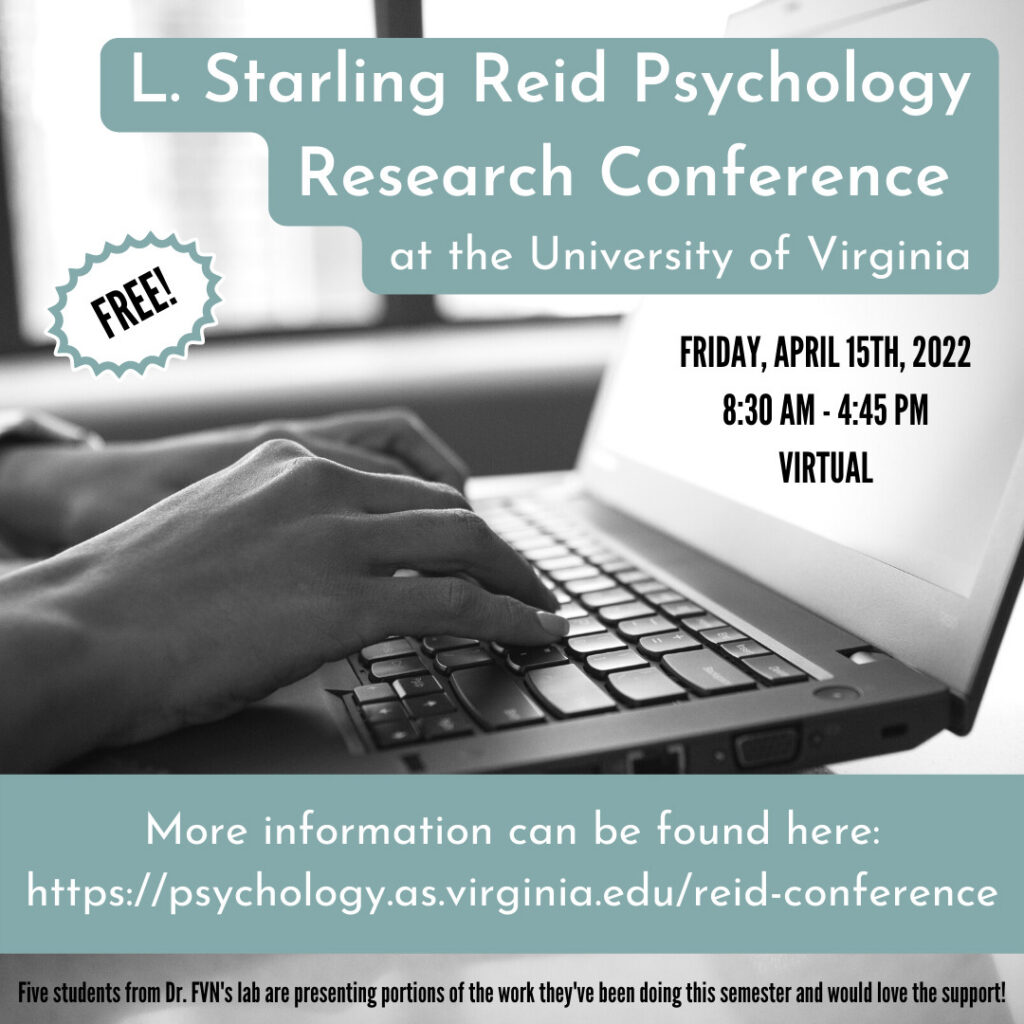
The annual L. Starling Reid Psychology Research Conference at the University of Virginia highlights empirical research conducted by undergraduate scholars. Registration is free!
Presentation formats are research talks (15 minutes) or posters. The 16th Annual Reid Conference (Virtual Format) is scheduled for:
Friday, April 15th (this Friday!)
8:30 am – 4:45 PM
You can register here. Or by copying and pasting this link: https://psychology.as.virginia.edu/reid-conference
All conference guests and presenters are required to register prior to the conference. After you register you will receive a zoom meeting link just for you. If someone you know also needs a link, please ask them to register to obtain a link (rather than sharing your link). This enables UVA to communicate with everyone who attends.
On February 9-13, eight students attended the Society for Personality and Social Psychology (SPSP) Conference virtually, to present research through poster sessions and to attend presentations. The students included Sophie Bacon ’20, Carolynn Bructo ’21, Ben Campbell ’22, Sydney Caulder ’21, Kira Hunt ’21, Abbie Joseph ’21, Naomi Painter ’22, and Carly Schepacarter ’21.
This blog post will highlight reactions to presenting and attending the SPSP conference virtually.
Sophie Bacon ’20
While presenting a poster at a virtual conference was a different experience, I ended up finding a silver lining! Something that I ended up enjoying about the virtual format was having all of the information about the conference and the research that was being presented at my fingertips. I think I ended up reading and viewing more posters on the SPSP app than I did at a different conference that I attended in person!
Carolynn Bructo ’21
It was exciting to have my independent study project accepted for presentation at the SPSP convention. SPSP is the biggest organization of social psychologists and personality psychologists globally, and it is an achievement to have my work displayed. A benefit of the online format of the conference was that it was low pressure. Instead of a formal presentation, attendees can look at the poster and post any questions they may have. The online format also provided flexibility. I did not have to miss any classes, and I could look at other presentations in my free time. Although the experience of an online conference was undoubtedly different from getting to travel, I enjoyed the opportunity.
Ben Campbell ’22
I thought the conference did the best it could to make it interactive and interesting for presenters and attendees. I uploaded my poster and then added a 4-minute recording of myself presenting my study. I saw that several people watched and liked my poster/presentation. I however did not receive any questions for my Q&A, so I hope that the attendees found my work to be interesting and easy to comprehend. Though being online was a bit disappointing, I found it to be a great experience for me to present my work.
Sydney Caulder ’21
My experience at the SPSP conference this year was a true reflection of these uncertain times. Although the way that it was conducted was unconventional, I was still met by a few professionals in the field that were supportive and interested in my work. I appreciated the organization into subsections of research and those who conducted the conference were able to keep a personalized feel. Overall, I enjoyed the experience of getting a taste of what conferences are like!
Kira Hunt ’21
Presenting at SPSP this year was certainly different because of the online format. I felt less pressure about having an audience because I recorded a video of me presenting the poster but I did miss the exhilaration from being around other people. However, I didn’t feel as though I missed seeing any posters I wanted to see, and having access to so much information for several days was nice.
Abbie Joseph ’21
Presenting at SPSP was a great experience, even though it was completely virtual. People from all across the country (and even across the world) were able to see the research I was doing and ask me questions. I was able to view as many posters as I wanted to on the app, and I still learned about a lot of the research that was going on, just like I would have if the conference was in person.
Naomi Painter ’22
Presenting virtually at the SPSP 2021 conference was an eye-opening experience. I greatly enjoyed the freeform aspect of a virtual conference that encouraged exploration and illustrated increased accessibility I had not experienced in past conferences. With the online platform, I was able to view multiple posters and recorded presentations at my own pace and convenience. As a presenter, I appreciated the various means by which questions and comments could be communicated in addition to the expanded time for individuals to view the poster and materials beyond a limited time period.
Carly Schepacarter ’21
Presenting at SPSP was a really positive experience. While I was skeptical at the beginning about an online conference, I feel like it was easier to navigate and find talks/posters I was interested in, as well as for others to engage with my work more than just for the hour that my presentation was scheduled. There was a whole host of topics to explore and I really enjoyed taking the time to listen to a few presentations and enjoy the conference environment (and the psychology meme group!). I would definitely present at another virtual conference and recommend the experience to others.
Congratulations once again to all those that presented at SPSP!
On February 9-13, eight students attended the Society for Personality and Social Psychology (SPSP) Conference virtually, to present research through poster sessions and to attend presentations. The students included Sophie Bacon ’20, Carolynn Bructo ’21, Ben Campbell ’22, Sydney Caulder ’21, Kira Hunt ’21, Abbie Joseph ’21, Naomi Painter ’22, and Carly Schepacarter ’21.
This blog post will highlight the posters that the students presented and a brief summary of their research.
Sophie Bacon ’20
Research has shown that social networking platforms (Instagam, Facebook, Snap Chat, ect) afford the opportunity for identity development, specifically through engaging in different types of self-presentation. In this study, we examined the association between social goals (including, authenticity, the need for popularity, and need for belonging) and presentation of the real, ideal, and false self on social media.
Our main findings were that Authenticity predicted greater real self-presentation on social media, a high need for popularity predicted higher false self-presentation, and a high need for belonging predicted greater ideal self-presentation.
Carolynn Bructo ’21
In this study, we examined achievement goal orientations (mastery, performance-approach, and performance-avoidance) in association with intention to remain in STEM majors and differences in these variables and associations by gender and unrepresented minority status in a large sample of undergraduate students. Results suggest achievement goals are meaningfully related to STEM persistence.
Ben Campbell ’22
This study aimed to expand on past research on relational aggression in adolescents, but in emerging adults (age 18-25). Relational aggression is an indirect form of aggression used to harm relationships (e.g., silent treatment, excluding others from a peer group, gossiping, verbal threats). We examined associations between relational aggression, resource control strategies (coercive and prosocial), social status (popularity, likeability, and social status insecurity), dominance, and prestige. Results showed that like in adolescents, relational aggression in emerging adults is associated with higher use of dominant behavior, coercive resource control strategies, greater social status insecurity, and greater valuing of popularity. This suggests that people who desire popularity and dominance within a peer group use higher amounts of relational aggression to attain and maintain that status.
Sydney Caulder ’21
Research has found that narcissism predicts heightened provoked aggression and hostility. However, less understood is the role of hostile attribution bias (HAB) in these associations. In this study, we examined multiple conceptualizations of narcissism (grandiose and pathological) in relation to HAB and aggressive responses to provocation.
Kira Hunt ’21
My poster “Ignoring Red Flags” pertained to online dating and how self-efficacy in romantic relationships impacted how much-emerging adults self-disclosed (i.e. shared information about themselves) to hypothetical online romantic matches. I also wanted to determine if disclosure levels would change if these hypothetical online romantic matches differed in physical attractiveness and were paired with vignettes that varied in honesty. We found that self-efficacy was not associated with disclosure and photo attractiveness did not influence participants’ disclosures but the level of honesty did influence disclosure. Participants were less likely to disclose and continue communicating for deception vignettes.
Abbie Joseph ’21
This project explores the use of ghosting as a romantic relationship dissolution strategy and its association with post-dissolutional cyberstalking behaviors. Due to the uncertainty that ghosting involves, it was expected that ghosting would be associated with more severe and more frequent cyberstalking behaviors than relationships ended by other strategies (e.g., an explicit breakup).
Naomi Painter ’22
COVID-19 has impacted the food industry’s means of operation and employment. We examined the effect of stigmatization against Asian restaurants on the perception of contamination and willingness to order takeout. We found statistically significant effects as participants with a higher fear of contamination were less likely to order takeout and were also less likely to order Chinese food.
Carly Schepacarter ’21
This project’s goal was to determine if people experiencing a negative life event have different tastes in art than others, as well as if interacting with art can help those people have an improved emotional state. In the first study, we were interested in studying if individuals reported a different preference for art after recalling a negative event, and we wanted to know how exposure to art would impact their emotions. Ultimately, participants did not have a specific preference for a subject matter in art, but there was an interaction between Prime and Order which means that the Prime did impact the emotional state of the participants when they did the emotion questionnaire right after the prime, but this effect disappeared when they did the art rating first. The second study tested if this happened because of some impact of the art task, or because of natural decline over time. The results indicated that participants who completed an art task had more positive emotions on a questionnaire than those in a non-art control task. From this, we can say confidently that experiencing art after recalling a negative event increases positive emotions more than the control task. Research from this project was used to create paintings for Hopetree Family Services in Salem, VA.
On February 27-29, four students and three psychology professors attended the Society for Personality and Social Psychology (SPSP) Conference in New Orleans, Louisiana, to present research through poster sessions and to attend presentations. The students included Hayley Mulford ’20, Naomi Painter ’22, Kaillee Philleo ’21, and Lauren Powell ’21. These students were joined by Dr. Buchholz, Dr. Carter, and Dr. Osterman.
Those in attendance have since given some insight onto what it was like presenting at the conference as well as their reactions to the conference and New Orleans, LA:
Hayley Mulford
While I did not present at the conference, It was so cool to see how many different research projects were being done and how enthusiastic people were! Everyone was really professional and genuinely interested in the research. Moreover, people held such intellectual conversations. I got to talk to some people that go to grad school at FSU, which is where I am going, so I was so excited! New Orleans is one of the coolest places I have ever been to. I loved the culture, the people, the food, and the area. I would go back in a heartbeat!
Naomi Painter
Dr. Buchholz and Naomi Painter standing in front of the poster Naomi Presented on – “Assessing the effects of participant inattentiveness on data quality across the semester”
Presenting at the SPSP 2020 conference was a wonderful experience in communicating our research projects and findings. I had a great time interacting with students and faculty members through discussion of projects and questions. Being able to see the wide variety of ongoing research was quite exciting, as many of the research topics correlated with ongoing issues that one often reads about or experiences each day.
One of the best parts of the New Orleans SPSP conference was being able to walk around and visit Bourbon Street, Jackson Square, and other popular sites while witnessing firsthand the fascinating and entertaining atmosphere of the great city of New Orleans.
Kaillee Philleo
Kaillee Philleo and Dr. Osterman standing in front of the poster Kaillee presented on – “Listener attitudes and social media engagement after offenses by podcast hosts”
Going into SPSP I was quite nervous, as I have never presented at a conference before. However, after attending a few presentations and talking with other poster presenters, when it came time to present on my own research, it was not nearly as nerve-racking. I loved getting to learn about the variety of research topics in the field of psychology and enjoyed getting to meet other psychologists from across the world and discuss their projects and my own. Beyond the conference, we were able to explore New Orleans and I was able to try gumbo, which has since become my newfound favorite meal. I cannot wait to return to New Orleans in the future and hope to return to SPSP one day as well.
Lauren Powell
Lauren Powell and Dr. Buchholz standing in front of the poster Lauren presented on – “Are liberals more empathic than conservatives?”
This was my second conference but it was the first conference that I have attended that I presented my work independently! It’s not as scary as it seems, and you get to meet a lot of cool people who have the same interests as you – I had a lot of great conversations with people from all over the world! Moreover, it was fun to see what other people were there to present. It’s always interesting to see that there are so many unexplored topics within the broad category of psychology. Beyond the conference, New Orleans was so much fun and I definitely plan on going back! I am really glad we were all able to experience New Orleans for just long enough to enjoy it but not long enough to be affected by the COVID-19 outbreak that has been happening.
Dr. Buchholz
I always enjoy going to the Society of Personality and Social Psychology annual conference. This year it was in New Orleans, which was a lot of fun. At the conference, we have a chance to interact with some of the leading scientists in the field and to hear about cutting-edge research. It is also a great opportunity for our students to present research that they have been conducting in our research labs. This year Naomi Painter and Lauren Powell were both able to present as first authors on our research examining empathy.
Dr. Carter
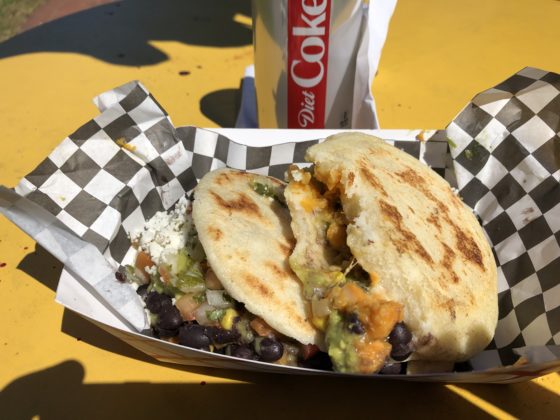
Dr. Carter’s lunch one day!
I had a great time at SPSP! I wasn’t able to attend last year due to the birth of my son, so it was great to catch up with colleagues and friends from graduate school that I hadn’t seen in a while, and of course to soak up some culture in New Orleans (and several really good meals). I saw a number of really excellent talks, learned a lot, and took inspiration for a few new research projects. My favorite part, however, was getting to see one of my graduate advisors (Tom Gilovich) win the society’s prestigious Campbell Award. He’s a giant in the field, and he absolutely deserves the recognition.
Dr. Osterman
SPSP was a blast as always, and I’m so proud of how well our students did with presenting their research! They represented the college and department well. Kaillee even talked to some people from NPR about her podcasting research!
Congratulations to all those who attended the conference and for having successful presentations!
On November 20-23, Dr. Powell took two students to the National Council on Family Relations (NCFR) Conference in Fort Worth, Texas to present research through poster sessions and to attend presentations. These students included Rachel Harmon ’20 and Morgan Hamilton ’21.
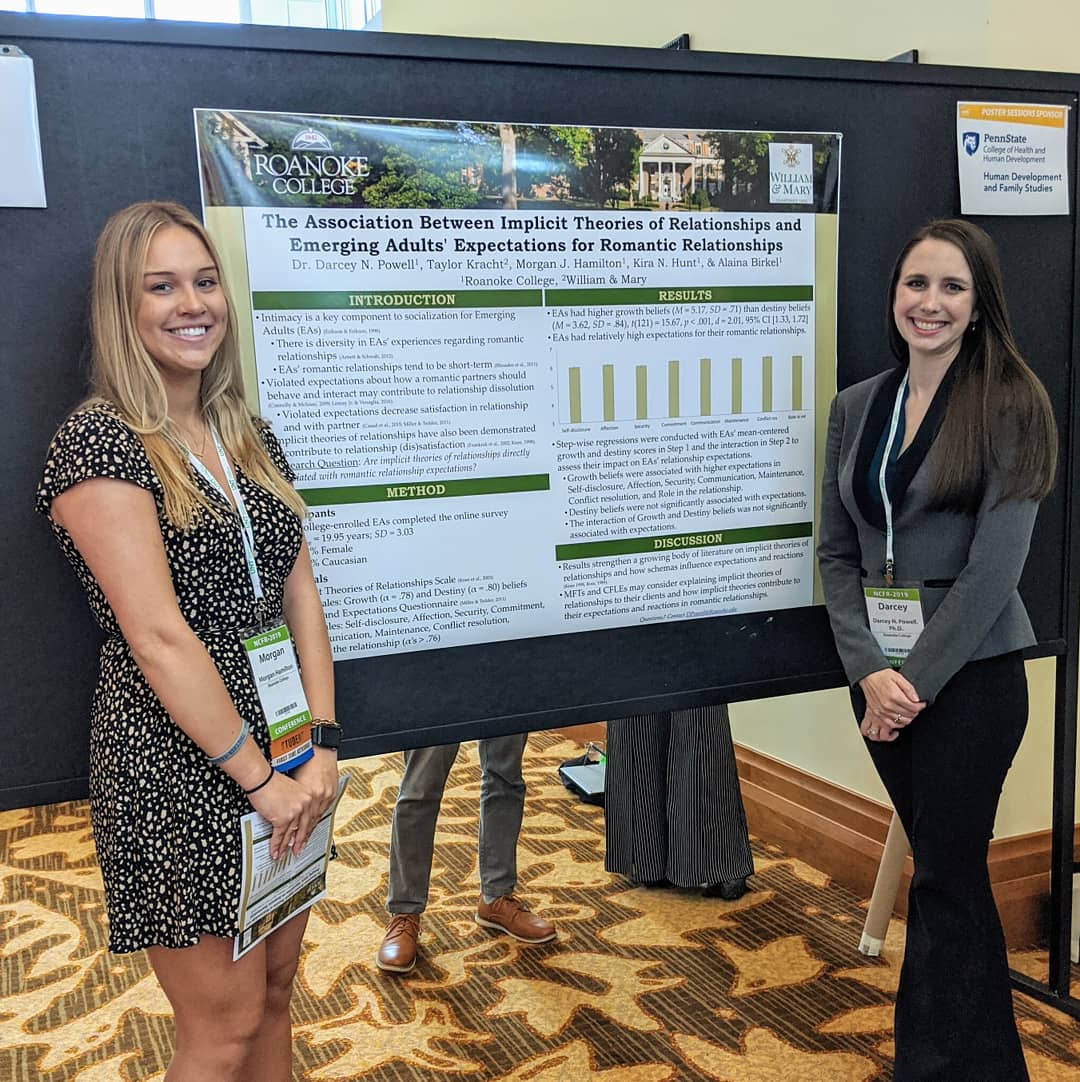
Morgan Hamilton Worked alongside Dr. Powell and presented their poster titled “The Association Between Implicit Theories of Relationships and Emerging Adults’ Expectations for Romantic Relationships,” which was based on a subset of results from Taylor Kracht’s ’18 honors in the major study.
The students have since given some insight onto what it was like presenting at the conference as well as their reactions to the conference and Fort Worth, TX:
Rachel Harmon and Morgan Hamilton at the NCFR conference
Rachel Harmon
I attended the annual NCFR conference with Dr. Powell and my fellow lab-mate, Morgan. Although I did not present at the conference I enjoyed attending the poster sessions and symposiums that were relevant to my current and future research interests, as well as supporting Morgan and Dr. Powell during their presentation. I specifically enjoyed attending presentations on the topics of disability and immigrant youth and families. Attending this conference was beneficial for me as I am currently applying to graduate programs in Human Development and Family Studies and Clinical Psychology. While I was at the conference I was able to interact and network with professors in Human Development and Family Studies programs as well as to receive feedback on my own research. Attending NCFR also prepared me to present my own research at a conference next semester. I am very thankful that Dr. Powell and Roanoke College encourage their undergraduate students to attend conferences to gain valuable experience in their areas of interest. Overall, I really enjoyed exploring Fort Worth with Dr. Powell and Morgan. The things I enjoyed most about the city were the food and the nice weather!
Morgan Hamilton and Dr. Powell presenting their poster
Morgan Hamilton
The opportunity to present at NCFR was incredible. Leading up to the poster session, I was very nervous because I had never presented to a group of scholars. After the session began and I had spoken to a few people who gave high praise to our research, my nerves significantly calmed. It was so cool to hear people’s thoughts about how our research applied to their own work. Although presenting was a great experience, my favorite part of the conference was listening to other scholars talk about research they conducted on topics I want to pursue and am truly passionate about. I was able to sit in a room with thirty people who all cared about adolescent mental health and was also able to meet a few professors at graduate programs too. It was fascinating to see how Psychology is growing & gave me great ideas about potential future research I would like. Finally, Fort Worth was such an amazing city! Rachel, Dr. Powell and I spent a lot of time walking around the shops in the city and finding great food along the way. Overall, the experience was something I am super grateful to have been warranted and I’m sure it will stand out as a highlight of my academic career at Roanoke College.
Fort Worth, TX gearing up for the holiday season!
Congratulations to all those who attended the conference and for having a successful presentation!





 Research has shown that social networking platforms (Instagam, Facebook, Snap Chat, ect) afford the opportunity for identity development, specifically through engaging in different types of self-presentation. In this study, we examined the association between social goals (including, authenticity, the need for popularity, and need for belonging) and presentation of the real, ideal, and false self on social media.
 In this study, we examined achievement goal orientations (mastery, performance-approach, and performance-avoidance) in association with intention to remain in STEM majors and differences in these variables and associations by gender and unrepresented minority status in a large sample of undergraduate students. Results suggest achievement goals are meaningfully related to STEM persistence.
 Research has found that narcissism predicts heightened provoked aggression and hostility. However, less understood is the role of hostile attribution bias (HAB) in these associations. In this study, we examined multiple conceptualizations of narcissism (grandiose and pathological) in relation to HAB and aggressive responses to provocation.


 On February 27-29


 Congratulations to all those who attended the conference and for having successful presentations!