
Latest
-
Congratulations to Cody Dillon-Owens ’19, Dr. Findley-Van Nostrand, and Dr. Buchholz on recent publication
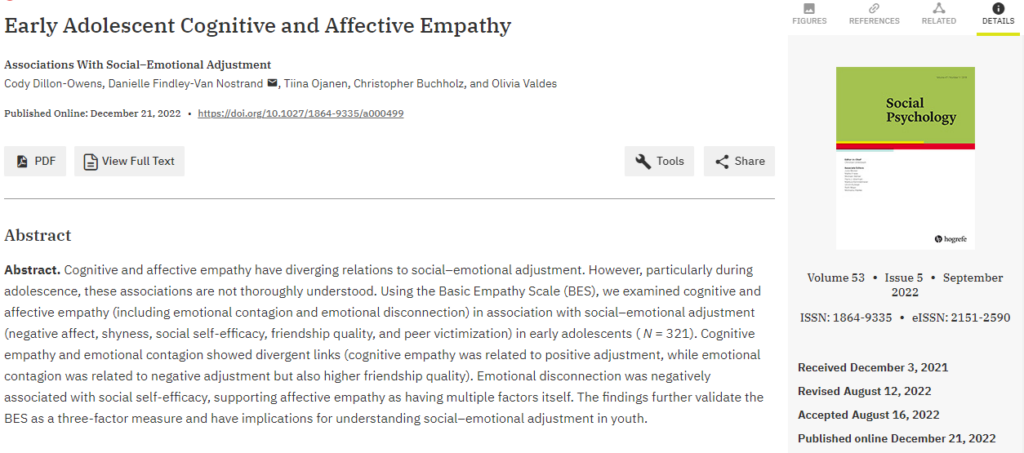
Alum Cody-Dillon Owens ’19, Dr. Findley-Van Nostrand, and Dr. Buchholz recently had their research published in an article titled Early Adolescent Cognitive and Affective Empathy – you can read the full article here. Congratulations! -
New Disabilities Studies Concentration
This year, Roanoke College has expanded their academic catalog by launching a new concentration in Disability Studies.
“the concentration was designed with an interdisciplinary approach that reflects the truth that disabilities are woven into every aspect of society.” –Roanoke College
The interdisciplinary team of faculty directing the concentration include Dr. Teresa Milbrodt, Assistant Professor of English & Communication Studies; Mrs. Frances McCutcheon, Lecturer in Biology; and Dr. Andréa Burchfield, Visiting Assistant Professor of Psychology.
Required courses for the concentration focus on disability theory, the lived experience of people with disabilities, elective units, and a capstone consisting of an internship or independent study.
Dr. Burchfield shares that Disability Studies “prepares students for careers in the human services where they are likely to encounter people with disabilities.” Students who aim to attend graduate programs for special education, occupational therapy, speech and language pathology, and applied behavior analysis will especially benefit from completing the concentration.
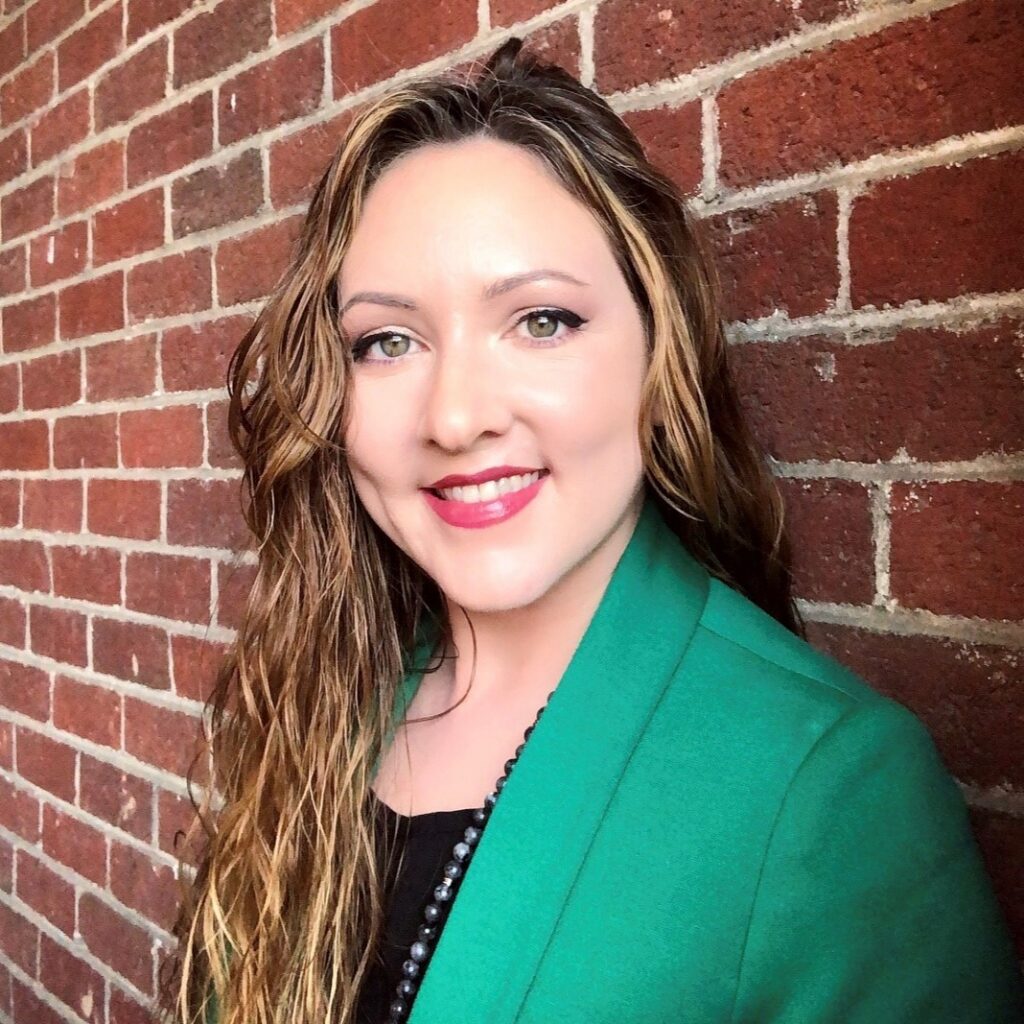
Dr. Andréa Burchfield, Visiting Assistant Professor of Psychology, Coordinator for Disability Studies The concentration is also aimed at providing students with disabilities at Roanoke College a means to “better understand themselves, their disability communities, and what to expect from the world at large, while also deepening their support network here on campus.”
Prior to teaching at Roanoke College, Dr. Burchfield worked in the field by providing behavior therapy, disability education and consultation, and disability accommodation training. Her past research focused on children with autism.
She says,
“I’m motivated to educate students about disabilities after years of witnessing the systemic isolation, negative stigmas, and obstacles to accessing services that people with disabilities face. People without disabilities lack a general awareness about the challenges the disability community faces; I’d like to reduce that gap in awareness.”
Through disability studies, Dr. Burchfield hopes that students will create “positive changes for people with disabilities on campus and in their communities” and that current and prospective Roanoke students with disabilities will benefit from a stronger sense of community and belonging on campus.
The Psychology Department is excited that this valuable field of study is now represented on campus.
Get Connected!
- Blog: https://psych.pages.roanoke.edu/
- Facebook: https://www.facebook.com/rcpsychology
- Twitter: @RC_Psychology
- Linked In: https://www.linkedin.com/groups/RC-Psychology-8140491/about
- Website: https://www.roanoke.edu/inside/a-z_index/psychology
- Instagram: @rcpsychology #PsychRC
-
Lecture Today!
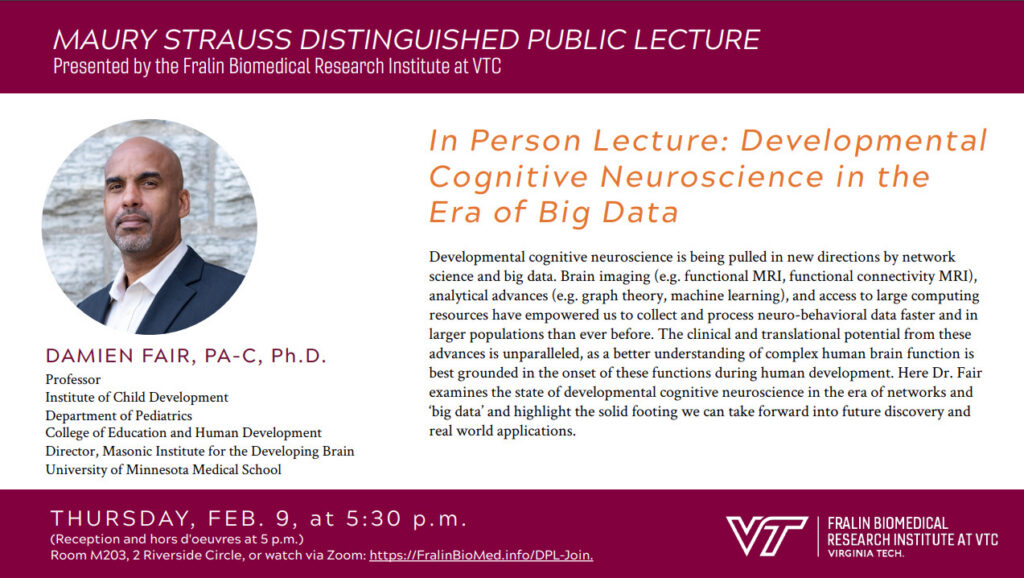
Psychology students are invited to attend the lecture titled “Developmental Cognitive Neuroscience in the Era of Big Data” hosted by the Fralin Biomedical Research Institute at VTC. On February 9th at 5:30pm, Damien Fair, PA-C, Ph.D. will be speaking on this topic.
The lecture will be broadcast on Zoom and is free to attend! Click here to join the webinar.
Read on, or visit the event page for more details!
“Developmental cognitive neuroscience is being pulled in new directions by network science and big data. Brain imaging (e.g. functional MRI, functional connectivity MRI), analytical advances (e.g. graph theory, machine learning), and access to large computing resources have empowered us to collect and process neuro-behavioral data faster and in larger populations than ever before. The clinical and translational potential from these advances is unparalleled, as a better understanding of complex human brain function is best grounded in the onset of these functions during human development. Here Dr. Fair examines the state of developmental cognitive neuroscience in the era of networks and ‘big data’ and highlight the solid footing we can take forward into future discovery and real world applications.”
Get Connected!
- Blog: https://psych.pages.roanoke.edu/
- Facebook: https://www.facebook.com/rcpsychology
- Twitter: @RC_Psychology
- Linked In: https://www.linkedin.com/groups/RC-Psychology-8140491/about
- Website: https://www.roanoke.edu/inside/a-z_index/psychology
- Instagram: @rcpsychology #PsychRC
-
Position available: Full-time research assistant at Fralin Biomedical Research Institute at Virginia Tech Carillion
Job opportunity available at Fralin Biomedical Research Institute at Virginia Tech Carillion for a full-time research assistant to support projects in the labs of Dr. Pearl Chiu and Dr. Brooks King-Casas. More information below
-
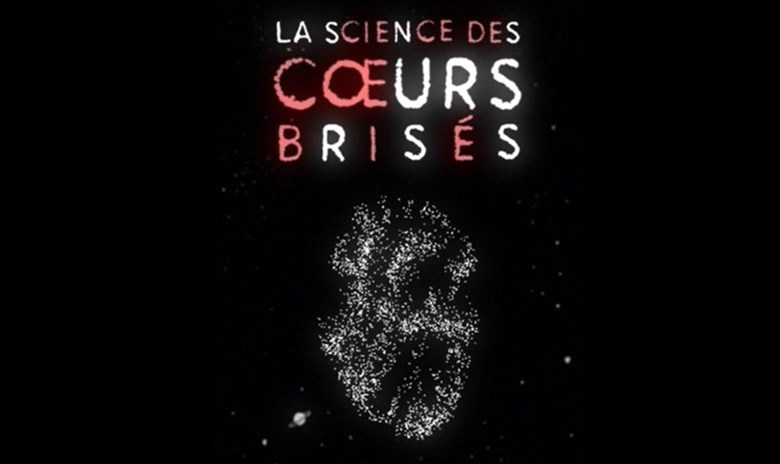
Dr. Powell appears in docuseries about ghosting
Our very own Dr. Powell recently appeared as an expert commentator on ghosting in relationships in the Swiss docuseries “La science das coeurs brises” or “The science of broken hearts.” You can read more about Dr. Powell’s research in ghosting and her appearance in this docuseries in this article.
-
Fall ’22 Poster Session
On Thursday December 8th, the Roanoke College community gathered to see psychology students present their latest research and internship experiences. This event is held at the end of every semester and always draws a crowd. As usual, Fintel library was packed with students, staff, and faculty alike to celebrate the hard work of driven psychology students.
Scroll through the photos below to see how our students enhance their learning beyond the classroom!

Fintel buzzes with excitement as students present research and internships 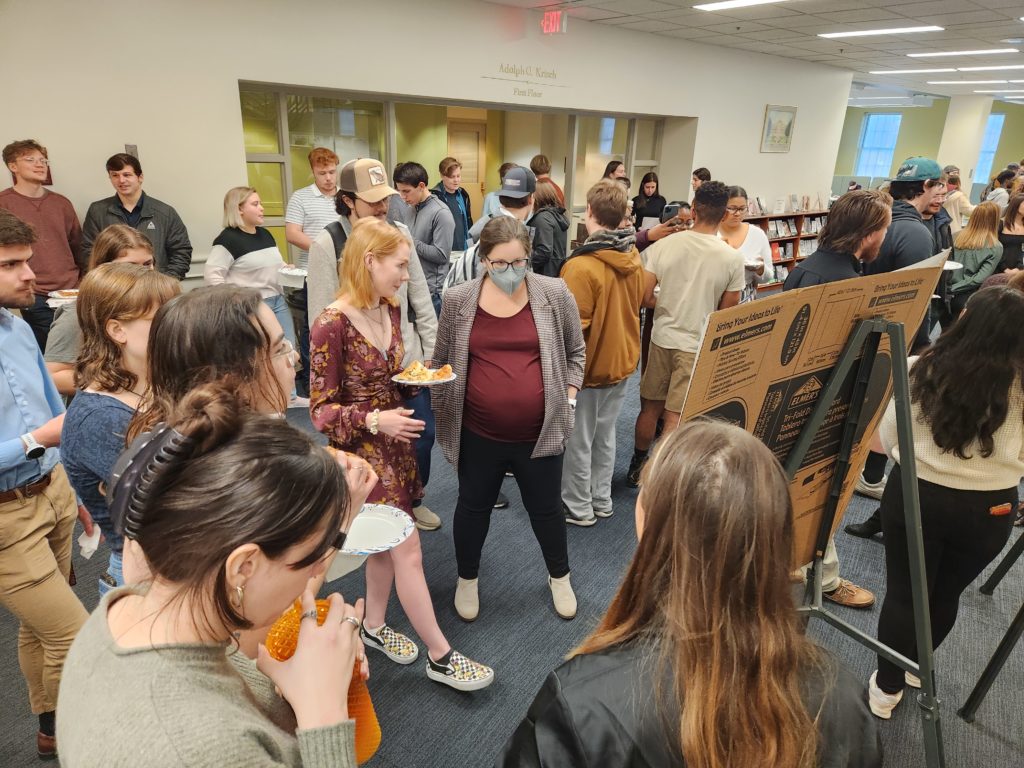
Dr. Findley-Van Nostrand and students listen to a presentation. 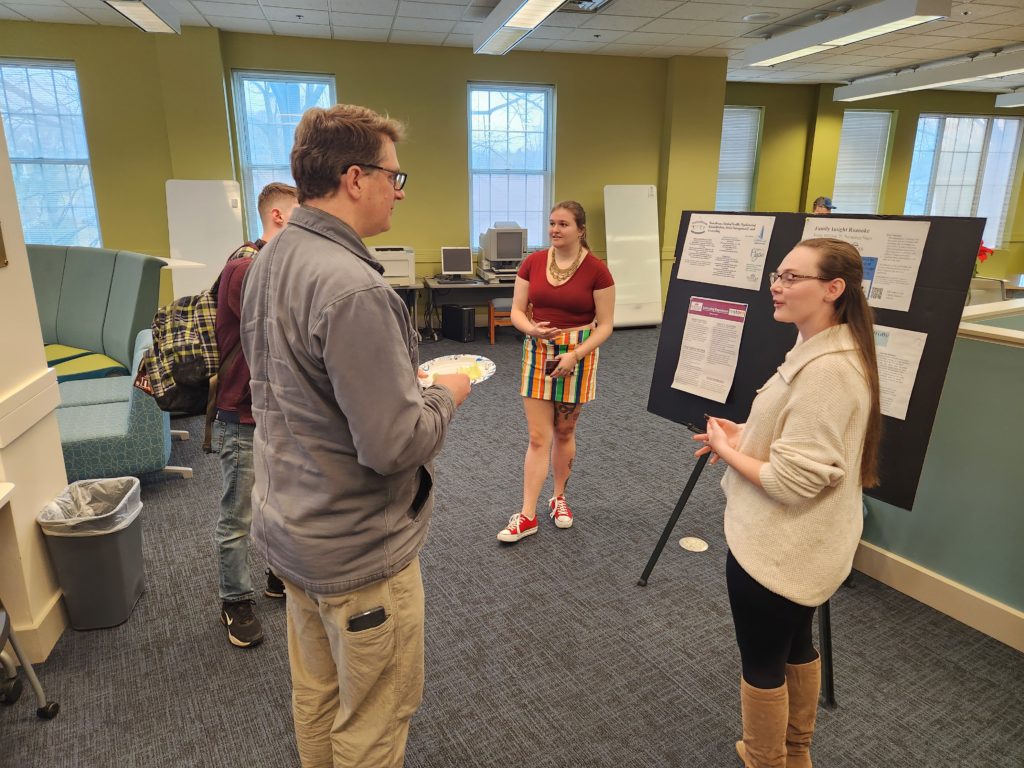
Kelsey McCown and Devin Brown speak about their recent internships. Research
Psychology students love research! Senior seminar, honors in the major, and independent studies are just a few of many ways students conduct research under the supervision of faculty. These experiences are all presented at the poster session as seen in the pictures below.
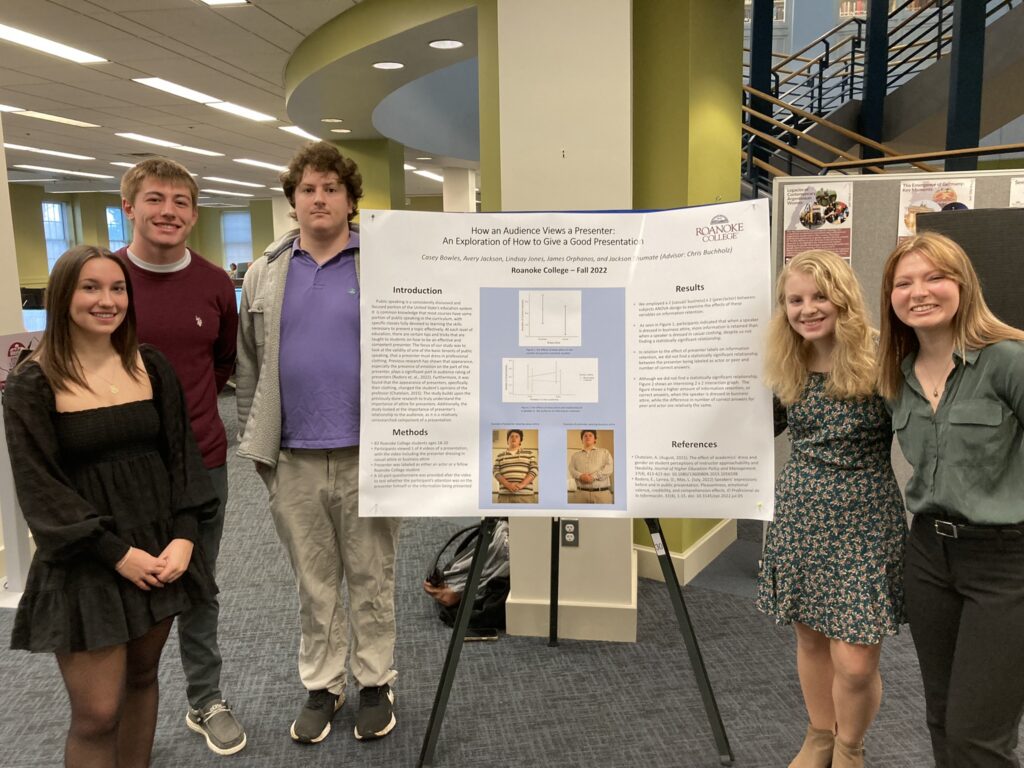
Seminar students (left to right) Avery Jackson, Jackson Shumate, James Orphanos, Lindsay Jones, and Casey Bowles present their capstone project. 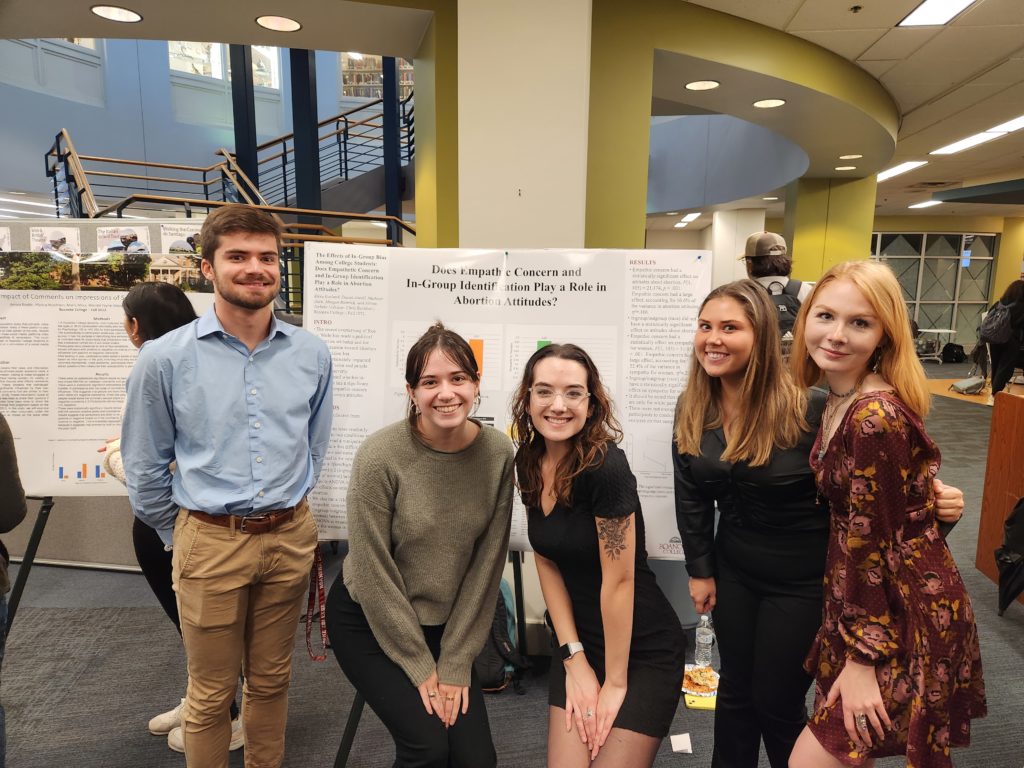
Seniors (left to right) Daniel Jewell, Morgan Bamrick, Kirra Eveland, Madison Dorn, and Allison Verbeke present their capstone project. 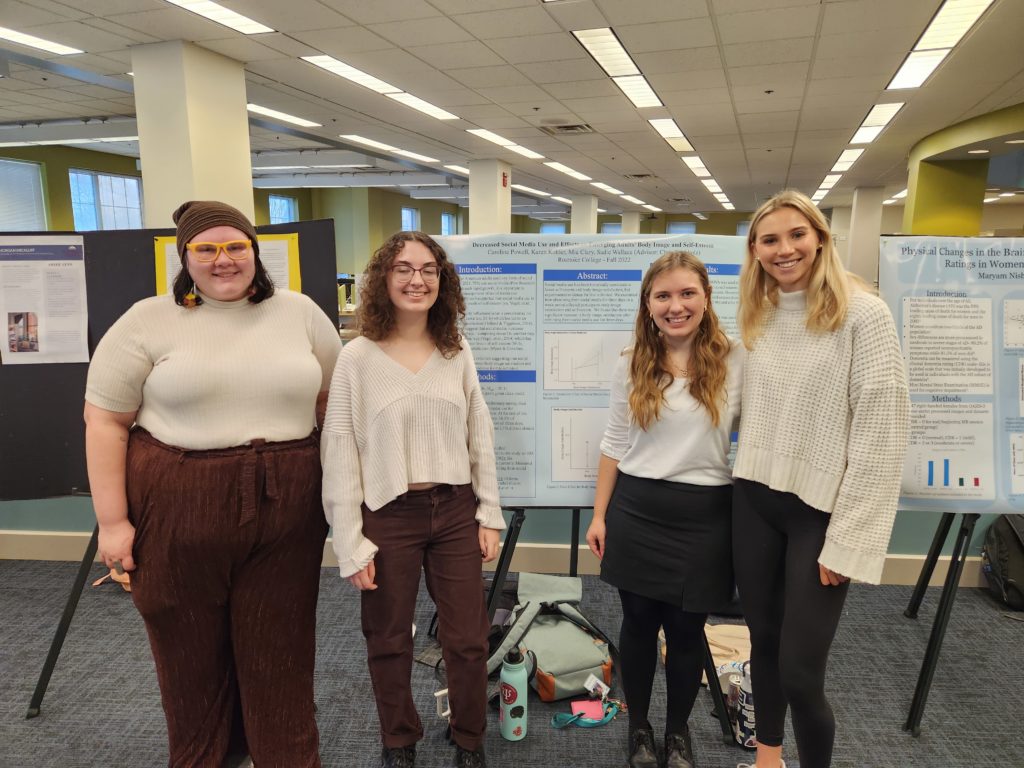
Seminar students (left to right) Sadie Wallace, Karen Kohler, Caroline Powell, and Mia Clary present their capstone project. 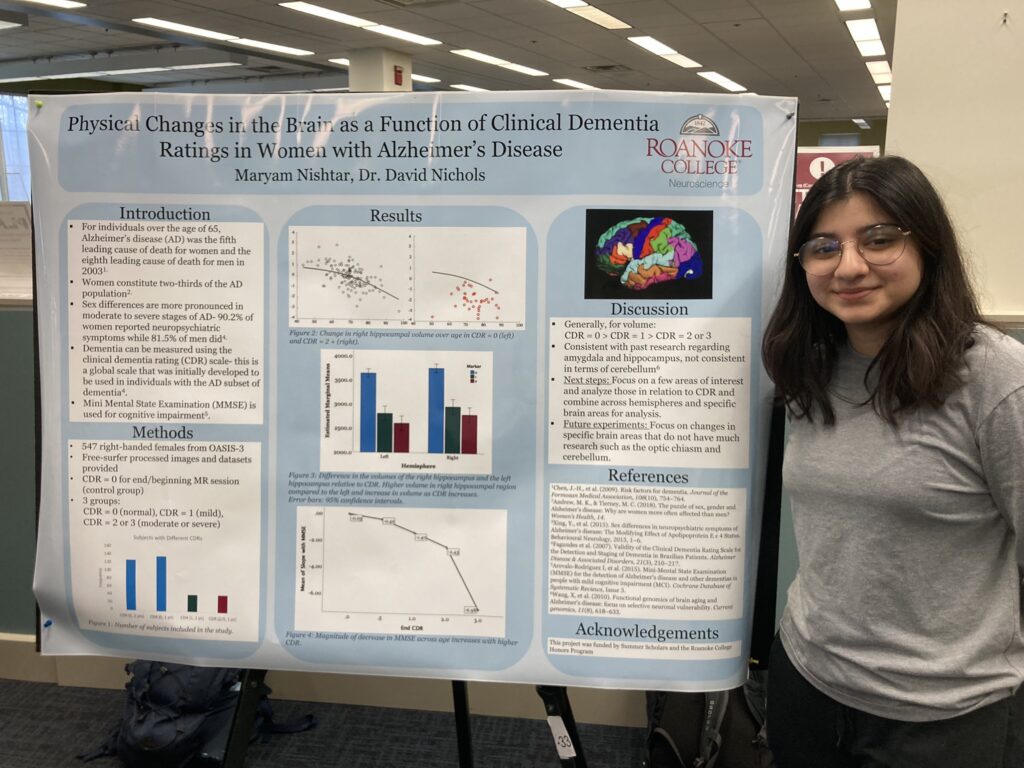
Maryam Nishtar presents her project conducted with Dr. Nichols, Physical Changes in the Brain as a Function of Clinical Dementia Ratings in Women with Alzheimer’s Disease. 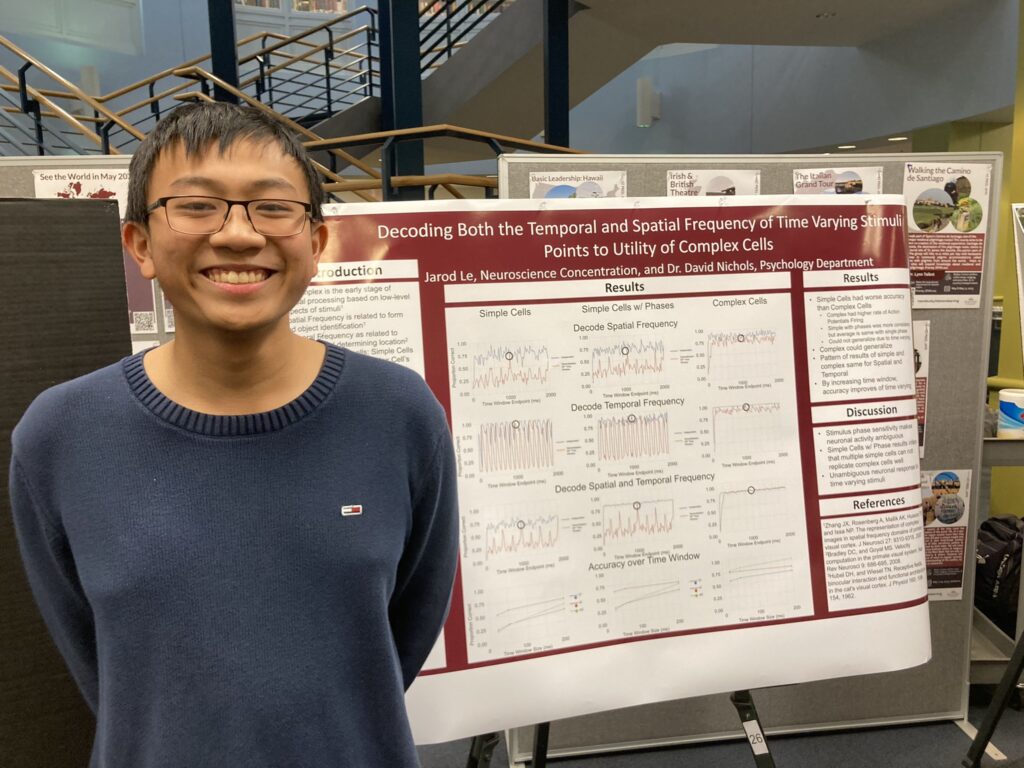
Jarod Le presents his research conducted with Dr. Nichols titled Decoding the Temporal and Spatial Frequency of Time Varying Stimuli Points to Utility of Complex Cells. HNRS 260 Projects
This semester, Dr. Findley-Van Nostrand taught an Honors-260 course titled The Psychology of Aggression. For their final project, students in the class worked in groups to create informational brochures or flyers summarizing practical applications of the topic they studied throughout the semester. In this course, students from a variety of academic backgrounds learned about the discipline of psychology and its applications.
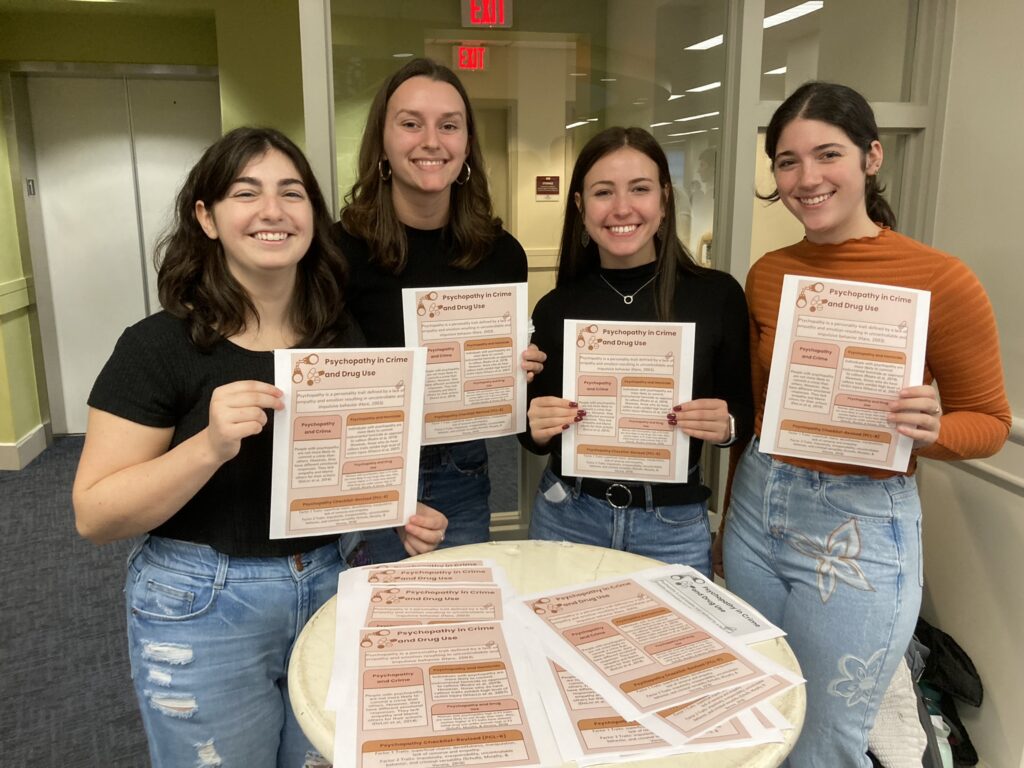
HNRS 260 students present Psychopathology in Crime and Drug Use 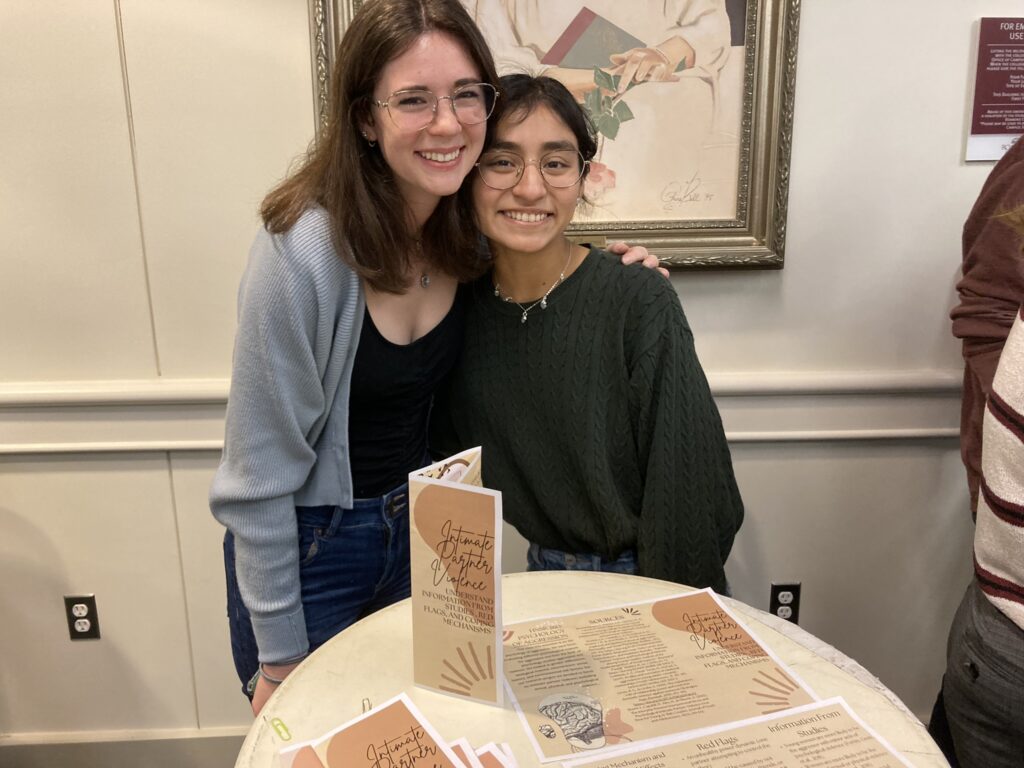
HNRS 260 students present their brochure on intimate partner violence. 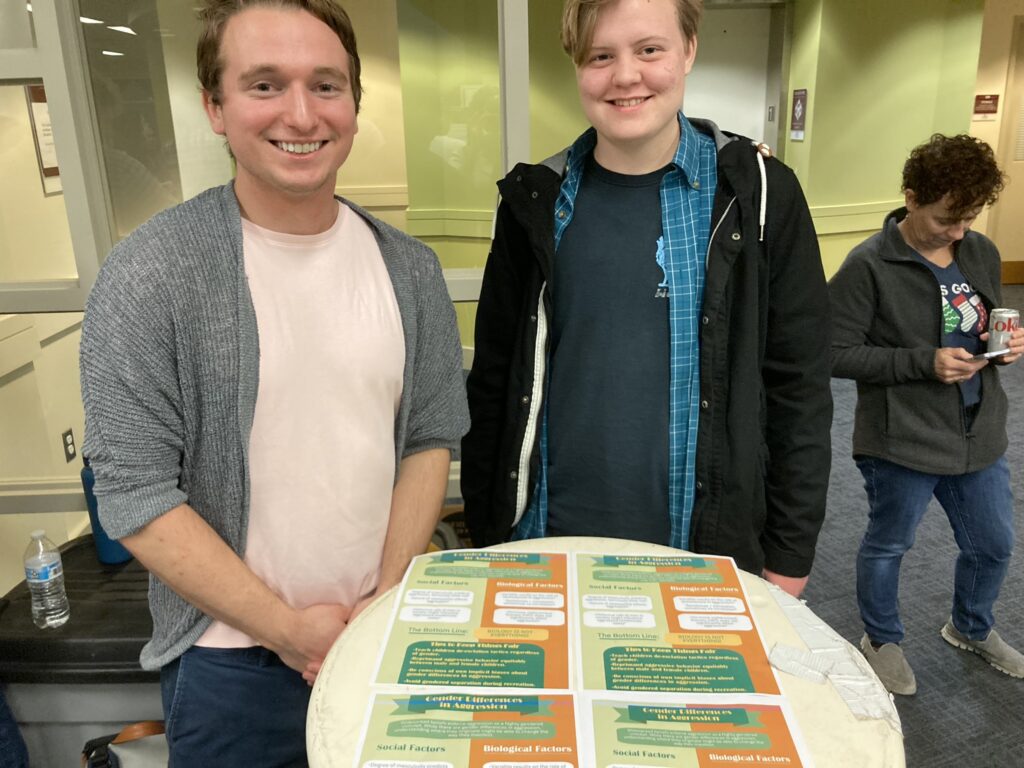
HNRS 260 students present Gender Differences in Aggression. 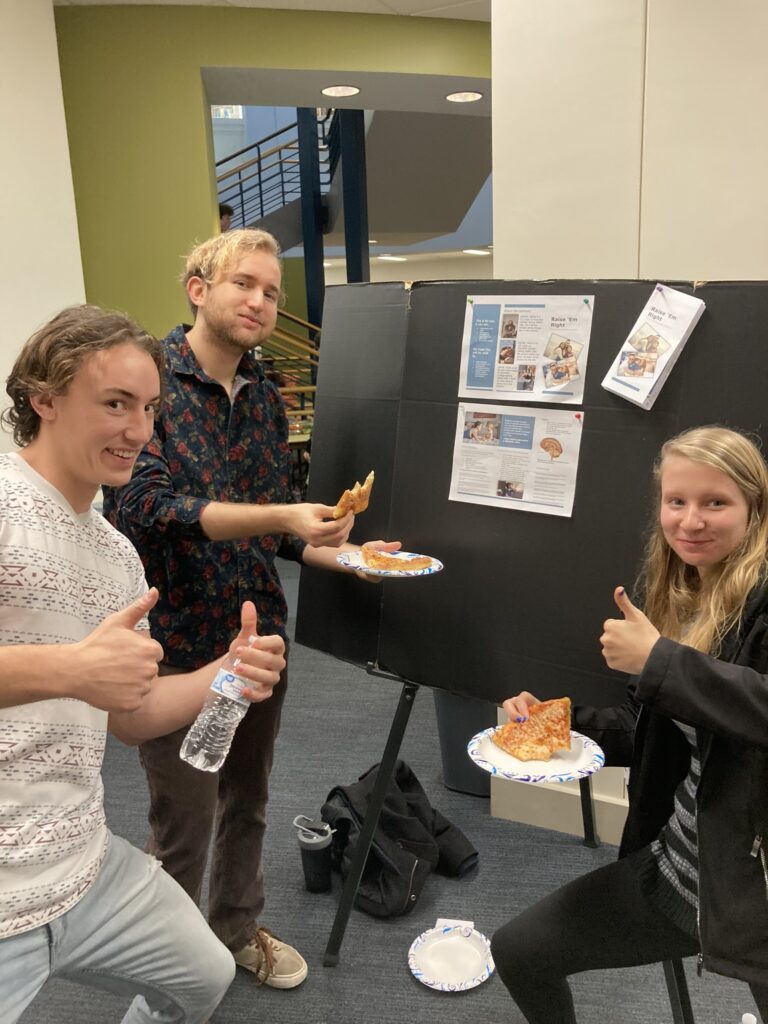
HNRS 260 students enjoy pizza while sharing their brochure about psychopathy in children. Internships
Many students also shared the workplace experience they gained through internships during the summer or school year. A broad range of internships qualify for academic credit and prepare students for the workforce after graduation.
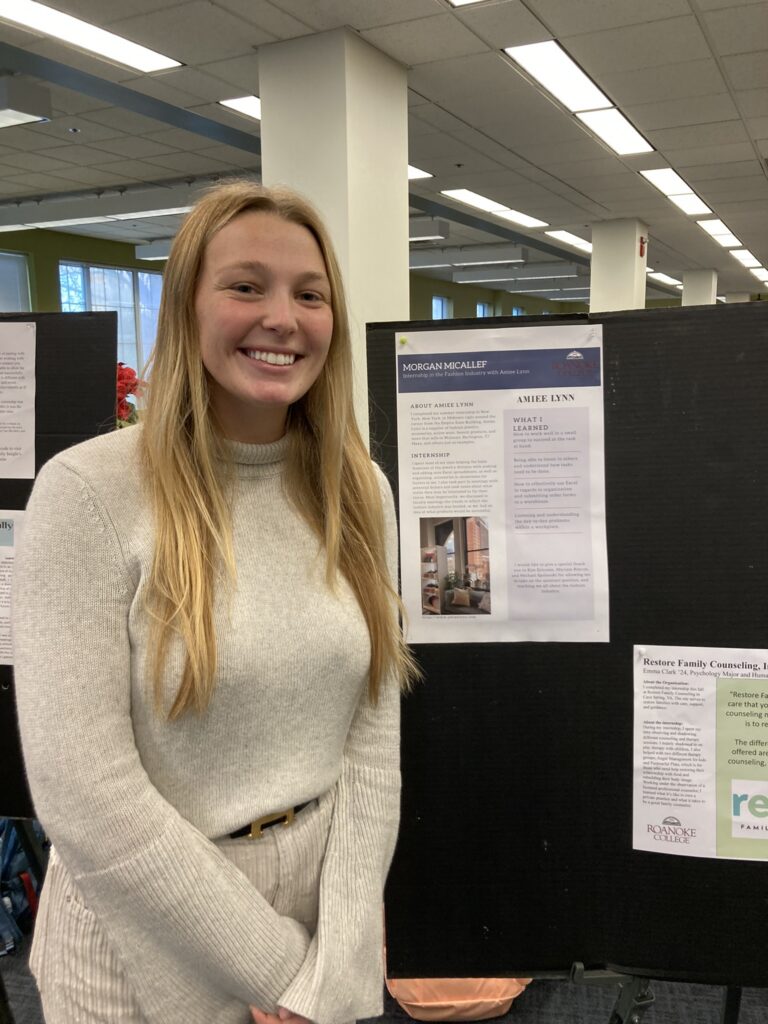
Morgan Michallef presents her fashion internship at Amiee Lynn in Manhattan 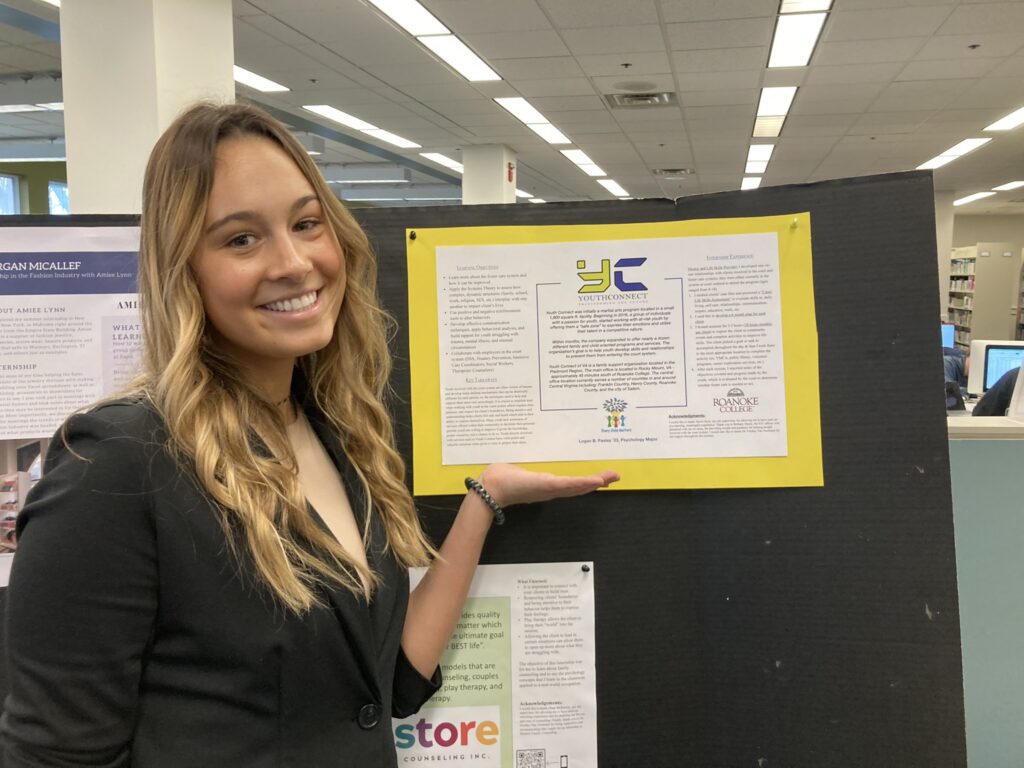
Logan Pasley presents her work at Youth Connect 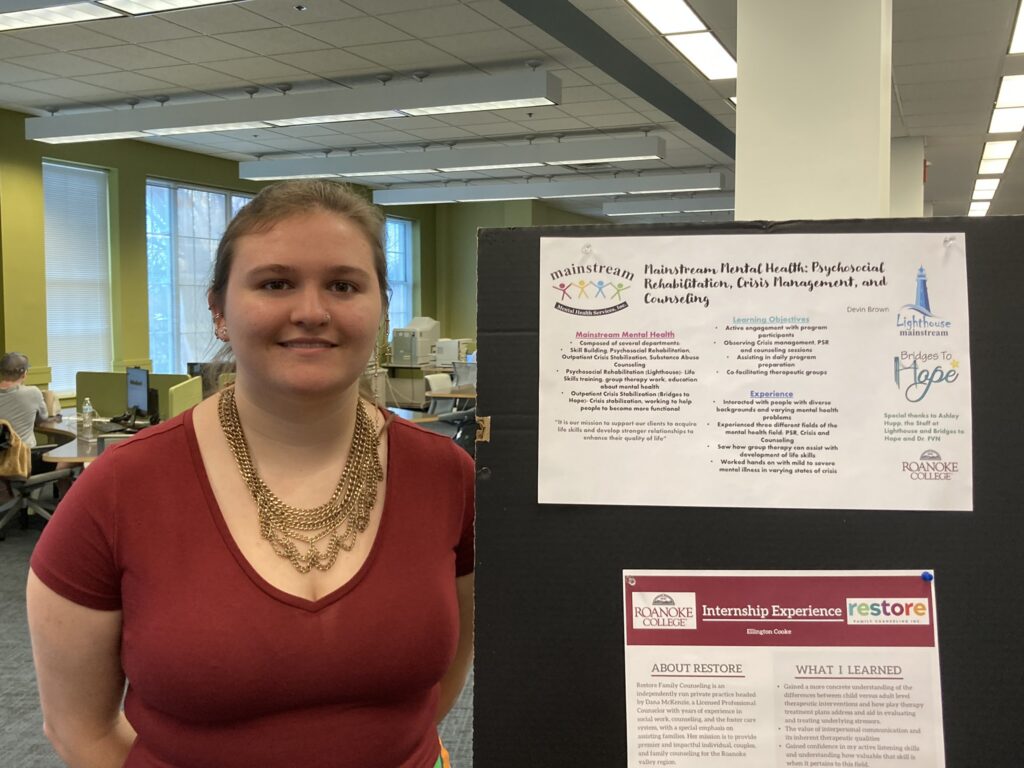
Devin Brown presents her work at Mainstream Mental Health in Roanoke, VA Get Connected to RC psychology!
- Blog: https://psych.pages.roanoke.edu/
- Facebook: https://www.facebook.com/rcpsychology
- Twitter: @RC_Psychology
- Linked In: https://www.linkedin.com/groups/RC-Psychology-8140491/about
- Website: https://www.roanoke.edu/inside/a-z_index/psychology
- Instagram: @rcpsychology #PsychRC
-
Psychology Department Poster Session
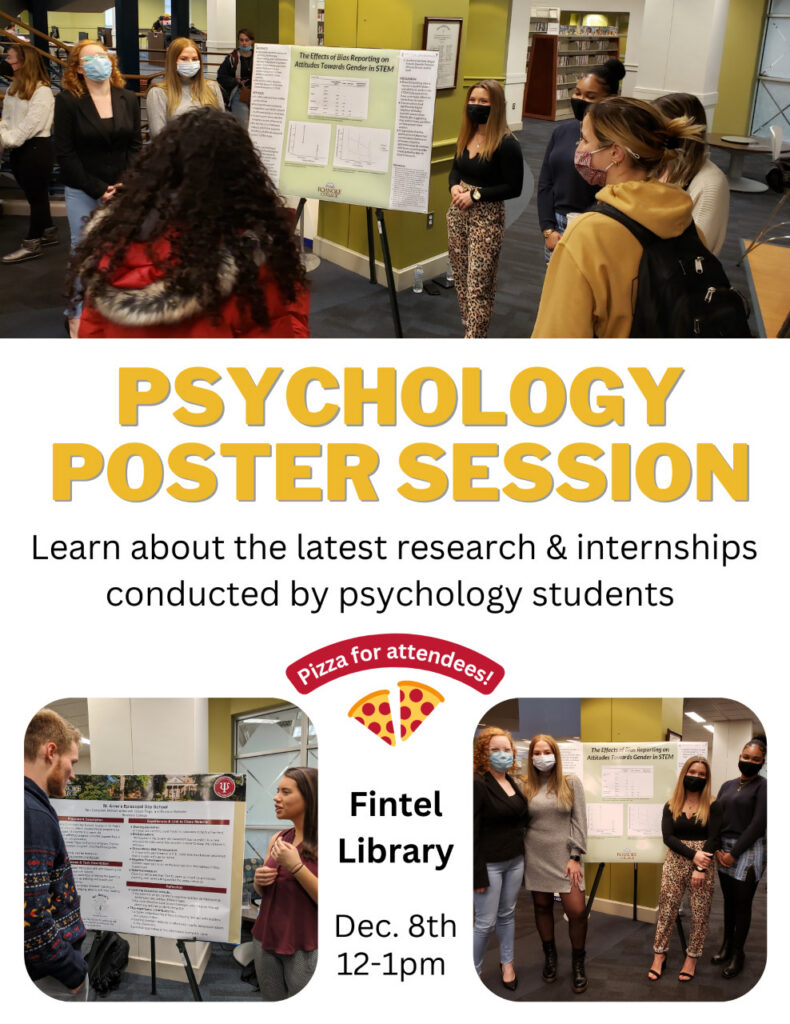
Come have some pizza and hear about the latest research and internships conducted by psychology students in the Library on December 8th from 12-1 pm!
Get Connected!
Blog: https://psych.pages.roanoke.edu/
Facebook: https://www.facebook.com/rcpsychology
Twitter: @RC_Psychology
LinkedIn: https://www.linkedin.com/groups/RC-Psychology-8140491/about
Website: https://www.roanoke.edu/inside/a-z_index/psychology
Instagram: rcpsychology
-
Kiah Coflin (’19) Honors in the Major Project Published

Kiah Coflin ’19 Kiah Coflin (’19) recently had her Honors in the Major project published in the Journal of Couple and Family Psychology. The article, titled “Comparison of emerging adults’ bid responses based on their gender and attachment” examines how individual differences in bid responses (i.e. turning toward, turning away, and turning against) effect relationship quality and duration.
Kiah completed this project under Dr. Darcey N. Powell, who she credits with encouraging her to become involved in research. She __ that the experiences that she gained from research – including presenting at research conferences, May Term, and the Honors in the major process were both fun and useful for her future beyond Roanoke
“It was an incredibly fun and enlightening time that shaped my undergraduate career, and certainly helped as I continued on into graduate school for my Masters.” – Kiah Coflin ’19
After graduation, Dr. Powell continued to support her through the publication process, as they worked together to edit and create manuscripts and submit for publication at various journals. Kiah graduated from Boston College with her Masters in School Counseling in Spring 2021, and has been working as a School Adjustment Counselor with hopes to continue to grow in the profession.
“I’m continually in awe of the opportunities Roanoke College has been able to provide myself and fellow graduates, and consider myself lucky to continue to have the support and guidance of the Psychology Department years beyond my leaving campus.” – Kiah Coflin ’19
Here’s the abstract for the paper:
This project explored individual differences in bid responses, focusing specifically on participant gender and attachment. Bid responses (i.e., turning toward, turning away, and turning against) have been demonstrated to predict relationship quality and duration. However, to date, individual differences have not been explored. A pilot study of college-enrolled emerging adults (N = 51) demonstrated variability in responses to the created vignettes about hypothetical interactions with a romantic partner. Participants in the main study (N = 172) were emerging adults recruited from Prolific who responded to the finalized vignettes, as well as attachment and demographic questions. Turning toward was the most endorsed response type, and participants’ responses did not differ based on their gender. Bid responses did differ based on their romantic attachment, but not on their friend or family attachments. The results reiterate that practitioners should consider clients’ romantic attachment when discussing their interactions in romantic relationships and suggest additional research examining individual differences in bid responses is warranted.
Citation is: Coflin, K., & Powell, D. N. (2022). Comparison of emerging adults’ bid responses based on their gender and attachment. Couple and Family Psychology: Research and Practice. Advance online publication. https://doi.org/10.1037/cfp0000236
Get Connected!
Blog: https://psych.pages.roanoke.edu/
Facebook: https://www.facebook.com/rcpsychology
Twitter: @RC_Psychology
LinkedIn: https://www.linkedin.com/groups/RC-Psychology-8140491/about
Website: https://www.roanoke.edu/inside/a-z_index/psychology
Instagram: rcpsychology
-
RC Psychology Alum in the News
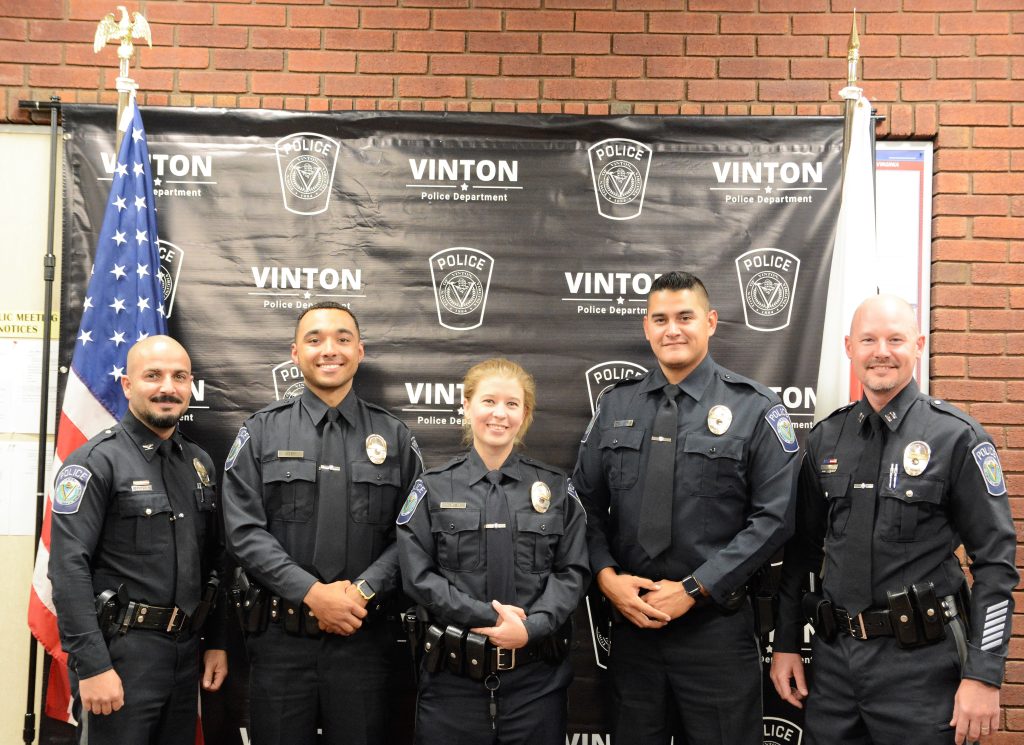
Stephanie Walsh ’14 was sworn in as a police officer in Vinton and was recently highlighted in Vinton’s weekly newspaper, which you can read here. Congratulations Stephanie!
.
.
Get Connected!
Blog: https://psych.pages.roanoke.edu/
Facebook: https://www.facebook.com/rcpsychology
Twitter: @RC_Psychology
LinkedIn: https://www.linkedin.com/groups/RC-Psychology-8140491/about
Website: https://www.roanoke.edu/inside/a-z_index/psychology
Instagram: rcpsychology
-
Phi Beta Kappa News: Elected Psychology Students
Congratulations to all Roanoke College students who have been elected into Phi Beta Kappa. PBK is the oldest honors society in the country and recognizes stellar students in the liberal arts and sciences who are championed in free thought. PBK is America’s most prestigious honors society, and as such, serves as the forefront of recognition in liberal arts education. The Psychology Department would like to say a special congratulations to this year’s juniors and seniors who have been selected to join PBK:
Devin Brown
Edmond Dixon
Emma Kalinski
Skyler Pokorny
Kristi Rolf
Molly Willingham
Sydney Willingham

https://stock.adobe.com/search?k=congratulations The Psychology Department is proud of all of your hard work this semester and previous semesters! Your hard work during your college years has paid off tremendously, and for that we commend you.
Stay tuned for upcoming posts highlighting each student!
.
.
Get Connected!
Blog: https://psych.pages.roanoke.edu/
Facebook: https://www.facebook.com/rcpsychology
Twitter: @RC_Psychology
LinkedIn: https://www.linkedin.com/groups/RC-Psychology-8140491/about
Website: https://www.roanoke.edu/inside/a-z_index/psychology
Instagram: rcpsychology